
News
Dr. Catherine Ovitt Accepted to the 2013 Mid-Career Women Faculty Professional Development Seminar
Tuesday, October 1, 2013
Dr. Catherine Ovitt has been accepted to the 2013 Mid-Career Women Faculty Professional Development Seminar to be held in Austin, TX in mid December. This three and a half-day seminar is primarily designed for women physicians and scientists holding medical school appointments at the Associate Professor level, and holding leadership positions within their discipline, department or institution. Seminar faculty members are chosen from various schools in the US and Canada for their demonstrated leadership abilities and offer knowledge, inspiration and valuable career advice to participants.
Fred Sherman, Major Contributor to Modern Genetics, Dies
Thursday, September 19, 2013
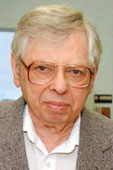
Dr. Fred Sherman
Fred Sherman, Ph.D., an internationally recognized scientist and a faculty member at the University of Rochester Medical Center since 1962, died on September 16 at the age of 81. Sherman, who served as chair of the Department of Biochemistry and then the merged Department of Biochemistry and Biophysics from 1982 until 1999, was one of only three URMC faculty members appointed to the prestigious National Academy of Sciences.
Sherman performed groundbreaking research on the structure of genes and the effects of genetic mutations on proteins in yeast. He was also a proponent of the use of baker's yeast as a genetic model system. Research using yeast is now conducted at virtually all research centers worldwide, largely due to Sherman’s efforts and his teaching of many leaders in the field.
It’s hard to overstate Fred’s contribution to modern genetics. His insights into how genetic mutations affect protein coding and his foresight of the utility of the yeast system quite literally changed the course of biological research,
said Jeffrey J. Hayes, Ph.D., chair of Biochemistry and Biophysics at URMC. Beyond his scientific accomplishments, Fred’s quick wit and sense of humor were legendary. It was always enjoyable to be in a room with Fred. He will be terribly missed.
The Democrat and Chronicle has published an article about Fred's life, viewable here.
Mental Fog with Tamoxifen is Real; Scientists Find Possible Antidote
Tuesday, September 17, 2013
A team from the University of Rochester Medical Center has shown scientifically what many women report anecdotally: that the breast cancer drug tamoxifen is toxic to cells of the brain and central nervous system, producing mental fogginess similar to chemo brain.
However, in the Journal of Neuroscience, researchers also report they've discovered an existing drug compound that appears to counteract or rescue brain cells from the adverse effects of the breast cancer drug.
Corresponding author Mark Noble, Ph.D., professor of Biomedical Genetics and director of the UR Stem Cell and Regenerative Medicine Institute, said it's exciting to potentially be able to prevent a toxic reaction to one of the oldest and most widely used breast cancer medications on the market. Although tamoxifen is more easily tolerated compared to most cancer treatments, it nonetheless produces troubling side effects in a subset of the large number of people who take it.
Ovitt Article Featured on NIDCR Website
Thursday, June 27, 2013
Drs. Catherine Ovitt & Szilvia
Arany's article, Nanoparticle-mediated gene silencing confers radioprotection to salivary glands in
vivo
journal Molecular Therapy, has been featured on NIDCR website. The results of the study suggest that
optimization of in vivo siRNA-mediated silencing for clinical application could be an effective means of
protecting salivary glands in the radiation treatment of head and neck cancer. They also pointed out that the
approach has significant advantages over alternative methods, as it is limited to the salivary glands, does not
involve viruses, and the block in Pkcδ protein expression is only temporary.
@ISSCR 2013
Wednesday, June 19, 2013
Above is Part 3 of ISSCR's video blogs from the 2013 ISSCR annual meeting. This video introduces the fascinating research in cell-based CNS repair done by Dr. Christoph Pröschel.
Dr. Pröschel’s most recent work has focused on using human glial progenitor cells to repair damage to the CNS caused by spinal cord injury. In a 2011 study published in PLoS One, Dr. Pröschel and colleagues describe how human glial precursors were able to restore motor function to spinal cord-injured rats. In our interview, Dr. Pröschel explains the difference between replacement and repair in cell-based regenerative medicine, a theme that fellow spinal cord injury researcher Dr. Aileen Anderson of UC Irvine also frequently touches on. In our video, Dr. Pröschel also has some remarks about direct lineage reprogramming.
Potential New Way to Suppress Tumor Growth Discovered
Monday, June 3, 2013
Researchers at the University of California, San Diego School of Medicine, with colleagues at the University of Rochester Medical Center, have identified a new mechanism that appears to suppress tumor growth, opening the possibility of developing a new class of anti-cancer drugs.
Writing in this week's online Early Edition of the Proceedings of the National Academy of Sciences, Willis X. Li, PhD, a professor in the Department of Medicine at UC San Diego, reports that a particular form of a signaling protein called STAT5A stabilizes the formation of heterochromatin (a form of chromosomal DNA), which in turn suppresses the ability of cancer cells to issue instructions to multiply and grow.
Co-authors are Xiaoyu Hu, Amy Tsurumi and Hartmut Land, Department of Biomedical Genetics, University of Rochester Medical Center; Pranabananda Dutta, Jinghong Li and Jingtong Wang, Department of Medicine, UCSD.
Wilmot Cancer Center Update - May 2013
Wednesday, May 1, 2013
Mark Noble, Ph.D. and doctoral student Hsing-Yu Chen studied the molecular mechanism that allows basal-like breast cancer cells to escape the secondary effects of tamoxifen, and discovered that two proteins are critical in this escape.
The research, published in the journal EMBO Molecular Medicine, shows how to exploit tamoxifen's secondary activities so that it might work on more aggressive breast cancer—a promising development for women with basal-like breast cancer, sometimes known as triple-negative disease.
Researchers Identify New Pathway, Enhancing Tamoxifen to Tame Aggressive Breast Cancer
Tuesday, April 23, 2013
Tamoxifen is a time-honored breast cancer drug used to treat millions of women with early-stage and less-aggressive disease, and now a University of Rochester Medical Center team has shown how to exploit tamoxifen’s secondary activities so that it might work on more aggressive breast cancer.
The research, published in the journal EMBO Molecular Medicine, is a promising development for women with basal-like breast cancer, sometimes known as triple-negative disease. Led by doctoral student Hsing-Yu Chen and Mark Noble, Ph.D., professor of Biomedical Genetics at URMC, the team studied the molecular mechanism that allows basal-like breast cancer cells to escape the secondary effects of tamoxifen, and discovered that two proteins are critical in this escape.