

Rochester Housing-based Opportunities to Minimize Environmental Exposures (ROC HOME) Study
Rochester Housing-based Opportunities to Minimize Environmental Exposures (ROC HOME) Study
 About the Study
Between May 2021 and May 2024, the University of Rochester conducted a study (called “ROC HOME”) of contaminants (lead, allergens, and other environmental chemicals) in household dust in partnership with Silent Spring Institute. The ROC HOME study was funded by the US Department of Housing and Urban Development and included 84 owner-occupied households that participated in the City of Rochester’s Lead Hazard Control grant program.
Watch a video about the study created by Silent Spring Institute
Keep reading to learn more about the study, our findings and view related resources.
Questions about the study or your results?
If you have questions about the study or want to talk to someone about your results, please reach out to us at (585) 301-6815 or
rochome@urmc.rochester.edu
The goal of the study was to answer the questions:
- Can Lead Hazard Control work reduce exposures to other common contaminants in the home?
- Does providing residents with information and resources help further improve and maintain home health over the longer term?
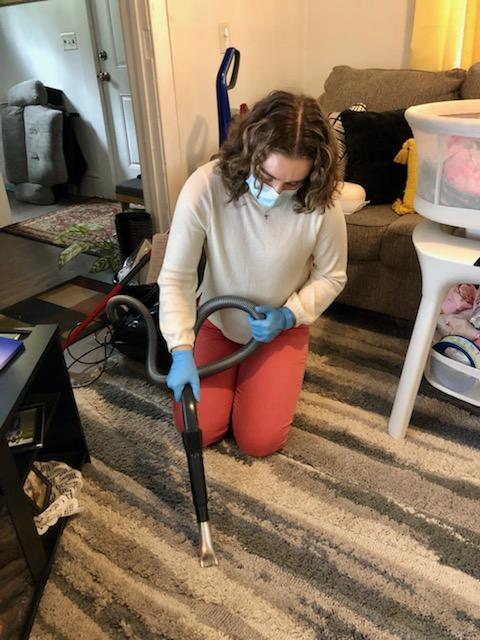
We visited each home three times and collected dust samples to measure levels of lead, mouse and cockroach allergens, and 45 environmental chemicals found in common household products, furniture, or building materials. We also asked questions about products in the home, cleaning, and other features of the home. We visited each home before, just after, and a few months after Lead Hazard Control work.
Contaminants we measured:
Many of the contaminants we tested for -- pesticides, phthalates, flame retardant chemicals, and fragrance chemicals -- are found in common household products, furniture and building materials and can make their way into dust in homes. These contaminants may affect health, particularly children’s health. We tested for these contaminants because past studies show reason for concern, but there is no set level of safety. The government has not established health standards for most of these contaminants (except lead).
| Contaminant | Associated Health Concerns |
|---|---|
Lead | Impaired neurodevelopment, kidney and reproductive problems, cancer |
Mouse and cockroach allergens (substances from mice and cockroaches that can cause an allergic reaction) | Allergic reactions, asthma attacks |
Environmental Chemicals | |
Flame retardants (chemicals added to products to make it harder for them to catch fire) | Impaired brain development, cancer, hormone disruption |
Phthalates (chemicals used in plastics, cosmetics, and personal care and cleaning products) | Impaired reproductive and neurological development, hormone disruption, asthma |
Pesticides (chemicals used to kill bugs, mold, weeds, and other pests, as well as bacteria, fungus and other microbes) | Impaired neurodevelopment, hormone disruption, cancer |
Fragrance chemicals (chemicals used to create artificial smells or mask unwanted odors) | Asthma attacks; impaired reproductive development |
Some ROC HOME participants joined a substudy, “Engaging Residents to Sustain Healthier Homes” (ERSHH), that also tested their urine for environmental chemicals. This substudy was funded by the National Institute of Environmental Health Sciences.
The substudy’s goal was to answer the questions:
- Do these chemicals get from the dust into residents’ bodies?
- How does providing participants with information about the chemicals in their home and their urine affect them?
We collected urine samples at the second and third home visits to measure some of the same environmental chemicals that were measured in household dust. We also visited each home one more time and interviewed study participants after they received their study results.
Contact Us
Questions about the study or want to talk to someone about your results? Reach out to us at (585) 301-6815 or rochome@urmc.rochester.edu.
Study Partners
- Silent Spring Institute
- City of Rochester
- National Center for Healthy Housing
- Rochester ENergy Efficiency and Weatherization (RENEW)
Funding Sources
- HUD Healthy Homes Technical Study Project #MAHHU0060-20
- NIH NIEHS R21 Award #1R21ES033750-01
- Supported by a grant from the William and Sheila Konar Foundation (Grant #2104)