

Areas of Research
Areas of Research
Precision Functional Medicine
Traditional healthcare decisions are often based on imaging studies, physical examination findings, and patient-reported symptoms. While essential, these measures may not fully capture how patients move, function, and perform during daily activities.
The Haddas Lab bridges this critical gap by developing objective digital biomarkers that quantify human function across the continuum of care, from diagnosis and surgical planning to rehabilitation, return-to-sport, and long-term recovery.
Through multidisciplinary collaboration among clinicians, engineers, scientists, healthcare innovators, and industry partners, we are developing the next generation of functional assessment technologies that enable more precise, personalized, and evidence-based healthcare.
Our collaborators include:
- Orthopaedic Surgery
- Neurosurgery
- Physical Medicine & Rehabilitation
- Physical Therapy
- Biomedical Engineering
- Medical Device and Digital Health Companies
- Professional and Collegiate Sports Organizations
- Federal Funding Agencies (NIH, NSF, DoD, FEMA)
Together, these partnerships drive the development of innovative technologies for precision diagnosis, surgical planning, rehabilitation monitoring, injury prevention, and real-world functional assessment.
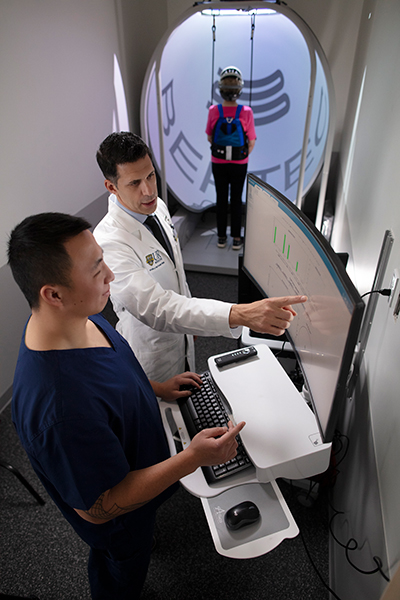
Balance, Mobility, and Fall Prevention
Dedicated to understanding and reducing fall risk through objective assessment of:
- Balance and postural control
- Dynamic stability
- Vestibular dysfunction
- Neurologic impairment
- Healthy aging and mobility preservation
Degenerative Spine and Musculoskeletal Outcomes
Focused on improving functional outcomes and quality of life in patients with: 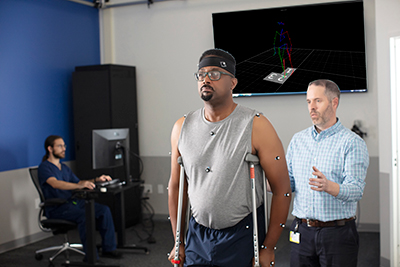
- Shoulder Arthritis
- Cervical Myelopathy
- Lumbar Stenosis
- Adult Spinal Deformity
- Low Back Pain
- Hip and Knee Osteoarthritis
Key areas of investigation include:
- Surgical decision-making
- Functional disability assessment
- Recovery trajectory analysis
- Objective outcome measurement
- Precision rehabilitation
Sports Performance and Return-to-Sport Science
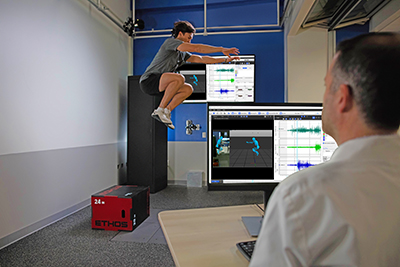
Dedicated to optimizing athletic performance and reducing injury risk through objective assessment of:
- ACL Reconstruction
- Achilles Tendon Injury
- Rotator Cuff Repair
- Shoulder Instability
- Running Biomechanics
- Return-to-Sport Readiness
Digital Health, Wearables, and Artificial Intelligence
Developing scalable technologies capable of transforming healthcare delivery through:
- Wearable Sensors
- Markerless Motion Capture
- Digital Biomarkers
- Machine Learning Models
- Remote Monitoring Technologies