

Advanced CEST MRI Reconstruction and Quantification for Brain Metabolism and Neuroinflammation
Advanced CEST MRI Reconstruction and Quantification for Brain Metabolism and Neuroinflammation
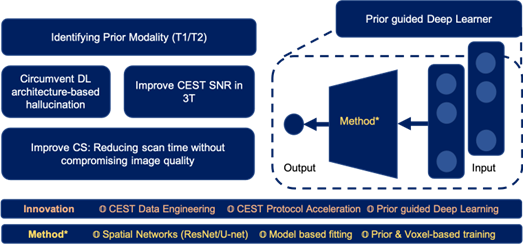
Figure 1: Schematic of prior guided learning proposed to improve CEST imaging at a 3T MRI
Our lab develops next-generation Chemical Exchange Saturation Transfer (CEST) MRI technologies aimed at robust, quantitative imaging of metabolic dysfunction and neuroinflammation in the human brain. We integrate advanced physics-based modeling, optimized numerical reconstruction methods, and modern machine learning to push the limits of CEST sensitivity, specificity, and clinical applicability.
A major focus of our work is model-based CEST reconstruction, where we explore a wide spectrum of regularization strategies—including compressed-sensing frameworks, low-rank and subspace models, L1-sparsity, Lorentzian and offset-dependent priors—to stabilize the inherently ill-posed inversion problem while preserving biologically relevant contrast. These approaches allow us to disentangle overlapping exchange processes and improve quantification of key molecular biomarkers.
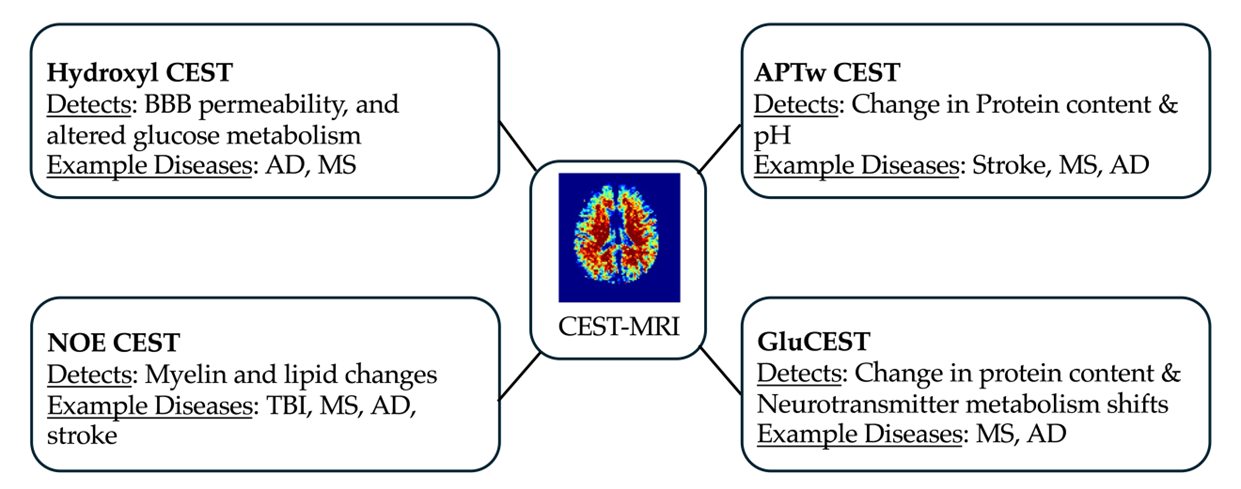
Figure 2: Applicability of CEST MRI for Neuroinflammation Studies
We also leverage artificial intelligence and deep learning, especially architectures that embed measurement physics and anatomical knowledge. This includes T1- and T2-informed anatomical priors derived from MR Fingerprinting (MRF), variational networks, and physics-informed neural networks (PINNs) designed specifically for CEST signal dynamics. By fusing biophysical modeling with data-driven representations, we achieve fast, accurate, and artifact-robust reconstructions that generalize across scanners and acquisition protocols.
Ultimately, our goal is to transform CEST MRI into a reliable, quantitative tool for neuroscience and clinical research. By combining rigorous modeling with intelligent reconstruction, we aim to provide sensitive imaging biomarkers for metabolic alterations, neuroinflammatory processes, and related neuropathologies—enabling earlier diagnosis, improved disease monitoring, and better understanding of brain physiology.