Skip to content
Home
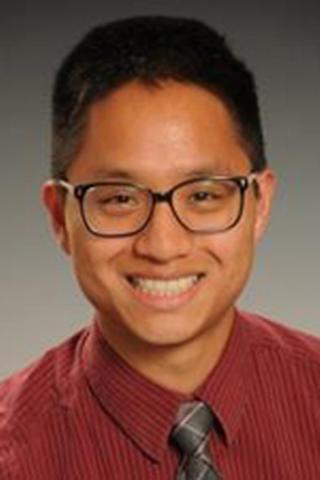
Andrew Huang, M.D.

Andrew Huang, M.D.

he/him/his

Contact

About Me

Dr. Andrew Huang is a Senior Instructor in the Division of Neuropalliative Care, Department of Neurology, at the University of Rochester Medical Center. He sees persons with neurologic illness including severe, acute brain injury, amyotrophic lateral sclerosis, Parkinson's disease and related disord...
Dr. Andrew Huang is a Senior Instructor in the Division of Neuropalliative Care, Department of Neurology, at the University of Rochester Medical Center. He sees persons with neurologic illness including severe, acute brain injury, amyotrophic lateral sclerosis, Parkinson's disease and related disorders, Alzheimer's disease and related disorders, multiple sclerosis, functional neurologic disorders, and chronic neuropathic pain.

He leads the URMC Post Cardiac Arrest Neurology clinic where he sees cardiac arrest survivors and their families in outpatient clinic, nursing homes, and home visits after hospital discharge. He also leads the URMC Skilled Nursing Neurology program where he sees persons with neurologic illness in different nursing homes in the Monroe county including Monroe Community Hospital, Highlands at Brighton, Jewish Home, and the Friendly Home. There he sees a group of persons in a disorders of consciousness (coma) long term.

His current research interests focus on the care needs of cardiac arrest survivors and their families after hospital discharge, the biopsychosocial model, and the ethics of life-sustaining therapy in severe, acute brain injury.

Faculty Appointments

Senior Instructor - Department of Neurology, Central Admin - Research (SMD)

Research

Reimagining Life After Cardiac Death: Neurologically-disabled, anoxic brain injury survivors from cardiac arrest face immense challenges and must reimagine life after hospital discharge. While there is research on survivors with good neurologic outcome, very little is known about ‘neurologically-dis...
Reimagining Life After Cardiac Death: Neurologically-disabled, anoxic brain injury survivors from cardiac arrest face immense challenges and must reimagine life after hospital discharge. While there is research on survivors with good neurologic outcome, very little is known about ‘neurologically-disabled survivors’ who face poor recovery and remain neurologically devastated. Yearly in the US, ~500,000 persons suffer cardiac arrest, ~70,00 survive, and up to 1/3 face severe, anoxic brain injury. These survivors have few if any inpatient or outpatient clinical services for their life-death decision-making about life-sustaining therapy, their prolonged hospital course, or their outpatient journey. Their family face prolonged grief and mistrust, and the healthcare staff caring for them face moral distress, all pointing towards a care system that leaves much to be desired. This study aims to assess the care needs of neurologically-disabled, cardiac arrest survivors and the feasibility of a team-based clinic to meet these needs. This study is funded by the American Academy of Neurology's Practice Research Training Scholarship from 2024-2026.

Starting Off on the Right Foot: Anoxic brain injury survivors face life-and-death conversations that require surrogate decision-making in the first weeks or month after cardiac arrest. While some surrogates limit life-sustaining therapy in the first days after cardiac arrest, many surrogates of severe, anoxic brain injury survivors deliberate over weeks in the intensive care unit about chronic life-sustaining therapy amidst the prospect of long-term disability, complex care transitions, and high mortality rate. Anoxic brain injury survivors acquire an expected, consequential life stage with prognostic uncertainty that contrasts other illnesses such as cancer or dementia. These surrogate-clinician conversations are critical opportunities ot start off on ther ight foot because long-lasting disengagement in care can result when they do not. This study aims to identify barriers to quality surrogate-clinician communication about life-sustaining therapies for severe, anoxi brain injury survivors.

Publications

Journal Articles

Curriculum Innovation: Combining Didactic and Clinic-Based Methods to Improve Palliative Care Education for Neurology Residents and Advance Practice Providers.

Huang AP, Gibson C, Seshadri S, Kluger BM

Neurology. Education.. 2025 December 4 (4):e200249. Epub 09/23/2025.

The Civil Versus the Neurocentric Conceptions of Death.

Huang AP, Bernat JL

The American journal of bioethics : AJOB.. 2025 September 25 (9):36-38. Epub 08/18/2025.

Navigating Neurologic Illness: Skills in Neuropalliative Care for Persons Hospitalized with Neurologic Disease.

Huang AP, Holloway RG

Seminars in neurology.. 2024 October 44 (5):503-513. Epub 07/25/2024.

Palliative Care of End Stage Parkinsonism: An Overview Including the Five Pillars Framework.

Hvisdak V, Huang AP, Kluger BM

Movement disorders clinical practice.. 2023 August 10 (Suppl 2):S63-S67. Epub 11/30/2022.

Cannabinoids in movement disorders.

Kluger BM, Huang AP, Miyasaki JM

Parkinsonism & related disorders.. 2022 September 102 :124-130. Epub 08/24/2022.

Informed consent for early-phase clinical trials: therapeutic misestimation, unrealistic optimism and appreciation.

Halpern J, Paolo D, Huang A

Journal of medical ethics.. 2019 June 45 (6):384-387. Epub 06/12/2019.