

Welcome from the Directors
Welcome from the Directors
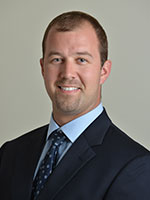
Ben Laplante, DO, MS
Fellowship Program Director

Rajeev Patel, MD
Chair and Associate Director

Ramzi A. El-Hassan, MD, MSD
Associate Fellowship Program Director
At the University of Rochester Medicine, we are dedicated to helping each and every trainee advance his or her career. Each trainee teams up with a faculty advisor and research mentor. In addition, they receive memberships in the leading national PM&R associations, namely the Association of Academic Physiatrists (AAP) and American Academy of Physical Medicine and Rehabilitation (AAPM&R). Residents also receive funds for books and costs related to attendance at national academic meetings.
Our humanistic emphasis prepares each of our graduates to learn, teach and practice medicine with professionalism, compassion and discipline. Our structured teaching includes a hands-on ultrasound course and significant exposure to a variety of injection procedures including spinal epidurals, ultrasound-guided, and botulinum toxin injections. The University of Rochester is a Level-1 trauma center, CARF-accredited (Commission for the Accreditation of Rehabilitation Facilities) spinal cord injury and stroke system of care. Rochester boasts one of the most active spinal cord disability networks in the region and residents are involved in community service for people with spinal cord disability.
Our excellent curriculum prepares our residents well for board exams. We offer twice-yearly mock orals which are well received by the current residents and prepare them for part 2 of the PM&R boards for certification. The rotations and didactic curriculum enables our residents to secure competitive positions of their choice after graduation. These are among the reasons we attract more qualified applicants each year making entrance to our program more competitive. We are both Rochester natives, and have attended out of area medical schools and residencies, and chose to return to Rochester for the variety of opportunities that it has to offer.
Why I chose URochester Medicine for Fellowship, and Why I Lead Now.
When I completed my residency at URochester Medicine, I had trained under faculty who represented different channels of the field’s intellectual lineage. Each mentor had mastered a distinct set of tools and approaches to the same clinical problems. Rather than compete, they communicated. They discussed cases, debated technique, and taught me that the strength of our program wasn’t uniformity; it was the deliberate coordination of different ways of thinking about interventional spine and musculoskeletal medicine.
I stayed for fellowship because I wanted to understand how that coordination worked at scale. What I found was a faculty culture built on active dialogue. We don’t teach fellows a single approach; we teach them the full toolkit, implemented across multiple philosophies. Faculty meet regularly to discuss each fellow’s progress, identify gaps, and adjust teaching in real time. When we notice a fellow needs deeper understanding of a particular technique or diagnostic pathway, we flag it to each other. We emphasize weaknesses deliberately, turning them into strengths. We tailor the entire year to each fellow’s trajectory: their interests, their goals, and their vision of independent practice.
The result is that our fellows graduate better prepared than any one of us alone could prepare them. They don’t choose between our approaches; they inherit all of them, along with the judgment to deploy each tool when it serves their patient best. And as we do this year after year, cohort after cohort, we aren’t just training interventionalists; we’re advancing the field itself. The University of Rochester motto, Meliora, means ever better. This isn’t aspirational for us; it’s operational. Each generation of fellows we train becomes better than the last, because they build on what we’ve learned, what we teach them, and what they’ll teach those who come after. This collaborative commitment to the mission, carried out by a coordinated faculty that feels like family, is why I chose to train here and why I continue to choose to help lead this fellowship.
Ramzi A. El-Hassan, MD, MS
Associate Fellowship Program Director