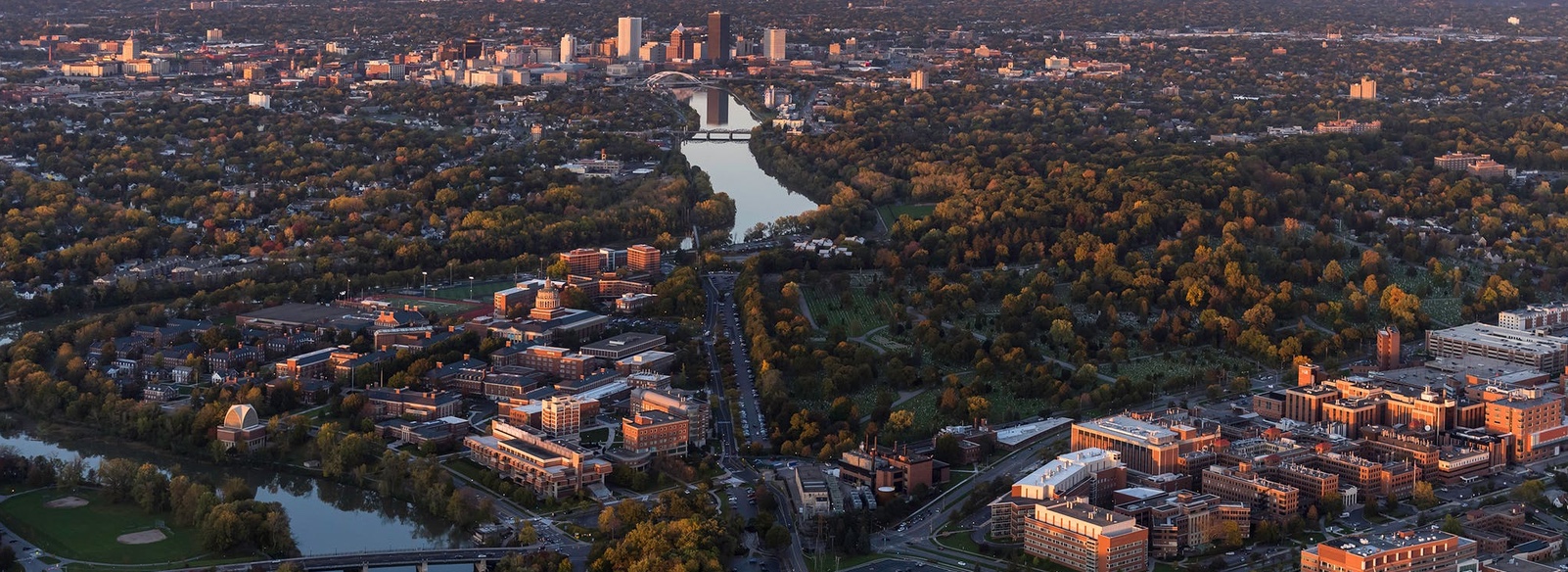
The University of Rochester offers many academic and student support services for graduate students, fostering an enriching and inclusive learning environment. Our students benefit from a range of support services, including academic mentorship and advisor relationship support, mental health services such as counseling and various academic assistance programs. Most of our academic and support resources are available to students throughout the university regardless of what program or school they are associated with. However, there may be some offices that work with a specific school. To see a full guide of the services offered in the School of Medicine and Dentistry and the School of Arts, Science and Engineering please use the links below.
Arts, Science and Engineering
School of Medicine and Dentistry
University Academic Supports
Office of Graduate Education and Postdoctoral Affairs (GEPA):
GEPA offices exist at both the university level as well as at individual school levels. These offices oversee graduate programs, ensuring academic excellence and compliance with university policies. They also provide comprehensive support services, including admissions guidance, program management, professional development, and mentorship initiative, enriching the educational journey for graduate students and postdoctoral scholars.
Get in touch with our GEPA offices!
Arts, Sciences and Engineering GEPA: ASEGEPA@rochester.edu
School of Medicine and Dentistry GEPA: SMDGEPA@urmc.rochester.edu
The goal of the University Ombuds is to promote a respectful and inclusive community. This is done by resolving conflicts, challenging perceptions, and advocating for fairness for everyone at the University.
The Learning Center offers Academic Success Coaching to graduate students in Arts, Sciences & Engineering (AS&E), the School of Medicine and Dentistry, the Simon Business School, and the Warner School of Education. Their services include one-on-one academic success coaching and workshops throughout the year on topics such as time-management, organization, work-life balance, academic support development, and transitioning into graduate school.
The University has 6 libraries spread throughout their seven schools. The libraries support all our student’s scholarly endeavors as related to the research lifecycle, including:
- In-class scholarly research instruction as well as personalized research consultations
- Identifying and accessing materials the libraries already possess and purchasing those we don’t (including data sets)
- Tailoring resources to specialized needs like primary source items and digital means for conducting your scholarship (e.g. virtual reality, text mining, GIS)
- Advising on issues of publishing, copyright, data management, and open scholarship
- Storing, preserving, and sharing your research output
Know that you have a librarian dedicated to your area of study and they can be your first stop as well as your guide throughout your time at Rochester
University Student Support and Mental Health Services
CARE is a proactive network of support services for University of Rochester students that may be struggling and may benefit from the use of campus and community resources. Faculty, staff, and students can make referrals when they recognize that a student may need support such as when they are experiencing emotional, social, and/or considerable academic stress. Students can also self-refer and a member of the CARE team will reach out to offer support. Looking for more information on resources? Check out the CARE Resource Center anytime.
All full-time graduate students can take advantage of UCC’s services, including individual and couples therapy, group therapy, medication management, 24-hour crisis services, and consultation services. Sessions with UCC counselors are free and confidential.
Is a place for worship, meditation, and quiet study; for community service, service-learning, and discussion of social issues; for weddings, unions, and celebrations for alumni and the wider community; a site for social and musical programs, talks on moral and ethical dilemmas, and memorials. Graduate students are encouraged to take advantage of the programs and religious faiths supported by the chapel.
The mission of the Paul J. Burgett Intercultural Center (BIC) is to promote cultural awareness and engagement, educate on issues of identity, and provide avenues for intersection and opportunities for collaboration. Their goal is to cultivate inclusivity and create a sense of belonging among all of our community members.