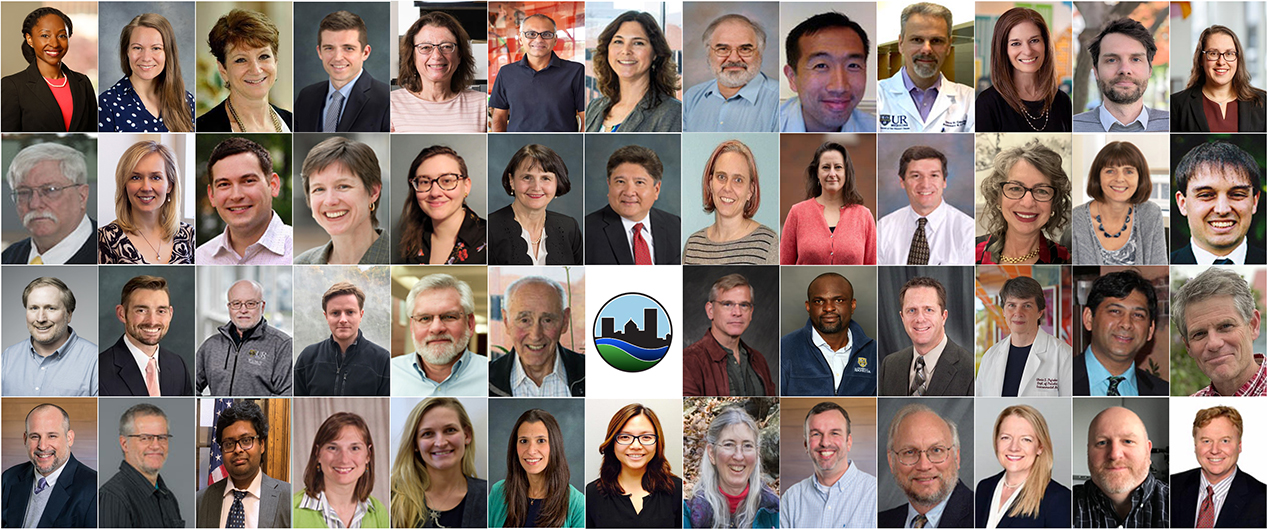
Welcome to the Summer 2026 edition of the EHSC newsletter! Use the links in the yellow boxes or keep reading to check out the latest Center news, research and engagement highlights, and more.
University of Rochester Medicine (URochester Medicine) has announced the formation of the Department of Environmental Medicine and Public Health Sciences, which unites biomedical toxicology and population-level environmental and public health expertise to accelerate discoveries into policy, clinical practice, and community action.
Read more about the new department, the administrative home to the Environmental Health Sciences Center (EHSC) and Institute for Human Health and the Environment (IHHE), from URochester Medicine News.
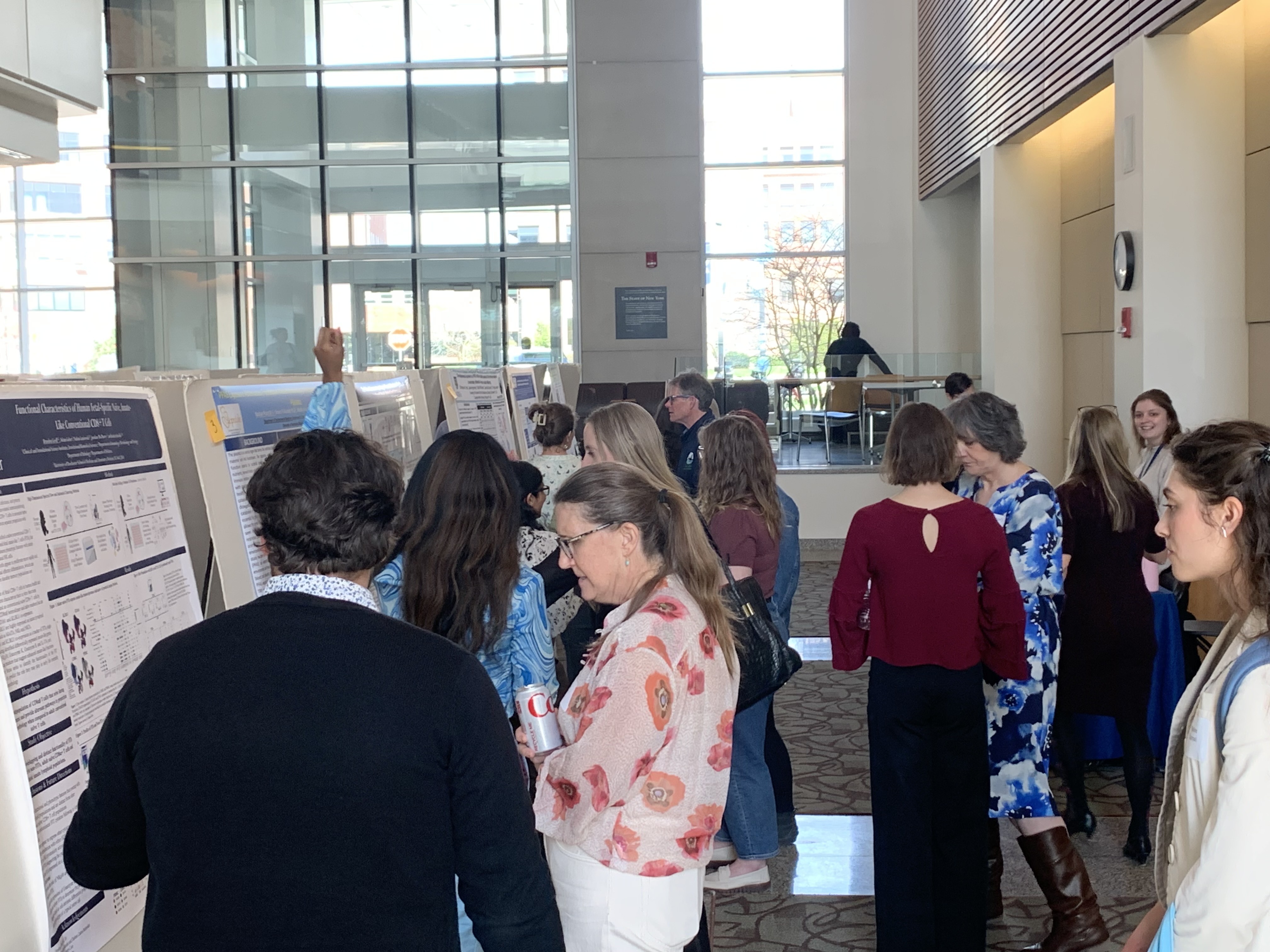
Poster presentations fostered lively discussion during the symposium
The IHHE and the EHSC co-hosted the “Pregnancy: A Critical Window for Maternal-Child Health” research symposium on April 9th, 2026. The symposium featured a wide variety of research related to pregnancy, children’s health and how the environment impacts pregnancy. The event gathered 129 faculty, staff, and students for featured keynote presentations, short talks, and a poster session.
Margaret Petroff, PhD (Michigan State University), Theresa Powell, PhD (University of Colorado), Center member Hitesh Deshmukh, MD, PhD, and Jennie Noll, PhD (University of Rochester) gave keynote addresses. Speakers and posters highlighted research on asthma, early-life exposures and immune development, effects of environmental exposures on birth outcomes, and more.
Hitesh S. Deshmukh, MD, PhD, is a leading expert in Neonatology with a career spanning multiple continents. He earned his medical degree at the University of Mumbai, completed fellowships at the Children’s Hospital of Philadelphia and Duke University, and previously served as the Director of the Center for Perinatal Immunity at the University of Cincinnati—one of the nation’s top pediatric institutions. He joined University of Rochester Medicine in 2025 as chief of the Division of Neonatology.
His goals at URochester include expanding the Division of Neonatology’s clinical research footprint, reestablishing its National Institutes of Health Neonatal Research Network Center designation, and developing a training program in neonatal immunology for physician-scientists. Clinically, he aims to reduce Rochester’s infant mortality rate to align with national averages—an ambitious goal requiring efforts to address regional social determinants of health.
Dr. Deshmukh's research reframes our understanding of early life, viewing infancy not as a period of vulnerability but as a critical window of opportunity to establish lifelong lung health. His work explores how conditions before and shortly after birth can shape health outcomes through adulthood. The concept of "fetal origins of health and disease" guides his research, supported by evidence that early life experiences—including those before birth—affect many aspects of lung health, from susceptibility to viral infections (including SARS-CoV-2) to the development of asthma and chronic lung diseases. These early influences can have consequences that extend well beyond childhood.
Deshmukh’s current research includes examining the impact of antibiotics on the microbiome and investigating whether probiotics could serve as an alternative. Additionally, he plans to lead studies on the long-term outcomes of preterm infants, particularly focusing on respiratory conditions like COPD and asthma. He has collaborated with several EHSC members, including Kristin Scheible, MD, Gloria Pryhuber, MD, and Thomas Mariani, PhD.
Jonathan Herington, PhD, is an Assistant Professor of Health Humanities & Bioethics at the University of Rochester. His research focuses on the political philosophy of science, health, and technology, with particular emphasis on environmental health and artificial intelligence in healthcare. He uses the tools of political philosophy to examine the governance of health technologies, resource allocation during health emergencies, and secondary research ethics.
A significant focus of Dr. Herington's current work involves developing ethical frameworks for environmental health research. As joint principal investigator of SHELTER, a four-year NIH R01 grant (along with Center member Katrina Korfmacher, PhD), he is investigating researchers' obligations to share potentially actionable information about environmental health risks with study participants and examining how to appropriately incorporate participant preferences into report-back plans. This research builds on his prior work exploring the ethics of health risk communication and the value tradeoffs between precautionary and "risk-neutral" approaches to environmental public health.
Herington's contributions to environmental ethics include examining climate-related insecurity, the ethics of consumer labels for genetically-modified foods, as well as the concept of “health security” and its connection to the emergence of zoonotic disease. His work in this area demonstrates how political philosophy can inform more justice-oriented approaches to communicating environmental health risks to affected communities.
Between 2014 and 2019, Herington served as an Assistant Professor in the Department of Philosophy at Kansas State University. Prior to that appointment, he was a Research Fellow in the Medicine, Ethics, Society and History unit at the University of Birmingham. He completed his PhD in the School of Philosophy at the Australian National University.
Researchers at the University of Rochester are investigating whether natural biological changes during pregnancy help reduce a fetus’s exposure to mercury. The project will examine how the maternal gut microbiome and pregnancy-related physiological changes may increase the body’s ability to eliminate methylmercury, the toxic form of mercury commonly found in fish, before it reaches the developing fetus.
2025 was the fourth year of the EHSC Community Engagement Core’s (CEC) Capacity Building Project program. This community grant program provides funding for local organizations to grow their engagement in environmental health work, building community capacity to respond to local environmental health problems while identifying opportunities for future partnerships with the EHSC. The CEC works closely with the awardee each year, connecting them with relevant expertise, resources, technical support, and strengthening partnerships between community partners and the EHSC.
The 2025 project, awarded to the Worker Justice Center of New York (WJCNY), focused on developing capacity to help farmworkers prevent negative health effects from air pollution and extreme temperatures. Farmworkers are particularly vulnerable to extreme temperatures and poor air quality, and outdoor air pollution and occupational health of farmworkers have been identified as key community environmental health priorities for the Finger Lakes region.
WJCNY staff worked closely with CEC staff and EHSC researchers to create a new informational poster about heat illness and air pollution to share with farmworkers. They also adapted resources about cold stress from experts in other regions for NYS. Both resources were distributed to farmworkers in Monroe County and other parts of NYS. WJCNY staff also received training on heat and cold illnesses from Finger Lakes Occupational Health Services, further increasing staff capacity to engage with farmworker concerns on these topics. The resources developed during this project will be incorporated into WJCNY’s toolkit for ongoing and future outreach and shared with other organizations working on the intersection of heat and air quality.
Previous project awardees continue to engage in environmental health work and build partnerships with environmental health researchers after participating in the program. Since completing their initial Capacity Building Project focused on identifying community environmental health priorities, the 2024 awardee, Rochester Ecology Partners (REP), has partnered with the Finger Lakes Children’s Environmental Health Center on an Environmental Health Ambassadors program. The program was part of a research catalyst pilot grant and included opportunities for local teens to learn about environmental health issues and careers. REP presented about how they have been incorporating environmental health into their work at the EHSC Community Advisory Board meeting in December 2025. This year, they will embark on a program building on recent updates to the City of Rochester’s Urban Forestry Master Plan with continued community engagement on the health benefits of urban tree cover, funded by the URochester IHHE. Center member Elaine Hill, PhD, serves on the advisory council, focusing on developing sustainable community-research partnerships. The 2022 Capacity Building Project awardee, Cornell Cooperative Extension of Monroe County, served on the advisory committee for the Urban Forestry Plan and will advise this effort as well.
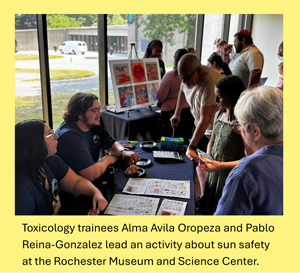
An additional partnership between EHSC member Marissa Sobelewski, PhD, and the 2023 Capacity Building Project awardee, the Rochester Museum and Science Center, took the form of “Tox2All” in August 2025 – a day of hands-on demonstrations at the science museum led by URochester Toxicology Trainees highlighting key concepts in toxicology for museum visitors.
Between 2022 and 2025, Center members Katrina Korfmacher, PhD, and Becca Lauzon, PhD, visited dozens of homes in Rochester as part of the “ROC HOME” study, a partnership between URochester and the Silent Spring Institute to study contaminants in household dust in homes in Rochester. They surveyed residents about the products they used in their homes, collected dust samples from couches, floors, and windowsills, and ventured into basements.
While interacting with Rochester residents during the study, the research team noticed two things: first, that many people use air fresheners in their homes, and second, that many people don’t know how to change their furnace filter. Both can impact air quality and health, but limited educational resources are available to communicate about either hazard. To respond to this identified community need for reliable environmental health information, the CEC worked closely with the ROC HOME study team to develop two new healthy homes resources.
Learn more about the study:
Read the “What’s in the Dust? Individual and Community-Level Report Back of Housing Exposure Research” article in the Fall 2025 newsletter
Read a National Center for Healthy Housing guest blog
The Hidden Hazards of Air Fresheners
Many people use air fresheners, either to mask odors or because they like the smell. Most air fresheners and other scented products use chemicals to create artificial scents. Many of these chemicals have not been thoroughly tested for health impacts, and some have been linked to health concerns like asthma, hormone disruption, and impacts on development and fertility. Air freshener manufacturers are not required to list their ingredients on the package, making it difficult for consumers to know if there are harmful ingredients. The CEC created the “Hidden Hazards of Air Fresheners,” an infographic and 2-page fact sheet designed to help people understand the health impacts of air fresheners and ways to keep homes smelling fresh without harmful chemicals.
Read a National Center for Healthy Housing guest blog by Becca Lauzon, PhD.
How - and Why - to Change Your Furnace Filter
Many homes in Rochester use forced hot air furnaces for heat. ROC HOME showed that many residents may not know how to properly maintain their furnaces. Annual maintenance and regular filter upkeep are important for ensuring furnaces work properly and help improve indoor air quality by removing dust, pollen, dander, and other potentially harmful particles. The CEC created a video to help people understand how and why to change their furnace filter. The video teaches viewers how to find and check their furnace filter, how to choose the right filter, and how furnace upkeep can help them breathe easy!
The CEC worked with the URMC-based Finger Lakes Children's Environmental Health Center, the Coalition to Prevent Lead Poisoning, and Causewave Community Partners to produce an updated edition of the “Healthy Homes, Healthy Families” resource guide. First published in 2010, the guide shares basic information and resources to help families reduce hazards in their homes. The guide has been widely distributed in Monroe County and across New York state by community agencies, medical offices, local health departments, and others.
There are two versions of the guide: one specific to Monroe County and one for New York State. Both are available in English and Spanish. The 2025 update added information about keeping homes thermally controlled (comfortable and safe in both extreme heat and extreme cold). The NYS version includes new information about drinking water, including information specific to well water and septic systems used in rural areas.
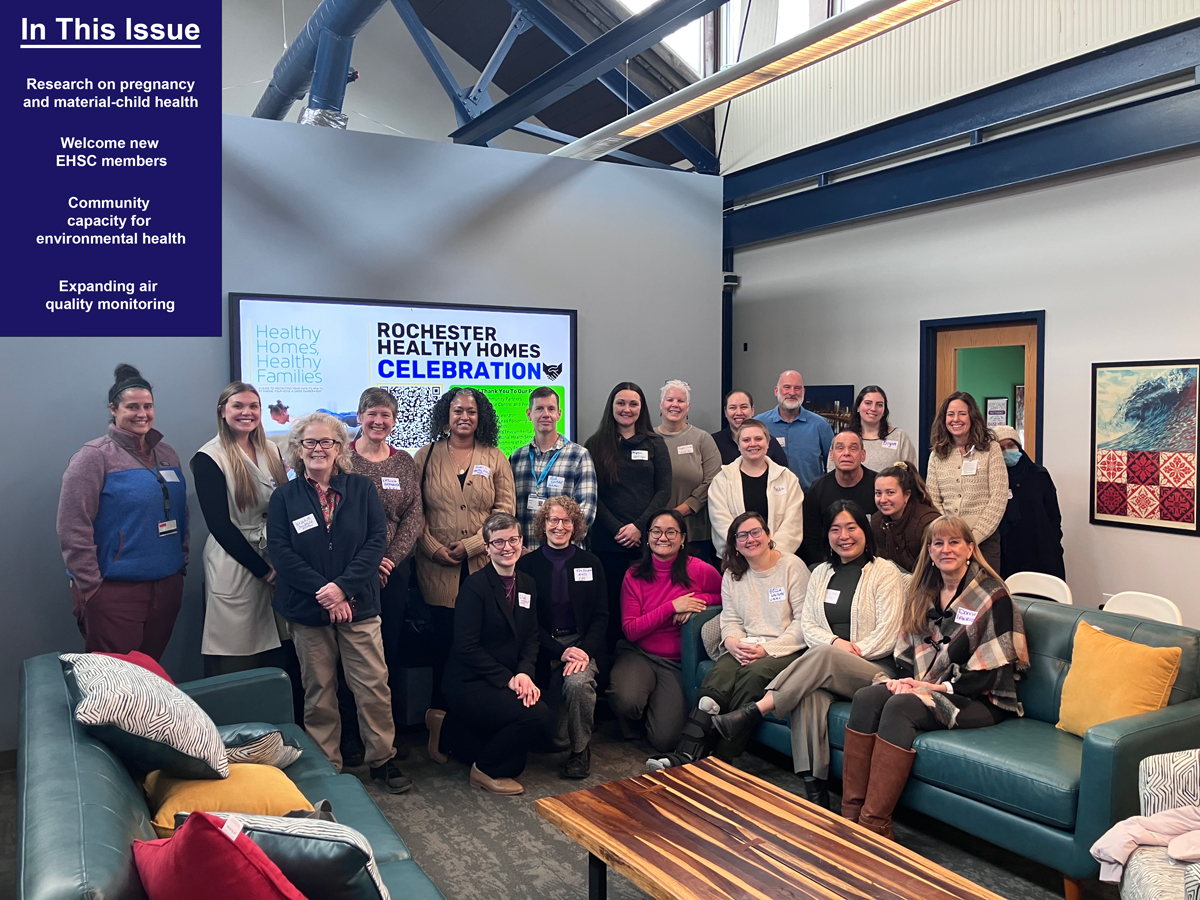
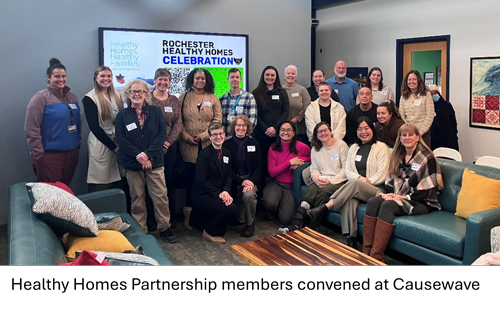
The guide was originally developed by the Rochester Healthy Homes Partnership, a group of 30+ organizations facilitated by the CEC that has been meeting monthly since 2009 to support local efforts to reduce home environmental health hazards in the community. In January, the group convened to celebrate the 8th revision of the “Healthy Homes, Healthy Families” guide, distribute hard copies, and connect with other organizations.
A new study in the Journal of Exposure Science & Environmental Epidemiology shows that indoor environments may be a source of PFAS exposure. A mini-pilot study funded by the EHSC and awarded to Center member Katrina Korfmacher, PhD, and Robin Dodson, ScD, of Silent Spring Institute, analyzed dust samples from 20 Rochester homes for PFAS. The dust samples were collected as part of the ROC HOME study, conducted in partnership with Silent Spring Institute. PFAS were detected in household dust in every home tested. The highest PFAS concentrations detected were of newer, “emerging” kinds of PFAS. Many of these newer chemicals are used in stain-resistant fabrics, carpets, and other household products and can break down into legacy PFAS such as PFOA and PFOS. In many communities, PFAS exposure is driven by contaminated drinking water. Levels in Rochester's drinking water tend to be below available drinking water standards, but Rochester residents may still be exposed to PFAS through other pathways including diet and residential sources. (Read more about URochester research on PFAS exposure in pregnant women in Rochester.) This new study suggests that indoor environments contain many emerging and legacy PFAS and may be an exposure source for some PFAS. Further research is needed to determine specific sources associated with these chemicals, the relative contribution of the indoor environment to people’s total PFAS exposure, and strategies to reduce PFAS exposure in homes.
Related publication: McIntyre, A.M., et al. 2026. Understudied PFAS precursors dominate household dust: insights from a pilot study in Rochester, NY. Journal of Exposure Science & Environmental Epidemiology https://doi.org/10.1038/s41370-026-00841-2
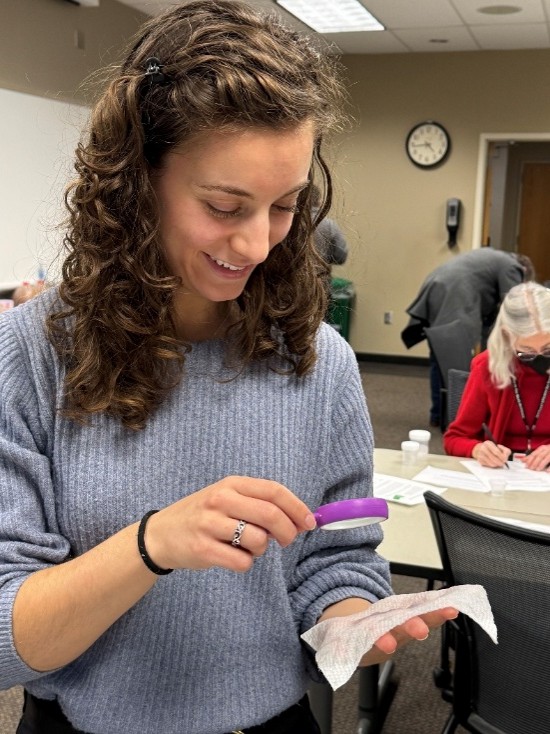
What happens when expertise in science education and microplastics and human health research overlap? Instant snow and glue combine to allow students, community members, and scientists to look for microplastics in simulated brain tissue in the Life Sciences Learning Center’s latest hands-on activity.
“The Problem with Microplastics”, available as full classroom lesson for high school students or as a set of 3 activities for other educational or community audiences, allows participants to analyze simulated tissues to discover if microplastics can be found in the human body. Participants learn how microplastics enter and move around the body, use evidence from research to learn about possible health effects, and consider how scientists and the media communicate about microplastics.
The lesson was developed with support from the IHHE and input from the CEC team and EHSC researchers studying microplastics. The community activities were piloted at a social event where faculty and staff enjoyed cider and donuts while participating in the hands-on activities.
Workshop participants at the International Conference on Microplastics and Nanoplastics in Santa Fe, NM.
Participants examine simulated brain tissue samples for microplastics
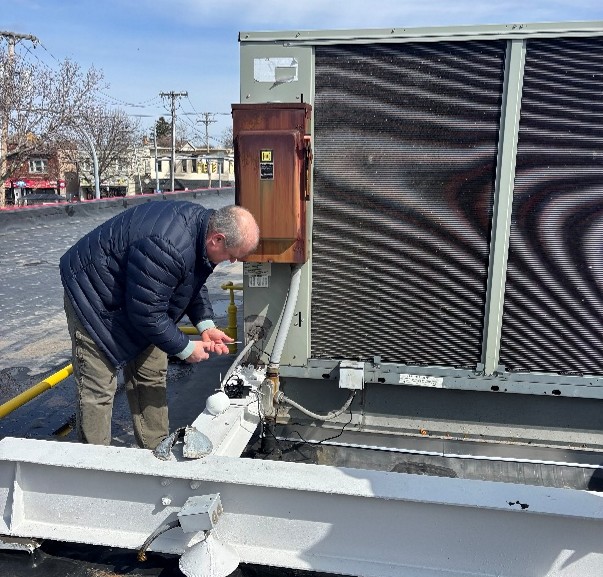
The IHHE, in partnership with the City of Rochester, has launched a new project to expand air quality monitoring throughout the city by installing low-cost air quality sensors at Rochester Public Library branches.
Installation of an air sensor
The initiative aims to increase the number of air quality sensors collecting data across Rochester, particularly in neighborhoods likely to experience poorer air quality. To date, five new sensors have been installed at the Arnett, Charlotte, Lincoln, Lyell, and Maplewood library branches, significantly expanding local air quality monitoring in Rochester.
This collaboration has also created new research opportunities. Center member Elaine Hill, PhD, and Shalini Beath, the City of Rochester's Energy and Sustainability Manager, were accepted to participate together in the Research Innovations using Sensor Technology to Improve Community Health (RISE) program hosted by the University of Cincinnati. The RISE program supports community-academic partnerships by providing research teams with training in the use of low-cost air quality sensors to address environmental health concerns. Through the program, participants develop technical expertise while joining a national network of researchers committed to improving community health through environmental monitoring. The RISE application builds on existing community partnerships and will expand the potential for long-term monitoring and health research in collaboration with URochester researchers.
This effort is also partnering with a recent EHSC Pilot Project grant to Center members Dave Rich, ScD, MPH, Phil Hopke, PhD, and Katrina Korfmacher, PhD, and University at Buffalo colleague Meng Wang, PhD. The research team plans to install additional sensors to monitor black carbon, ultrafine particles, and other pollutants at a network of sites around Rochester. This will provide the opportunity to calibrate the lower-cost sensors and test their potential for informing individual, community, and policy decisions on an ongoing basis.
Shalini Beath, City of Rochester, presented at the May 2026 Community Advisory Board meeting
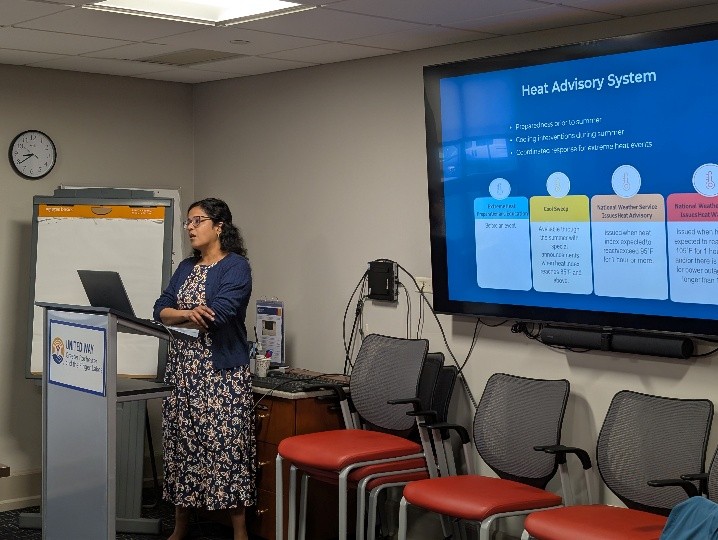
IHHE and EHSC engagement staff have also been partnering with City of Rochester staff on communication and planning for extreme heat and air quality events. Beath and Fred Rion, Director of Emergency Management for the City of Rochester, presented on about “Planning and Education for Extreme Heat and Air Quality Issues and their Impacts on Health” at the May 2026 Community Advisory Board meeting. Their presentation highlighted efforts to integrate heat and air quality into City planning, including strengthening communication systems for City employees and residents, sharing information about cooling and warming centers, providing guidance during poor air quality events, educating the community about health risks associated with extreme weather, and coordinating emergency operations when needed.
Together, these initiatives demonstrate the value of strong partnerships between researchers and local government in building healthier, more resilient communities.
The Rochester Young Scientists Club (RYSC), hosted by the University of Rochester Office of Enrichment and Engagement, is a STEM education program that serves 5th and 6th grade students in Monroe County. I have led RYSC for two years and have felt so fulfilled throughout my time in this position. It has been an amazing way to serve the Rochester community, develop my science communication, get practice in curriculum development, and gain experience running an educational program.
This program is particularly close to my heart because I participated in a similar program as a child in Washington, D.C. In middle school I did Get Set, a robotics program geared towards students that have limited options for STEM education. I didn’t have a science teacher until middle school, and it limited my understanding and exposure to science. When I was presented with Get Set as an afternoon program, I took it up because I didn’t know anything about robots outside of Star Wars and Doctor Who! If it wasn’t for Get Set, I don’t think I would have ever had the confidence for higher level science classes in high school.
Toxicology Trainees Alma Alvila Oropeza and Pablo Reina Gonzalez with Medical Faculty and RYSC youth participants at Mini Med School Day 2025
While I didn’t go into a robotics PhD program, I developed a love for solving problems I didn’t fully understand. If I can do that as Program Lead for RYSC for even one student, it’s worth it. Many of these students don’t traditionally have access to extracurricular programs and come from backgrounds not often seen in STEM positions. The ultimate focus of RYSC is to engage our students in science experiences that promote science as a profession. Sessions are held on Saturdays at URMC and are led by PhD Trainees, providing an opportunity to mentor the next generation of scientists. Each year we culminate with a community wide science fair where each small student group works with a Volunteer for a month-long project on a specific scientific question.
The Toxicology Training Program has a long history of involvement in RYSC; I took over the program from alumna Emily Quarato, PhD, and other current Toxicology trainees including Alma Alvila Oropeza, Tianna Torrice, Pablo Reina Gonzalez, and Ethan Lewis participate.
Hitesh Deshmukh, MD, PhD, chief of the Division of Neonatology in the Department of Pediatrics has been jointly appointed as Dean’s Professor in the Department of Pediatrics. Deshmukh’s research examines how conditions before and shortly after a child’s birth can influence health outcomes throughout adulthood. The Dean’s Professorship recognizes a faculty member’s outstanding research accomplishments.
Deshmukh recently received a seven-year, $5.8 million NIH R35 Emerging Investigator Award from the National Heart, Lung, and Blood Institute. The highly competitive award supports physician-scientists pursuing innovative research. Deshmukh, whose lab has studied how immune cells migrate to the lungs after birth, will use the funding to expand into patient-derived samples and organoid models to accelerate the translation of basic discoveries into clinical care. He recently spoke to URochester Medicine news about what matters most in shaping a baby’s long-term gut health.
Elaine Hill, PhD, professor of Environmental Medicine & Public Health Sciences, was selected for the Executive Leadership in Academic Medicine fellowship. The program prepares women for senior leadership roles.
Ehsan Hoque, PhD, professor of computer science, was inducted into the American Institute for Medical and Biological Engineering College of Fellows. Election to the AIMBE College of Fellows is among the highest professional distinctions accorded to medical and biological engineers, comprised of the top two percent of engineers in these fields. College membership honors those who have made outstanding contributions to “engineering and medicine research, practice, or education” and to “the pioneering of new and developing fields of technology, making major advancements in traditional fields of medical and biological engineering or developing/implementing innovative approaches to bioengineering education.” Hoque was nominated, reviewed, and elected by peers and members of the College of Fellows “for pioneering scalable, ethical AI technologies that improve neurological care, social communication, and health equity across clinical and global contexts.”
Kirsi Järvinen-Seppo, MD, PhD, was jointly appointed the inaugural Dr. Eric M. Dreyfuss Professor in the Department of Pediatrics. The professorship was established by the late Eric Dreyfuss, who had a distinguished 50-year career in allergy and immunology at URochester Medicine, as part of For Ever Better: The Campaign for the University of Rochester. Järvinen-Seppo also holds appointments as a professor of medicine, of microbiology and immunology, and as the Founders’ Distinguished Professor of Pediatric Allergy.
New research from Järvinen-Seppo may help explain why children who grow up in farming communities develop fewer allergies than urban children. Read more from URochester Medicine News. Järvinen-Seppo, chief of Pediatric Allergy and Immunology at Golisano Children’s Hospital, also spoke with URochester Medicine News about why some kids outgrow food allergies and others don’t.
The Translational Center for Barrier Microphysiological Systems (TraCe-bMPS) team, led by Jim McGrath, PhD, William R. Kenan Jr. Professor of Biomedical Engineering, develops and uses tissue chips to study diseases where two types of tissue meet. Recent research used the chips to identify how threats can break down the blood-brain barrier and could lead to new treatments to keep brains healthy. Read more about the research from URochester News.
New research from M. Kerry O’Banion, MD, PhD, suggests that brain immune cells may drive more damage in females than males with Alzheimer’s. Read more about the research in NeURoscience.
During his more than four decades in Rochester, Jeff Wyatt, DVM, MPH has advanced biomedical research, environmental restoration, and global conservation—always guided by his belief that human, animal, and ecosystem health are deeply interconnected. Read more about his career from the URochester Office of the Vice President for Research.
Augusto Litonjua, MD, MPH, professor of Pulmonary Diseases & Critical Care and Pediatric Pulmonology; and Gloria Pryhuber, MD, professor of Neonatology, were recognized for their outstanding contributions to pulmonary medicine and respiratory science at the American Thoracic Society (ATS) International Conference in May. The honors highlighted transformative work in thoracic oncology, foundational research of asthma and lung disease, and contributions to building a molecular map of the human lung. Litonjua received the John M. Peters Award and Pryhuber received a Recognition Award for Scientific Accomplishment.
Two EHSC members won poster awards at the 2025 annual NIEHS Environmental Health Sciences Core Centers meeting in Lexington, KY. Becca Lauzon, PhD, (left) received an award for Excellence in Environmental Health Sciences. John Onukwufor, PhD, (right) received an Outstanding Early Stage Investigator award.
EHSC Director, B. Paige Lawrence, PhD, and Center member Alison Elder, PhD, are among the 2026 Society of Toxicology award recipients. Dr. Lawrence received the SOT Education Award, which recognizes an individual who is distinguished by the teaching and training of toxicologists and who has made significant contributions to education in the broad field of toxicology. Dr. Elder received the SOT Translational Impact Award, which recognizes a scientist whose outstanding clinical, environmental health, or translational research has improved human and/or public health in an area of toxicological concern.
B. Paige Lawrence also received a University Research Award for the project “PFAS Exposure as a Determinant of Rectal Cancer Outcome and Treatment Benefit” with Scott Gerber, PhD (Department of Microbiology and Immunology). University Research Awards provide seed money on a competitive basis for innovative research projects that, when sufficiently developed, are likely to attract external support.


 Hitesh S. Deshmukh, MD, PhD, is a leading expert in Neonatology with a career spanning multiple continents. He earned his medical degree at the University of Mumbai, completed fellowships at the Children’s Hospital of Philadelphia and Duke University, and previously served as the Director of the Center for Perinatal Immunity at the University of Cincinnati—one of the nation’s top pediatric institutions. He joined University of Rochester Medicine in 2025 as chief of the Division of Neonatology.
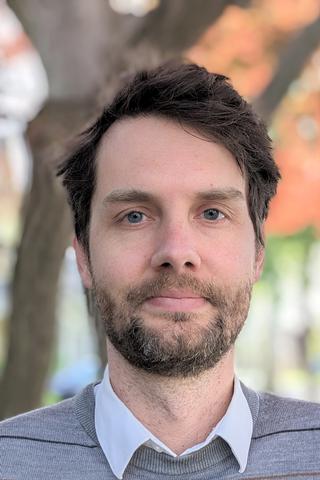 Jonathan Herington, PhD, is an Assistant Professor of Health Humanities & Bioethics at the University of Rochester. His research focuses on the political philosophy of science, health, and technology, with particular emphasis on environmental health and artificial intelligence in healthcare. He uses the tools of political philosophy to examine the governance of health technologies, resource allocation during health emergencies, and secondary research ethics.
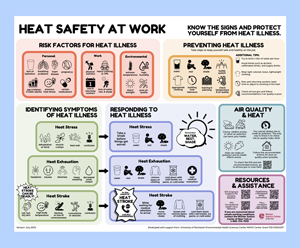 The 2025 project, awarded to the Worker Justice Center of New York (WJCNY), focused on developing capacity to help farmworkers prevent negative health effects from air pollution and extreme temperatures. Farmworkers are particularly vulnerable to extreme temperatures and poor air quality, and outdoor air pollution and occupational health of farmworkers have been identified as key community environmental health priorities for the Finger Lakes region.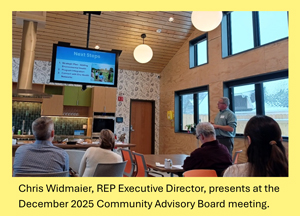
 This year, they will embark on a program building on recent updates to the City of Rochester’s Urban Forestry Master Plan with continued community engagement on the health benefits of urban tree cover, funded by the URochester IHHE. Center member Elaine Hill, PhD, serves on the advisory council, focusing on developing sustainable community-research partnerships. The 2022 Capacity Building Project awardee, Cornell Cooperative Extension of Monroe County, served on the advisory committee for the Urban Forestry Plan and will advise this effort as well.
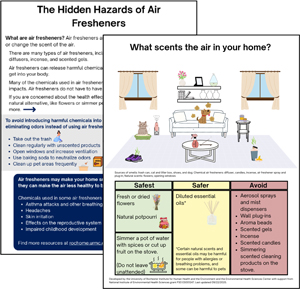 Many people use air fresheners, either to mask odors or because they like the smell. Most air fresheners and other scented products use chemicals to create artificial scents. Many of these chemicals have not been thoroughly tested for health impacts, and some have been linked to health concerns like asthma, hormone disruption, and impacts on development and fertility. Air freshener manufacturers are not required to list their ingredients on the package, making it difficult for consumers to know if there are harmful ingredients. The CEC created the “Hidden Hazards of Air Fresheners,” an infographic and 2-page fact sheet designed to help people understand the health impacts of air fresheners and ways to keep homes smelling fresh without harmful chemicals.
 The CEC worked with the URMC-based Finger Lakes Children's Environmental Health Center, the Coalition to Prevent Lead Poisoning, and Causewave Community Partners to produce an updated edition of the “Healthy Homes, Healthy Families” resource guide. First published in 2010, the guide shares basic information and resources to help families reduce hazards in their homes. The guide has been widely distributed in Monroe County and across New York state by community agencies, medical offices, local health departments, and others.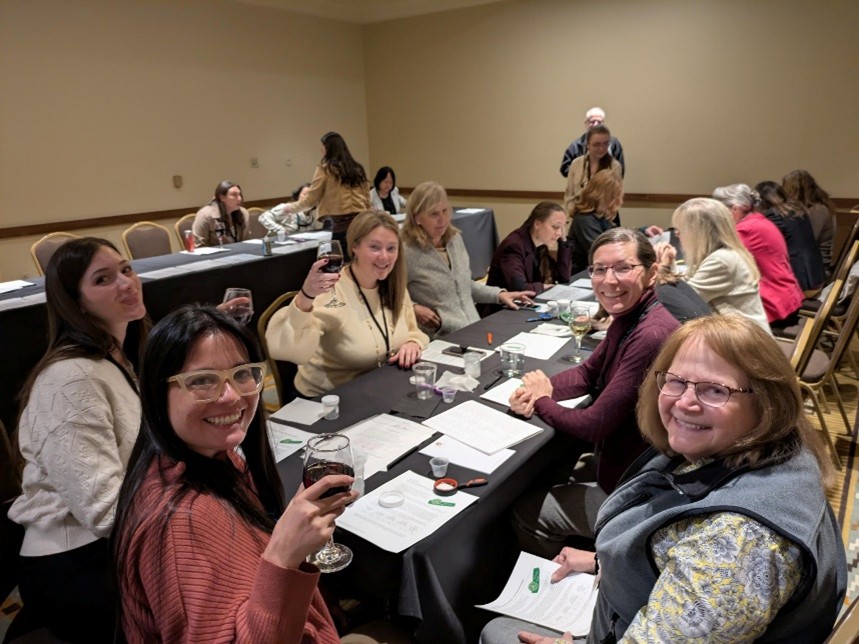
 The
The 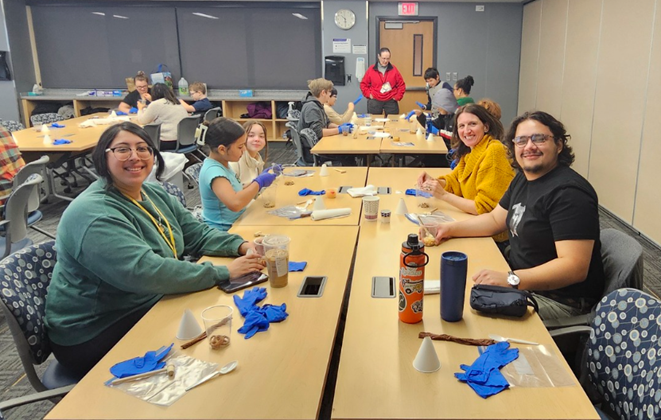
 After decades of being called Polycystic Ovary Syndrome (PCOS), one of the most common hormonal disorders affecting women is getting a new name: Polyendocrine Metabolic Ovarian Syndrome (PMOS). Olga Astapova, MD, PhD,
  Hitesh Deshmukh, MD, PhD, chief of the Division of Neonatology in the Department of Pediatrics has been jointly appointed as
  Elaine Hill, PhD, professor of Environmental Medicine & Public Health Sciences, was selected for the Executive Leadership in Academic Medicine fellowship. The program prepares women for senior leadership roles.
  Ehsan Hoque, PhD, professor of computer science, was inducted into the American Institute for Medical and Biological Engineering College of Fellows. Election to the AIMBE College of Fellows is among the highest professional distinctions accorded to medical and biological engineers, comprised of the top two percent of engineers in these fields. College membership honors those who have made outstanding contributions to “engineering and medicine research, practice, or education” and to “the pioneering of new and developing fields of technology, making major advancements in traditional fields of medical and biological engineering or developing/implementing innovative approaches to bioengineering education.” Hoque was nominated, reviewed, and elected by peers and members of the College of Fellows “for pioneering scalable, ethical AI technologies that improve neurological care, social communication, and health equity across clinical and global contexts.”
 Kirsi Järvinen-Seppo, MD, PhD, was
  The Translational Center for Barrier Microphysiological Systems (TraCe-bMPS) team, led by Jim McGrath, PhD, William R. Kenan Jr. Professor of Biomedical Engineering, develops and uses tissue chips to study diseases where two types of tissue meet. Recent research used the chips to identify how threats can break down the blood-brain barrier and could lead to new treatments to keep brains healthy. Read more about the research from
  New research from M. Kerry O’Banion, MD, PhD, suggests that brain immune cells may drive more damage in females than males with Alzheimer’s. Read more about the research in
  During his more than four decades in Rochester, Jeff Wyatt, DVM, MPH has advanced biomedical research, environmental restoration, and global conservation—always guided by his belief that human, animal, and ecosystem health are deeply interconnected. Read more about his career from the
 Augusto Litonjua, MD, MPH, professor of Pulmonary Diseases & Critical Care and Pediatric Pulmonology; and Gloria Pryhuber, MD, professor of Neonatology, were recognized for their outstanding contributions to pulmonary medicine and respiratory science at the American Thoracic Society (ATS) International Conference in May. The honors highlighted transformative work in thoracic oncology, foundational research of asthma and lung disease, and contributions to building a molecular map of the human lung. Litonjua received the John M. Peters Award and Pryhuber received a Recognition Award for Scientific Accomplishment.
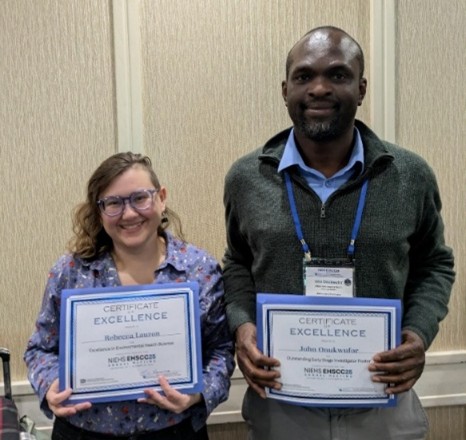 Two EHSC members won poster awards at the 2025 annual NIEHS Environmental Health Sciences Core Centers meeting in Lexington, KY. Becca Lauzon, PhD, (left) received an award for Excellence in Environmental Health Sciences. John Onukwufor, PhD, (right) received an Outstanding Early Stage Investigator award.
 EHSC Director, B. Paige Lawrence, PhD, and Center member Alison Elder, PhD, are among the 2026 Society of Toxicology award recipients. Dr. Lawrence received the SOT Education Award, which recognizes an individual who is distinguished by the teaching and training of toxicologists and who has made significant contributions to education in the broad field of toxicology. Dr. Elder received the SOT Translational Impact Award, which recognizes a scientist whose outstanding clinical, environmental health, or translational research has improved human and/or public health in an area of toxicological concern.