

Research Team
Research Team
The SHELTER Research Team includes co-PIs at the University of Rochester (Katrina Korfmacher and Jon Herington); co-investigators Gary Adamkiewicz (Harvard University), Robin Dodson (Silent Spring Institute), and Dave Jacobs (National Center for Healthy Housing); and study coordinator (Jennifer Becker).
Principle Investigators
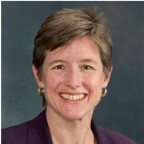
Katrina Smith Korfmacher, PhD is Professor of Environmental Medicine and Director of Community Engagement for the Environmental Health Sciences Center (EHSC) and the Institute for Human Health and the Environment at the University of Rochester. She co-directs the Lake Ontario Center for Microplastics and Human Health in a Changing Environment, which is supported by the NIH/NSF Centers for Oceans and Human Health program. Dr. Korfmacher holds an MS in Water Quality Management and PhD in Environmental Studies from Duke University’s Nicholas School of the Environment. As a policy scientist, her research focuses on the roles of science and communities in decision-making. Dr. Korfmacher has worked with community partnerships and national groups related to childhood lead poisoning prevention, healthy homes, air quality, built environment, fracking, water pollution, and other environmental justice issues for over twenty years. She has served on numerous local and state advisory boards, including the National Advisory Environmental Health Sciences Council. She is author of Bridging Silos: Collaborating for Environmental Health and Justice in Urban Communities (MIT Press 2019).
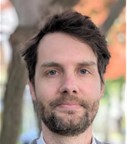
Jon Herington, PhD is an Assistant Professor of Health Humanities & Bioethics at the University of Rochester. His research focuses on the political philosophy of science, health and technology. More specifically, he uses the tools of political philosophy to interrogate the governance of health technologies, dual-use research, fairness in machine-learning algorithms, resource allocation during health emergencies, and secondary research ethics. Between 2014 and 2019 he was an Assistant Professor in the Department of Philosophy at Kansas State University. Prior to that he was a Research Fellow in the Medicine, Ethics, Society and History unit of the University of Birmingham. He completed his PhD in the School of Philosophy, at the Australian National University.
Co-Investigators
 Gary Adamkiewicz, PhD, MPH is an Associate Professor of Environmental Health and Exposure Disparities at the Harvard T.H. Chan School of Public Health. He oversees several research initiatives and projects committed to providing new insights into the real-world mechanisms that shape environmental health disparities and provide new pathways to alleviate these disparities. Gary brings more than 30 years of experience in environmental health to this mission. He has served on EPA’s Environmental Justice Technical Guidance Review Panel, under the auspices of the agency’s Science Advisory Board. He has also served as an advisor to the World Health Organization’s effort to establish indoor air quality guidelines. Dr. Adamkiewicz holds a Ph.D. in chemical engineering from the Massachusetts Institute of Technology and a Master of Public Health from the Harvard T.H. Chan School of Public Health.
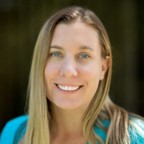
Robin Dodson, PhD is Associate Director of Research Operations at Silent Spring Institute and a Research Scientist with expertise in exposure assessment, particularly in the indoor environment. Her research focuses on three main areas: development of novel exposure measurements for epidemiological and community-based studies, analysis of environmental exposure data with a particular emphasis on semi-volatile organic compounds such as phthalates and flame retardant chemicals, and intervention studies aimed at reducing chemical exposures. Dr. Dodson oversees the Institute’s consumer product exposure research. She was the lead author on a landmark peer-reviewed study on endocrine disrupting and asthma-associated chemicals in more than 200 consumer products. As part of the Centers for Disease Control’s Green Housing study, she is currently investigating exposure in children with asthma to chemicals in consumer products and building materials. She leads Silent Spring’s Healthy Green Campus project, a research effort aimed at making health an integral part of sustainability practices on college campuses.
Dr. Dodson is an adjunct assistant professor of environmental health at Boston University School of Public Health and holds an appointment as a visiting scientist at Harvard T.H. Chan School of Public Health. She previously taught biostatistics at Brandeis University for eight years. Prior to her graduate work, Dr. Dodson worked at Menzie-Cura and Associates, where she contributed to both human and ecological risk assessments. In addition to her doctorate, Dr. Dodson holds a bachelor’s in environmental studies from Bates College, where she was inducted into the Phi Beta Kappa Academic Honor Society, and a master’s in environmental science and risk management from the Harvard T.H. Chan School of Public Health.
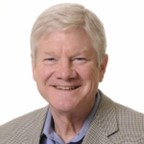
David E. Jacobs, PhD, CIH is currently adjunct associate professor at the University of Illinois Chicago School of Public Health. With over 120 peer-reviewed papers and more than twenty book chapters, he has conducted studies on health and other effects of green healthy housing, ventilation, asthma, indoor environmental quality, lead poisoning prevention and relationships between science and policy. He is a certified industrial hygienist and a licensed lead risk assessor in Illinois. He is the Chief Scientist at the National Center for Healthy Housing, previous director of the US Collaborating Center on healthy housing for WHO and a faculty associate at Johns Hopkins University. He was previously appointed Director of the Office of Lead Hazard Control and Healthy Housing at the US Department of Housing and Urban Development. For more than a decade, he has served as board president of Lincoln-Westmoreland Housing, a non-profit housing provider for more than a hundred low-income families in Washington DC. He is principal author of the 1999 Report to Congress that launched the nation’s Healthy Homes Initiative. He was a contributing author to the international WHO housing and health guidelines in 2018. His first book, "Fifty Years of Peeling Away the Lead Paint Problem: Protecting Our Children's Future with Healthy Housing," was published by Academic Press/Elsevier in 2022. He holds degrees in Environmental Engineering, Technology and Science Policy, Environmental Health, and Political Science.
Study Coordinator
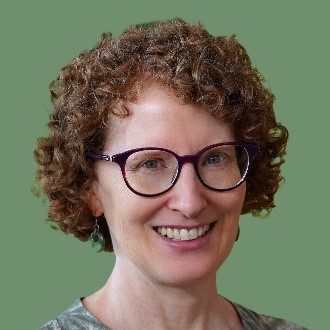
Jennifer D. Becker, MPH, CPH joined the University of Rochester Environmental Health Sciences Center in January 2025 as Community Environmental Health Research Associate and SHELTER Coordinator. Previously she worked in children’s environmental health for over a decade, coordinating two NYS Department of Health programs in the Rochester region: the Western NY Lead Poisoning Resource Center's Rochester Office and the Finger Lakes Children's Environmental Health Center, which is part of the NYS Children’s Environmental Health Center network. She has a master’s in public health from the University of Rochester and recently earned the Certified in Public Health credential.
Graduate Research Assistant
Adam DeDobbelaere was born in Chicago, Illinois and raised in the suburbs. He did his undergraduate degree at the University of Wisconsin-Madison, where he majored in philosophy and graduated with Comprehensive Honors (both Honors in the Major and Honors in the Liberal Arts). He wrote his undergraduate thesis on Spinoza’s modal metaphysics in the Ethics under the supervision of James Messina. After undergrad Adam worked at Epic Systems in Verona, Wisconsin for two years. He was a project manager on the population health team, where most of his projects were related to value-based care programs and Medicare Advantage contracts. During this time he also served as an ethics consultant for the artificial intelligence and machine learning team. Working as an ethics consultant reminded him how much he missed philosophy, so he left Epic and applied to graduate school. He was lucky to be accepted to the University of Rochester, where he is now a student. His advisor is Paul Audi, and he also works with Jonathan Herington on bioethics.