
Physician News
New Load Balancing Programs Helping Address Overcrowding
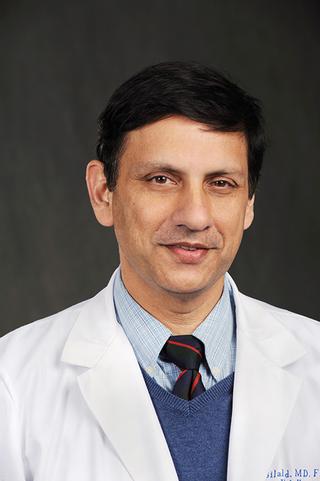 Bilal Ahmed, M.D.
Multiple new programs are achieving success in freeing up hospital capacity at Highland and Strong and providing care for patients closer to where they live. The Take Back Initiative, Southern Region Interregional Transfers, and ED Transfer Coordinator (ED TACO) Program are part of UR Medicine’s overall Inter-Facility Transfers and Load Balancing efforts.
The Take Back Initiative is designed to transition patients back to communities from which they were originally referred from, once they have completed their necessary care at Strong Memorial and Highland Hospital.
Since the program began in June 2024, more than 350 patients have been transitioned from Strong and Highland back to their referring sites, opening bed capacity at the two hospitals. Most of these patients complete their care at the affiliate hospitals and are discharged to their home or care facilities near their homes. Some have been accepted by facilities as far away as Albany and Pennsylvania.
“The key goals are to relocate patients closer to their homes and loved ones, improve emotional well-being and community integration, and free up beds at Strong and Highland for more acute needs,” said Bilal Ahmed, M.D., Associate Medical Director at Highland Hospital and Chief Medical Officer at Noyes Memorial and St. James Hospitals. “This has a significant, positive effect on system efficiencies.”
“Patients and families are extremely appreciative of the Take Back program,” said Keely Dwyer-Matzky, M.D., MSBA, Associate Chief Medical Officer, Patient Flow and Capacity Management, URMC. “Patients want to be near their home to finish recovery or rehabilitation. This program allows them to do that and to be closer to their families, which is especially important for a patient with an older spouse or family member who wants to visit them.”
The Southern Region Interregional Transfer program was started by Bilal Ahmed, M.D.. The work maximizes affiliate hospital utilization and ensures each of the URMC affiliate hospitals operates at full capacity and within its specialist capabilities. This prioritizes higher acuity care at regional centers and allows Strong Memorial and Highland Hospital to focus on resources for patients with higher acuity and complex medical needs.
The intra-affiliate transfer system also ensures sufficient resource application and balances patient loads across the hospital network. This innovative solution leverages the EPIC integrated, secure chat feature for communication and utilizes the nursing supervisors on call for the affiliate hospitals to find an open bed and service for the patient and their needs. Since its inception, the intra affiliate transfer system has transferred approximately 400 patients amongst the affiliate hospitals, thus reducing the workload for the central transfer center as well as creating bed capacity at our quaternary care hospitals.
The interactivity-to-transfer process has strengthened the relationship between affiliate hospitals and has optimized bed availability across the system. A significant benefit to the patients is that they receive care at the most suitable facility nearest to their home.
The ED TACO Program is also facilitating load balancing and addressing overcrowding. In November 2024, two ED Transfer Coordinators were hired — one at Strong and one at URMC Strong West — to help with transfers to affiliate hospitals for patients who do not require care at Strong or Highland. This program enables patients to get a bed at Noyes Memorial, Geneva, Thompson Health, or another affiliate hospital, while saving a bed at Strong or Highland.
Transfer Coordinators act as conduits to identify the capacity at affiliate hospitals to help alleviate overutilization of services at Strong or Highland, and they support physicians and nurses in communicating with patients. So far, 52 patients have transferred out of Strong’s ED, and 36 have transferred out of Strong West.
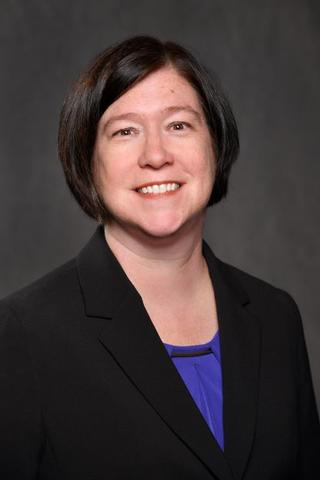 Keely E. Dwyer-Matzky, M.D
“All of these programs are helping us achieve our overarching goal of providing healthcare access to patients with the right care at the right place at the right time,” Keely Dwyer-Matzky said. “They are also strengthening our team relationships across the whole enterprise and sharpening our focus on collaborating to put patients and families first.”
Dwyer-Matzky noted that these latest programs are rooted in the Up and Back Program. Developed over the last decade, Up and Back allows patients requiring a hospital stay after an advanced procedure, such as a pacemaker implant, advanced GI and advanced pulmonary treatment, to return to their home institution for recovery or rehabilitation.
“Through our participation in national organizations, we are seeing how other institutions are dealing with similar issues and are implementing load-balancing programs that are the gold standard,” Dwyer-Matzky added. “With current capacity constraints at both Highland and Strong, load balancing efforts are necessary and will continue to develop.”
9/15/2025
You may also like
No related posts found.