menu

Dr. Lincoln Named NYS Emergency Medicine Unsung Hero

Lisa Lincoln, M.D., Attending Physician in the Department of Emergency Medicine at Highland Hospital and Associate Professor, Department of Clinical Emergency Medicine, University of Rochester School of Medicine & Dentistry has been named a New York State Emergency Medicine Unsung Hero. This designation is awarded to physicians for their work ethic, compassion, and collegiality.

Highland Introduces APP Career Ladder

Highland is introducing a Career Ladder for Advanced Practice Providers to recognize their skills, dedication, and compassion in caring for our patients at Highland every day. “This program is a real win for APPs and a testament to Highland’s commitment to our team,” said Arthur Arieno, PA-C MPAS, Director of APPs at Highland.

Kudos

Here are some physician KUDOS that were taken from Hot Comments during the past several months.
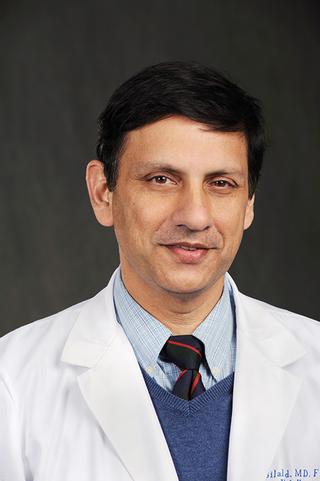
Finding HH's Flow: NTOCH Aims to Improve Patient Movement, Build Transparency

Nurse Transition of Care Handoff (NTOCH) is the next Better Flow communications processes initiative that aims to optimize the time it takes to transition a patient from the ED to a unit through instantaneous visuals to indicate when and where a patient is ready to move to the next phase of care.

The NTOCH tool helps nurses initiate a handoff in eRecord, optimizing efficiency through technology. When updating patient information in eRecord, real-time notifications and icon changes are created, alerting staff when the patient is ready to transition to the next phase of care. This visibility is multi-disciplinary, allowing unit secretaries to assist with notifying staff of patient flow changes.

Spotlight on Highland’s New Palliative Care Unit

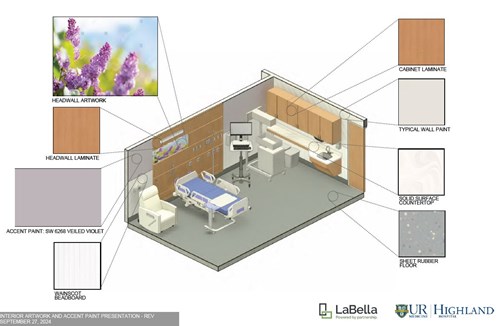
Highland’s new Palliative Care Unit received its first patients on October 10. Located on East 6, the eight-bed unit is led by Palliative Care Division Chief Chin-Lin Ching, M.D., East 6 Medical Director Brandon Wilcoxson, M.D., and East 6 Nurse Manager Kelsey Parnell, RN, BSN. The unit is primarily for patients with terminal illnesses, who are not receiving life-prolonging interventions and whose needs require hospitalization. The team gives patients comfort care and assists them with managing symptoms often experienced during end-of-life, such as pain, delirium, and agitation. An interdisciplinary team also provides emotional support to patients and their support persons. Patients who have a serious illness but are not at the last stages of their condition may also receive care in this unit.

1 2 3 4 5 6 7 8 9 10