


Welcome to the Ruffolo Lab
Mission
The Ruffolo Lab aims to improve outcomes for patients with hepatopancreatobiliary (HPB) cancers — cancers of the pancreas, bile ducts and liver. We study tissue from patients and from mouse models to find new therapeutic targets, then turn those findings into early-phase clinical trials at the Wilmot Cancer Institute. Our work spans human tissue analysis, mouse modeling, data science and clinical trial development.
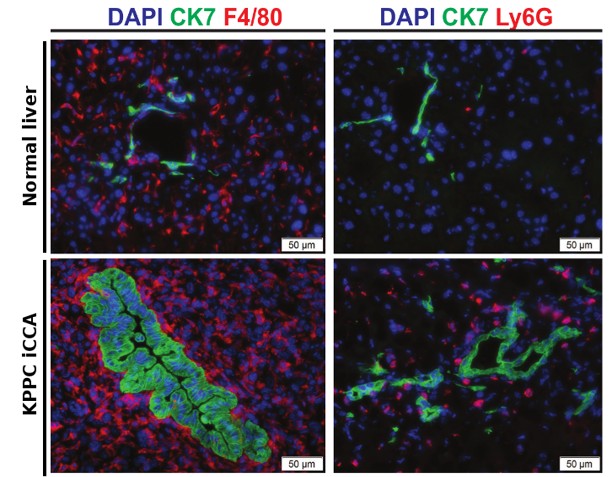 Pancreatic Cancer, Bile Duct Cancer, and Liver Metastases
Pancreatic and bile duct cancers are among the deadliest solid tumors, and the liver is one of the most common places that cancers spread. Immunotherapy has transformed care for some cancers, but most patients with HPB cancers do not benefit. One reason is the tumor microenvironment: dense scar-like tissue (stroma) and suppressive immune cells, such as macrophages, that switch off the T cells meant to attack the cancer. Liver metastases add a further barrier, because the liver itself tends to dampen immune responses. Our lab asks how these cells work together to block anti-tumor immunity, and how to break that circuit.
From the Operating Room to the Lab and Back
As a surgical oncology lab, we start with patients. Tumor specimens removed during surgery, and paired biopsies collected before and during treatment on clinical trials, let us study the human disease directly with spatial transcriptomics and proteomics, RNA sequencing and single-cell assays. We test the most promising targets in genetically engineered mouse models of pancreatic cancer, combining immune-targeted drugs with standard chemotherapy. We also analyze large national and institutional clinical-genomic datasets to learn which patients respond to immunotherapy and why. Findings that hold up across these approaches become the basis for mechanism-driven clinical trials.
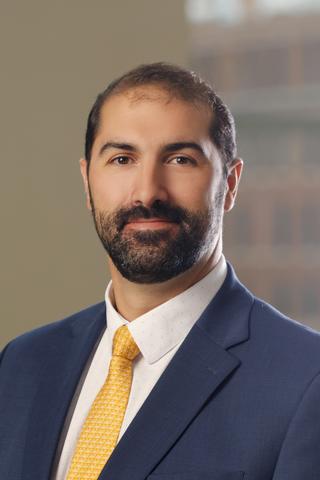
Luis I. Ruffolo, M.D.
Principal Investigator
Publications
View All Publications- Optimizing liver transplant outcomes for colorectal liver metastases in the United States.; Liver transplantation : official publication of the American Association for the Study of Liver Diseases and the International Liver Transplantation Society; Vol 32(4), pp. 508-517. 2025 Oct 14.
- Liver Transplant for Upfront Unresectable Colorectal Metastases.; JAMA surgery; Vol 160(10), pp. 1159-1162. 2025 Oct 01.
- Neighborhood Factors: A Multivariate Analysis on the Social Determinants in Simple Appendicitis.; Journal of racial and ethnic health disparities. 2025 Sep 02.
- Rethinking surrogate endpoints in metastatic colorectal cancer: counting chickens only when they hatch.; Journal of gastrointestinal oncology; Vol 16(4), pp. 1763-1767. 2025 Aug 25.
- Corrigendum to 'The Rochester Protocol for living donor liver transplantation of unresectable colorectal liver metastasis: A 5-year report on selection, approval, and outcomes' [American Journal of Transplantation 25 (2025) 780-792].; American journal of transplantation : official journal of the American Society of Transplantation and the American Society of Transplant Surgeons; Vol 25(10), pp. 2262. 2025 Jul 09.
- Increased Hospital System Utilization After Gastrostomy in Children is Related to Neighborhood.; The Journal of surgical research; Vol 312, pp. 68-74. 2025 Jun 14.
- Live Donor Liver Transplantation for Oncologic Indications.; Transplantation; Vol 109(10), pp. 1591-1600. 2025 Jun 11.
Affiliations
- Department of Surgery, Division of Surgical Oncology
- Wilmot Cancer Institute
Contact Us
Ruffolo Lab
Medical Research Building Extension (MRBX)
Rooms 2-11001 and 2-11301
University of Rochester Medical Center
601 Elmwood Ave., Box Surgery
Rochester, NY 14642