


Noise Induced Hearing Loss
Our goals are two-fold: to better understand the genetics of noise induced hearing loss and to build a biological therapy to restore sensorineural hearing loss.
Most of us have older family members who turn up the volume on the television every night. A lifetime of hunting or working with loud machinery can lead to noise induced hearing loss. This disability affects millions of people worldwide. In the United States, around one third of military veterans receive compensation specifically for hearing loss. The only available treatments are prosthetics, such as hearing aids and cochlear implants. Even with treatment, adult-onset hearing loss impacts education, quality of life, earning potential, medical outcomes, and dementia risk.
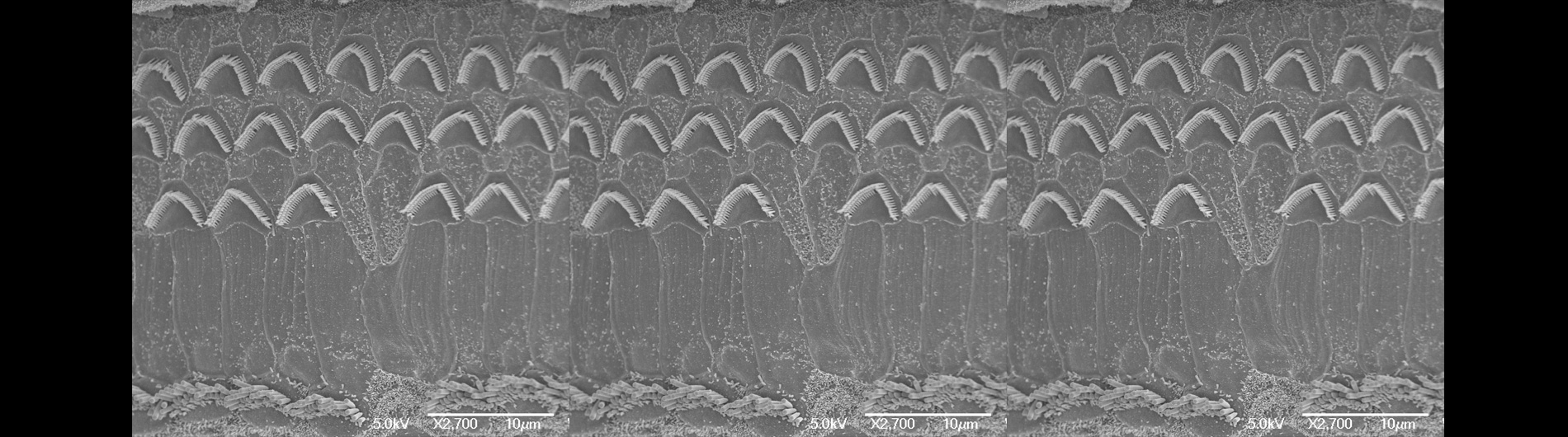
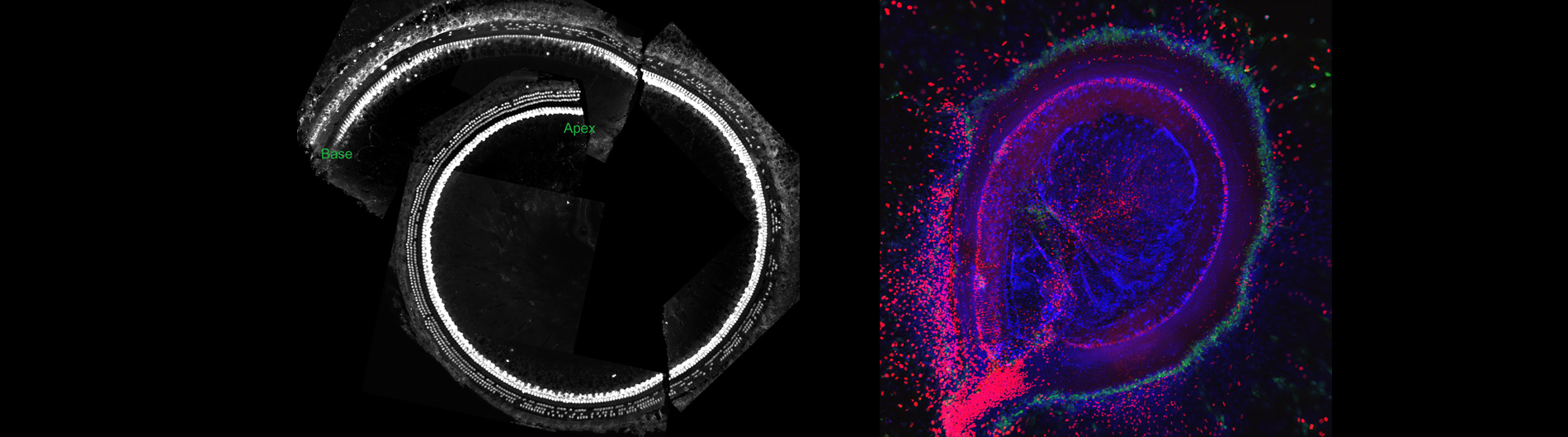
When one hears a sound, it is because acoustic energy was detected by the mechanosensory hair cells situated in their organ of Corti. Most people are born with ~15,000 hair cells in each cochlea. If hair cells die from ototoxins or noise damage, they are not replaced, leaving an unresponsive scar. As people age, this accumulated damage drives progressive and incurable hearing loss.
Not everyone has the same susceptibility to hearing loss from noise. Lifestyle factors like tobacco use and conditions like diabetes strongly correlate with worse hearing outcomes. Genetic variation also plays a role. We have found that a gene named Foxo3 plays a crucial role in resilience from noise damage in mice. Foxo3 mutants incur severe disability from noise levels that do not harm their littermates. In humans, certain FOXO3 variants strongly correlate with both longevity and susceptibility to noise induced hearing loss. Understanding the mechanism by which FOXO3 protects hearing from damage could lead to therapeutics to prevent noise induced hearing loss.
What about people who have already lost their hearing? A biological therapy for hearing restoration after noise damage may seem impossible, but we think it is feasible. Nearly forty years ago, researchers discovered that birds do not suffer the same fate. Like humans and mice, birds can be deafened by noise or ototoxic drugs. Unlike mammals, the avian auditory organ spontaneously regenerates lost hair cells and regains full function over several weeks. We hypothesize that one of the signals initiating regeneration in birds is absent in mammals, and that by restoring this signal, we can induce hearing restoration. With support from the Congressionally Directed Medical Research Programs managed by the U.S. Army, we have developed and are testing a prototype gene therapy for cochlear regeneration in mice. This work follows pioneering achievements in gene therapy for deaf infants. If successful, our work may impact the treatment of noise induced hearing loss world-wide.

Patricia M. White, Ph.D.
Principal Investigator


- Age-related hearing loss persisted in mice that had demonstrated improved healthspan, reduced inflammaging and extended lifespan following expression of the naked mole-rat transgene for hyaluronan synthase 2.; Frontiers in aging; Vol 7, pp. 1936677. 2026 Aug 27.
- Genotype-Phenotype Relationships in Azole-Resistant Aspergillus: Two Sides of the Same Coin.; Journal of fungi (Basel, Switzerland); Vol 12(4). 2026 Apr 18.
- A new generation of assays to overcome current limitations of detection of azole resistance in Aspergillus fumigatus.; Future microbiology. 2026 Apr 11.
- SEZ6L2 Loss Disrupts Motor Coordination, Cognitive Function, and Synaptic Connectivity.; bioRxiv : the preprint server for biology. 2026 Jan 01.
Contact Us
Patricia White Lab
MC 6-8529
601 Elmwood Ave,
Rochester, NY 14642