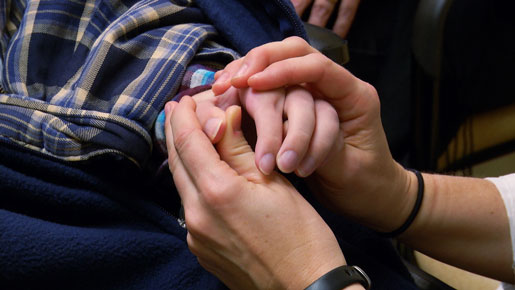
Myotonic Dystrophy
Make Appointments & Get Care
What is Myotonic Dystrophy?
Myotonic Dystrophy (MD) is a rare genetic condition affecting muscles and other body parts, such as the heart, eyes, and gastrointestinal system. There are two types of the disease: myotonic dystrophy type 1 (DM1) and type 2 (DM2).
What Causes Myotonic Dystrophy?
Type 1 DM (DM1) is caused by a change in the DMPK gene. In the past, it was sometimes called Steinert disease.
Type 2 DM (DM2) is caused by a change in the CNBP gene.
A blood or saliva (genetic) test can assess whether a person carries the abnormal copy of the gene. In both types of Myotonic Dystrophy, the abnormal gene causes abnormal RNA, which disrupts cell function.
If one parent has DM1 or DM2, there's a 50% chance of passing it to their child.
What Are the Symptoms of Myotonic Dystrophy Type 1?
The first symptoms of DM1 can appear at any age — from birth to later in life. While most people with DM1 develop muscle weakness, symptoms affecting other body parts can vary widely from person to person.
Additional symptoms may include:
- Muscle weakness of hands, ankles, neck and face
- Trouble relaxing muscles after, for example, making a tight fist (grip myotonia) or when starting to talk (tongue myotonia)
- Trouble with the gastrointestinal system, which can include trouble swallowing, acid reflux (heartburn), abdominal pain, constipation, diarrhea, bowel urgency
- Excessive daytime sleepiness, sleep circadian rhythm disorder, sleep apnea
- Abnormal heart rhythm
- Cataracts
- Trouble with thinking, memory, or making decisions
- Trouble with motivation (apathy)
- Learning difficulties or developmental delays (particularly when the first symptom occurred at birth or during childhood)
What Are the Symptoms of Myotonic Dystrophy Type 2?
The first symptoms of DM2 most commonly occur in adulthood. While most people with DM2 develop muscle weakness, symptoms affecting other body parts can vary widely from person to person.
Additional symptoms may include:
- Muscle weakness of hips, shoulder, and neck
- Muscle stiffness (e.g. getting up after sitting for a longer time)
- Muscle pain
- Trouble relaxing muscles after, for example, making a tight fist (grip myotonia)
- Abnormal heart rhythm
- Cataracts
- Trouble with the gastrointestinal system, which can include trouble swallowing, acid reflux (heartburn), abdominal pain, constipation, diarrhea, bowel urgency
- Excessive daytime sleepiness, increased sleep requirement and/or sleep apnea
- Trouble with thinking, memory, or making decisions
Treatments for Myotonic Dystrophy
Treatment for Myotonic Dystrophy will focus on managing symptoms. We work closely with other providers and specialists to develop an individualized treatment plan.
Depending on symptoms, treatment may include:
- Medications to alleviate symptoms
- Counseling on Exercise
- Physical and occupational therapy
- Swallowing and Speech therapy
- A device that helps breathe when sleeping (CPAP or BIPAP)
- Cataract surgery
There is no current treatment that slows down or halts the progression of DM1 or DM2. However, much progress has been made in research, including here at University of Rochester Medicine. Several clinical trials are underway testing drugs in myotonic dystrophy type 1.

Dialing Back Stiffness May Protect Muscles in Myotonic Dystrophy
New research suggests that muscle stiffness in myotonic dystrophy may be more than a symptom—it may also contribute to the muscle damage the disease causes.
What Sets Us Apart?
Our center has worked towards finding therapies for myotonic dystrophy type and type 2 for over 30 years. URochester Medicine researchers were the first to describe myotonic dystrophy type 2. Since then, significant scientific progress has been achieved in Rochester and beyond. These advancements have brought researchers closer than ever to developing treatments for myotonic dystrophy.
Several clinical trials testing new therapies for myotonic dystrophy are now underway. The myotonic dystrophy clinical research program includes trials, the National Registry, and clinical projects of the Wellstone Center.
URochester Medicine is home to one of six NIH-funded Wellstone Muscular Dystrophy Cooperative Research Centers, and our clinicians are active in research, advancing our knowledge in both types of myotonic dystrophy and serving as principal investigators for national and international multi-center trials.
In the clinic, we coordinate care tailored to the needs of patients and their families, in partnership with the Muscular Dystrophy Association.
Providers
- Jordan Bontrager, MS, CGC
Certified Genetics Counselor - Katy Eichinger, PhD, DPT
Physical Therapist and Clinical Evaluator for Clinical Trials - Nicole Koopman, PT
Physical Therapist - Joan Mountain, RN
Registered Nurse - Jennifer Sellars, RN
Registered Nurse
Locations
View All LocationsWe serve you in the Rochester metropolitan area and surrounding region. Locations are ordered by distance, with those closest to listed first.
4 locations


Patient Education & Support
Support the DM Clinic
Your donation, no matter the size, brings us closer to life-changing discoveries and treatments. For someone living with a neuromuscular disorder, your support means more than just hope – it means a chance at a fuller, more independent life.