

Built to Grow: Firearm Injury Prevention Program Begins New Chapter
Built to Grow: Firearm Injury Prevention Program Begins New Chapter
Reducing firearm injury and mortality requires a multi-disciplinary approach with healthcare and community collaboration – a framework that drives the University of Rochester Medicine Firearm Injury Prevention Program (FIPP).
Previously housed under the Department of Psychiatry, the FIPP will officially move under the Center for Community Health & Prevention (CCHP) starting July 1, 2026. The move is a natural fit, with gun violence prevention being one of the five pillars of the Office of Health Equity Research (OHER), part of the CCHP.
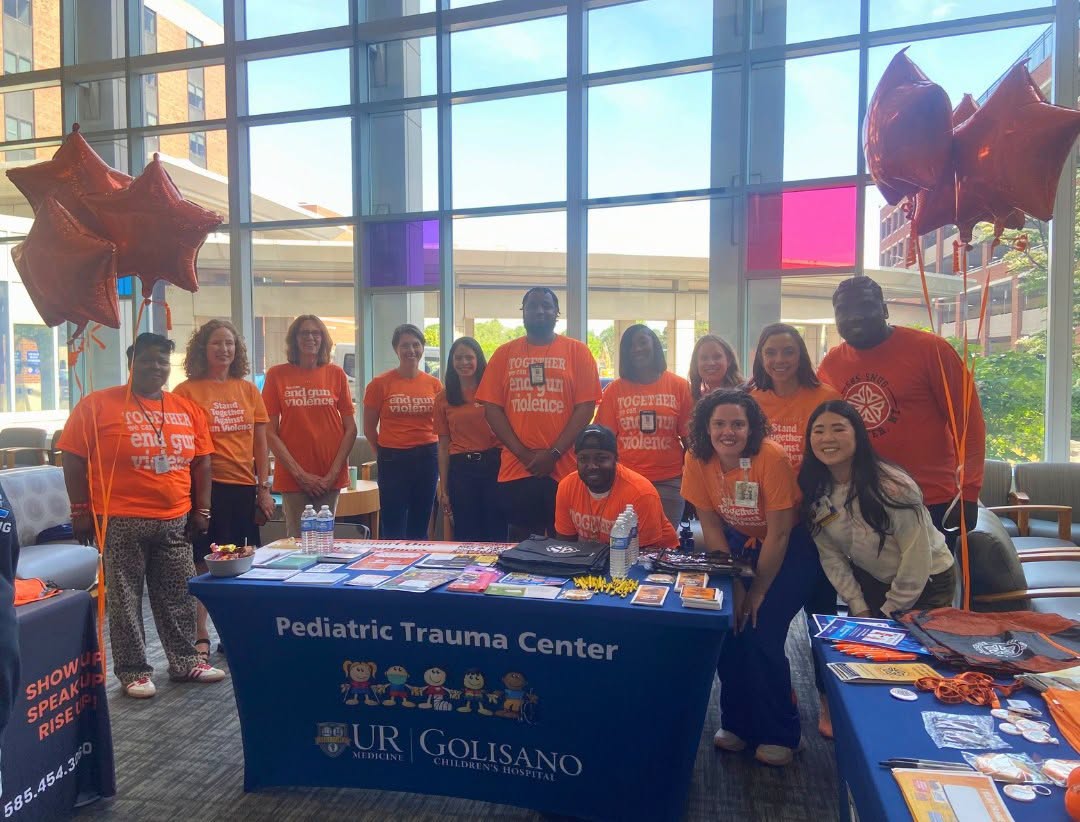 Launched in 2022, the FIPP collaborates with healthcare providers, community agencies, and community members in Rochester and the Finger Lakes region. Collectively they work to develop effective ways to reduce injuries and death from firearms—whether due to criminal activity, suicide, or unintentional causes—through prevention, intervention, education, research, and support for gun violence survivors.
“Firearm injuries are a significant public health issue that impact individuals, families, and communities,” shared Edith Williams, PhD, director of the CCHP and founder of OHER. “By promoting evidence-based prevention strategies, strengthening community partnerships, and advancing education and outreach, the program aligns with the Center's mission to ensure everyone can achieve their highest level of health.”
“The relationships that CCHP has built throughout the region, along with its commitment to community-based participatory research, are essential to advancing this work in meaningful and lasting ways,” shares Corey Nichols-Hadeed, JD, co-director of the FIPP and assistant professor of Psychiatry at School of Medicine & Dentistry.
Education at the Forefront
Education on prevention and intervention strategies is a core principle of the FIPP. Jennifer West, PhD, director of Health Service Psychology Training in the Department of Psychiatry and co-director of the FIPP, leads many of these efforts across the Finger Lakes region. A large focus of education is training healthcare providers and other credible messengers to have conversations about firearm injury risk and ways to mitigate it.
“This next chapter gives us the opportunity to deepen our impact—expanding resources while responding more directly to the needs of the communities we serve,” shares West.
Looking Ahead – Enhancing Prevention Efforts
ED Screening for Firearm Risk
FIPP and care teams in the Strong Memorial Hospital Emergency Department (ED) will test the feasibility of universal patient screening and interventions to address firearm injury risk, funded by a $250,000 grant from the New York State Division of Criminal Justice Services Office of Gun Violence Prevention
Scheduled to begin later this summer, the program takes a harm reduction approach, which includes providing gun locks and information about storage devices to interested individuals, and linking patients to resources that support people who are at risk of firearm injury and/or are survivors of gun violence. Williams and West are co-principal investigators.
Trauma Response Toolkit
URochester Medicine also announced a firearm injury trauma response toolkit to help people affected by gun violence navigate the immediate aftermath of the incident, access long-term recovery resources, and support community efforts to prevent violence. Community partners who collaborated to create the toolkit include the City of Rochester, Rochester Regional Health, Monroe County, Rise Up Rochester, and 585 Snug.
The free toolkit is available in Spanish and English to anyone interested in supporting victims of guns violence, including educators, worship leaders, youth workers, and family members. The concept was created by Shaun Nelms, EdD, MS, vice president of community partnerships at the University of Rochester and special advisor to the president.
“Although we are seeing progress from communitywide efforts to reduce gun violence, especially among young people, it remains an unfortunate reality and we need to support the victims and their families as a community,” Nelms said. “The University was pleased to connect with partners and compile a resource guide for people who have been physically or emotionally traumatized by a firearm incident.”
For more information about the FIPP, visit fipp.urmc.edu or email preventing_firearm_injury@urmc.rochester.edu.