

Pilot Awards Support Optimal Health for All
Pilot Awards Support Optimal Health for All
Pilot Awards from the Office of Health Equity Research (OHER), part of the Center for Community Health & Prevention (CCHP) at the University of Rochester Medical Center (URMC), are supporting three research projects focused on optimizing health outcomes for a variety of populations in need. The Awards fund research in five key community-identified priority areas.
Community-identified priority areas include safe and healthy housing, prevention of mental health and substance use disorders, prevention of gun violence, prevention of re-incarceration, and prevention and management of chronic diseases.
All investigators affiliated with OHER as a Health Equity Research Core Investigator are eligible to apply for and receive OHER pilot funding, regardless of race, color, religion, sex, national origin, age, and any other protected classes under current federal anti-discrimination policies. Research involving all populations is considered.
Community “Hub” to Serve as Connector for Training, Education, and Research
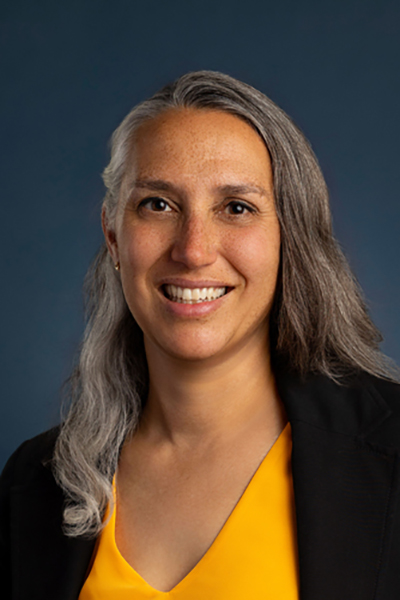 Laura Sugarwala, MBA, RDThrough community-driven collaborations and vision, Principal Investigators Laura Sugarwala, MBA, RD, director of Community Health Partnerships at the CCHP, and Charles White, community liaison at the CCHP, will use pilot funding to develop a central “hub” for research, education, resident feedback, and community capacity-building activities. Located in central Rochester, ThE ARCCC (Training, Education, and Research Center for Community Connections) will be guided and co-led by community members, including a 15-member Steering Committee that began meeting in Fall 2024. A project goal is to become a national model for community/academic collaborative programs and overall research engagement.
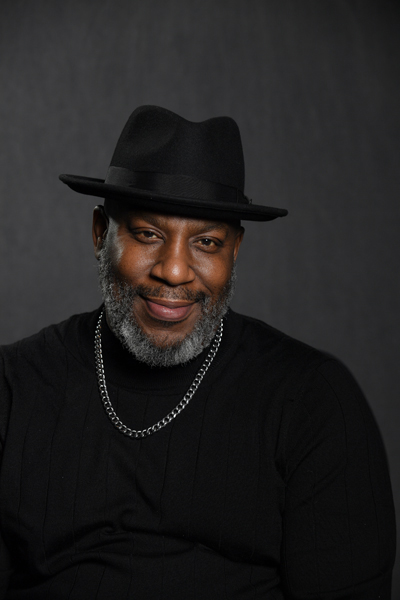 Charles WhiteThe Steering Committee will reconvene in Fall 2025 to provide leadership to ThE ARCCC and advise research outcomes.
Funding will support the design and implementation of community input sessions – with wide community representation and perspective, the expansion of a co-created workshop series, and the evaluation of curriculum co-created by the community.
“ThE ARCCC will be a bridge from the community to the University,” shares White. “Grounded in the principles of Community-Based Participatory Research and bi-directional learning between community members and healthcare providers, ThE ARCCC can spark neighborhood involvement and initiation of new projects that can facilitate long-term change in the city and region.”
One-Day Workshops: Expanding Indigenous Community Conversations
According to the Substance Abuse and Mental Health Services Administration’s 2021 National Survey on Drug Use and Health, American Indians and Alaska Natives have the highest rate of illicit drug use, the highest likelihood of having a substance use disorder, and the greatest need for chemical dependency treatment compared to other racial/ethnic groups. As a response, Seneca Scientific Solutions+ and the University of Rochester’s Recovery Center of Excellence partnered to develop and deliver “Indigenous Community Conversations.”
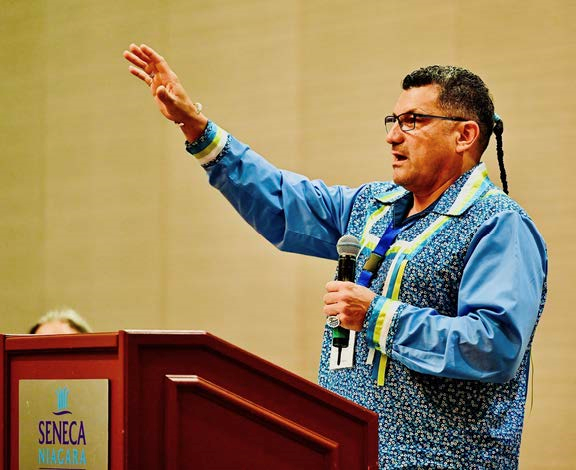 Dean S. SenecaIndigenous Community Conversations are trauma-informed, culturally relevant one-day workshops aimed at reducing stigma around substance use disorders, helping individuals feel more comfortable with seeking treatment. The impactful workshop brings people from the same community together to stop the cycle of addiction and substance use in Native populations.
“When people with substance use disorders come in contact with people in recovery who look like them and have similar lived experiences, the stigma surrounding seeking treatment and care reduces significantly,” shared Dean S. Seneca, CEO of Seneca Scientific Solutions+ and principal investigator for the project.
With support from the OHER pilot awards, the team on this project aims to expand the reach of the workshops to urban areas, where the need is most critical.
“Urban Indigenous Community Conversations will take the foundational elements of the original rural workshop and tailor it to urban communities where, despite popular belief, 70 to 80% of Indigenous peoples live in the U.S.,” shares Seneca. “This is a major step forward as we continue to develop and refine the best and most appropriate ways to lessen and prevent the substance use epidemic in communities where a majority of Indigenous peoples reside in this country."
To best meet the urban-specific needs of the Greater Rochester area, the team, in collaboration with local community partners, will administer a survey about the burden of substance use disorder/addiction in the Rochester Indigenous community. Long-term goals include obtaining funding from federal agencies to support an Urban Indian Community Conversations workshop as a national-scaled program.
Advancing Firearm Injury Prevention for Children and Adolescents
A recent study of employer-sponsored insurance found that child and adolescent survivors of gun violence experienced a 114% increase in substance use disorders, 1,713% increase in healthcare spending, and 1,449% increase in hospitalizations in the year following the injury.
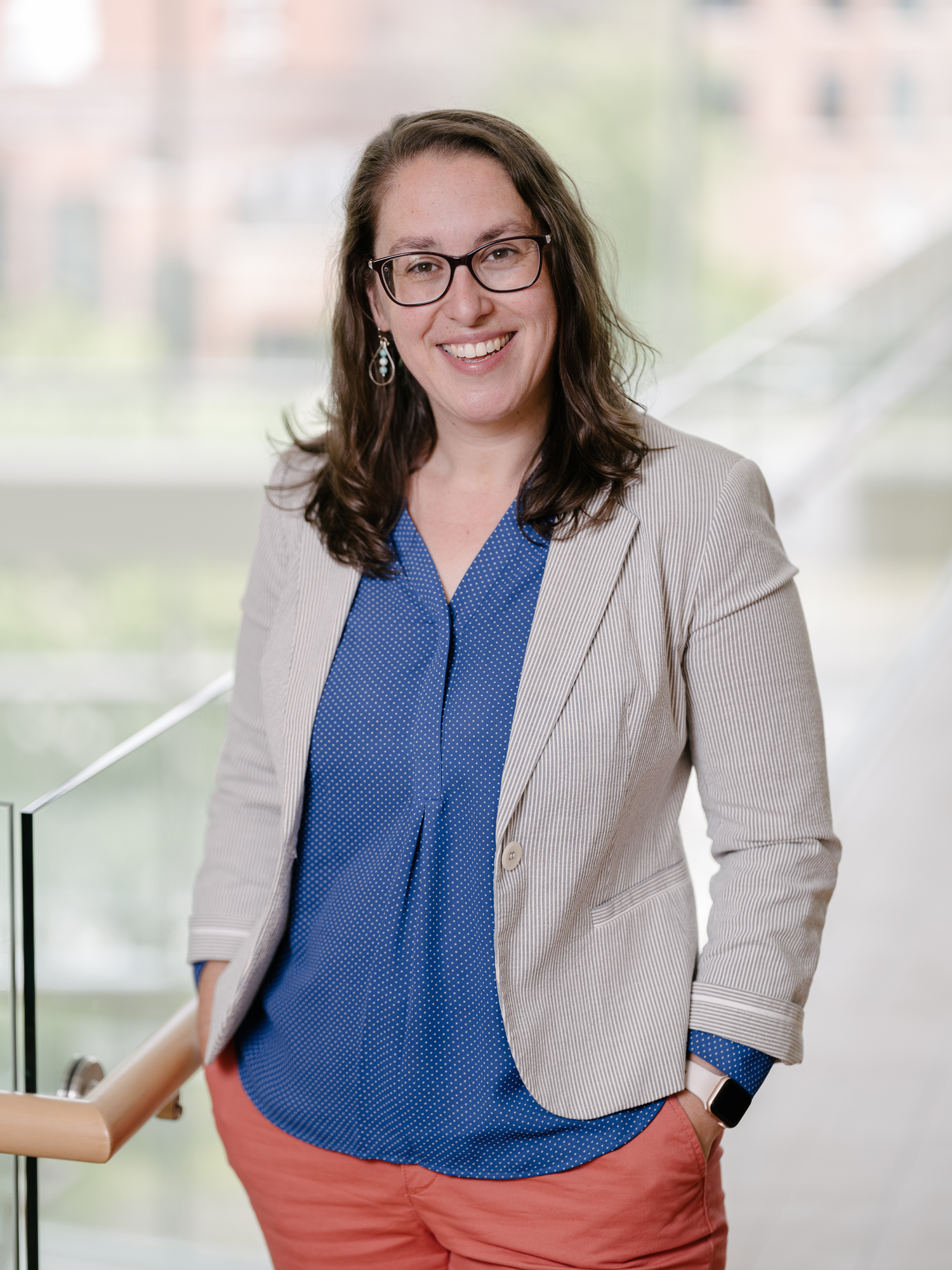 Elaine Hill, PhDThe pilot project “Advancing Firearm Injury Prevention for Children and Adolescents with Policy-Relevant Research in Rochester, NY and the U.S.: A Community-Engaged Study of Medicaid and Private Insurance Claims,” aims to evaluate state policies aimed at firearm prevention to enhance the effectiveness of policies across the U.S. and to study the long-term impact of firearm injury, quantifying the long-term costs to society.
Principal Investigator Elaine Hill, PhD, professor in the Department of Public Health Sciences at the University of Rochester School of Medicine & Dentistry and leader of the Health and Environmental Economics Lab at URMC, will work to create a Medicaid cohort of children and adolescents impacted by gun injury, compare prevalence over time and across communities, and quantify the incidence and costs for Rochester.
“Building this data-driven cohort and capacity for future research will allow our team to engage in evaluation of prevention programs, perform cost-benefit analysis, and implementation research that targets the devastating truth that firearms are now the leading cause of death among children and adolescents,” shares Hill. “The urgent need for transdisciplinary approaches for real-world solutions is what our team is aiming to address with this pilot funding.”
Investigators will ultimately pursue solution-focused research involving community-based organizations and policy makers, with the OHER pilot award serving as a catalyst for multiple external funding opportunities.
Health Equity Research Core Investigators, otherwise known as HERCI members, affiliated with OHER are eligible to apply for these pilot grants. The grant program is currently co-sponsored by OHER, the University of Rochester Aging Institute, and the Environmental Health Sciences Center/Institute of Human Health and Environment.
The Pilot Studies in Health Equity award will open for the fourth year in January 2026. OHER can fund up to five proposals depending on participating co-sponsors and the merit of applications received. Researchers interested in affiliating with OHER are encouraged to contact oher@urmc.rochester.edu.