

Meet Wiljar Schanck, M.Ed
Meet Wiljar Schanck, M.Ed
Mental health disorders among young people have reached alarming levels, particularly for students from racially and culturally diverse backgrounds. In a 2024 study by the National Alliance on Mental Illness (NAMI), 70% of college students reported struggling with their mental health, and less than half sought help for their symptoms. Research shows that BIPOC (Black, Indigenous, and People of Color) students are even less likely to seek treatment for anxiety, depression, and other mental health issues. Wiljar Schanck, a PhD student and researcher at the University of Rochester (URochester), is working to change that.
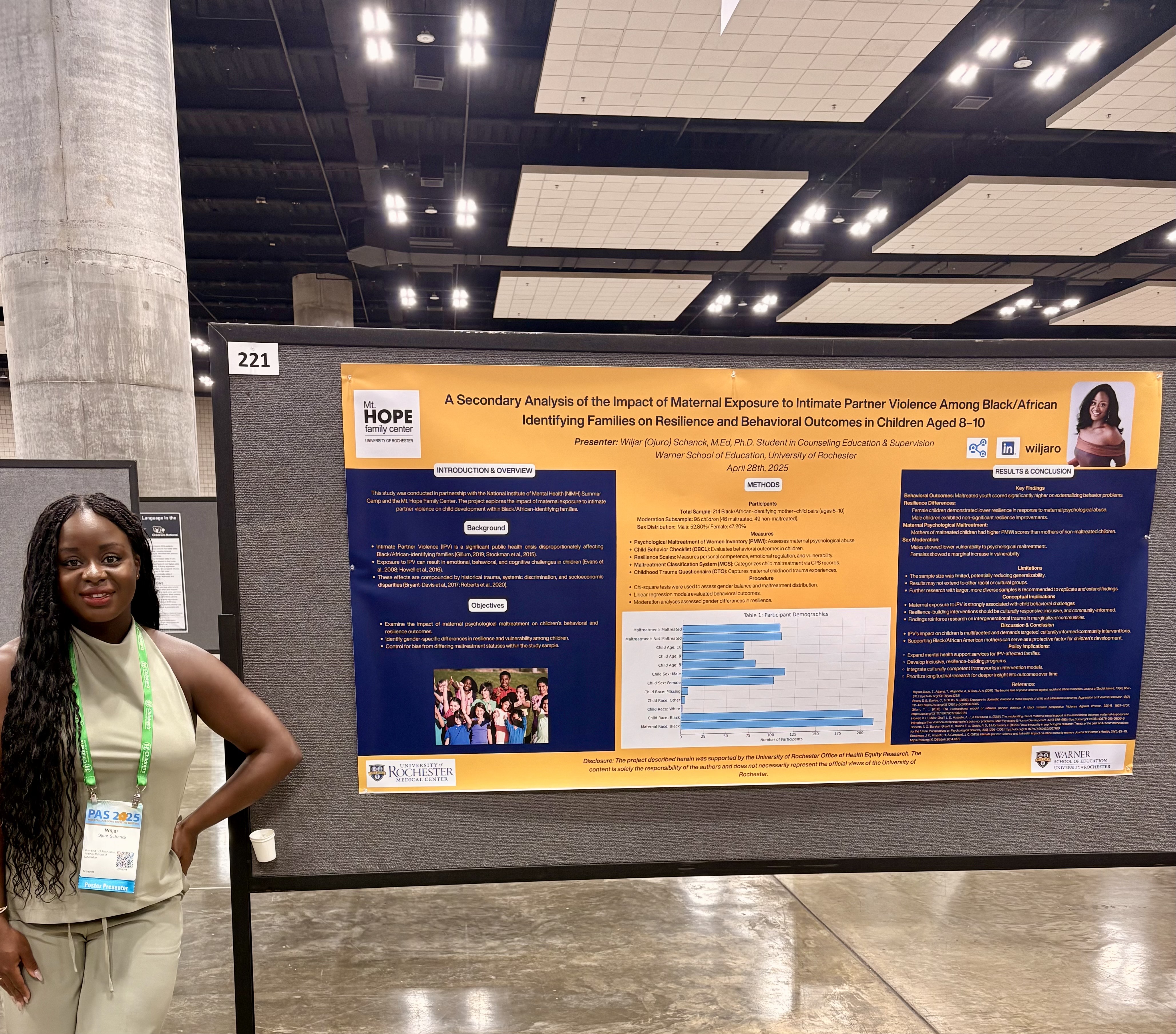 Schanck’s passion for health equity research comes from personal experience. Born and raised in upstate New York to parents from Haiti and Kenya, she moved around the U.S. and lived in Haiti for a few years before starting her doctoral program in 2022. Now back in New York, Schanck is pursuing a PhD in Counselor Education and Supervision, researching mental health issues among immigrant and first-generation students, and teaching psychology and counseling to graduate and undergraduate students at URochester.
“In my culture, seeking a mental health clinician is taboo,” said Schanck. That stigma, which is common in many immigrant communities, sparked Schanck’s interest in understanding the additional challenges for bicultural students. She explains that international and first-generation students often face immense pressure to succeed while dealing with financial, familial, and societal stressors. Language barriers and isolation contribute to mental health challenges.
Schanck works closely with the Center for Community Health & Prevention’s (CCHP) Office of Health Equity Research (OHER) focusing on community-based research and interventions. Schanck emphasizes the importance of understanding cultural and familial contexts in all mental health work. She participates in research with the Mt. Hope Family Center, where she investigates how family structures and gender expectations can influence youth outcomes. She then uses data to teach parents, communities, and institutions like Mt. Hope Family Center and URochester how to build relationships that alleviate mental health stressors.
A recurring theme in Schanck’s work is the need for cultural representation in research. There is often deep mistrust between communities and researchers because some community members feel exploited by the survey and data collection process. Schanck and other researchers at the University of Rochester aim to build trust and drive meaningful change based on their field research.
“Community members want researchers to authentically present themselves, and they want someone they can relate to,” she explained. “It’s important to show up in that space with humility, not trying to play a power dynamic, so that people understand this is something researchers are doing because we care about community members and what their needs are.”
She encourages counseling students to appreciate how a client’s background shapes their experiences and needs. “We're helping students prepare to work with individuals from very different backgrounds,” said Schanck. “They need to realize that conversations around racial discrimination and systemic issues can make a profound impact on our work.”
For one assignment, she has students share a deep personal story to emphasize how difficult it can be for clients to open up and be vulnerable. “It's important for them to understand that clients will be sharing their personal narrative, and showing their own humanity can make these conversations more productive,” she said.
Schanck wears many hats including teacher, student, and researcher, but her primary focus now is on research and using data to help understand and support students from diverse backgrounds. “I’m a very curious being, and I think that’s the starting point,” she said. “I enjoy research because it helps us learn what we don’t know. I love learning, so that’s where my heart is right now.”