

Is it an Emergency?
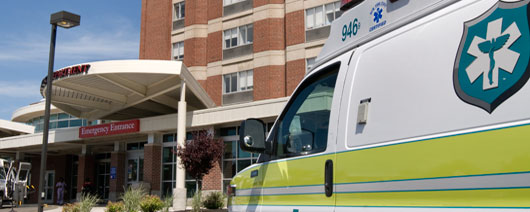
Emergency?
Call 911 or your local ambulance service.
If you were injured in a car accident or a fall from a ladder, you wouldn't hesitate to go to the emergency department. But there are other times when you're not sure if your situation requires a trip to the hospital. Ask yourself some questions about the seriousness of the situation and the options available to you.
Frequently Asked Questions
Contact your doctor and discuss the situation with them. If you can't reach your doctor, it's better to be safe than sorry: Call 911 or go to the emergency department.
If you think you face a life-threatening situation, don't hesitate: Call 911 or go to the nearest emergency department. If you're not sure, look for the following conditions.
- Heavy bleeding
- Seizures
- Difficulty breathing
- Excessive pain
- Unconsciousness
- Large bruise or other obvious injury
- May be a serious head, neck, or back injury
- Change in skin color or skin condition (cold, clammy, etc.)
- Person is showing signs of shock (pale, cold, clammy skin; a weak, rapid pulse)
If any of these factors are present, we suggest that you choose albulance transporation
- You don't feel capable for driving safely
- Traffic conditions could cause an unacceptable delay
- The person's condition could get worse on the way
- The person may have signification injures that you can't see
- You think the injury may be life-threatening (see above)
Your doctor can advise you. If you can't reach your doctor and you intend to drive, go to the nearest emergency room. If you go by ambulance, ambulance team members can provide the current status of area emergency departments.
Note: The ambulance team cannot recommend which emergency department you should choose. If you don't have a preference, the team will choose an emergency department based on its proximity, your type of emergency, and other factors.
The emergency department at Highland Hospital is fully staffed 24 hours a day, seven days a week.
You will be triaged (given an initial medical evaluation) right away. We always treat the sickest patients first, regardless who arrived first.
Triage and admission usually take 15-20 minutes. The time between arrival and treatment depends on the seriousness of the patient's condition and how many other patients are in need of emergency care. For example, when patient volume is high, severe bleeding or a head injury may take priority over a broken arm. We strive to keep our patients informed, but if you think you've been overlooked, or if you think your condition is getting worse, don't hesitate to ask a nurse for help.
We treat, and are equipped to handle, all emergency-type conditions. We do not perform check-ups or elective surgical procedures.
Yes. We treat everyone in need of emergency medical are.
Part of our medical evaluation is gathering information about the patient's existing medical condition and medical history. It's a good idea to maintain written medical histories of any loved ones, such as an older adult, who is more likely to face a medical emergency. Keep them updated, and bring them with you. We'll ask for the following information at check-in:
- Name, address, and date of birth
- Name(s) and specialties of current doctor(s)
- Name(s) and dosage of current medication(s)
- Any drug allergies
- Any recent medical problems or surgeries
- Health insurance ID card(s)
- Religious beliefs/preferences
- Living will or advance directives
We recognize virtually all health insurance coverage. All patients are accepted for care, regardless of their ability to pay. We'll sort that out after we're sure the patient is out of danger.
Yes. Get to know the hospitals in your area. What are the best driving routes? What conditions are they known for treating? Also, if you have a loved one, such as an older adult, who might be expected to face an emergency, pack an overnight bag with their necessities in it and keep it handy.
If the patient can't communicate clearly, a family member or friend should hold their paperwork, know their medical history and be ready to provide answers. Other than that, we direct visitors to the waiting area. We'll update them on the patient's condition on a regular basis.