


Rethinking care for patients with complex biomedical, psychiatric, and social needs; starting with what matters most to them.
The challenge
Patients with complex biomedical, social, and psychiatric needs face multiple barriers to care, including unmet basic needs such as safe housing and transportation, along with navigating disparate health and social service systems. Poor communication between clinicians and patients and families can lead to care that is misaligned with a patient's context, resulting in preventable harms such as falls from polypharmacy and missed opportunities for health screening.
As the population ages, this need is growing rapidly. Patients with concomitant medical and surgical or medical and mental illness, particularly older patients, are frequently the highest utilizers of acute care, from the emergency room to the ICU. Yet from their perspective, the health system operates in disconnected silos, with hospitalizations often disrupting the very care coordination they need most.
Our approach
Building on clinical services in the Division of Medicine in Psychiatry, LISCN studies patients' needs and priorities across the clinical and social spheres to develop innovative, integrated care solutions. Listening to what matters most to patients is our first step in changing the service paradigm.
Our work builds on the biopsychosocial approach to health first proposed by Drs. George Engel and John Romano at the University of Rochester, bringing together research expertise in prioritization and decision-making, implementation science, and health services research.
Research Focus
Research Focus
Patient priorities elicitation
We use mixed-methods and self-determination theory (SDT) - informed tools to surface what matters most to patients and communicate these priorities to the health care team in a way that is actionable.
Integrated medical-psychiatry care
Studying and improving Medical Psychiatry Units (MPUs) that co-locate medical and psychiatric care for patients with complex needs.
Implementation and dissemination
Translating priority-elicitation tools into routine bedside practice, in partnership with clinical teams and health system leadership.
Health services research
NIMH- and PCORI- funded studies examining outcomes, equity, and system-level barriers for patients with complex biomedical and psychiatric needs.
Projects
Vertical Integration for Patients with Serious Mental Illness
The VIP-SMI study evaluates innovative strategies to strengthen hospital-to-community transitions for patients with SMI.

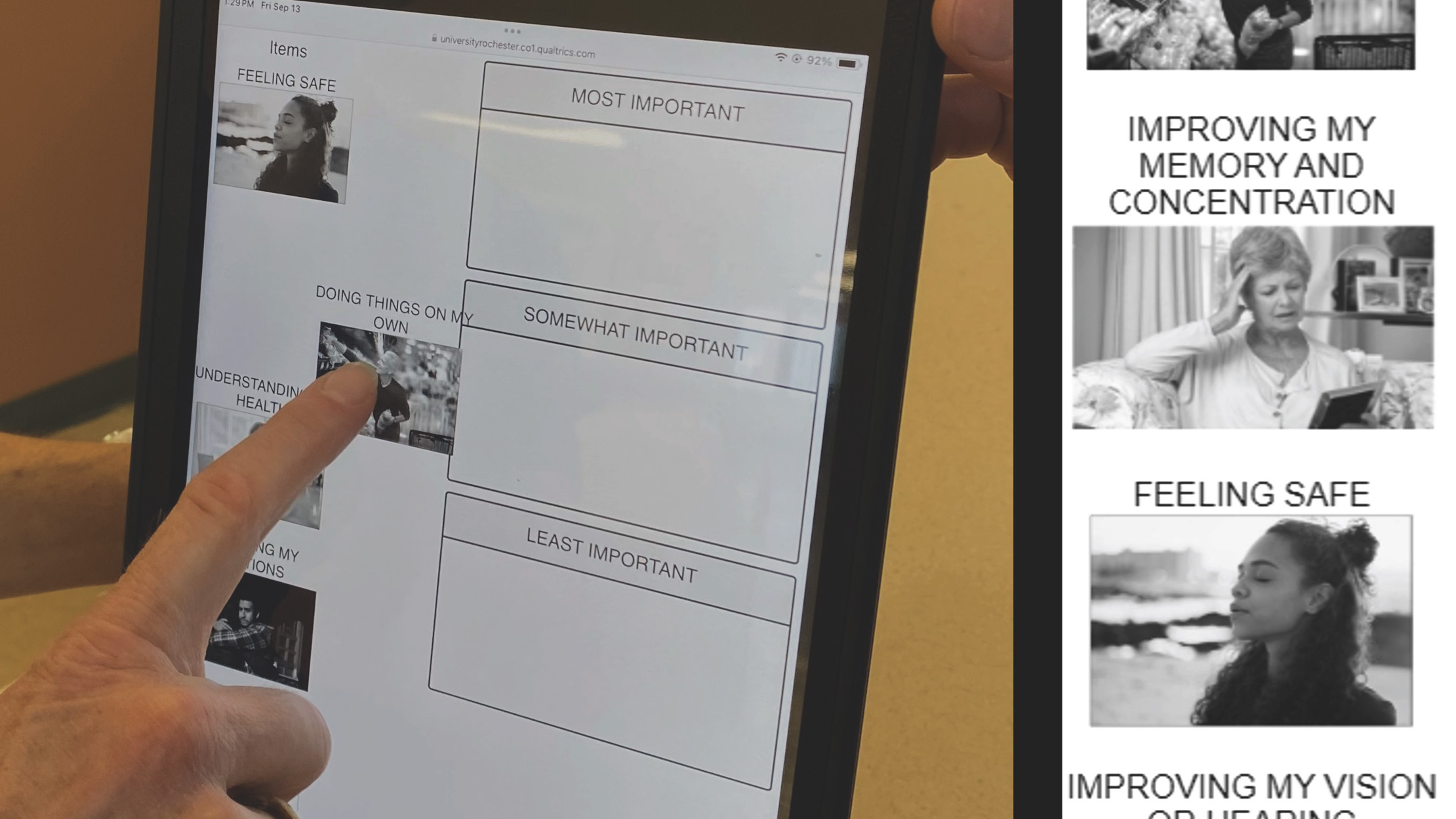
What Matters to Patients: Scaling a Bedside Priorities Assessment
This project expands a bedside assessment that helps patients communicate their priorities, enabling care teams to provide more personalized, patient-centered care.


Collaborating Investigators


Nicole Fulle, MS, RN-BC, CNL

Daniel Maeng, PhD




View All Research Team Members
- A Blueprint for Implementing Ketamine-Assisted Psychotherapy in Palliative Care: Design, Process, and Treatment Patterns of a Real-World Clinical Program.; Journal of palliative medicine. 2026 Mar 05.
- The impact of an online suicide prevention training program on community pharmacy staff outcomes: A cluster randomized trial.; Journal of the American Pharmacists Association : JAPhA. 2026 Feb 03.
- Connect for caregivers: an exemplar using the NIH Stage Model for behavioral intervention development.; Aging & mental health. 2025 Nov 06.
- Hospital Outcomes for Patients with Psychiatric Comorbidities: A Comparison of an Integrated Medical-Psychiatry Unit and Traditional Medical Units.; Population health management. 2025 Oct 17.
- Patient-Centered Suicide Prevention Care Delivery Among Established Integrated Primary Care Providers.; Crisis. 2025 Jul 01.
Affiliations
- Department of Psychiatry
- Medicine in Psychiatry Primary Care services
- Inpatient Medicine in Psychiatry
- Department of Psychiatry Advocacy Council of Consumers
- Patient and Family Relations
Resources on Current Studies
- Improving Communication about Patient Priorities in Multimorbidity (ICOM-APP) study funded by NIMH
- Study to Develop a tool for patients and oncologists to discuss patient priorities for adjuvant chemotherapy
- Depression treatment that takes women’s context into account
- Healing through education advocacy and law project
Contact Us
Laboratory of Integration Services for Complex Needs (LISCN)
601 Elmwood Ave
Rochester, NY 14642
Marsha_Wittink@URMC.Rochester.edu
Marsha Wittink, MD, MBE
Director, LISCN Lab, Professor of Psychiatry and Family Medicine, Academic Chief, Division of MIPS