

Research Projects
Research Projects
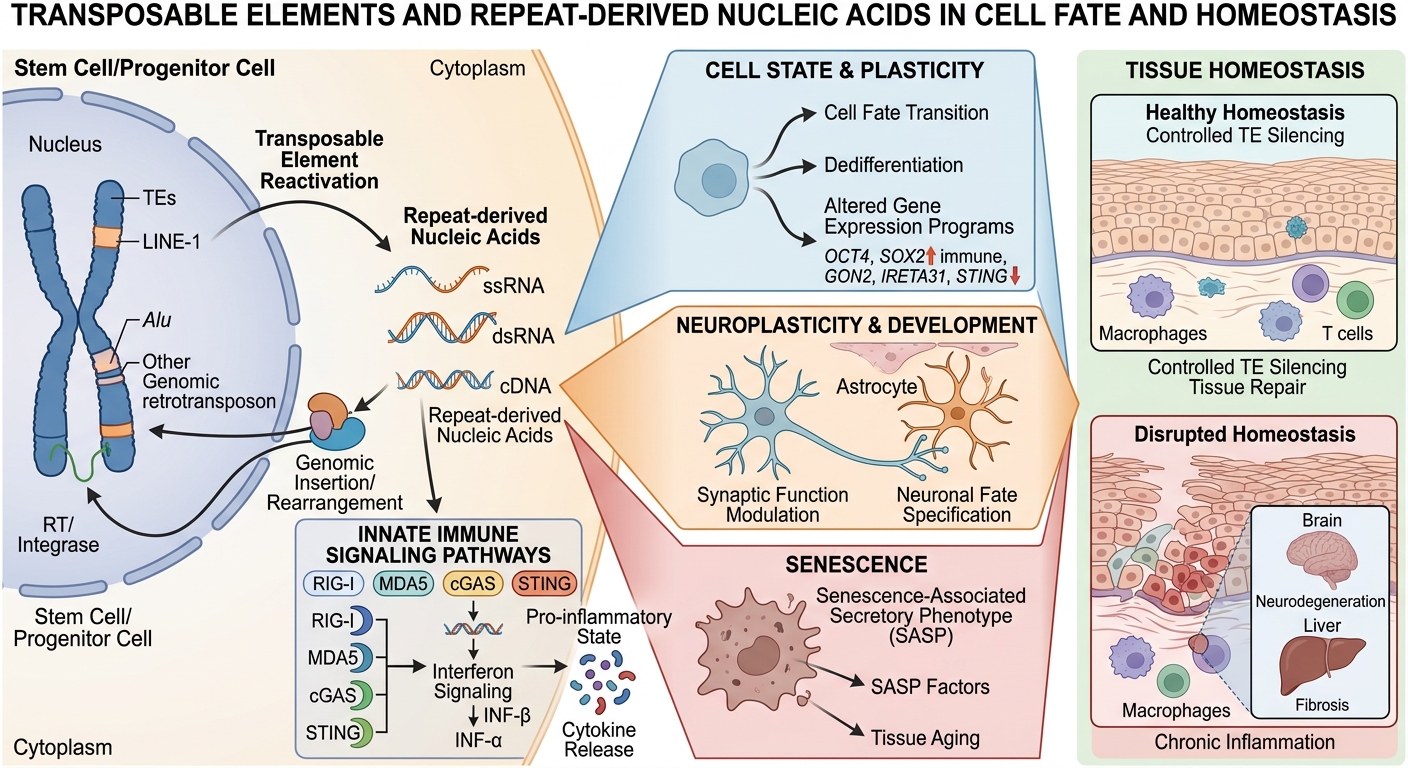
Repetitive genome regulation and cell-state plasticity
Repetitive elements comprise more than half of the human genome and were historically considered genomic "noise." We now know that their activity is tightly controlled by epigenetic and RNA-regulatory mechanisms and can change dramatically during development, aging, and disease. We study how repetitive elements become dysregulated, how repeat-derived nucleic acids reshape gene regulation and cell states, and how these changes influence cellular plasticity and evolutionary trajectories.
Repeat-derived immunity and tissue microenvironment
Many repetitive elements generate RNA and other nucleic acid structures that can resemble viral molecules and activate innate immune sensing pathways. We investigate how cells distinguish repeat-derived self nucleic acids from foreign signals and how repeat activation alters immune signaling, cell-cell communication, and tissue homeostasis. In cancer, we are particularly interested in how these signals reshape the tumor microenvironment and influence interactions between cancer and immune cells.
Repetitive genome in disease evolution and aging
Loss of genomic and epigenetic control is a common feature of cancer, aging, and neurodegenerative disease, yet the repetitive genome is often overlooked in studies of these processes. We use computational genomics, single-cell and multi-omic approaches, together with experimental validation, to understand how repeat dysregulation emerges during disease progression and aging.