
Events
Events of Interest
-
 Mar 19
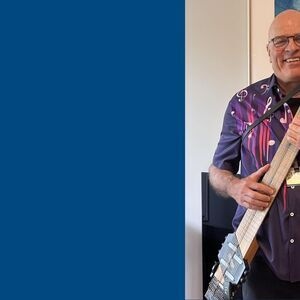
Rochester jazz artist Bob Pizzutiello will to share light jazz music on the Chapman stick. - On Thursday March 19th from 2:0pm-3:00pm, Bob Pizzutiello will share about the music he is offering as he brings relaxing jazz music to our chapel.
Every Thursday the chapel hosts live music which streams to patient TVs on channel 1 and is open to all to attend in person, entering and leaving as you need to. This music series is made possible in part from a National Endowment for the Arts grant, Chaplaincy, and Eastman Performing Arts Medicine Center.
-
 Mar 25
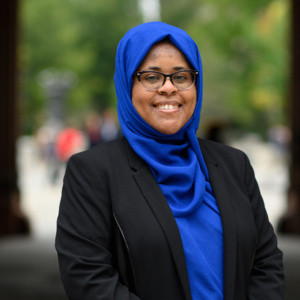
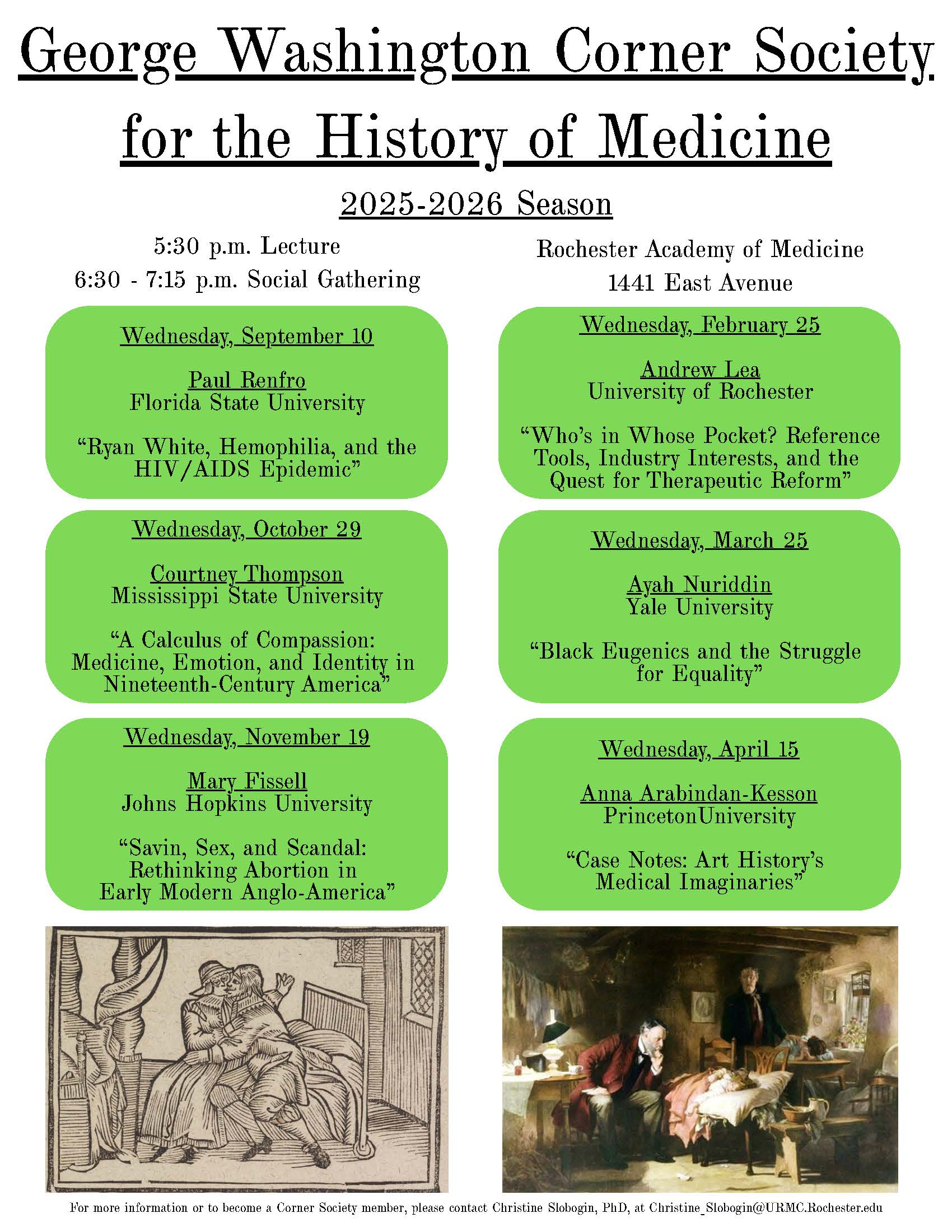
Ayah Nuriddin is Assistant Professor in the History of Medicine at Yale University. She is a historian of medicine and biology with particular interests in the histories of eugenics, racial science, scientific racism, reproduction, and human subjects research. Prior to arriving at Yale, she was a Cotsen Postdoctoral Fellow in the Society of Fellows and Lecturer in the Council of the Humanities and African American Studies at Princeton University. She received her PhD in the History of Medicine at Johns Hopkins University in 2021. She is currently working on her first book tentatively entitled “Seed and Soil: Black Eugenic Thought in the Nineteenth and Twentieth Centuries.” It examines how African Americans navigated questions of racial science, eugenics, and hereditarianism in relation to struggles for racial justice in the nineteenth and twentieth centuries. Her work has been published in the Historical Studies of Natural Science, Journal for the History of Medicine and Allied Sciences, the Lancet, Nursing Clio, and Somatosphere, and she has appeared on American History TV on C-Span.
Her dissertation, entitled “Liberation Eugenics: African Americans and the Science of Black Freedom Struggles, 1890-1970,” analyzes African American engagement with eugenics, hereditarian thought, and racial science as part of a broader strategy of racial improvement and black liberation. She holds a Masters in History and Masters of Library Science (MLS) from the University of Maryland, College Park. She was a Graduate Fellow in the Center for Medical Humanities and Social Medicine in 2017-2018, and a Dissertation Fellow at the Consortium for the History of Science, Technology, and Medicine (CHSTM) in 2018-2019.
-
 Mar 26
The Schola Cantorum from the Eastman School of Music is directed by Prof Stephen Kennedy and focuses on music of plainsong, motets of the Renaissance and Romantic eras, as well as contemporary music and improvisation. The group has been featured in various national radio broadcasts, appeared in international festivals and concerts, and collaborated with ensembles such as the Boston Early Music Festival Chamber Ensemble and Ensemble Weser-Renaissance Bremen. The Schola has recorded for the Arsis and Loft labels.
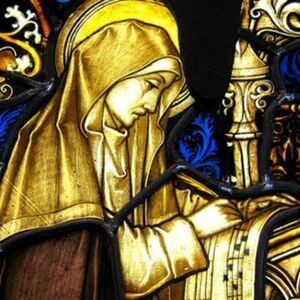
On Thursday March 26th, they will be led by Prof Honey Meconi and will share a program of the music of St. Hildegard of Bingen,a 12th century scholar, poet, and composer, in the Interfaith Chapel of Strong Memorial Hospital.
Every Thursday the chapel hosts live music which streams to patient TVs on channel 1 and is open to all to attend in person, entering and leaving as you need to. This music series is made possible in part from a National Endowment for the Arts grant, URMC Chaplaincy, and Eastman Performing Arts Medicine Center.
-
 Apr 2
Apr 2
**TAG HUMANITIES**
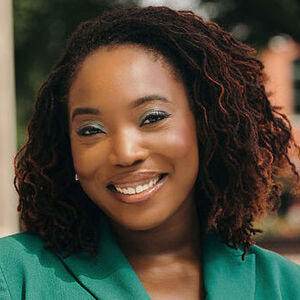
HIV. Ebola. COVID-19—Three very different viruses with different trajectories and even more divergent outcomes. What links these epidemics together, however, is the recurrent theme of blame directed towards entire ethnoracial groups as an etiological explanation for deadly diseases and their spread. This presentation explores racialized blame in times of epidemic uncertainty, and interrogates the role of public health institutions in perpetuating this age-old phenomenon.
Elizabeth Adetiba (she/her) is an early career researcher and assistant professor in the Department of Black Studies at the University of Rochester. Dr. Adetiba earned her PhD in Sociology from Columbia University, where she specialized in historical sociology, science, knowledge, and technology, and medical sociology. Her research career extends from the U.S., to South Africa, to New Zealand, where she was a 2018 U.S. Fulbright Fellow. Her work has also been supported by National Science Foundation. Above all, Dr. Adetiba is a critical writer, having worked as a journalist and fact-checker prior to pursuing her doctoral studies. Her writing has been featured in HuffPost, Slate, The Nation, Salon, SB Nation, and The Black Youth Project, and you can find her most recent public articles here. Dr. Adetiba’s work investigates how historical constructions of Blackness—and more so anti-Blackness— shape scientific thinking across a range of social domains, from medical and epidemiological scholarship, to athletics, to intergovernmental organizations. Her current book project explores the presence of anti-Black sentiment in the medical scholarship concerning the origins of the HIV/AIDS epidemic, and its widespread impact on global AIDS policy.
https://urmc.zoom.us/j/96878868372?pwd=OEtVZVdNLzZiallVY2pIS2xnSVF6dz09 ;
Passcode: 807980 -
 Apr 2
Apr 2
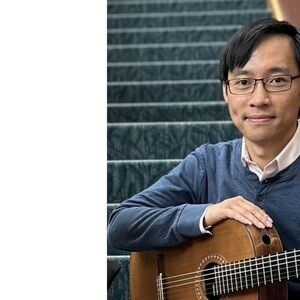
Eastman alum Kenneth Kam will to share music for the guitar, ranging from classical to folk music. - On Thursday April 2nd from 2:0pm-3:00pm, Kenneth Kam will play the guitar and share about the music he is offering.
Every Thursday the chapel hosts live music which streams to patient TVs on channel 1 and is open to all to attend in person, entering and leaving as you need to. This music series is made possible in part from a National Endowment for the Arts grant, Chaplaincy, and Eastman Performing Arts Medicine Center.
-
 Apr 9
Apr 9
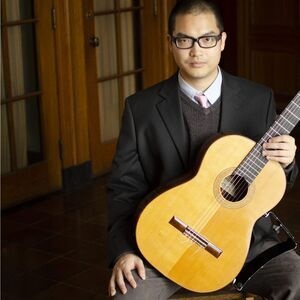
Eastman alum Ken Luk will to share music for the guitar, ranging from classical to folk music. - On Thursday April 9th from 2:0pm-3:00pm, Ken Luk will play the guitar and share about the music he is offering.
Every Thursday the chapel hosts live music which streams to patient TVs on channel 1 and is open to all to attend in person, entering and leaving as you need to. This music series is made possible in part from a National Endowment for the Arts grant, Chaplaincy, and Eastman Performing Arts Medicine Center.
-
 Apr 15
"Tag Humanities"
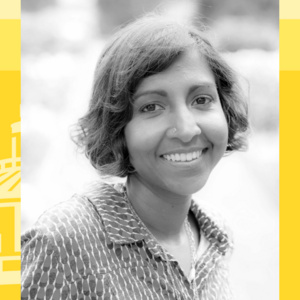
How have art and medicine converged historically, and how do they do so today? This talk centers on the work of Black diaspora artists, tracking art history's medical imaginaries and the stories they help us narrate about how health, well-being, and care connect us.
Anna Arabindan-Kesson is an immigrant writer and curator. A former nurse, she later completed a PhD in African American Studies and Art History at Yale University. She holds the position of Associate Professor of Black Diasporic Art at Princeton University, is the director of Art Hx, a platform for exploring art and medicine, and a Senior Research Fellow at the Art Gallery of Western Australia.

George Washington Corner Society for the History of Medicine 2025 - 2026 Lecture Schedule
There are no upcoming seminars.