

Projects & Publications
The Department supports creative, educational and scholarly projects that critically examine healthcare from a humanities, arts or ethics perspective.


 Tattooed Bodies
Theorizing Body Inscription Across Disciplines and Cultures
By James Martell and Erik Larsen
As linguistic or pictorial marks inscribed on skin, tattoos exemplify complex human relationships between bodies, social structures, and personal meaning. The essays collected in Tattooed Bodies draw on several disciplines, including philosophy, media studies, anthropology, and literary studies, to explore how tattoos express our shifting attitudes toward these relationships.
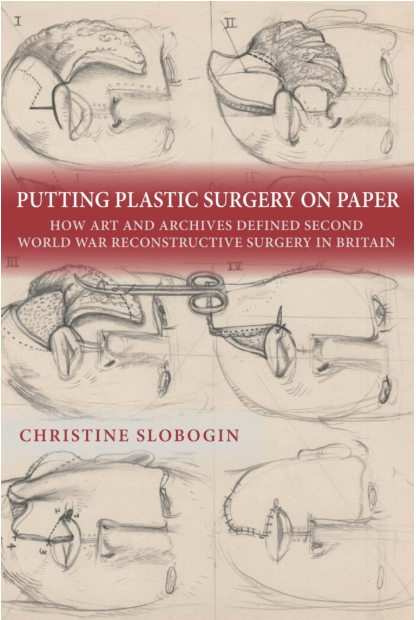 Putting Plastic Surgery on Paper
How Art and Archives Defined Second World War Reconstructive Surgery in Britain
By Christine Slobogin
An interdisciplinary approach to medical history that shows the key role that drawings and photographs had in shaping the material, professional, emotional and aesthetic parameters of plastic surgery.
In addition to telling an art history of plastic surgery during this period, Putting Plastic Surgery on Paper engages with the affective parameters of archival objects, and with what working as a historian involves when done within potentially traumatic spaces. Paying particular attention to the emotional dimensions and effects of this visual culture and the ways in which it is archived and framed by the discipline of plastic surgery – then and now – Putting Plastic Surgery on Paper explores not only what it meant to make art in a surgical space but also what it means to study these affecting paper objects in the archive today.
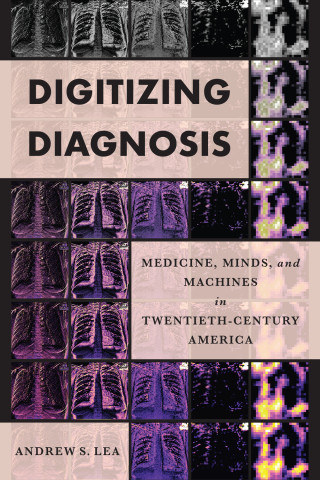 Digitizing Diagnosis: Medicine, Minds, and Machines in Twentieth-Century America
By Andrew Lea
Beginning in the 1950s, interdisciplinary teams of physicians, engineers, mathematicians, and philosophers began to explore the possible application of a new digital technology to one of the most central, and vexed, tasks of medicine: diagnosis. In Digitizing Diagnosis, physician-historian Andrew Lea explores the earliest efforts to bring artificial intelligence to medicine—and the larger moral and philosophical questions that they raised. How should doctors classify diseases? Could humans understand, and come to trust, the opaque decision-making processes of machines? And how might computerized systems circumvent, or calcify, bias? As medical algorithms become more deeply integrated into clinical care, researchers, clinicians, and caregivers continue to grapple with these questions today.