

Alumni Spotlights
Alumni Spotlights
Stewart Babbott, MD (Res '90, Chief Res '91)
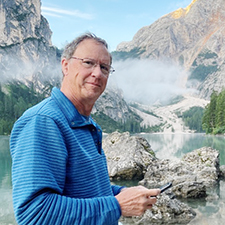
My career themes have included primary care practice, medical education and leadership in general internal medicine. I began my career with 2 years in full-time primary care practice in Dundalk, Maryland. With my interests in medical education, I then completed a 2-year medical education fellowship at Johns Hopkins with specific interests in faculty development and medical consultation. I moved to Baystate Medical Center in Springfield Massachusetts where, for 9 years, I was an Associate Program Director and had roles in faculty development. I was recruited to the University of Kansas by Steve Stites (Residency ’89, Chief Resident ‘90) where I was the Division Chief of General, Geriatric, Palliative and Hospital Medicine and an Associate Program Director for 11 years. I returned ‘Back East’ to the University of Virginia where for 8 years I was Section Leader for General Internal Medicine. I retired last year. I have always had a primary care practice which has been rewarding and grounded me in all that I have done. Throughout my career, I have strived to keep physician wellbeing at the forefront of my work. I am married to Cecelia Carbrey (Pediatrics ’89, Pediatric Chief Resident ’90) and we have 3 children.
My time in the PCPIM took place at a time of residency education transition. It goes without saying that the work hours were long! I recall the terror of staffing the RGH ED overnight as an intern with one resident. I also recall the pride we took in the care we provided. With the new work hours regulation in New York State, our schedules changed, and I recall one task as a chief resident was doing the coverage scheduling. Morning report at each of our hospitals was truly a teaching, and occasionally grueling, experience. Mostly, we grew in our patient care skills and our teaching skills. Given that we were at the University of Rochester, our approaches were informed by the biopsychosocial model. We were pushed constantly to learn and to think critically. We took care of each other and our program. We had a dedicated full-time faculty who in addition to their teaching and practice, modeled engagement in national organizations such as APDIM (AAIM), SGIM, ACP and AAMC. I have had rewarding involvement in these organizations over the years. Our community faculty were similarly dedicated. Indeed, since many of our program colleagues stayed in and around Rochester, the ethos of care, and the commitment to education in the office and the hospital were outstanding.
Keely Dwyer-Matzky, MD (Res '06, MSBA '19)
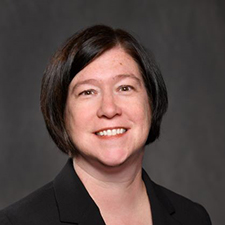
I completed my Med-Peds residency in 2006, followed by a year of pediatric critical care training at URMC. With supportive division chiefs, I helped establish a Med-Peds hospitalist role as our Pediatric Hospital Medicine division launched and have served as a medicine attending at Highland Hospital. Over the past 18 years, my non-clinical work has centered on patient safety, quality improvement, and have enjoyed training many residents. Opportunities I’m grateful to have had alongside talented colleagues and trainees. In 2019, I earned a Master of Science in Business Administration from the UR Simon Business School, focusing on clinical operations—training that proved essential during COVID-19. Since 2021, I have served as Associate Chief Medical Officer for Patient Flow and Capacity Management at URMC while continuing Med-Peds hospitalist practice. I have been fortunate to have a supportive husband, an educator at a local school. Together we have raised three wonderful children with diverse interests. We spend our leisure time outdoors—including hiking, skiing, camping—and enjoying the musical arts. I’ve also appreciated all that UR has to offer - including tuition benefits, as my son is currently an undergraduate at UR.
A formative memory from residency was the support I received as a female intern over two decades ago with a 12-week-old infant—an experience that exemplifies UR Medicine’s supportive, progressive culture.
Michael R. Joynt, MD (Res '12)
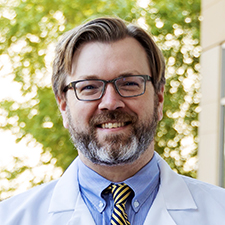
Michael R. Joynt, MD is currently an adult congenital cardiologist and clinical associate professor in the Departments of Internal Medicine and Pediatrics at the University of Michigan in Ann Arbor.
In his own words, “I have so many fond memories of my time as a resident. I have never worked with more supportive colleagues and mentors. The bond that is shared between Med-Peds residents is special and unique. One memory that stands out was when one of our classmate’s fathers fell ill, and she had to return home immediately. Since she was a senior on inpatient medicine, immediate coverage was needed. All of us volunteered to take her shifts, including splitting her long-call! We were all so close and we protected and cared for each other. I have never worked so closely and developed such deep and supportive connections with colleagues in my life.”
Carlos Oronce, MD, MPH, PhD (Res '19)
Assistant Professor in the Division of General Internal Medicine and Health Services Research at the UCLA David Geffen School of Medicine and the VA Greater Los Angeles Healthcare System
After finishing residency in 2019, I completed fellowship at UCLA in the National Clinicians Scholars Program (previously the Robert Wood Johnson Clinical Scholars Program). The NCSP is a 2-year program that provides clinicians with research, policy, and leadership training to shape policy, lead health systems, and develop evidence to improve health and health care. During fellowship, I led a wide range of research projects—from quantifying the costs of USPSTF Grade D services delivered by Medicare to conducting a meta-analysis of the evidence behind food insecurity interventions.
I really enjoyed research and knew I wanted a career as a physician-scientist, so I pursued a PhD in health services research through our Department of Medicine's Specialty Training and Advanced Research fellowship. The program reverses the usual MD/PhD path and takes physicians who are typically in subspecialty training and gives them the opportunity to pursue a PhD in basic/translational science or health services research. My dissertation drew on insurance claims, EMR data, and government finance data to examine the relationships between health care systems, their communities, and how they invest dollars towards addressing the social determinants of health.
I finally got my first grown-up job in 2023 and stayed at UCLA as an Assistant Professor in the Division of General Internal Medicine and Health Services Research. I'm a teaching hospitalist at our VA, which I absolutely love, and am on wards 8 weeks out of the year. The rest of the time I work on my research projects evaluating UCLA Health's population health and quality interventions, Medicare Advantage's impact on health equity, disparities in Asian American and immigrant populations, and the effectiveness of the VA's policy to expand access to non-VA care.
I think without a doubt, the clinical training was exceptional. It really showed that it's possible to have a rigorous training program while supporting residents and ensuring they still have a life outside of the hospital. I have the fondest memories of morning report—I enjoyed that the setting was smaller, that you could think out loud without feeling dumb, and I still dream of the pink muffin from Finger Lakes coffee.
There were specific people that also influenced me and helped me get to where I am today. Dr. Marc Berliant was my primary care preceptor for the whole 3 years. He brought me on as a clinic admin chief my PGY-3 year and I got to learn the nuts and bolts of how Strong Internal Medicine is run, the QI initiatives, and how Medicaid payment reform in NY trickled down to clinic innovation. SIM was on the cutting edge of ambulatory medicine, especially in collaborative mental health and addressing health-related social needs. Dr. Bill Novak left a lasting impact on me as an inpatient attending. He created a learning environment that encouraged curiosity (especially with POCUS!) and I really channel his questioning style when I'm rounding with my residents/students. Dr. Mahala Schlagman was another key figure. It was her mentorship and friendship that allowed Clare Park and I to develop and implement a social determinants of health series that eventually developed into a core component of the primary care didactics. Finally, Dr. Rob Fortuna was an invaluable research mentor and helped nurture my ideas. Under his mentorship, I gave my first oral research presentation at the Society of General Internal Medicine. I still connect with him and Mahala at the annual meetings.
Alison Walker, MD, MPH, MBA (MD '02, Res '05)
Chief of the Medical Oncology Service at Moffitt Cancer Center in Tampa, FL
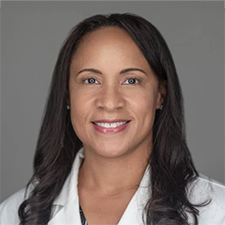
It is difficult to fully capture how influential my medical training — medical school, internal medicine residency, and Hematology & Oncology fellowship — at the University of Rochester has been on my professional life. As a first-year medical student sitting in Lower S-Wing in 1998, I listened to a lecture by Dr. Jane Liesveld on hematologic malignancies, focusing on acute myeloid leukemia. In that moment, I realized that caring for patients with blood disorders felt like a calling rather than simply a career choice.
From then on, I sought out every opportunity to learn from and spend time with hematologists. I was especially fortunate to rotate at Rochester General Hospital with Dr. Ron Sham, completing multiple rotations that further solidified my interest and commitment to the field.
After completing fellowship in 2008, I joined the Division of Hematology at The Ohio State University. Early in my career, my work focused on experimental therapeutics, phase I and II clinical trials, and involvement in the American Society of Hematology. Through a training grant, I completed a Master of Public Health, which broadened my understanding of medicine beyond individual patient encounters and encouraged me to think more deeply about how systems and structure shape care.
While serving as program director for our fellowship program, I became increasingly interested in the intersection of healthcare delivery and organizational leadership, leading me to pursue a Master of Business Administration in 2019. The concepts I was learning were immediately applicable to my roles as Associate Division Director and Chief of Staff of the James Hospital, allowing me to contribute in new ways while remaining grounded in patient care.
After marrying in 2021, I moved to Tampa to join the Department of Malignant Hematology, where I am currently a Senior Member and Chief of the Medical Oncology Service. Although my administrative responsibilities now occupy more of my time, I continue to care for patients in clinic and on the inpatient services. The skills I developed during my training at Rochester remain my north star — how to communicate with patients and families, how to approach clinical complexity with humility, and how to lead with thoughtfulness and integrity.
I carry many fond memories from this formative period — night float and late evenings at Rodgers, covering 634 and hematology consults, and the unforgettable Highland floors and Dr. Mead patients. I am deeply grateful for the mentorship, camaraderie, and kindness of my co-residents, fellows, and attendings, and I hope that those who trained after me have found the same sense of purpose and community that shaped my own journey.
Peter Weissmann (MD '88, Res '91)
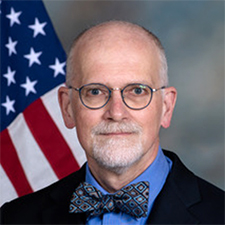
A little more about my adventures: I just retired as staff physician from the Minneapolis VA HealthCare System for 15 years. I was also on faculty at the University of Minnesota since 1993. Right now, I’m pursuing another life-long passion—music—and I’m enrolled in a performance degree program at a local college. Transitioning from Professor of Medicine to freshman music major is quite a trip!
There are many memories I have of residency in the Primary Care Program. A lot of those recollections will stay with me long after I’ve forgotten my children’s names, I’m sure. In particular, I remember when [Program Director] Rudy [Napodano] would come to morning report, and how stern he could look. I learned quickly that “I don’t know,” or “get a consult” were never the right answer, regardless of his question, but I remember him fondly, and I’m grateful that he ingrained in me a passion for excellence and thoroughness. In difficult clinical situations, I would often ask myself, “What would Rudy do?”