

Clinical Rotations
Clinical Rotations
On-Service Rotations (Oral and Maxillofacial Surgery)
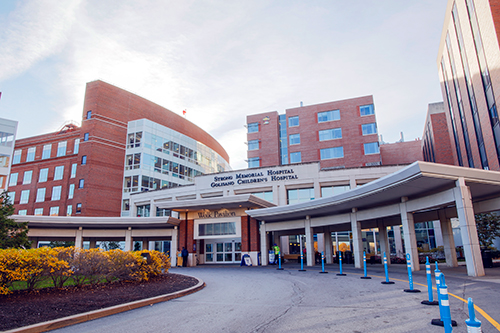 Each of the on-service clinical rotations or sites is chosen in order to help meet the goals and objectives of the program.
At the completion of the program, the resident is expected to be:
- Proficient in patient evaluation and management
- Proficient in dentoalveolar surgery
- Proficient in ambulatory anesthesia and sedation
- Competent in orthognathic surgery
- Competent in TMJ surgery
- Competent in oncologic surgery, including major resections
- Competent in reconstructive surgery
- Competent in facial trauma surgery
- Competent in facial cosmetic surgery
The OMFS clinic on the 4th floor of Strong Memorial Hospital's Ambulatory Care Unit (AC-4) is is the primary site of on-service clinical experience in oral and maxillofacial surgery, and where the majority of program experience in ambulatory outpatient anesthesia occurs.
 The Wilmot Cancer Center is the first multidisciplinary academic cancer center in the Rochester community, a 164,000 square foot facility directly next to the Ambulatory Care Unit of Strong Memorial Hospital. The clinic consolidates all outpatient cancer care services and research programs into a single, accessible location, including the latest in clinical trials, many of which originated at the Wilmot Cancer Center. It is named for James P. Wilmot, a prominent Rochester businessman and philanthropist who originally founded the center in 1980 to train physicians in cancer research and treatment.
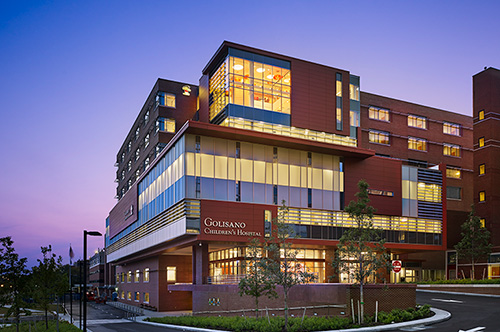 Golisano Children's Hospital is an 8-story, 248,000 square foot building directly connected to Strong Memorial Hospital, containing 52 private rooms for sick children and their families as well as 68 NICU beds. It employs more than 200 pediatric specialists and provides a spectrum of care that spans more than 40 specialty areas, serving more than 85,000 children and their families each year. It serves as the referral center for all seriously ill or injured children from the 17-county Finger Lakes region and beyond.
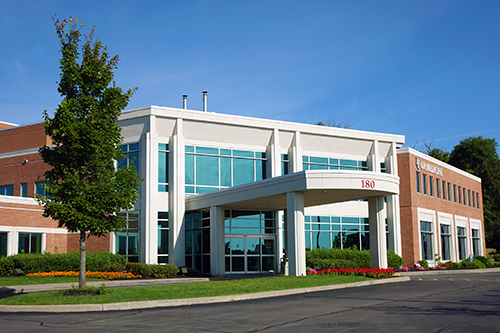 Sawgrass Ambulatory Center is a URMC outpatient surgical center located at 180 Sawgrass Drive in Rochester, NY.
Off-Service Rotations
The off-service experience is rich and varied. These rotations are among the strengths of the program. OMFS residents are expected to perform at a level exceeding their peer group on rotations. Evaluations received during off-service rotations are reviewed by the OMFS Program Director.
First-year residents complete 2 months off-service in Internal Medicine.
At the completion of the Internal Medicine assignment, residents will have gained valuable experience in physical assessment and the application of their history and physical examination knowledge and abilities, as well as further knowledge in the pathophysiology, diagnosis and medical management of systemic disease.
While assigned to the internal medicine service, the resident is expected to assume and discharge all duties and responsibilities of a first year house officer in internal medicine including on-call responsibility. The resident will participate fully in all scheduled conferences, seminars, and lectures. Supervision of the resident shall be the responsibility of the Internal Medicine faculty. At the completion of the internal medicine assignment, the resident will be evaluated in the same manner and to the same standards as other internal medicine residents.
Second-year residents complete 4 months off-service in General Surgery and 2 months off-service in Trauma Surgery.
At the completion of this experience, residents will be able to understand and apply the basic principles of surgery, including the pathophysiology of surgical disease, metabolism, and wound healing, and are expected to be competent in:
- Pre-surgical evaluation of the patient
- Risk assessment
- Peri-operative management
- Surgical techniques
This knowledge and experience is gained through assignment to one of the general surgical teams, transplant surgery, pediatric surgery, head and neck surgery, plastic surgery, or cardio-thoracic surgery. While assigned to the surgical service, the resident is expected to assume all duties and responsibilities of a first- or second-year surgical house officer, including on call responsibilities. The resident is expected to fully participate in all seminars, lectures, and conferences. Supervision of the resident will be the responsibility of the surgical faculty. At the completion of the surgical assignment, the resident will be evaluated in the same manner and to the same standards as other surgical residents.
Trauma Surgery off-service will include ATLS certification.
Second-year residents complete 5 months off-service in Anesthesia.
At the completion of the Anesthesia experience, residents will understand and apply anatomy, physiology, and pharmacology as it pertains to anesthesia, and are expected to be competent in:
- Evaluation and risk assessment
- Airway management
- Anesthesia administration
- Monitoring techniques
- Management of anesthetic emergencies
- Post-anesthetic care
During assignment to the anesthesia service, the resident participates fully in the education and clinical activities of the anesthesia service including on call responsibilities similar in all respects to an anesthesia resident. Participation includes attending all scheduled seminars, lectures, and conferences. During the resident's assignment to the anesthesia service, the resident will be responsible to the anesthesia faculty. At the end of the rotation, the anesthesia faculty will evaluate the resident in the same manner as other anesthesia residents.
All third-year residents complete a 2-week craniofacial rotation in Plastic Surgery. Third-year residents may also choose to complete an elective rotation in Plastic Surgery.
Third-year residents may choose to complete an elective rotation in Otolaryngology.