

Stem Cells and Tissue Engeineering
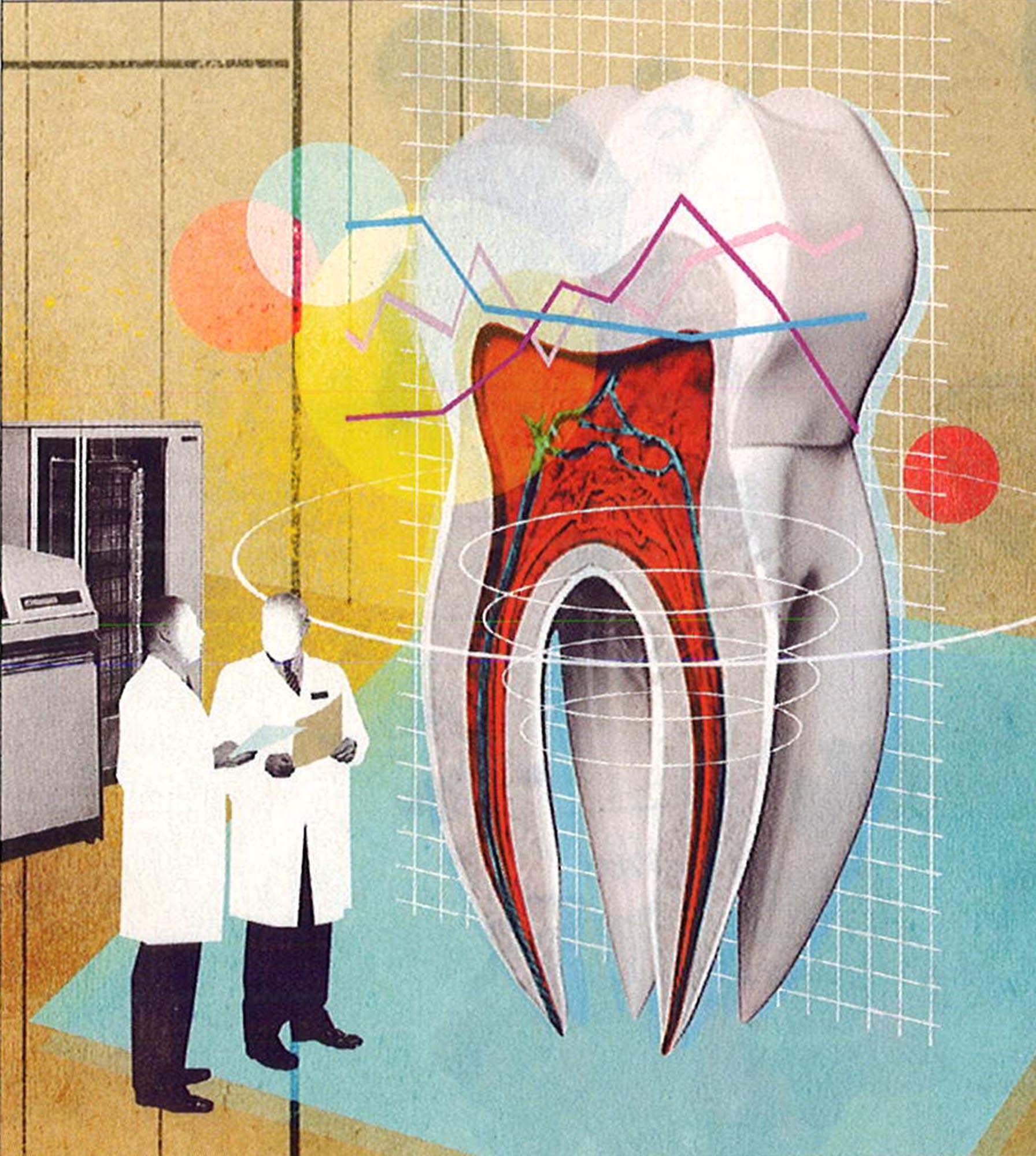
Tissue engineering seeks to generate new tissues or regenerate lost tissues through a combination of stem cells, materials design, and biochemical and molecular cues. The first step toward tissue engineering in our lab began with a focus on periodontal stem cells in 2001, for which we were awarded an NIH grant (DE15425) in 2003. At that point we began to generate and characterize stem cell populations in developing periodontal tissues (Luan et al. 2006, 2009, Dangaria et al. 2009, 2011a, Gopinathan et al. 2013). Subsequently, we have established periodontal progenitor populations to regenerate the periodontium of extracted teeth and replant these teeth into sockets (Dangaria et al. 2011b,c).
This research has prompted a number of studies related to the design of scaffolds and homing factors for odontogenic regeneration (Li et al. 2013, Pan et al. 2013, Huang et al. 2013). Over time, we have expanded our repertoire of molecular cues (Francis et al. 2020, Pandya et al. 2021, Ma et al. 2021, Lyu et al. 2022) to include histone demethylases, neuropeptides and hormones. In parallel, we have continuously expanded on our portfolio of innovative and complex materials, focusing on electrospinning and multi-layer coating to achieve histocompatibility, degradability and optimum release characteristics (Qian et al. 2019, Lyu et al. 2022). We aim that our strategies will improve the healing and new formation of complex tissues.
Contributions to Journals
- Ding, Y., Luan, J., Malmstrom, H.D., Luan, X., and Diekwisch, T.G.H. (2025). Mir-27 promoted periodontal regeneration via osteogenesis/angiogenesis. J. Dent. Res. 105(4): 495-504.
- Lyu, H., Zhou, X., Qian, Y., Liu, X., Gopinathan, G., Pandya, M., Qin, C., Luan, X., Diekwisch, T.G.H. (2022). Long-acting PFI-2 small molecule release and multilayer scaffold design achieve extensive new formation of complex periodontal tissues with unprecedented fidelity. Biomaterials. 290: 121819.
- Ma, W., Lyu, H., Pandya, M., Gopinathan, G., Luan, X., and Diekwisch, T.G.H. (2021). Successful Application of a Galanin-Coated Scaffold for Periodontal Regeneration. J. Dent. Res. 100(10): 1144-1152.
- Pandya, M., Saxon, M., Bozanich, J., Tillberg, C., Luan, X., and Diekwisch, T.G.H. (2021). The glycoprotein/cytokine erythropoietin promotes rapid alveolar ridge regeneration in vivo by promoting new bone extracellular matrix deposition in conjunction with couple angiogenesis/osteogenesis. Int. J. Mol. Sci. 22(6): 2788. https://doi.org/10.3390/ijms22062788
- Francis, M., Gopinathan, G., Salapatas, A., Nares, S., Gonzales, M., Diekwisch, T.G.H. and Luan, X. (2020). SETD1 and NF-kB Regulate Periodontal Inflammation through H3K4 Trimethylation. J. Dent. Res. 99(13): 1486-1493.
- Francis, M., Gopinathan, G., Foyle, D., Fallah, P., Gonzalez, M., Luan, X., and Diekwisch, T.G.H. (2020). Histone Methylation: Achilles Heel and Powerful Mediator of Periodontal Homeostasis. J. Dent. Res. 99(12): 1332-1340.
- Pandya, M., and Diekwisch, T.G.H. (2019). Enamel biomimetics: fiction or future of dentistry? Int. J. Oral Sci. 11(1):8.
- Qian, Y., Zhou, X., Zhang, F., Diekwisch, T.G.H., Luan, X., and Yang, J. (2019). Triple PLGA/PCL scaffold modification including silver impregnation, collagen coating, and electrospinning significantly improve biocompatibility, antimicrobial, and osteogenic properties for orofacial tissue regeneration. ACS Appl. Mater. Interfaces. 11(41): 37381-37396.
- Issac, A., Jivan, F., Xin, S., Hardin, J., Luan, X., Pandya, M., Diekwisch, T.G.H. and Alge, D.L., (2019). Microporous Bio-orthogonally Annealed Particle Hydrogels for Tissue Engineering and Regenerative Medicine. ACS Biomater. Sci. Eng. 5(12): 6395-6404.
- Liu, H., Yan, X., Pandya, M., Luan, X., and Diekwisch, T.G.H. (2016). Daughters of the enamel organ: Development, fate, and function of the stratum intermedium, stellate reticulum, and outer enamel epithelium. Stem Cells Dev. 25(20): 1580-1590.
- Li, Q., Reed, D.A., Min, L., Gopinathan, G., Li, S., Dangaria, S.J., Li, L., Geng, Y., Galang, M.T., Gajendrareddy, P., Zhou, Y., Luan, X., Diekwisch, T.G.H. (2014). Lyophilized Platelet-Rich Fibrin (PRF) promotes craniofacial bone regeneration through Runx2. Int. J. Mol. Sci. 15(5): 8509-8525.
- Gopinathan G., Kolokythas, A., Luan, X., and Diekwisch, T.G.H. (2013). Epigenetic marks define the lineage and differentiation potential of two distinct neural crest-derived odontogenic progenitors. Stem Cells Dev. 22(12): 1763-1778.
- Huang, J., Zhao, D., Dangaria, S.J., Luan, X., Diekwisch, T.G.H., Saiz, E., Liu, G., Tomsia, A.P. (2013). Combinatorial design of hydrolytically degradable, bone-like biocomposites based on PHEMA and hydroxyapatite. Polymer. 54(2): 909-919.
- Dangaria, S., Ito, Y., Luan, X., and Diekwisch, T.G.H. (2011). Successful periodontal ligament regeneration by periodontal progenitor pre-seeding on natural tooth root surfaces. Stem Cells Dev. 20(10): 1659-1668.
- Dangaria, S., Ito, Y., Yin, L.L., Valdrè, G., Luan, X., and Diekwisch, T.G.H. (2011). Apatite microtopographies instruct signaling tapestries for progenitor-driven new attachment of teeth. Tiss. Eng. Part A. 17(3-4): 279-290.
- Dangaria, S., Ito, Y., Luan, X., and Diekwisch, T.G.H. (2011). Differentiation of neural crest-derived intermediate pluripotent progenitors into committed periodontal populations involves unique molecular signature changes, cohort shifts, and epigenetic modifications. Stem Cells Dev. 20(1): 39-52. Journal Cover.
- Dangaria, S.J., Ito, Y., Walker, C., Druzinsky, R., Luan, X., and Diekwisch, T.G.H. (2009). Extracellular matrix-mediated differentiation of periodontal progenitor cells. Differentiation. 78(2-3): 79-90.
- Luan, X., Ito, Y., Dangaria, S., and Diekwisch, T.G.H. (2006). Dental follicle progenitor cell heterogeneity in the developing mouse periodontium. Stem Cells Dev. 15(4): 595-608.
- Flores-de-Jacoby, L., Diekwisch, T., Zimmermann, A. (1991). Periodontal therapy using guided tissue regeneration - Experiences with Goretex -. German Dentists’ Calender 1991. Carl Hanser, Munich 1991.