

News
Fragile X Syndrome: What Happens in the Brain?
Monday, August 25, 2025
 The genetic disorder Fragile X syndrome occurs when individuals don’t make the Fragile X protein known as FMRP. Essential for normal brain development, FMRP helps control when and where proteins are made in the brain, supporting its ability to change and adapt in response to things we experience and the environment around us. Determining exactly how FMRP exerts such influence in the brain is key to developing new treatments for Fragile X but has proven a tough nut to crack.
In a new study in the journal Molecular Cell, scientists at the University of Rochester School of Medicine & Dentistry clarify how the FMRP protein works and what happens when its missing, like in patients with Fragile X. The research, which challenges the predominant theory in the field, establishes a new foundation for developing therapies from the scientific ground floor—fundamental knowledge of how the molecules in our cells function and interact—and up.
RNA biologist and senior study author Lynne Maquat, PhD, describes FMRP as a molecular brake pad in brain cells. Proteins need to be produced at very precise times and places to support learning and memory, allow us to adapt to new experiences, and respond to injury. Like lifting your foot off the brakes in your car when a traffic light changes from red to green, FMRP lifts the brakes and permits protein production in a cell once it gets the appropriate signal from the brain. FMRP does this by interacting with our messenger RNAs, or mRNAs.
mRNAs carry genetic instructions from the nucleus to the body of the cell, where the instructions can be translated into proteins. Maquat’s team discovered that FMRP physically sequesters approximately one-fourth of our mRNAs—gathers and protects them while preventing them from making protein—and transports them to specific locations in brain cells. Once FMRP delivers the mRNAs to the desired location, safe and intact, it waits for a signal from the brain that says, “lift the brakes.” FMRP then unleashes the mRNAs to make the desired proteins.
When FMRP is absent, like in Fragile X, there is no brake. Imagine a busy intersection full of cars with no brakes; turmoil and damage are inevitable. The same is true for the brain without FMRP; mRNAs travel through cells unchecked, haphazardly producing protein. This unregulated environment creates chaos in the brain and contributes to the cognitive and behavioral symptoms seen in Fragile X syndrome.
“Currently there is no cure for Fragile X and available treatments are inadequate; we need more options for patients,” said Maquat, founding director of the University of Rochester Center for RNA Biology and the J. Lowell Orbison Endowed Chair and Professor of Biochemistry & Biophysics at the School of Medicine & Dentistry. “Clinical trials are always based on findings in fundamental research. We need to figure out exactly what the molecules in our cells are doing to generate therapeutic targets and tools. Until we understand what is going on at the most basic level, we’re shooting in the dark.”
Read More: Fragile X Syndrome: What Happens in the Brain?Congratulations to Victor Gu
Tuesday, May 13, 2025
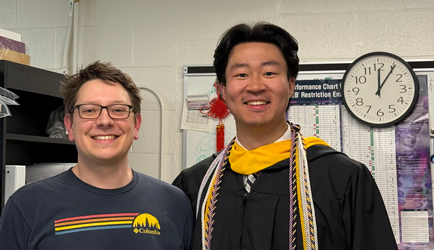
Congratulations, Victor, for graduating the UR with honors in Biochemistry and for being accepted to URMC’s Medical Science Training Program!


RNA Discoveries Leading to Cutting-Edge Cures
Wednesday, April 23, 2025
 RNA, long overlooked in the research world, is having its moment.
The pandemic provided the rocket fuel, because mRNA vaccines essentially saved our way of life. Talk of RNA-based treatments and trials is suddenly commonplace.
Both the 2023 and 2024 Nobel Prizes in physiology or medicine were awarded for research in RNA (ribonucleic acid). The Advanced Research Projects Agency for Health (ARPA-H), a $2 billion federal entity funding transformative ideas for health breakthroughs, focused its first multi-million-dollar grant on the development of mRNA technologies that strengthen the immune system to better fight cancer and other diseases. In 2022, more than $1 billion in private equity funds was invested in biotechnology start-ups to explore frontiers in RNA research. There are now more than 400 RNA-based drugs in development.
Less known is what happened before we were lining up to get shots in our arms to regain a semblance of normal life. The story of RNA research and its blossoming future began many decades earlier. The main characters were diligent, unsung scientists who believed in the importance of the work long before others did.
And key chapters are still being written by University of Rochester researchers who—decades prior—discovered properties of RNA that ended up being vital to the development of COVID-19 vaccines and that even launched an entire field of study on how mRNA activity contributes to disease.
“I’ve studied RNA since 1972,” said Lynne Maquat, PhD, founding director of the Center for RNA Biology at the University of Rochester. “We’ve gone from being in the last session at meetings under the context of ‘other things’ to being at the forefront in virtually every specialty.”
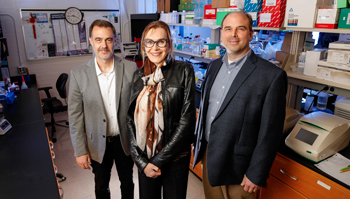
Thomas Cech, a biochemist at the University of Colorado (Boulder) and winner of the Nobel Prize in Chemistry in 1989, wrote in an opinion essay in The New York Times, “Though it is a linchpin of every living thing on Earth, RNA was misunderstood and underappreciated for decades—often dismissed as nothing more than a biochemical backup singer, slaving away in obscurity in the shadows of the diva, DNA. I know that firsthand: I was slaving away in obscurity on its behalf.”
Rochester researchers have been in those shadows for decades, quietly unraveling RNA’s role in the vast and complex process of gene expression. Even they could not have known their work would have such important implications for therapies. But it’s clear now—and new clinical trials are showing the life-changing promise of their once-obscure research.
Read More: RNA Discoveries Leading to Cutting-Edge Cures