
Patient Care
Patient Care
Hospital Medicine Oncology Service
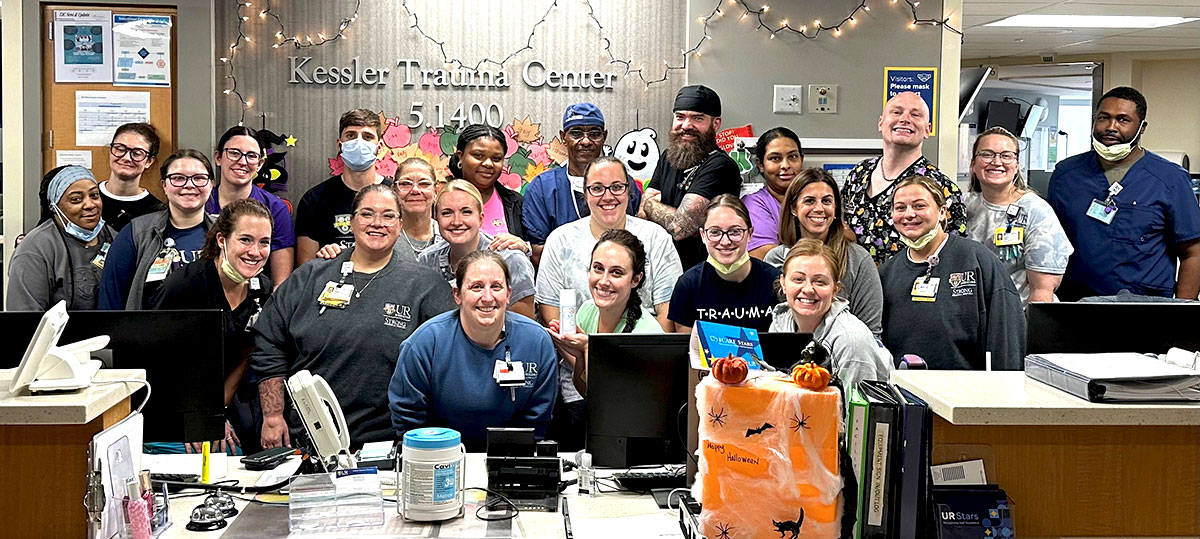
Since 2020 the Heme Onc Hospitalist group has been caring for patients with cancer who are admitted to Strong Memorial Hospital for complications related to their cancer or cancer treatments. We work collaboratively with the Wilmot Cancer Center oncology attendings, solid oncology APPs, nurses, physical and occupation therapy, social work, and the palliative care team to care for this complex group of patients. Our goal is to get our patients back to where they can continue their cancer directed treatments. However, when goals of care change, we are skilled at providing palliative and end of life care with the aide of our palliative care colleagues. This field can be challenging at times, but it is incredibly rewarding thanks to the dedication of a unique team that delivers exceptional care for our patients.
Adult Inpatient Eating Disorder Service
In 2018, an adult inpatient eating disorder program was developed through collaboration between adolescent medicine and adult hospital medicine division (HMD). This program is now overseen by HMD and is housed on a medical unit with professionals trained in caring for individuals with an Eating Disorder. Patients receive symptom interruption, nutritional rehabilitation, and treatment of medical and psychiatric concurrent conditions in a controlled and supportive environment. To ensure continued progress, patients are connected with resources to enable continued healing and recovery from their eating disorder. This program is one of the only hospitalist run eating disorder programs housed on a dedicated unit in the country, bridging a needed gap for individuals with an eating disorder."
Surgical Co-Management Services
Our surgical co-management programs bring together surgeons, hospital medicine physicians, nurses, therapists, and other healthcare professionals to provide comprehensive, coordinated care for older adults who need surgery or are recovering from a serious injury.
By working as one team, we address both the surgical needs and the medical needs of each patient. Our goal is to help patients recover safely, avoid complications, maintain their independence, and return prior function as soon as possible.
Orthopedic/Geriatric Fracture Center
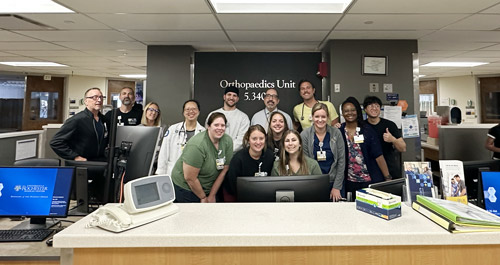
Since 2017, the Geriatric Fracture Center (GFC) at Strong Memorial Hospital has provided coordinated care for older adults with fragility fractures, including hip and pelvic fractures.
Patients are co-managed by the Orthopedic Surgery and Hospital Medicine teams. Together, we work to:
 Reduce delays to surgery
- Manage medical conditions before and after surgery
- Support early mobility and weight-bearing when appropriate
- Prevent complications
- Promote a safe and timely recovery
The GFC is recognized by The Joint Commission for its commitment to high-quality care for older adults with hip fractures.
Geriatric Trauma and General Surgery
Older adults who experience a traumatic injury or require general surgery may have complex medical needs in addition to their surgical condition. Our Geriatric Trauma and General Surgery Co-Management Team provides coordinated care tailored to each patient's needs.
The team may include trauma and general surgeons, hospital medicine physicians, nurse practitioners, physician assistants, nurses, physical and occupational therapists, and other specialists. Together, we manage a wide range of medical conditions, including heart failure, diabetes, dementia, delirium, COPD, asthma, and osteoporosis.
Geriatric Surgery
 We are continuing to expand our co-management approach to additional surgical services, with the goal of providing older adults with coordinated, age-friendly care throughout their surgical journey. At this time, we have included Colon and Rectal surgery, Ear nose and throat surgery, Thoracic surgery, and Urological surgery into the co-management program and with plans to expand to more surgical services such as Surgical Oncology/Hepatobiliary (Fall 2026), Vascular surgery (2027), and Neurosurgery (TBD).
Our surgical co-management provide services that are consistent with the 4Ms Age-Friendly Care defined as:
- What Matters Most: Understanding each patient's goals, values, and preferences so that care reflects what is most important to them. This may include discussions about advance directives and healthcare agents.
- Medications: Reviewing medications to reduce side effects, harmful interactions, and unnecessary medications.
- Mobility: Helping patients maintain or regain movement and independence during recovery.
- Mentation: Monitoring and supporting cognitive health, including screening for and preventing delirium.
Hepatology Co-Management Service
The Hepatology Co-management Service is a multi-disciplinary, inpatient team developed to provide comprehensive care for patients with advanced liver disease or who have undergone liver transplantation and are admitted to the hospital. It consists of a dedicated team of transplant hepatologists, hospitalists, advanced practice providers, transplant pharmacists, care coordinator, and social worker who collaborate throughout the hospital stay to manage liver disease, chronic medical conditions, and formulate a cohesive discharge plan.
 Our Commitment to High-Quality Care
Unit-Based Teams
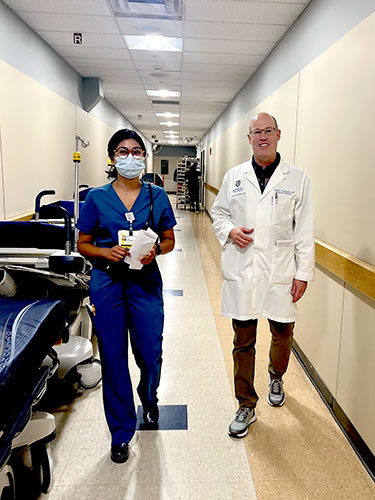
Hospitalists serve as Medical Directors for thirteen patient units at Strong Memorial Hospital. In partnership with the Unit Nurse Managers, they lead interdisciplinary unit-based teams and collaborate on initiatives to improve the quality and efficiency of care for our patients. Each unit-based team includes a core group of physicians, advanced practice providers, nurses, care coordinators, social workers, physical therapists, mobility assistants, and other important contributors to patient care.
Patient Safety and Quality Improvement
Hospitalists at Strong Memorial Hospital are actively involved in processes and lead over 20 different initiatives to improve the safety, efficiency and quality of care we provide our patients. Hospitalists lead and collaborate on initiatives to prevent hospital-acquired infections, delirium, falls, and readmissions, while improving pain control, geriatric care, and the overall patient experience. Hospitalist initiatives also target specific conditions, such as diabetes, pneumonia, and heart failure, and integrate methods to help our patients quit smoking.