

Alumni & Outcomes
Alumni Success Stories

He is a suicide attempt survivor who has been active in suicide prevention since 1996. He is the Director of the Lived Experience Academy, an internationally recognized speaker, and a published author.
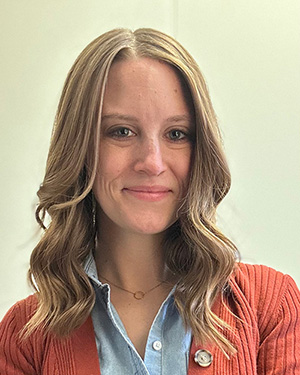
Anna Defayette, PhD, current KL2 awardee and T32 alum, spoke with the UR CTSI about her research on targeting social networks to prevent suicide in young people at high for psychosis and the role of mentoring during her research fellowship in the CSPS played in her career development.
Defayette, A. B., Silverstein, S. M., & Pisani, A. R. (2024). Social network structure as a biopsychosocial suicide prevention target for young people at clinical high-risk for psychosis. Schizophrenia Research, 270, 63-67.
https://doi.org/10.1016/j.schres.2024.06.006
Recent Alumni
(Full list of over 40 alumni coming soon!)
Annamarie Defayette,PhD
Anna received her PhD in Clinical Psychology from George Mason University in 2022. As a fellow, her research examined relations between social networks, inflammatory markers, and suicide risk among youth and young adults, including those considered to be at clinical high-risk for psychosis.

Morica Hutchinson,PhD
Morica’s work on fellowship focused on suicide prevention in adolescents, including the role of emotion regulation strategies in psychosocial interventions to bolster mental health outcomes and adaptive coping.
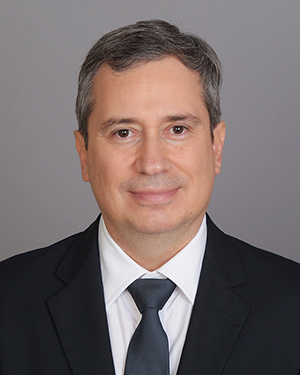
Alexandre Paim-Diaz, MD
Alex is a Brazilian MD/Ph.D. interested in investigating non-invasive brain stimulation techniques for decreasing suicidal ideation and their mechanism of action. On fellowship, he conducted a study investigating the feasibility of a home-based, non-invasive brain stimulation administered after hospital discharge for individuals with a history of suicidal ideation or behavior.