

Research News
Eric Small's Research Suggests a Cancer Protein Could Be at the Heart of Cardiac Scarring and Disease
The associate professor of Medicine and his colleagues found that the tumor suppressor protein p53 might play an important role in both. Supported in part by the CTSI, the research shows that too much p53 may speed progression of a heart rhythm disease, while too little p53 could lead to scarring after cardiac injury.

Fueling Discovery: Meet the 2026 Research and Education Pilot Awardees
Tuesday, June 9, 2026
The Department of Medicine is brimming with innovative ideas for research, quality improvement, and scholarship. Each year, the department provides Research and Education Pilot Awards to help bring those ideas to fruition. Awardees receive $20,000-$40,000 to fund sustainable programs that will lead to further extramural funding, scholarly dissemination, and/or peer-reviewed publications.
Learn more about this year’s awardees, who will kick off their projects on July 1:
B Cell-Derived Pro-Fibrotic Factors Drive Myofibroblast Differentiation in Lupus Nephritis
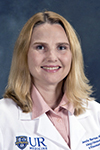
Jennifer Barnas, MD, PhD

Roukaya Yaakoubi, PhD
PIs: Jennifer Barnas, MD, PhD, and Roukaya Yaakoubi, PhD, of Allergy, Immunology, and Rheumatology
Mentor: Jennifer Anolik, MD, PhD, of Allergy, Immunology, and Rheumatology
Kidney involvement affects many patients with lupus and can lead to permanent kidney damage due to progressive scarring, or fibrosis. This project will explore a newly recognized role for B cells, which are known to produce autoantibodies and promote inflammation, in contributing to kidney fibrosis. Barnas and Yaakoubi will combine advanced analysis of kidney samples with laboratory studies using patient-derived B cells and human kidney cells to identify the signals that drive fibrosis and determine how B cells contribute to tissue remodeling. The findings could lead to more targeted therapies that prevent scarring while avoiding the broad immunosuppression associated with current B cell–depleting treatments.
Advancing Patient Autonomy Through HCP Documentation

Catherine Glatz, MD
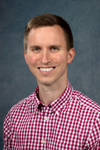
Paul Vermillion, MD
PIs: Catherine Glatz, MD, of Hospital Medicine, and Paul Vermillion, MD, of Palliative Care
Mentors: Ashley Jenkins, MD, MSc, of Hospital Medicine, and Janice Shriefer, MBA, MSN, DrPH, of Pediatrics
Almost half of hospitalized adults over 65 require a surrogate to help make medical decisions, but less than half of adults have a documented health care proxy. In New York, the Family Health Care Decisions Act outlines a hierarchy of decision-makers where no proxy is named, but their decisions can be challenged. Surrogate decision-making also places emotional and psychological burden on decision-makers.
This project aims to increase the percentage of patients with a health care proxy on file at the time of discharge. We will also investigate the barriers and facilitators to health care proxy documentation from the patient, caregiver, and healthcare professional perspective.
Understanding and Enhancing Peer Recovery Support Services in the Inpatient Setting for Adults with Substance Use Disorder

Elizabeth Pope-Collins, MD
PI: Elizabeth Pope-Collins, MD, of Hospital Medicine
Mentor: Ashley Jenkins, MD, MSc, of Hospital Medicine, and Marsha Wittink, MD, MBE, of Psychiatry
Hospitalization can be a moment where sick patients with substance use disorder are more motivated to initiate recovery or harm reduction practices. Leveraging this critical point can increase engagement in treatment and prevent further disability and death. Peer recovery support services are an under-studied intervention to encourage this engagement in care during hospitalization.
Pope-Collins will explore how patients, peers, and the rest of the medical team understand and experience peer recovery support services within University of Rochester Medicine to produce a local model of inpatient peer support grounded in realist and self-determination theory. She will also evaluate the national landscape of patient engagement strategies in substance use disorder to understand where her model exists in local and national contexts, laying the groundwork for future implementation studies.
Kidney Transplant Knowledge and Decision-Making Process in Older Population: Perceptions of Patients and Development of a Decision Support Tool

Hafsa Tariq, MBBS
PI: Hafsa Tariq, MBBS, of Nephrology
Mentors: Fahad Saeed, MBBS, of Nephrology, and Sandhya Seshadri, PhD, of Neurology
Older adults with end-stage kidney disease may benefit substantially from kidney transplantation, but they face unique risks and early post-transplant care burdens. Despite these tradeoffs, there is currently no shared decision-making tool designed for older adults, caregivers, and transplant clinicians that focuses on kidney transplantation.
This pilot study will explore older recipients’ and caregivers’ perspectives on kidney transplant education, knowledge gaps, and current decision-making practices through qualitative interviews. Findings will inform the development of a shared decision-making tool with input from patients, caregivers, and the multidisciplinary transplant team.
Pulmonary Leaders Honored for Outstanding Research, Mentorship
Thursday, May 28, 2026
University of Rochester Medicine pulmonary researchers and leaders M. Patricia Rivera, MD, Augusto Litonjua, MD, MPH, and Gloria Pryhuber, MD, were recognized for their outstanding contributions to pulmonary medicine and respiratory science at the American Thoracic Society International Conference, held May 15-20.
Learn more about their awards and the breadth of research our teams shared at the annual meeting.
Wilmot Wins $7.7M Award to Support Clinical Trials
Tuesday, May 26, 2026
The grant, led by Paul Barr, MD, of Hematology & Oncology, recognizes Wilmot Cancer Institute’s leading role in conducting large, cancer-related clinical trials. Barr discussed the rewarding nature of conducting clinical trials with Danielle Wallace, MD, of Hematology & Oncology, in a recent URochester SMD video.
Younger Adults Opt for ‘Quick-Fix’ Heart Valve Surgery Despite Risks
Tuesday, May 26, 2026
Transcatheter aortic valve replacement (TAVR) is a less invasive alternative to open heart surgery for aortic stenosis, but the prosthetic valves placed via TAVR wear out over time, posing a risk to younger patients. A study supported by Cardiology researchers shows that nearly half of low-risk, younger patients with aortic stenosis opt for TAVR despite the long-term risk.
DOM Sets the Pace at Heart Rhythm Society Meeting
Thursday, April 30, 2026
Our Division of Cardiology has been on the cutting edge of electrophysiology for several decades, from leading the seminal trials on implantable cardioverter defibrillators (ICDs) nearly 25 years ago to launching the first Long QT Syndrome (LQTS) registry in 1979. Last weekend, Cardiology faculty and trainees presented new research on ICDs, LQTS, and much more at the annual Heart Rhythm Society (HRS) meeting.
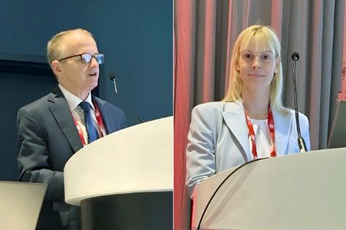
Ilan Goldenberg, MD and Valentina Kutyifa, MD, PhD
Given the immense advances in medical therapies for heart failure over the past two decades, Ilan Goldenberg, MD, and Valentina Kutyifa MD, PhD, are reassessing the risk stratification criteria for ICDs and whether they still provide a survival benefit compared to medical therapies. They presented recent research in two core sessions. Fellow Keshav Patel, MD, shared research from the LQTS registry highlighting the sustained risk of life-threatening events for LQTS patients over age 50. Faculty members and trainees also presented research on LVADS, beta-blockers, GLP-1s, and more:
- Mehmet Aktas, MD, MBA, presented “Effect of Carvedilol versus Metoprolol on the Risk of Inappropriate Implantable Cardioverter Defibrillator Therapies: Analysis from the APPRAISE-ATP Trial” and the poster “The Competing Risk of Arrhythmic Events and Non-Arhythmic Mortality by Age: Analysis from the APPRAISE-ATP Trial”
-
Malcolm Dix, MD, cardiovascular disease fellow, presented the poster “Impact of Statins on the Risk of Life-Threatening Ventricular Tachyarrhythmias in Patients with Non-ischemic Cardiomyopathy”
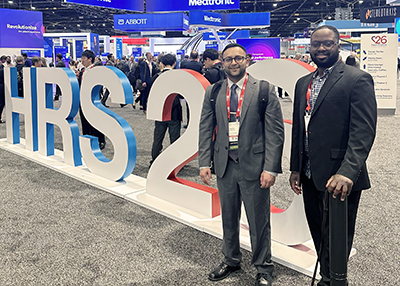
Keshav Patel, MD, and Malcolm Dix, MD
- Dillon Dzikowicz, PhD, RN, presented two posters: “Serum Potassium and Atrial Arrhythmia Risk in ICD Patients” and “Serum Potassium Levels and ICD Therapy Incidence in a Real-World Cohort”
- Shaul Gelikas, MD, MBA, presented two posters: “The Association Between Ranolazine Treatment and Ventricular Arrhythmia Burden in Patients Without Atrial Fibrillation” and “Ranolazine Treatment is Associated with a Reduced Burden of Ventricular Tachyarrhythmias Among Patients with Elevated Brain Natriuretic Peptide Levels”
- Ilan Goldenberg, MD, presented “Limitation of Evidence: Outdated Trial Data, Inadequate Risk Stratification, and Lack of Personalization.”
- David Huang, MD, presented the poster “Impact of Heart Failure Etiology on the Burden of Sustained Ventricular Tachyarrhythmic Events Following LVAD Implant: Preliminary data from the PIVATAL Trial”
- Jefferson Hunter, MD, Internal Medicine resident, presented the poster “Association of GLP-1 Receptor Agonist Use with Atrial and Ventricular Arrhythmias in Obese Populations with Heart Failure”
-
Valentina Kutyifa, MD, presented “LVEF is Not Enough: Limitations of Current ICD Criteria” and “The Present and Future of Risk Stratification for and Prevention of Sudden Cardiac Death: An HRS Think Tank Follow-Up (non-ACE)”
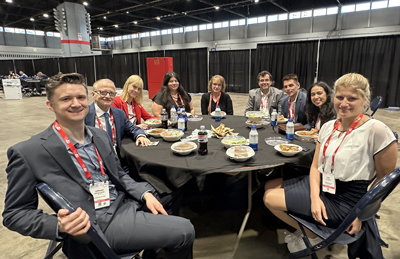
From Left: Jefferson Hunter, MD, Ilan Goldenberg, MD, Valentina Kutyifa, MD,
PhD, Nicole Guerrero, Kristina Cutter, Alexei Nakonechnyi, PhD, Dillon Dzikowicz,
PhD, RN, Sofia Nguyen, and Anika Beierle, MD. - Alexei Nakonechnyi, PhD, presented “LLM classification of clinical notes to facilitate lifestyle intervention in patients with atrial fibrillation” as part of the HRX satellite conference.
- Amole Ojo, MD, co-chaired the core session “Atrial Fibrillation and Special Populations: Treatment Dilemmas and Future Directions” and the HRS Board Review Course.
- Keshav Patel, MD, cardiovascular disease fellow, presented “Long QT Syndrome in Older Adults: Risk Factors and Outcomes After Age 50.”
Building Partnerships at 2026 Research in Health Equity Symposium
Tuesday, February 17, 2026
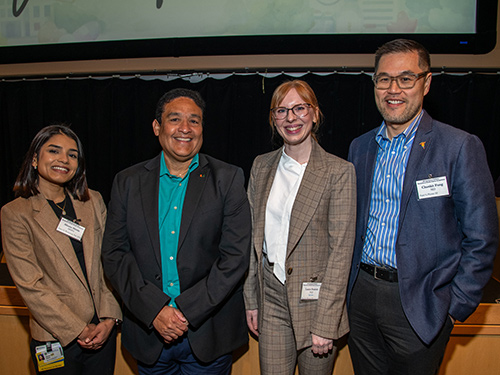
From left: Ahona Shirin, MBA, Olveen Carrasquillo, MD, MPH, Laura Stamm,
PhD, and Chunkit Fung, MD. Photo credit: Keith Burris.
Building sustainable solutions that address community needs and improve health equity takes a village. At our 4th Annual Research in Health Equity Symposium over 200 health care providers, researchers, trainees, and community leaders gathered to exchange expertise and learn how to build partnerships across disciplines and with the community to improve health for all.
Keynote speaker Olveen Carrasquillo, MD, MPH, associate dean for Clinical and Translational Research at the University of Miami’s Miller School of Medicine, shared his experience co-developing community health worker programs to address conditions such type 2 diabetes. Community partners shaped research questions, clinical interventions, and cultural alignment of health education.
Other panel presentations stressed the importance of working across institutions and sectors, from music therapists working with dentists to quell patients’ dental anxiety, to psychiatry residents riding along with law enforcement officers to better understand how they respond to mental health emergencies. A workshop featured research teams composed of University and community researchers, sharing strategies to build sustainable partnerships.
“This meeting exemplifies our commitment to advancing health equity, fostering collaboration, and engaging with our community to address pressing health care challenges,” said DOM Chair Ruth O’Regan, MD, who opened the meeting with a welcome message.
At the end of the day, judges selected the top projects and presentations from the symposium:
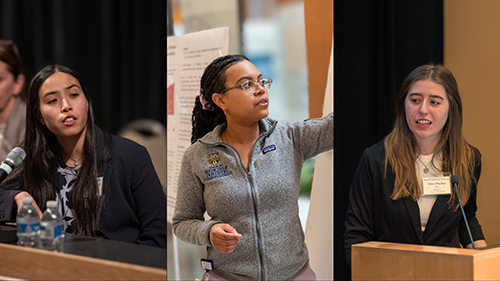
From left: Karina Hiroshige, MD, London Smith, and Drea Hacker. Photo credit:
Keith Burris.
- Best Community Partnership Project:
- Presenter: Karina Hiroshige, MD, trauma surgery research fellow at the University of Pennsylvania
- Project: “Increasing Patient Volume at a Student-Run Free Clinic: 21-Month Follow-Up of a Two-Phase Community Outreach Initiative”
- Best Oral Presentation:
- Presenter: Drea Hacker, fourth year undergraduate student at Hamilton College
- Project: “Adapting Individualized Care Plans for Inpatient Sickle Cell Care(I-PIC)”
- Best Poster Presentation:
- Presenter: London Smith, medical student at the University of Rochester School of Medicine & Dentistry
- Project: “Rochester Outreach Catering Dermatology Education: Outreach and Education Dermatology Initiative Serving Underserved Communities in Rochester, NY”
Congratulations to this year’s awardees and a special thank you to our conference coordinating team: Chunkit Fung, MD, DOM’s associate chair for Engagement, Enrichment, and Well-Being, Laura Stamm, PhD, assistant professor of General Medicine and Health Humanities & Bioethics, and Ahona Shirin, MBA, project manager for DOM Engagement, Enrichment, and Well-Being.