

Meet Rashmi Jasrasaria, MD
Meet Rashmi Jasrasaria, MD
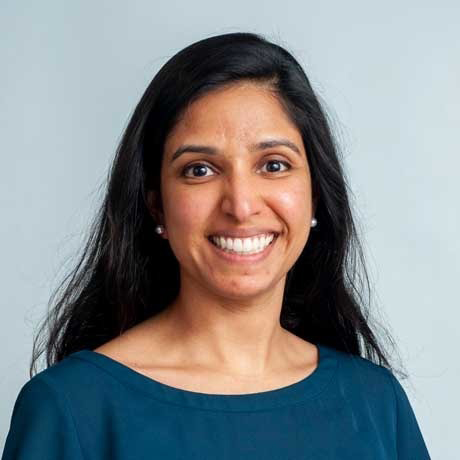
When confronted with some of the most persistent public health challenges, Rashmi Jasrasaria, MD, makes a sobering admission: “I struggle to navigate the healthcare system myself, and I'm a doctor." Through her work as a health equity researcher, Jasrasaria is determined to help address this problem.
As a primary care physician at University of Rochester Medicine’s Strong Internal Medicine and a member of the Center for Community Health & Prevention’s (CCHP) Community Health Partnerships team, Jasrasaria is well-positioned to make an impact. Whether she’s treating patients in her office, partnering with local nonprofits to educate the public, or developing new community-based programs to reach underserved populations, her goal remains the same: helping people overcome barriers that stand between them and a better life.
“Unlike my colleagues who specialize in the heart, GI tract, or the brain and nervous system, I get to be the expert in the whole person,” Jasrasaria said. “A big part of my job is understanding how to motivate someone to make changes, what's acceptable to them and what’s not, and I love that. I take the same approach in my community-based work, to meet people where they are, to help them flourish and be the best versions of themselves."
Connecting Communities with Healthcare
Long before arriving at the University of Rochester, Jasrasaria learned that caring for patients means understanding their lives beyond the clinic. In 2009, while attending Harvard College, she traveled to Tanzania to interview 20 women living with HIV who received group microloans to finance small businesses. She sought to understand how economic empowerment influenced their health and wellbeing. Then, in 2013, while pursuing her medical degree and a scholarly concentration in Community Health at Stanford School of Medicine, Jasrasaria interviewed 30 asylum-seeking women from the Middle East, Sub-Saharan Africa, and South Asia who regularly participated in community craft circles. Through these experiences, she gained a deeper understanding of the social and economic factors that shape health and the barriers that can make access to care difficult.
Jasrasaria’s research explored how gathering in social groups helps connect people with each other, develop self-esteem, build self-efficacy, and achieve improved health. She learned about persistent gaps in both physical and mental health for underserved populations. It was meaningful and rewarding work and inspired Jasrasaria’s path into primary care.
Jasrasaria returned to her home state of Massachusetts to complete an Internal Medicine Primary Care residency at Massachusetts General Hospital (MGH) and served an additional year as chief resident. Upon joining the faculty at Harvard and MGH, she practiced community-based primary care at MGH Chelsea HealthCare Center and co-founded and co-directed the MGH Center for Immigrant Health, an umbrella organization dedicated to promoting health equity for immigrants through education, advocacy, and research.
In her most recent role, Jasrasaria serves as a physician liaison for the Community Health Partnerships team at the Center for Community Health & Prevention. Being fluent in Spanish enables her to help strengthen outreach and engagement with Rochester's Hispanic, immigrant, and refugee communities by building trust among populations that often face barriers to care.
"I've had an opportunity to meet community leaders, work with some nonprofits, play a role in health education, and think of ways to engage with the community that are impactful for diverse populations, especially those who speak languages other than English," she explained.
Addressing Health Inequities in Rochester
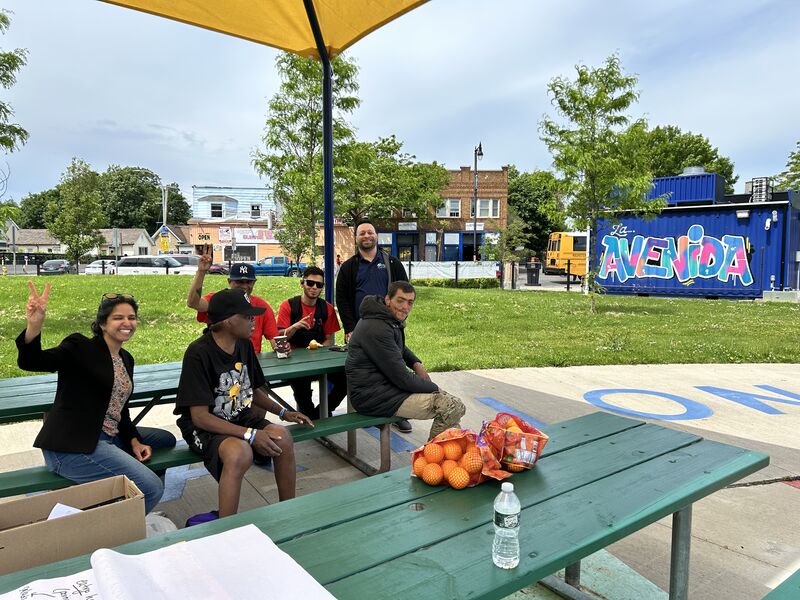 Jasrasaria sits with health ambassadors at Innovation Square in Rochester.Earlier this year, Jasrasaria and colleague Laura Sugarwala, MBA, RD, director of Community Health Partnerships at CCHP, received a 2026 Health Equity Innovation Award from Excellus BlueCross BlueShield. The annual award supports nonprofit organizations dedicated to improving health outcomes throughout the region.
Jasrasaria and Sugarwala will use the $30,000 grant to co-create a bilingual health curriculum with Father Tracy Advocacy Center (FTAC), a non-profit organization on North Clinton Avenue in Rochester, NY that helps individuals recover from substance use disorders (SUDs) in a way that respects each person’s experience and journey.
The project, Bilingual Health Education in a Community Setting, responds directly to needs identified in Monroe County's 2025 Community Health Needs Assessment, which found significant health disparities among Latino communities, people experiencing homelessness, and individuals living with substance use disorders. Drug overdose remains one of the leading causes of premature death in Monroe County, disproportionately affecting low-income and minority residents, including many Latino community members.
The project builds upon findings from a 2025 pilot program that demonstrated bilingual group health education increased participants' commitment to self-care, improved disease management, and boosted confidence in navigating the healthcare system.
"We’re excited to see people find their voice and say, 'Yes, I can do this. I'm capable and motivated to change my own health.'" Jasrasaria said.
Learning Together
The new initiative consists of four bilingual group health education sessions developed collaboratively by Jasrasaria, Sugarwala, FTAC staff, and a cohort of 10 ambassadors, or peer advocates. The sessions focus on identifying ambassadors’ personal health goals and learning priorities and then addressing those priorities through evidence-based education on nutrition, behavioral health, and healthcare navigation.
The series employs a “train the trainer” model, in which ambassadors act as peer advocates, extending the program’s impact beyond direct participation— amplifying the program’s reach and effectiveness.
The Bilingual Health Education in a Community Setting program emphasizes the transformative power of gathering and learning together. Building meaningful connections combats isolation and loneliness and enhances health and well-being. “When individuals come together, the impact resonates through families and communities, creating a ripple effect of improved health and collective resilience,” said Jasrasaria.