Poster Day Awards
Poster Day Awards
29th Annual Resident Poster Day Presentation
September 8, 2026
Resident Poster Day is an event for internal medicine and medicine-pediatrics residents to present clinical cases, research, and Q/I posters. We are excited to have posters from the URMC and Rochester Regional programs this year. Posters were judged on the chosen topic, the poster arrangement and the oral presentation.
Click on an image below to view slide gallery.
Winners of Poster Day 2026
Clinical Vignette
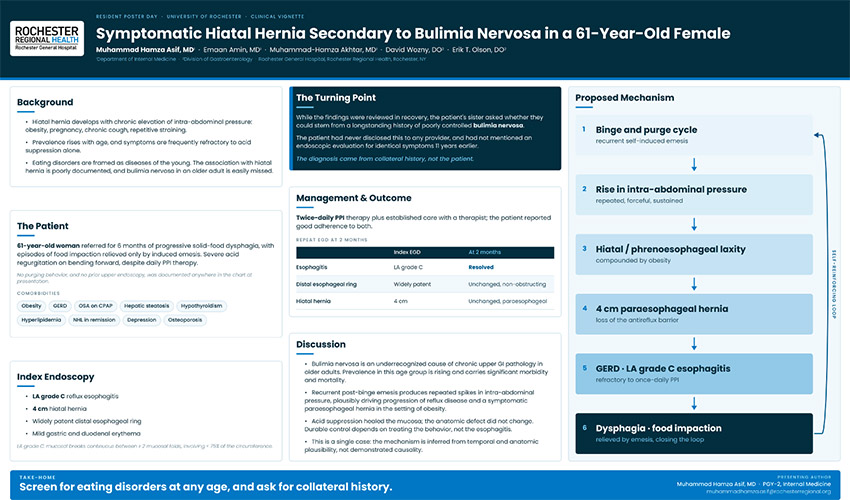
Muhammad Hamza Asif, M.D.1; Emaan Amin, M.D.1; Muhammad-Hamza Akhtar, M.D.1; David Wozny, D.O. 2; and Eric T. Olson, D.O.2
1Department of Medicine, Rochester General Hospital, Rochester Regional Health, Rochester, NY; 2Division of Gastroenterology, Rochester General Hospital, Rochester Regional Health, Rochester NY
Background
- Hiatal hernia develops with chronic elevation of intra-abdominal pressure: obesity, pregnancy, chronic cough, repetitive straining.
- Prevalence rises with age, and symptoms are frequently refractory to acid suppression alone.
- Eating disorders are framed as diseases of the young. The association with hiatal hernia is poorly documented, and bulimia nervosa in an older adult is easily missed.
The Patient
61-year-old woman referred for 6 months of progressive solid-food dysphagia, with episodes of food impaction relieved only by induced emesis. Sere acid regurgitation on bending forward, despite daily PPI therapy.
No purging behavior, and no prior upper endoscopy, was documented anywhere in the chart at presentation.
Comorbidities: Obesity, GERD, OSA on CPAP, hepatic steatosis, hypothyroidism, hyperlipidemia, NHL in remission, depression, osteoporosis.
Index Endoscopy
- LA grade C reflux esophagitis
- 4 cm hiatal hernia
- Widely patent distal esophaeal ring
- Mild gastric and duodenal erythema
LA grade C mucosal breaks continuous between ≥ 2 mucosal folds, involving < 75% of the circumference.
The Turning Point
While the findings were reviewed in recovery, the patient's sister asked whether they could stem from a longstanding history of poorly controlled bulimia nervosa.
The patient had never disclosed this to any provider, and had not mentioned an endoscopic evaluation for identical symptoms 11 earlier.
The diagnosis came from collateral history, not the patient.
Management and Outcome
Twice daily PPI therapy plus established care with a therapist; the patient reported good adherence to both.
Repeat EGD at 2 Months
| Condition | Index EGD | At 2 months |
|---|---|---|
| Esophagitis | LA grade C | Resolved |
| Distal esophageal ring | Widely patent | Unchanged, non-obstructing |
| Hiatal hernia | 4 cm | Unchanged, paraesophageal |
Discussion
- Bulimia nervosa is an underrecognized cause of chronic upper GI pathology in older adults. Prevalence in this age group is rising and carries significant morbidity and mortality.
- Recurrent post-binge emesis produces repeated spikes in intra-abdominal pressure, plausibly driving progression of reflux disease and a symptomatic paraesophaeal hernia in the setting of obesity.
- Acid suppression heated the ucosa; the anatomic defect did not change. Durable control depends on treating the behavior, not the esophagitis.
- This is a single case: the mechanism is inferred from temporal and anatomic plusibility, not demonstrated causality.
Proposed Mechanism
- Binge and purge cycle: recurrent self-induced emesis
- Rise in intraabdominal pressure: repeated, forceful, sustained
- Hiatal/prenoesophageal laxity: compounded by obesity
- 4 cm paraesophageal hernia: loss of the antireflux barrier
- GERD - LA grade C esophagitis: refractory to once-daily PPI
- Dysphagia - Food impaction: relieved by emesis, closing the loop
Take-Home
Screen for eating disorders at any age, and ask for collateral history.
Sarah H. Choudhury, M.D.; Ava Wexler, M.D.; Shamroz Farooq, M.D., Kevin S. McGrody, M.D.
Department of Medicine, Division of Cardiology, University of Rochester School of Medicine and Dentistry, Rochester, NY
Introduction
- Antiphospholipid syndrome (APS) is an under-recognized cause of STEMI, particularly in younger patients without traditional cardiovascular risk factors.
- Catastrophic APS (<1% of APS) is a life-threatening form with rapid multiorgan thrombosis.
- STEMI as the initial presentation of CAPS is rare and may mimic plaque rupture, delaying diagnosis.
- CAPS mortality is 25–37%, emphasizing the importance of early recognition and treatment with anticoagulation, steroids, and plasma exchange/IVIG.
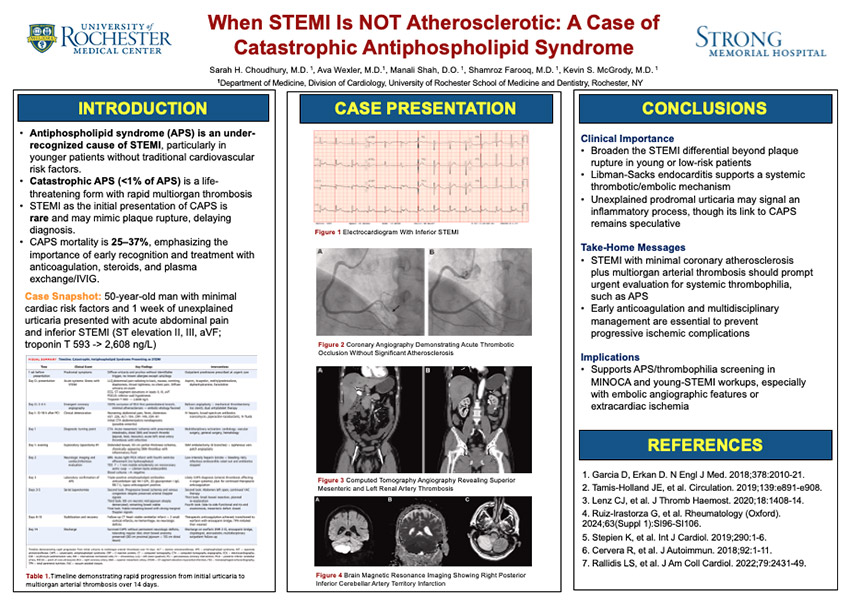
Case Snapshot: 50-year-old man with minimal cardiac risk factors and 1 week of unexplained urticaria presented with acute abdominal pain and inferior STEMI (ST elevation II, III, aVF; troponin T 593 -> 2,608 ng/L)
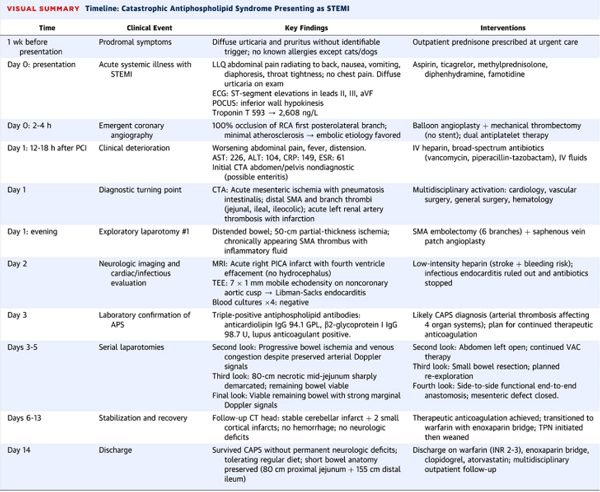
Timeline demonstrating rapid progression from initial urticaria to multiorgan arterial thrombosis over 14 days. ALT = alanine aminotransferase; APS = antiphospholipid syndrome; AST = aspartate aminotransferase; CAPS = catastrophic antiphospholipid syndrome; CRP = C-reactive protein; CT = computed tomography; CTA = computed tomography angiography; ECG = electrocardiography; ESR = erythrocyte sedimentation rate; INR = international normalized ratio; IV = intravenous; LLQ = left lower quadrant; PC I= Percutaneous coronary intervention; PICA = posterior inferior cerebella arter; POCUS = point-of-care ultrasound; RCA = right coronary artery; SMA = superior mesenteric artery; STEMI = segment elevation myocardial infarction; TEE = transesophageal echocardiograph; TPN = total parenteral nutrition; VAC = vacuum-assisted closure.
Case Presentation
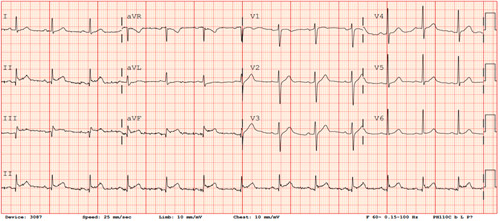
Figure 1. Electrocardiogram With Inferior STEMI
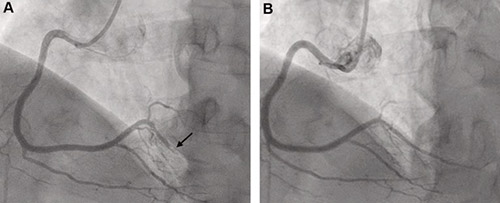
Figure 2. Coronary Angiography Demonstrating Acute Thrombotic Occlusion Without Significant Atherosclerosis
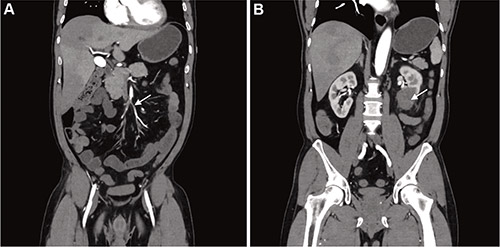
Figure 3. Computed Tomography Angiography Revealing Superior Mesenteric and Left Renal Artery Thrombosis
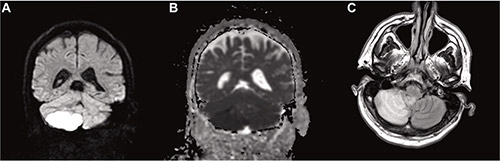
Figure 4. Brain Magnetic Resonance Imaging Showing Right Posterior Inferior Cerebellar Artery Territory Infarction
Conclusions
Clinical Importance
- Broaden the STEMI differential beyond plaque rupture in young or low-risk patients
- Libman-Sacks endocarditis supports a systemic thrombotic/embolic mechanism
- Unexplained prodromal urticaria may signal an inflammatory process, though its link to CAPS remains speculative
Take-Home Messages
- STEMI with minimal coronary atherosclerosis plus multiorgan arterial thrombosis should prompt urgent evaluation for systemic thrombophilia, such as APS
- Early anticoagulation and multidisciplinary management are essential to prevent progressive ischemic complications
Implications
- Supports APS/thrombophilia screening in MINOCA and young-STEMI workups, especially with embolic angiographic features or extracardiac ischemia
References
- Garcia D, Erkan D. N Engl J Med. 2018;378:2010-21.
- Tamis-Holland JE, et al. Circulation. 2019;139:e891-e908.
- Lenz CJ, et al. J Thromb Haemost. 2020;18:1408-14.
- Ruiz-Irastorza G, et al. Rheumatology (Oxford). 2024;63(Suppl 1):SI96-SI106.
- Stepien K, et al. Int J Cardiol. 2019;290:1-6.
- Cervera R, et al. J Autoimmun. 2018;92:1-11.
- Rallidis LS, et al. J Am Coll Cardiol. 2022;79:2431-49.
Asma Tameez ud din, Syeda M. Rukh, D.O.; Nina C. Rizk, M.D., M.P.H., M.S.
University of Rochester Medicine
Introduction
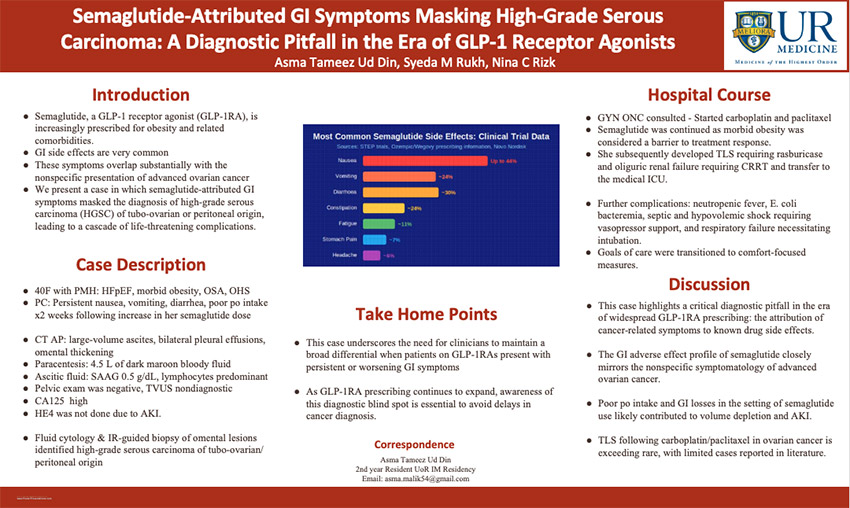
- Semaglutide, a GLP-1 receptor agonist (GLP-1RA), is increasingly prescribed for obesity and related comorbidities.
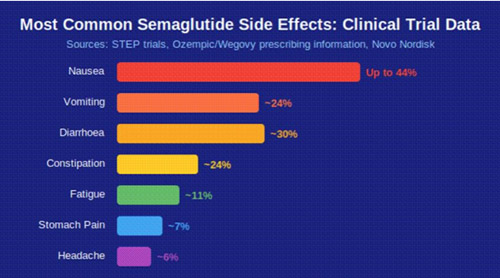
- GI side effects are very common
- These symptoms overlap substantially with the nonspecific presentation of advanced ovarian cancer
- We present a case in which semaglutide-attributed GI symptoms masked the diagnosis of high-grade serous carcinoma
- (HGSC) of tubo-ovarian or peritoneal origin, leading to a cascade of life-threatening complications
Case Description
- 40F with PMH: HFpEF, morbid obesity, OSA, OHS
- PC: Persistent nausea, vomiting, diarrhea, poor po intake x2 weeks following increase in her semaglutide dose
- CT AP: large-volume ascites, bilateral pleural effusions, omental thickening
- Paracentesis: 4.5 L of dark maroon bloody fluid
- Ascitic fluid: SAAG 0.5 g/dL, lymphocytes predominant
- Pelvic exam was negative, TVUS nondiagnostic
- CA125 high
- HE4 was not done due to AKI.
- Fluid cytology & IR-guided biopsy of omental lesions identified high-grade serous carcinoma of tubo-ovarian/ peritoneal origin
Take Home Points
- This case underscores the need for clinicians to maintain a broad differential when patients on GLP-1RAs present with persistent or worsening GI symptoms
- As GLP-1RA prescribing continues to expand, awareness of this diagnostic blind spot is essential to avoid delays in cancer diagnosis.
Hospital Course
- GYN ONC consulted - Started carboplatin and paclitaxel
- Semaglutide was continued as morbid obesity was considered a barrier to treatment response.
- She subsequently developed TLS requiring rasburicase and oliguric renal failure requiring CRRT and transfer to the medical ICU.
- Further complications: neutropenic fever, E. coli bacteremia, septic and hypovolemic shock requiring vasopressor support, and respiratory failure necessitating intubation.
- Goals of care were transitioned to comfort-focused measures.
Discussion
- This case highlights a critical diagnostic pitfall in the era of widespread GLP-1RA prescribing: the attribution of cancer-related symptoms to known drug side effects.
- The GI adverse effect profile of semaglutide closely mirrors the nonspecific symptomatology of advanced ovarian cancer.
- Poor po intake and GI losses in the setting of semaglutide use likely contributed to volume depletion and AKI.
- TLS following carboplatin/paclitaxel in ovarian cancer is exceeding rare, with limited cases reported in literature.
Research
Jefferson Hunter, M.D., M.B.A.; Mandeep Singh, D.O.; Keshav Patel, M.D., M.P.H.
Background
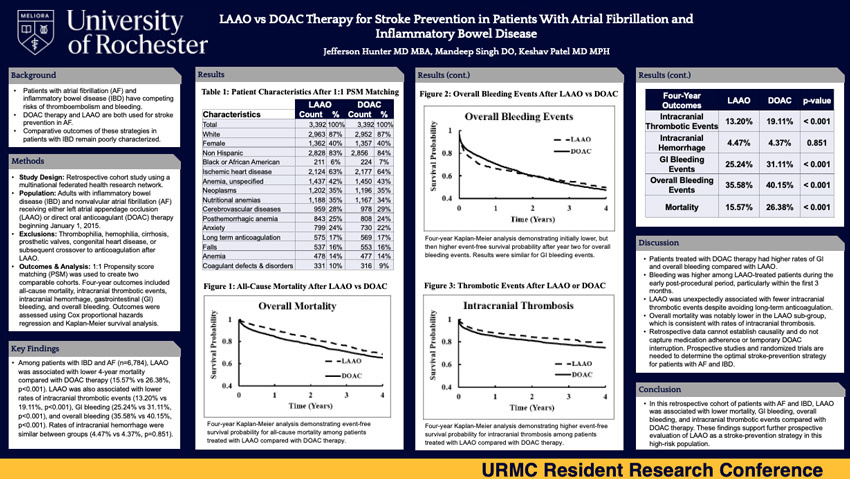
- Patients with atrial fibrillation (AF) and inflammatory bowel disease (IBD) have competing risks of thromboembolism and bleeding.
- DOAC therapy and LAAO are both used for stroke prevention in AF.
- Comparative outcomes of these strategies in patients with IBD remain poorly characterized.
Methods
- Study Design: Retrospective cohort study using a multinational federated health research network.
- Population: Adults with inflammatory bowel disease (IBD) and nonvalvular atrial fibrillation (AF) receiving either left atrial appendage occlusion (LAAO) or direct oral anticoagulant (DOAC) therapy beginning January 1, 2015.
- Exclusions: Thrombophilia, hemophilia, cirrhosis, prosthetic valves, congenital heart disease, or subsequent crossover to anticoagulation after LAAO.
- Outcomes & Analysis: 1:1 Propensity score matching (PSM) was used to create two comparable cohorts. Four-year outcomes included all-cause mortality, intracranial thrombotic events, intracranial hemorrhage, gastrointestinal (GI) bleeding, and overall bleeding. Outcomes were assessed using Cox proportional hazards regression and Kaplan-Meier survival analysis.
Key Findings
- Among patients with IBD and AF (n=6,784), LAAO was associated with lower 4-year mortality compared with DOAC therapy (15.57% vs 26.38%, p<0.001). LAAO was also associated with lower rates of intracranial thrombotic events (13.20% vs 19.11%, p<0.001), GI bleeding (25.24% vs 31.11%, p<0.001), and overall bleeding (35.58% vs 40.15%, p<0.001). Rates of intracranial hemorrhage were similar between groups (4.47% vs 4.37%, p=0.851).
Results
| Characteristics | LAAO Count | DOAC Count |
|---|---|---|
| Total | 3,392 (100%) | 3,392 (100%) |
| White | 2,963 (87%) | 2,952 (87%) |
| Female | 1,362 (40%) | 1,357 (40%) |
| Non Hispanic | 2,828 (83%) | 2,856 (84%) |
| Black or African American | 211 (6%) | 224 (7%) |
| Ischemic heart disease | 2,124 (63%) | 2,177 (64%) |
| Anemia, unspecified | 1,437 (42%) | 1,450 (43%) |
| Neoplasms | 1,202 (35%) | 1,196 (35%) |
| Nutritional anemias | 1,188 (35%) | 1,167 (34%) |
| Cerebrovascular diseases | 959 (28%) | 978 (29%) |
| Posthemorrhagic anemia | 843 (25%) | 808 (24%) |
| Anxiety | 799 (24%) | 730 (22%) |
| Long term anticoagulation | 575 (17%) | 569 (17%) |
| Falls | 537 (16%) | 553 (16%) |
| Anemia | 478 (14%) | 477 (14%) |
| Coagulant defects & disorders | 331 (10%) | 316 (9%) |
Figure 1. All-Cause Mortality after LAOO vs DOAC
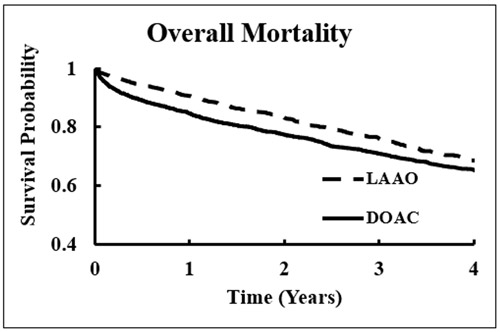
Four-year Kaplan-Meier analysis demonstrating event-free survival probability for all-cause mortality among patients treated with LAAO compared with DOAC therapy.
Figure 2. Overall Bleeding Events After LAAO vs DOAC
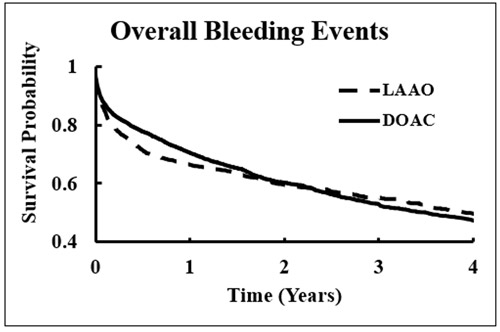
Four-year Kaplan-Meier analysis demonstrating initially lower, but then higher event-free survival probability after year two for overall bleeding events. Results were similar for GI bleeding events.
Figure 3. Thrombotic Events After LAAO or DOAC
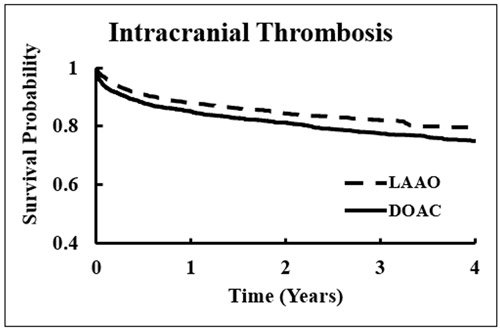
Four-year Kaplan-Meier analysis demonstrating higher event-free survival probability for intracranial thrombosis among patients treated with LAAO compared with DOAC therapy.
| Four-Year Outcomes | LAAO | DOAC | p-value |
|---|---|---|---|
| Intracranial Thrombotic Events | 13.20% | 19.11% | <0.001 |
| Intracranial Hemorrhage | 4.47% | 4.37% | 0.851 |
| GI Bleeding Events | 25.24% | 31.11% | <0.001 |
| Overall Bleeding Events | 35.58% | 40.15% | <0.001 |
| Mortality | 15.57% | 26.38% | <0.001 |
Discussion
- Patients treated with DOAC therapy had higher rates of GI and overall bleeding compared with LAAO.
- Bleeding was higher among LAAO-treated patients during the early post-procedural period, particularly within the first 3 months.
- LAAO was unexpectedly associated with fewer intracranial thrombotic events despite avoiding long-term anticoagulation.
- Overall mortality was notably lower in the LAAO sub-group, which is consistent with rates of intracranial thrombosis.
- Retrospective data cannot establish causality and do not capture medication adherence or temporary DOAC interruption. Prospective studies and randomized trials are needed to determine the optimal stroke-prevention strategy for patients with AF and IBD.
Conclusion
- In this retrospective cohort of patients with AF and IBD, LAAO was associated with lower mortality, GI bleeding, overall bleeding, and intracranial thrombotic events compared with DOAC therapy. These findings support further prospective evaluation of LAAO as a stroke-prevention strategy in this high-risk population.
Sarah H. Choudhury, M.D.; Arsh Issany, M.D.; M.P.H., Yilin Xu, M.S.; Rebekah J. Walker, Ph.D.; Sebastian Linde, Ph.D.; Obinna Ekwunife, Ph.D.; Jennifer A. Campbell, Ph.D., M.P.H.; Jennifer K. Lang, M.D.
University of Rochester Medicine, Rochester NY
Background
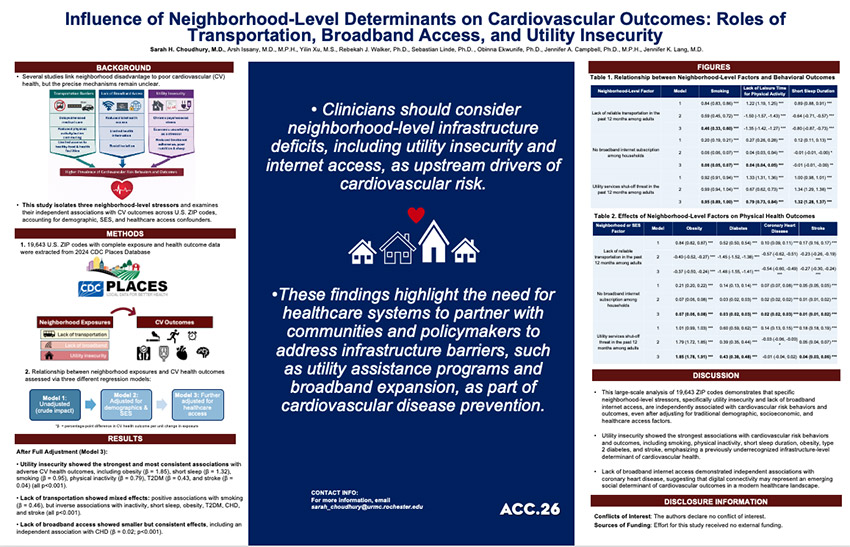
- Several studies link neighborhood disadvantage to poor cardiovascular (CV) health, but the precise mechanisms remain unclear.
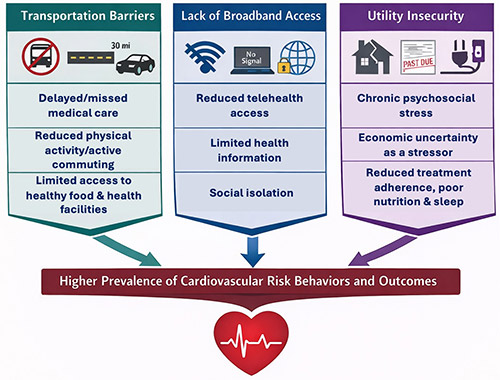
- This study isolates three neighborhood-level stressors and examines their independent associations with CV outcomes across U.S. ZIP codes, accounting for demographic, SES, and healthcare access confounders.
Methods
- 19,643 U.S. ZIP codes with complete exposure and health outcome data were extracted from 2024 CDC Places Database
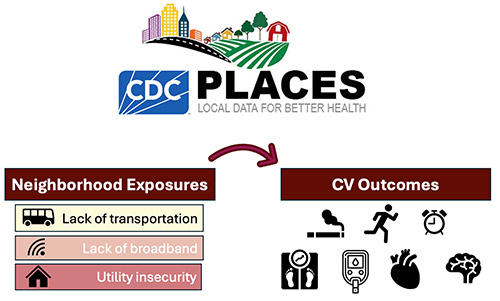
- Relationship between neighborhood exposures and CV health outcomes assessed via three different regression models:
- Model 1: Unadjusted (crude impact)
- Model 2: Adjusted for demographics & SES
- Model 3: Further adjusted for ehatlcare access
Results
- Utility insecurity showed the strongest and most consistent associations with adverse CV health outcomes, including obesity (β = 1.85), short sleep (β = 1.32), smoking (β = 0.95), physical inactivity (β = 0.79), T2DM (β = 0.43, and stroke (β = 0.04) (all p<0.001).
- Lack of transportation showed mixed effects: positive associations with smoking (β = 0.46), but inverse associations with inactivity, short sleep, obesity, T2DM, CHD, and stroke (all p<0.001).
- Lack of broadband access showed smaller but consistent effects, including an independent association with CHD (β = 0.02; p<0.001).
Discussion
- This large-scale analysis of 19,643 ZIP codes demonstrates that specific neighborhood-level stressors, specifically utility insecurity and lack of broadband internet access, are independently associated with cardiovascular risk behaviors and outcomes, even after adjusting for traditional demographic, socioeconomic, and healthcare access factors.
- Utility insecurity showed the strongest associations with cardiovascular risk behaviors and outcomes, including smoking, physical inactivity, short sleep duration, obesity, type 2 diabetes, and stroke, emphasizing a previously underrecognized infrastructure-level determinant of cardiovascular health.
- Lack of broadband internet access demonstrated independent associations with coronary heart disease, suggesting that digital connectivity may represent an emerging social determinant of cardiovascular outcomes in a modern healthcare landscape.
Conclusions
- Clinicians should consider neighborhood-level infrastructure deficits, including utility insecurity and internet access, as upstream drivers of cardiovascular risk.
- These findings highlight the need for healthcare systems to partner with communities and policymakers to address infrastructure barriers, such as utility assistance programs and broadband expansion, as part of cardiovascular disease prevention.
Disclosure Information
Conflicts of Interest: The authors declare no conflict of interest.
Sources of Funding: Effort for this study received no external funding.
QI
Jie Yin, M.D.1; Elizabeth Kiss, D.N.P.2; Shawn Newlands, M.D., Ph.D.2
1Department of Medicine, University of Rochester Medicine, Rochester, NY; 2Department of Otolaryngology, University of Rochester Medicine, Rochester NY
Introduction
- Post-operative radiation therapy (PORT) is critical to improve survival for patients with head and neck cancer
- Per NCCN guideline, time between surgery and initiation of PORT: ≤ 6 weeks
- At Wilmot Cancer Institute, time between surgery and initiation of PORT: 11.5 weeks

- As part of the initiative to reduce delays to PORT, a SmartPhrase was developed to evaluate the status of PORT to increase PORT documentation
SMATIE Aim
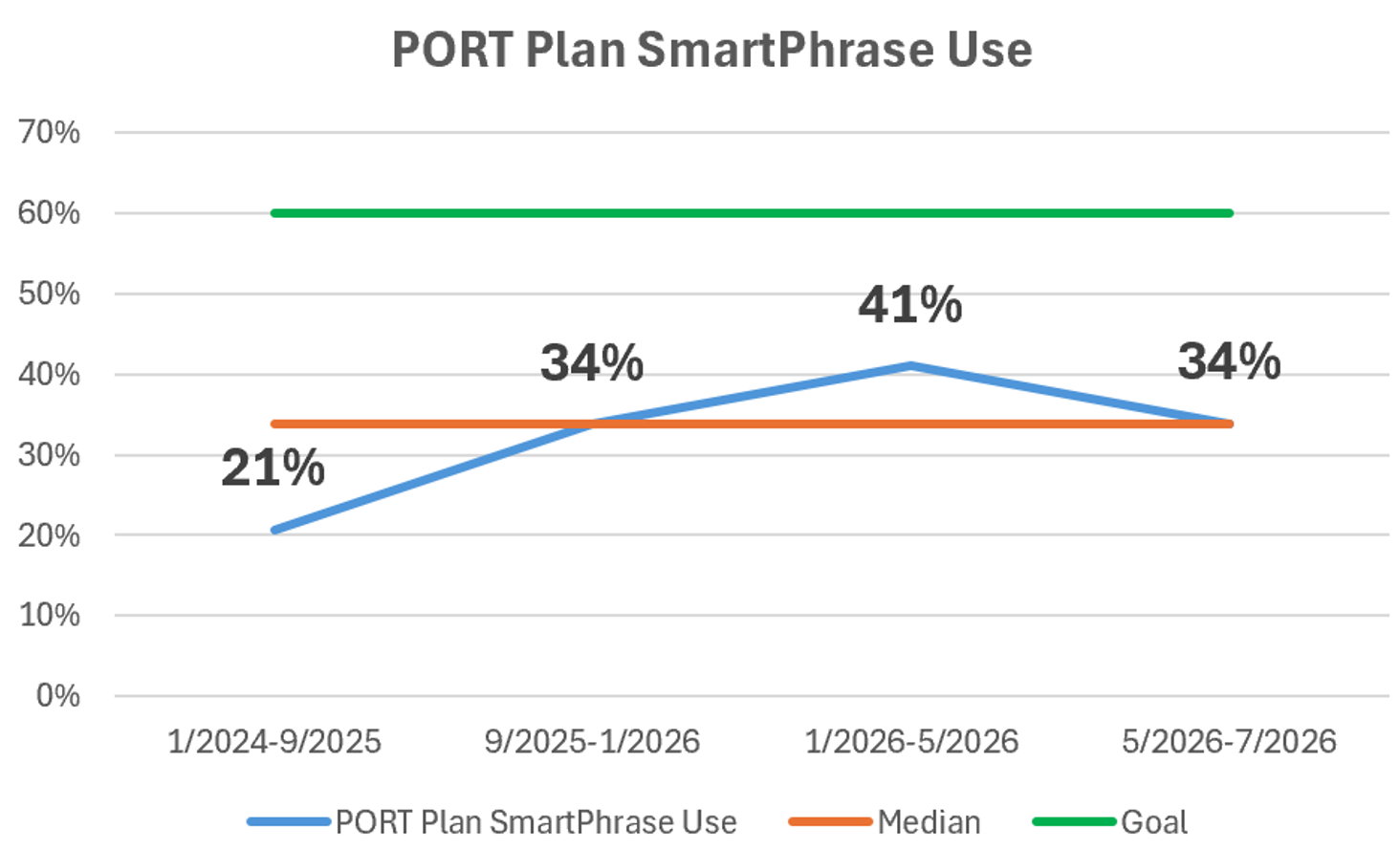
To increase use of the adjuvant radiation SmartPhrase in postoperative head and neck progress notes from approximately 21% toward a goal of 60% within one year.
Methods
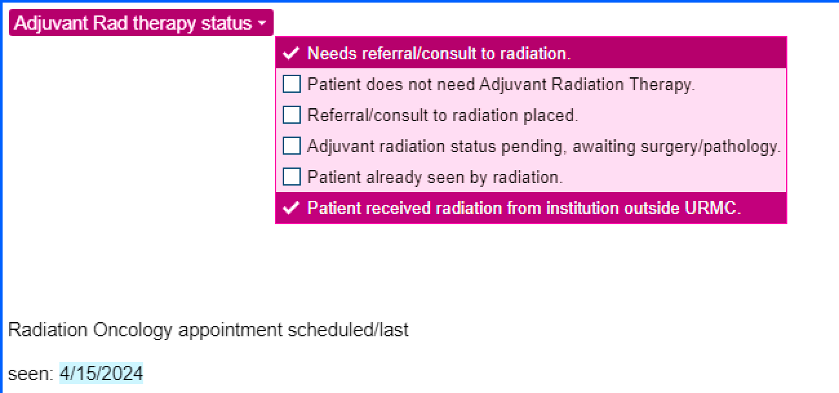
- I devised a red text reminder to encourage SmartPrase completion and encouraged ENT chief to promote SmartPrase use amongst ENT residents:
- We tracked SmartPhrase use through the electronic record and visualized progress through a run chart
Results
Conclusions
- The resident-focused reminder improved use of a standardized SmartPhrase designed to reinforce postoperative radiation planning
- CSmartPhrase utilization increased from a baseline of 20.7% to a peak of 41%, although the improvement was not fully sustained and remained below the 60% goal
Future Directions
- The next PDSA cycle should focus on understanding barriers and improving reliability towards the 60% goal
- The outcome of the larger multidisciplinary Head and Neck Time to Treatment initiative: average time from surgery to PORT decreased from 11.5 to 6.61 weeks
Sydney Barrett, M.D.; Jefferson Hunter, M.D., M.B.A.; Erica Miller, M.D.
Background & Rationale
- Lipoprotein(a) Lp(a) is a genetically determined, independent risk factor for cardiovascular disease.
- Elevated Lp(a) is common, affecting approximately 1 in 5 adults.
- 2026 ACC/AHA guidelines recommend one-time Lp(a) measurement in adults.
- Elevated Lp(a) identifies residual ASCVD risk not captured by a standard lipid panel.
- Identifying elevated Lp(a) can promote more intensive management of modifiable ASCVD risk factors
SMART Aim
- Increase Lp(a) screening in eligible patients from 5% to 30% in an internal medicine residency primary care clinic over 4 months.
Methods
- The Plan-Do-Study-Act framework was utilized to assess possible interventions and achieve the project’s aim.
- Eligible patients included adults ≥18 seeing residents as a CCP who had not previously undergone Lp(a) testing.
- Preliminary data was obtained using Slicer-Dicer: a query software embedded within Epic Electronic Health Record.
- Primary outcomes: the number of Lp(a) orders conducted by residents.
- Balancing measures: duplicate or repeat Lp(a) orders.
- A four-pronged intervention targeted residents, staff and EHR-level barriers to screening.
- Stakeholder feedback was incorporated into the first PDSA cycle
Interventions
- Staff Training
- Provide clinic staff (nursing, technicians, administrators) Lp(a) education and collaborated on Lp(a) collection.
- Resident Education
- Educated residents on Lp(a) testing, patient communication, result interpretation, and dyslipidemia management.
- EPIC Optimization
- Developed a Lp(a) screening dot phrase integration into annual physicals
- Renamed the order to "Lipoprotein(a) - Lp(a)" instead of “LPA” to avoid confusion.
- Physical In-Clinical Reminders
- Placed patient-facing materials in each clinic room, waiting area, and resident work room
- Posted in-clinic reminders to resident to order LP(s).
Outcomes
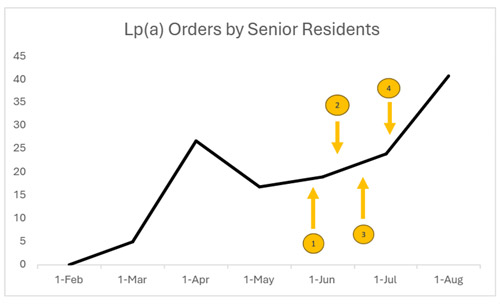
- Prior to February 2026, Lp(a) tests had not been ordered
- Lp(a) orders increased 71% following implementation of three of the four intervention from July to August
Future Outlook
- Detailed analysis in conjunction with the University of Rochester Medical Center Quality Institute is underway to provide additional statistics and comprehensive outcomes.
- Investigators are inquiring into additional ways to notify providers via EHR when Lp(a) has or has not been ordered.
- Additional educational methods, such as integration into ambulatory education sessions, are being considered.
References
Blumenthal, Roger S., et al. “2026 ACC/AHA/AACVPR/ABC/ACPM/ADA/AGS/APhA/ASPC/NLA/PCNA Guideline on the Management of Dyslipidemia: A Report of the American College of Cardiology/American Heart Association Joint Committee on Clinical Practice Guidelines.” Journal of the American College of Cardiology, vol. 87, no. 19, 2026, pp. 2624–2757. https://doi.org/10.1016/j.jacc.2025.11.016.
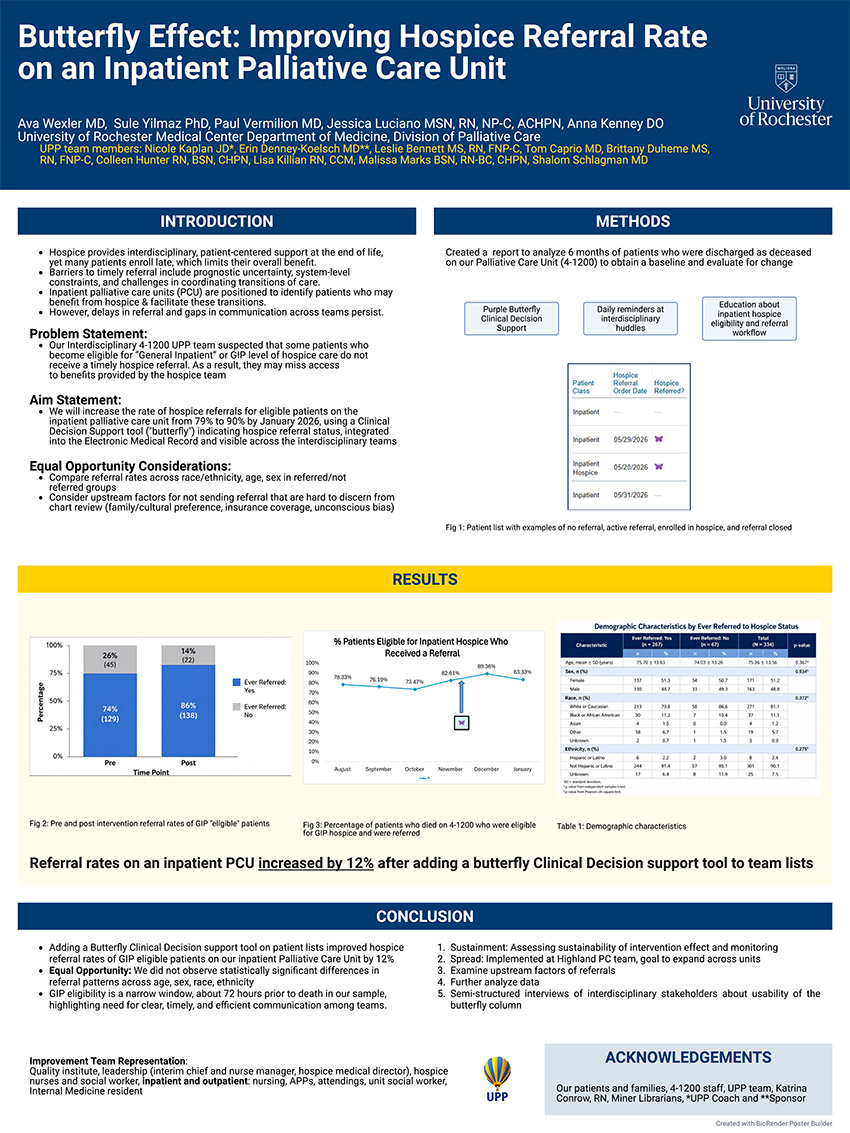
Ava Wexler, M.D.; Sule Yilmaz, Ph.D.; Paul Vermilion, M.D.; Jessica Luciano, M.S.N., R.N., NP-C, A.C.H.P.N.; Anna Kenney, D.O.
UPP team members: Nicole Kaplan, J.D.*; Erin Denney-Koelsch, M.D*.;* Leslie Bennett M.S., R.N., FNP-C; Tom Caprio, M.D.; Brittany Duheme, M.S., R.N., FNP-C; Colleen Hunter, R.N., B.S.N., C.H.P.N.; Lisa Killian, R.N., C.C.M., Malissa Marks B.S.N.; RN-BC, C.H.P.N.; Shalom Schlagman, M.D.
University of Rochester Medicine, Rochester, NY
Introduction
- Hospice provides interdisciplinary, patient-centered support at the end of life, yet many patients enroll late, which limits their overall benefit.
- Barriers to timely referral include prognostic uncertainty, system-level constraints, and challenges in coordinating transitions of care.
- Inpatient palliative care units (PCU) are positioned to identify patients who may benefit from hospice & facilitate these transitions.
- However, delays in referral and gaps in communication across teams persist.
Problem Statement
- Our Interdisciplinary 4-1200 UPP team suspected that some patients who become eligible for “General Inpatient” or GIP level of hospice care do not receive a timely hospice referral. As a result, they may miss access to benefits provided by the hospice team
Aim Statement
- We will increase the rate of hospice referrals for eligible patients on the inpatient palliative care unit from 79% to 90% by January 2026, using a Clinical Decision Support tool ("butterfly") indicating hospice referral status, integrated into the Electronic Medical Record and visible across the interdisciplinary teams
Equal Opportunity Considerations
- Compare referral rates across race/ethnicity, age, sex in referred/not referred groups
- Consider upstream factors for not sending referral that are hard to discern from chart review (family/cultural preference, insurance coverage, unconscious bias)
Methods
Created a report tp review 6 months of patients who were discharged as deceased on our Palliative Care Unit (4-1200) to obtain a baseline and evaluate for change
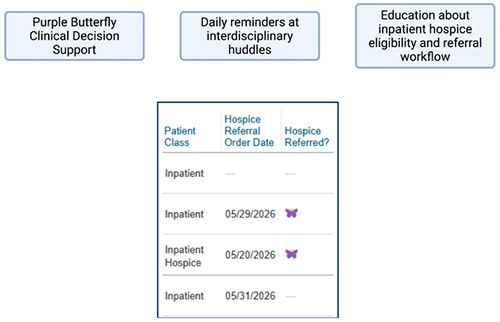
Fig 1: Patient list with examples of no referral, active referral, enrolled in hospice, and referral closed
Results
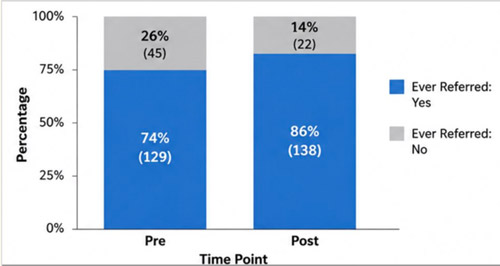
Fig 2: Pre and post intervention referral rates of GIP "eligible" patients
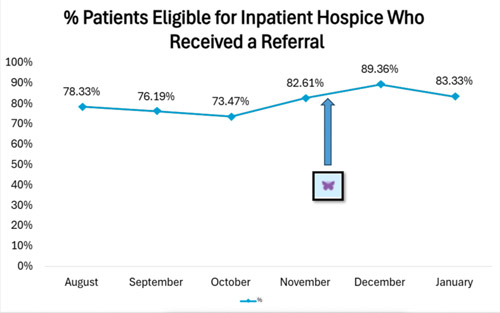
Fig 3: Percentage of patients who died on 4-1200 who were eligible for GIP hospice and were referred
Referral rates on our inpatient PCU increased by 12% after adding a Butterfly Clinical Decision support tool to team lists
Conclusion
- Adding the Butterfly Clinical Decision support tool on patient lists improved hospice referral rates on our inpatient Palliative Care Unit by 12%
- Equal Opportunity: We did not observe statistically significant differences in referral patterns across age, sex, race, ethnicity
- GIP eligibility is a narrow window, about 72 hours prior to death in our sample, highlighting need for clear, timely, and efficient communication among teams.
- Sustainment: Assessing sustainability of intervention effect
- Spread: Implemented at Highland PC team, goal to expand across units
- Examine upstream factors of referrals
- Further analyze data
- Semi-structured interviews of interdisciplinary stakeholders about usability of the butterfly column
Improvement Team Representation: Quality institute, leadership (interim chief and nurse manager, hospice medical director), hospice nurses and social worker, inpatient and outpatient: nursing, APPs, attendings, unit social worker, Internal Medicine resident
Acknowledgements
Our patients and families, 4-1200 staff, UPP team, Katrina Conrow, Miner Librarians, *UPP Coach and **Sponsor
Additional Presentations and Posters Submitted
Clinical
Sydney Barrett, M.D.; Lefan He, M.D.; Malcolm Dix, M.D.; Kushani Kaushi Gajjar, M.D.
University of Rochester Medicine, Rochester, NY
Introduction
- Hereditary hemochromatosis (HH) is an iron overload disorder characterized by progressive iron deposition in multiple organs, including the heart.
- Cardiac involvement, though uncommon, can cause arrythmias, dilated cardiomyopathy, and cardiogenic shock.
- Early recognition is critical, as iron-induced myocardial dysfunction may be reversible with timely diagnosis and treatment.
Case Presentation
- 42-year-old woman with major depressive disorder and tobacco use presented with progressive dyspnea and was found to have new-onset atrial fibrillation with rapid ventricular response and dilated cardiomyopathy.
- Despite rate control and cardioversion, she developed progressive heart failure with hypoperfusion and volume overload, prompting transfer to an advanced heart failure center.
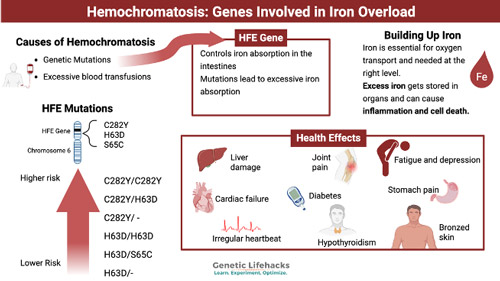
Figure 1: HFE dysfunction leads to inappropriately low hepcidin activity and increased intestinal absorption, resulting in progressive systemic iron accumulation. Cardiac iron deposition promotes oxidative injury and myocardial dysfunction, which can progress to dilated cardiomyopathy, arrhythmias, and heart failure.
Clinical Course
- Initial Presentation: Progressive dyspnea and palpitations. Lethargic on presentation with signs of hypoperfusion, including cool extremities and volume overload. Review of systems positive for orthopnea, abdominal distension and significant weight gain.
- Progressive decompensation: Recurrent atrial fibrillation with RVR and worsening biventricular failure progressed to low output cardiogenic shock despite rate control, cardioversion and aggressive diuresis. Estimated LVEF of 20-25% with biatrial enlargement and global systolic dysfunction
- Cardiogenic Shock: Refractory shock required inotropic support, aggressive diuresis, and escalation to temporary mechanical circulatory support. Initial IABP support was transitioned to Impella 5.5 with RP Flex for severe biventricular failure. Cardiac Index 1.19, SCAI Stage D Shock
- Therapeutic Intervention: Iron chelation therapy was initiated, as phlebotomy was contraindicated due to tenuous volume status and ongoing critical illness. High intensity chelation with deferoxamine with adjunctive deferiprone recommended by hematology team along with genetic testing.
Initial Vitals and Physical Exam
- BP 100/63 , HR 77, RR 20, T 33.3C
- General: lethargic, ill appearing, ashen, pale
- Pulmonary: decreased breath sounds
- Cardiovascular: regular rate, irregular rhythm
- Abdomen: distended
- MSK: 2+ lower extremity edema, extremities are cool to the touch
Pertinent Laboratory Values
- Ferritin: 47,732
- Serum iron: 212
- Transferrin: 130
- Transferrin Saturation: unable to calculate
- TIBC: unable to calculate
- MCV: 96
- Platelets: 250
- Lactate: 2.2
- Creatinine: 1.44
- AST/ALT: 259/386
- INR: 4.6
- SAAG 1.4
- Ascites Fluid Total Protein 3.2
- LVEF 21%
- Cardiac Index of 1.19
Cardiac Imaging Modalities
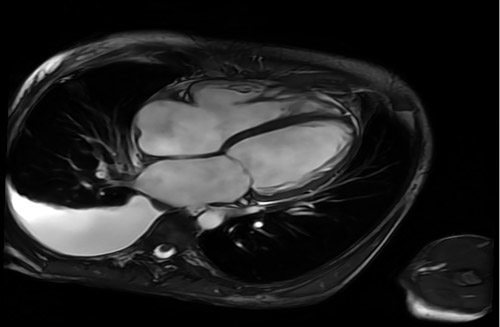
Figure 2: CMR short-axis image demonstrating a dilated left ventricle with global hypokinesis and reduced systolic function. The right ventricle is also dilated with reduced contractility. No delayed gadolinium enhancement is present, suggesting absence of myocardial fibrosis and supporting a reversible non-ischemic cardiomyopathy. T2 mapping findings showed myocardial iron quantification consistent with hemochromatosis.
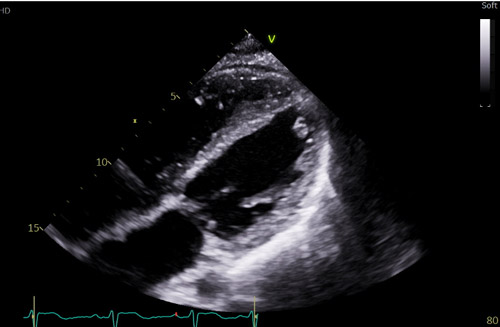
Figure 3: Transthoracic echocardiography demonstrating a mildly dilated left ventricle with severely reduced ejection fraction and global systolic dysfunction, with associated biatrial enlargement and right ventricular dilation. Follow up at 6 months after guideline directed medical therapy and iron reduction therapy demonstrates recovery of LVEF to 49% with mild residual global dysfunction.
Discussion
- Cardiac hemochromatosis is a rare, but potentially reversible cause of severe nonischemic cardiomyopathy and cardiogenic shock. Multi-organ dysfunction warrants consultation from perspective teams for thorough evaluation.
- Iron deposition causes oxidative stress, mitochondrial dysfunction, and impaired calcium handling, leading to systolic dysfunction and arrythmias.
- Management of severe iron overload requires multidisciplinary collaboration with hematology to guide chelation strategy, dosing, and monitoring particularly when phlebotomy is not feasible in hemodynamically unstable patients.
- CMR was critical in establishing myocardial iron deposition and assessing reversibility.
- The absence of late gadolinium enhancement suggested limited irreversible fibrosis and potential for recovery.
- This case highlights that advanced cardiogenic shock from iron overload may still improve with prompt diagnosis, circulatory support and disease directed therapy.
Key Clinical Takeaways
- Think beyond “common causes” - severe unexplained cardiomyopathy, arrythmias, and systemic dysfunction should prompt evaluation for iron overload and other reversible etiologies.
- Multidisciplinary approach is critical for timely care. Hematology, Gastroenterology and Cardiology worked closely to coordinate care.
- CMR can identify reversibility - myocardial iron quantification and assessment for fibrosis can establish the diagnosis and help determine the potential for functional recovery.
- Treat the cause while supporting circulation - in fulminant cardiac hemochromatosis, temporary mechanical circulatory support can bridge patients through cardiogenic shock while chelation therapy reduces myocardial iron burden.
- Recovery can be dramatic - Early recognition and disease-directed treatment may permit substantial recovery of ventricular function, even after severe biventricular failure.
Brian M. Cornell, M.D.1; Joshua Rosario, M.D.2; Mark G. Ettel, M.D.1; Patrick Twohig, M.D., M.P.H.1
1University of Rochester Medicine, Rochester, NY; 2University of Pittsbugh Medical Center, Pittsburgh, PA
Introduction
- Sarcoidosis is a multisystem granulomatous disease that can affect any organ system, though most commonly affects the lungs and lymphatic system
- Gastrointestinal involvement of sarcoidosis is rare, occurring in 0.1-3.4% of cases, with colonic disease particularly uncommon
- Patients may be asymptomatic or have findings that mimic neoplastic or inflammatory pathology, creating diagnostic uncertainty
Case Presentation
- 63-year-old female with biopsy-proven sarcoidosis, T2DM, HTN, and dyslipidemia, presenting for her second screening colonoscopy
- Initial sarcoidosis diagnosis was 13 years ago, following biopsy of a toe mass, which demonstrated non-necrotizing granulomas in skin & soft tissue. She has since been found to have non-necrotizing granulomas in an axillary lymph node and in the skin of the cheek, and was also found to have mediastinal and bilateral hilar lymphadenopathy, all believed to be related to her sarcoidosis
- Initial screening colonoscopy, 11 years prior, revealed no polyps
- Denied abdominal pain, diarrhea, hematochezia, weight loss, or other gastrointestinal symptoms
- Colonoscopy significant for three, 2 mm sessile polyps in the ascending and transverse colon, which were removed
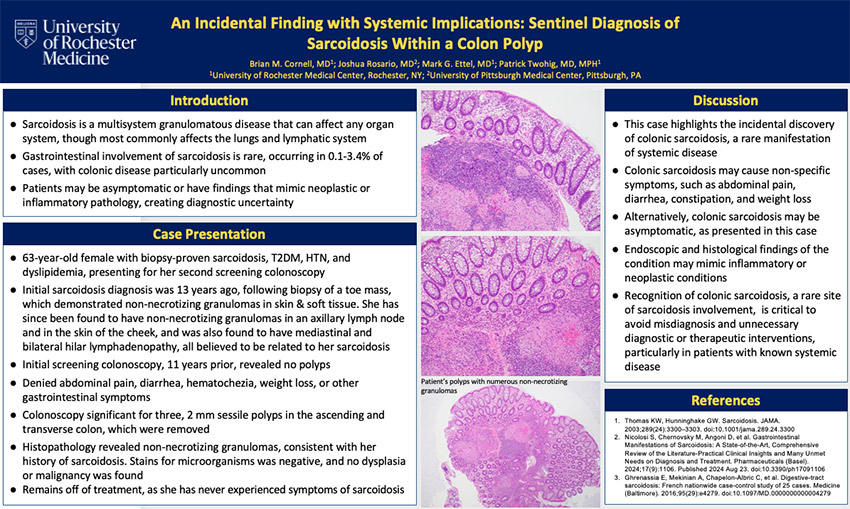
- Histopathology revealed non-necrotizing granulomas, consistent with her history of sarcoidosis. Stains for microorganisms was negative, and no dysplasia or malignancy was found
- Remains off of treatment, as she has never experienced symptoms of sarcoidosis
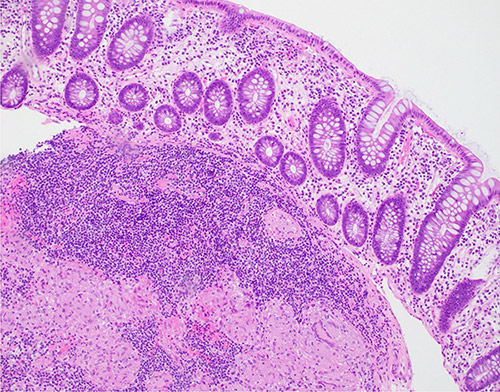
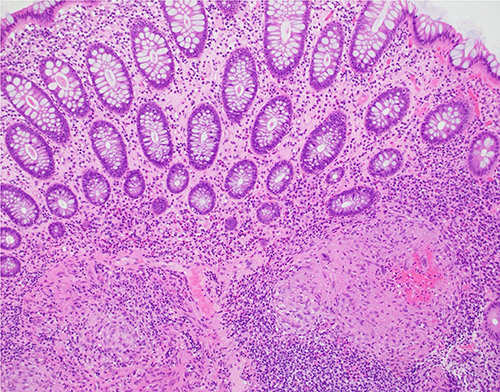
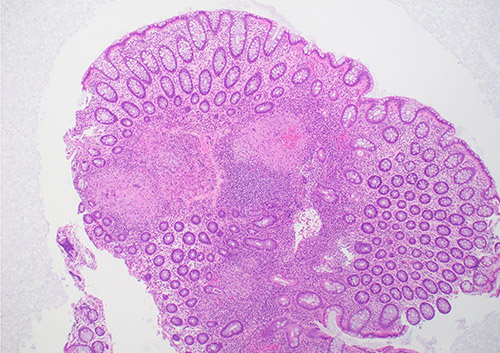
Figures 1a-c: Patient's polyps with numerous non-necrotizing granulomas
Discussion
- This case highlights the incidental discovery of colonic sarcoidosis, a rare manifestation of systemic disease
- Colonic sarcoidosis may cause non-specific symptoms, such as abdominal pain, diarrhea, constipation, and weight loss
- Alternatively, colonic sarcoidosis may be asymptomatic, as presented in this case
- Endoscopic and histological findings of the condition may mimic inflammatory or neoplastic conditions
- Recognition of colonic sarcoidosis, a rare site of sarcoidosis involvement, is critical to avoid misdiagnosis and unnecessary diagnostic or therapeutic interventions, particularly in patients with known systemic disease
References
- Thomas KW, Hunninghake GW. Sarcoidosis. JAMA. 2003;289(24):3300–3303. doi:10.1001/jama.289.24.3300
- Nicolosi S, Chernovsky M, Angoni D, et al. Gastrointestinal Manifestations of Sarcoidosis: A State-of-the-Art, Comprehensive Review of the Literature-Practical Clinical Insights and Many Unmet Needs on Diagnosis and Treatment. Pharmaceuticals (Basel). 2024;17(9):1106. Published 2024 Aug 23. doi:10.3390/ph17091106
- Ghrenassia E, Mekinian A, Chapelon-Albric C, et al. Digestive-tract sarcoidosis: French nationwide case-control study of 25 cases. Medicine (Baltimore). 2016;95(29):e4279. doi:10.1097/MD.0000000000004279
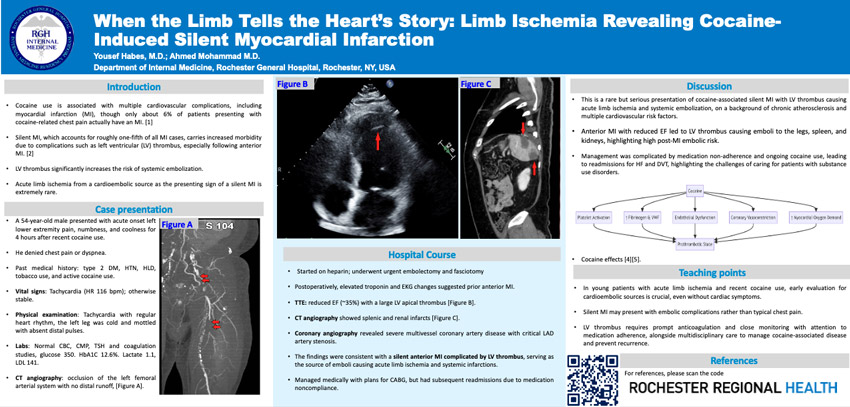
Yousef Habes, M.D.; Ahmed Mohammad, M.D.
Department of Internal Medicine, Rochester General Hospital, Rochester, NY
Introduction
- Cocaine use is associated with multiple cardiovascular complications, including myocardial infarction (MI), though only about 6% of patients presenting with cocaine‑related chest pain actually have an MI. [1]
- Silent MI, which accounts for roughly one‑fifth of all MI cases, carries increased morbidity due to complications such as left ventricular (LV) thrombus, especially following anterior MI. [2]
- LV thrombus significantly increases the risk of systemic embolization.
- Acute limb ischemia from a cardioembolic source as the presenting sign of a silent MI is extremely rare.
Case Presentation
- A 54-year-old male presented with acute onset left lower extremity pain, numbness, and coolness for 4 hours after recent cocaine use.
- He denied chest pain or dyspnea.
- Past medical history: type 2 DM, HTN, HLD, tobacco use, and active cocaine use.
- Vital signs: Tachycardia (HR 116 bpm); otherwise stable.
- Physical examination: Tachycardia with regular heart rhythm, the left leg was cold and mottled with absent distal pulses
- Labs: Normal CBC, CMP, TSH and coagulation studies, glucose 350. HbA1C 12.6%. Lactate 1.1, LDL 141.
- CT angiography: occlusion of the left femoral arterial system with no distal runoff, [Figure A].
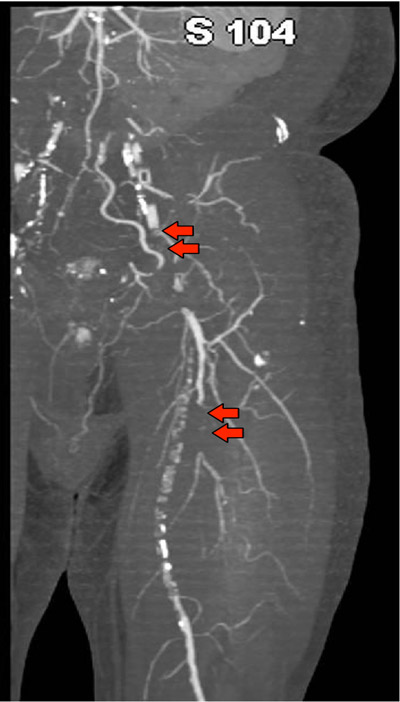
Figure A
Hospital Course
- Started on heparin; underwent urgent embolectomy and fasciotomy
- Postoperatively, elevated troponin and EKG changes suggested prior anterior MI.
- TTE: reduced EF (~35%) with a large LV apical thrombus [Figure B].
- CT angiography showed splenic and renal infarcts [Figure C].
- Coronary angiography revealed severe multivessel coronary artery disease with critical LAD artery stenosis.
- The findings were consistent with a silent anterior MI complicated by LV thrombus, serving as the source of emboli causing acute limb ischemia and systemic infarctions.
- Managed medically with plans for CABG, but had subsequent readmissions due to medication noncompliance.
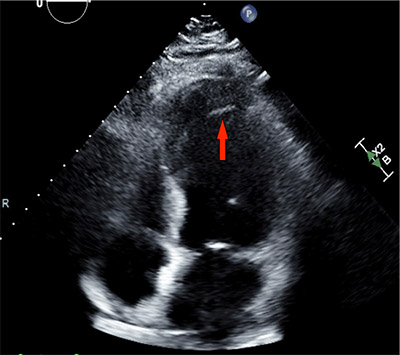
Figure B
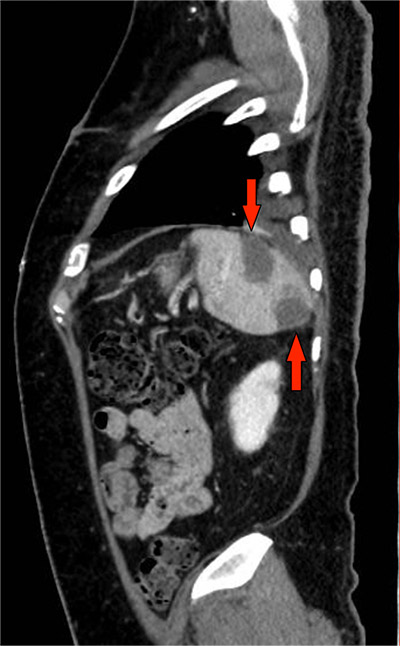
Figure C
Discussion
- This is a rare but serious presentation of cocaine-associated silent MI with LV thrombus causing acute limb ischemia and systemic embolization, on a background of chronic atherosclerosis and multiple cardiovascular risk factors.
- Anterior MI with reduced EF led to LV thrombus causing emboli to the legs, spleen, and kidneys, highlighting high post-MI embolic risk.
- Management was complicated by medication non-adherence and ongoing cocaine use, leading to readmissions for HF and DVT, highlighting the challenges of caring for patients with substance use disorders.
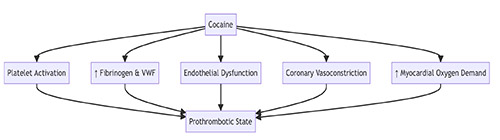
- Cocaine effects [4][5].
Teaching Points
- In young patients with acute limb ischemia and recent cocaine use, early evaluation for cardioembolic sources is crucial, even without cardiac symptoms.
- Silent MI may present with embolic complications rather than typical chest pain.
- LV thrombus requires prompt anticoagulation and close monitoring with attention to medication adherence, alongside multidisciplinary care to manage cocaine-associated disease and prevent recurrence.
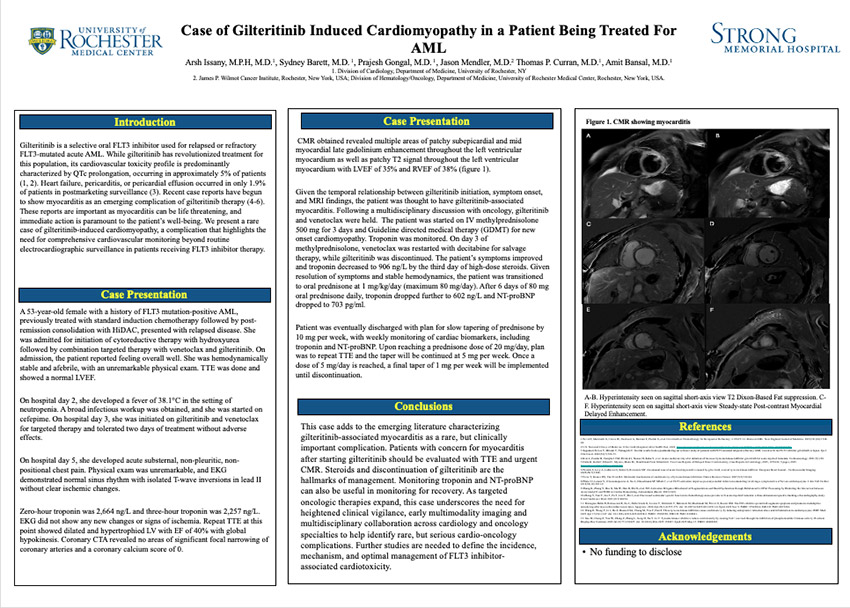
Arsh Issany, M.P.H, M.D.;1 Sydney Barrett, M.D.;1 Prajesh Gongal, M.D.;1 Jason Mendler, M.D.;2 Thomas P. Curran, M.D.;1 Amit Bansal, M.D.1
1Division of Cardiology, Department of Medicine, University of Rochester Medicine, NY; 2James P. Wilmot Cancer Institute, Rochester, NY; Division of Hematology/Oncology, Department of Medicine, University of Rochester Medicine, Rochester, NY.
Introduction
Gilteritinib is a selective oral FLT3 inhibitor used for relapsed or refractory FLT3-mutated acute AML. While gilteritinib has revolutionized treatment for this population, its cardiovascular toxicity profile is predominantly characterized by QTc prolongation, occurring in approximately 5% of patients (1, 2). Heart failure, pericarditis, or pericardial effusion occurred in only 1.9% of patients in postmarketing surveillance (3). Recent case reports have begun to show myocarditis as an emerging complication of gilteritinib therapy (4-6). These reports are important as myocarditis can be life threatening, and immediate action is paramount to the patient’s well-being. We present a rare case of gilteritinib-induced cardiomyopathy, a complication that highlights the need for comprehensive cardiovascular monitoring beyond routine electrocardiographic surveillance in patients receiving FLT3 inhibitor therapy.
Case Presentation
A 53-year-old female with a history of FLT3 mutation-positive AML, previously treated with standard induction chemotherapy followed by post-remission consolidation with HiDAC, presented with relapsed disease. She was admitted for initiation of cytoreductive therapy with hydroxyurea followed by combination targeted therapy with venetoclax and gilteritinib. On admission, the patient reported feeling overall well. She was hemodynamically stable and afebrile, with an unremarkable physical exam. TTE was done and showed a normal LVEF.
On hospital day 2, she developed a fever of 38.1°C in the setting of neutropenia. A broad infectious workup was obtained, and she was started on cefepime. On hospital day 3, she was initiated on gilteritinib and venetoclax for targeted therapy and tolerated two days of treatment without adverse effects.
On hospital day 5, she developed acute substernal, non-pleuritic, non-positional chest pain. Physical exam was unremarkable, and EKG demonstrated normal sinus rhythm with isolated T-wave inversions in lead II without clear ischemic changes.
Zero-hour troponin was 2,664 ng/L and three-hour troponin was 2,257 ng/L. EKG did not show any new changes or signs of ischemia. Repeat TTE at this point showed dilated and hypertrophied LV with EF of 40% with global hypokinesis. Coronary CTA revealed no areas of significant focal narrowing of coronary arteries and a coronary calcium score of 0.
CMR obtained revealed multiple areas of patchy subepicardial and mid myocardial late gadolinium enhancement throughout the left ventricular myocardium as well as patchy T2 signal throughout the left ventricular myocardium with LVEF of 35% and RVEF of 38% (figure 1).
Given the temporal relationship between gilteritinib initiation, symptom onset, and MRI findings, the patient was thought to have gilteritinib-associated myocarditis. Following a multidisciplinary discussion with oncology, gilteritinib and venetoclax were held. The patient was started on IV methylprednisolone 500 mg for 3 days and Guideline directed medical therapy (GDMT) for new onset cardiomyopathy. Troponin was monitored. On day 3 of methylprednisolone, venetoclax was restarted with decitabine for salvage therapy, while gilteritinib was discontinued. The patient’s symptoms improved and troponin decreased to 906 ng/L by the third day of high-dose steroids. Given resolution of symptoms and stable hemodynamics, the patient was transitioned to oral prednisone at 1 mg/kg/day (maximum 80 mg/day). After 6 days of 80 mg oral prednisone daily, troponin dropped further to 602 ng/L and NT-proBNP dropped to 703 pg/ml.
Patient was eventually discharged with plan for slow tapering of prednisone by 10 mg per week, with weekly monitoring of cardiac biomarkers, including troponin and NT-proBNP. Upon reaching a prednisone dose of 20 mg/day, plan was to repeat TTE and the taper will be continued at 5 mg per week. Once a dose of 5 mg/day is reached, a final taper of 1 mg per week will be implemented until discontinuation.
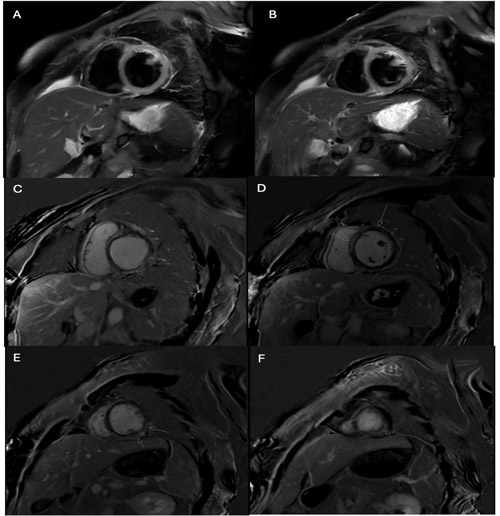
A-B. Hyperintensity seen on sagittal short-axis view T2 Dixon-Based Fat suppression. C-F. Hyperintensity seen on sagittal short-axis view Steady-state Post-contrast Myocardial Delayed Enhancement.
Conclusions
This case adds to the emerging literature characterizing gilteritinib-associated myocarditis as a rare, but clinically important complication. Patients with concern for myocarditis after starting gilteritinib should be evaluated with TTE and urgent CMR. Steroids and discontinuation of gilteritinib are the hallmarks of management. Monitoring troponin and NT-proBNP can also be useful in monitoring for recovery. As targeted oncologic therapies expand, this case underscores the need for heightened clinical vigilance, early multimodality imaging and multidisciplinary collaboration across cardiology and oncology specialties to help identify rare, but serious cardio-oncology complications. Further studies are needed to define the incidence, mechanism, and optimal management of FLT3 inhibitor-associated cardiotoxicity.
References
- Perl AE, Martinelli G, Cortes JE, Neubauer A, Berman E, Paolini S, et al. Gilteritinib or Chemotherapy for Relapsed or Refractory FLT3-Mutated AML. New England Journal of Medicine. 2019;381(18):1728-40.
- U.S. National Library of Medicine. Gilteritinib (Xospata) tablet fouDUJAA, 2026. https://dailymed.nlm.nih.gov/dailymed/drugInfo.cfm?setid=b5ff59aa-9c0d-49a8-9053-1f179b482383.
- Sugamori H, Lee T, Mitomi T, Yamagishi C. Interim results from a postmarketing surveillance study of patients with FLT3-mutated relapsed/refractory AML treated with the FLT3 inhibitor gilteritinib in Japan. Jpn J Clin Oncol. 2022;52(7):766-73.
- Kim L, Fowler B, Campbell CM, Slivnick J, Nawaz H, Kaka Y, et al. Acute cardiotoxicity after initiation of the novel tyrosine kinase inhibitor gilteritinib for acute myeloid leukemia. Cardiooncology. 2021;7(1):36.
- Dutta K, Kotloff, Ethan D., Mysore, Manu M., Heartbreak From Gilteritinib: Two Case Reports of Delayed Onset Cardiotoxicity, Case Reports in Cardiology, 2025, 1976122, 5 pages, 2025. https://doi.org/10.1155/cric/1976122.
- Patnaik S, Levy A, LaRocca G, Sahni G, Bienstock SW. An unusual case of acute focal myocarditis caused by gilteritinib, a novel tyrosine kinase inhibitor. European Heart Journal - Cardiovascular Imaging. 2025;26(7):1309-.
- Force T, Krause DS, Van Etten RA. Molecular mechanisms of cardiotoxicity of tyrosine kinase inhibition. Nature Reviews Cancer. 2007;7(5):332-44.
- Pfister O, Lorenz V, Oikonomopoulos A, Xu L, Häuselmann SP, Mbah C, et al. FLT3 activation improves post-myocardial infarction remodeling involving a cytoprotective effect on cardiomyocytes. J Am Coll Cardiol. 2014;63(10):1011-9.
- Zhang K, Zheng Y, Bao G, Ma W, Han B, Shi H, et al. Flt3 Activation Mitigates Mitochondrial Fragmentation and Heart Dysfunction through Rebalanced L-OPA1 Processing by Hindering the Interaction between Acetylated p53 and PHB2 in Cardiac Remodeling. Antioxidants (Basel). 2023;12(9).
- Zhang Y, Tan Y, Liu T, Fu Y, Lin Y, Shi J, et al. Decreased ventricular systolic function in chemotherapy-naive patients with acute myeloid leukemia: a three-dimensional speckle-tracking echocardiography study. Front Cardiovasc Med. 2023;10:1140234.
- Monogiou Belik D, Bernasconi R, Xu L, Della Verde G, Lorenz V, Grüterich V, Balzarolo M, Mochizuki M, Pfister O, Kuster GM. The Flt3-inhibitor quizartinib augments apoptosis and promotes maladaptive remodeling after myocardial infarction in mice. Apoptosis. 2024 Apr;29(3-4):357-371. doi: 10.1007/s10495-023-01911-8. Epub 2023 Nov 9. PMID: 37945814; PMCID: PMC10873224.
- Wang H, Wang Y, Li J, He Z, Boswell SA, Chung M, You F, Han S. Three tyrosine kinase inhibitors cause cardiotoxicity by inducing endoplasmic reticulum stress and inflammation in cardiomyocytes. BMC Med. 2023 Apr 17;21(1):147. doi: 10.1186/s12916-023-02838-2. PMID: 37069550; PMCID: PMC10108821.
- Gao M, Cheng Z, Yan W, Zhang Z, Zhang L, Geng H, Xu Y, Li C. Tyrosine kinase inhibitors induce cardiotoxicity by causing Ca2+ overload through the inhibition of phosphoinositide 3-kinase activity. Biochem Biophys Res Commun. 2025 Jul 22;771:152027. doi: 10.1016/j.bbrc.2025.152027. Epub 2025 May 15. PMID: 40403685.
Acknowledgements
No funding to disclose.
Jayesh Menon, MD; Tyler Pocchiari M.D.; Amy Blatt M.D.
Background
Content
Faisal Pervaiz, M.D.; Samra Azeem
Unity Hospital, Rochester Regional Health, Rochester, NY
Background and Case
Background
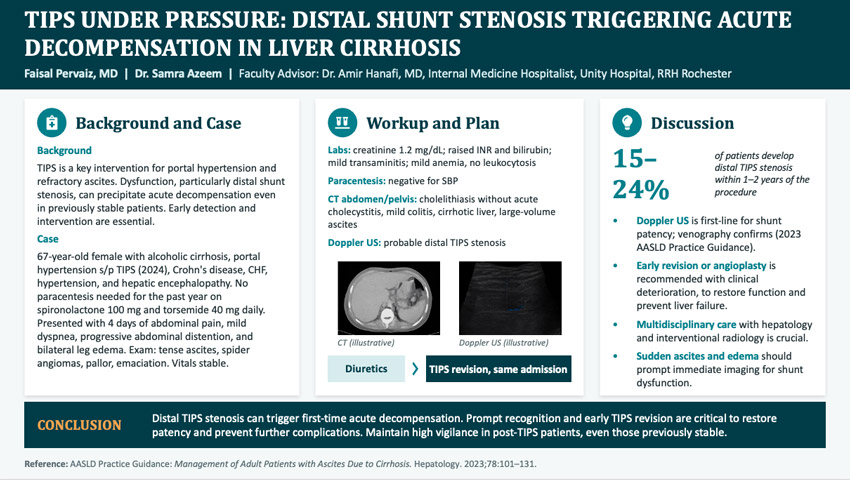
TIPS is a key intervention for portal hypertension and refractory ascites. Dysfunction, particularly distal shunt stenosis, can precipitate acute decompensation even in previously stable patients. Early detection and intervention are essential.
Case
67-year-old female with alcoholic cirrhosis, portal hypertension s/p TIPS (2024), Crohn's disease, CHF, hypertension, and hepatic encephalopathy. No paracentesis needed for the past year on spironolactone 100 mg and torsemide 40 mg daily. Presented with 4 days of abdominal pain, mild dyspnea, progressive abdominal distention, and bilateral leg edema. Exam: tense ascites, spider angiomas, pallor, emaciation. Vitals stable.
Workup and Plan
Labs: creatinine 1.2 mg/dL; raised INR and bilirubin; mild transaminitis; mild anemia, no leukocytosis
Paracentesis: negative for SBP
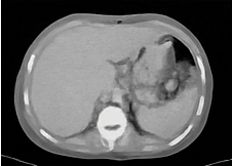
CT abdomen/pelvis: cholelithiasis without acute cholecystitis, mild colitis, cirrhotic liver, large-volume ascites
Doppler US: probable distal TIPS stenosis
Diuretics → TIPS revision, same admission
Discussion
15-24% of patients develop distal TIPS stenosis within 1-2 years of the procedure
- Doppler US is first-line for shunt patency; venography confirms (2023 AASLD Practice Guidance).
- Early revision or angioplasty is recommended with clinical deterioration, to restore function and prevent liver failure.
- Multidisciplinary care with hepatology and interventional radiology is crucial.
- Sudden ascites and edema should prompt immediate imaging for shunt dysfunction.
Conclusion
Distal TIPS stenosis can trigger first-time acute decompensation. Prompt recognition and early TIPS revision are critical to restore patency and prevent further complications. Maintain high vigilance in post-TIPS patients, even those previously stable.
Reference
AASLD Practice Guidance: Management of Adult Patients with Ascites Due to Cirrhosis. Hepatology. 2023;78:101–131.
Stefan Kaliszuk D.O.; Mandeep Singh D.O.; William Archibald M.D.
Introduction
Hemophagocytic lymphohistiocytosis (HLH) is a syndrome of unchecked immune activation causing fever, cytopenias, hyper-ferritinemia, and organ failure. In adults it is usually secondary to infection, malignancy, or autoimmune disease
Case Presentation
Chief Complaint:
- Subacute progressive weakness
Past Medical History:
- Remote history of Hodgkin’s lymphoma c/b splenectomy, currently in remission
- Hypercalcemia with recent bone marrow biopsy showing noncaseating granulomas
Initial Vitals:
- Blood pressure: 131/62, Heart Rate: 63,
- Respiratory Rate: 16, SpO2 97%, Temperature: 36.3 °C
Physical Exam:
- General: Cachectic
- Pulmonary: Decreased breath sounds bilaterally
Laboratory:
- CBC: WBC 2.9, Hb 12.8, Plt 17
- Ferritin 70,050
- LDH 2942
Imaging:
- CT chest showed pleural effusions and right upper lobe consolidation concerning for infectious versus inflammatory process
- CT head showed no acute intracranial abnormalities, but right maxillary consolidation concerning for fungal process
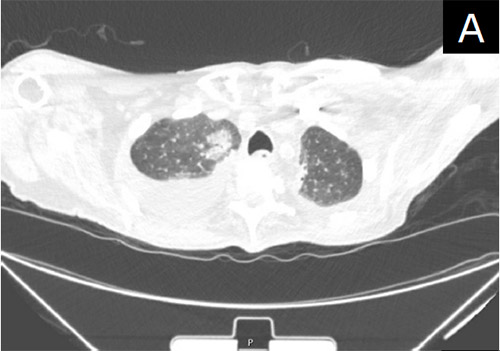
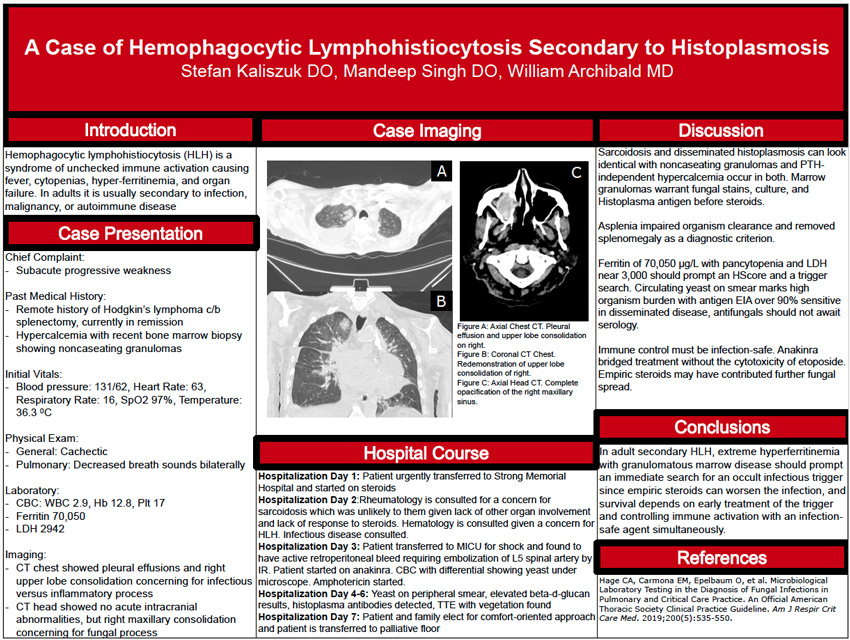
Figure A. Axial Chest CT. Pleural effusion and Upper lobe consolidation on right.
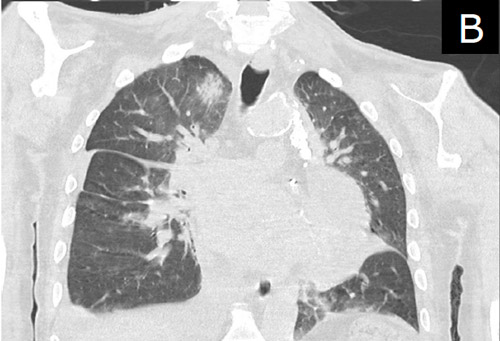
Figure B. Coronal CT Chest. Redemonstration of upper lobe consolidation of right.
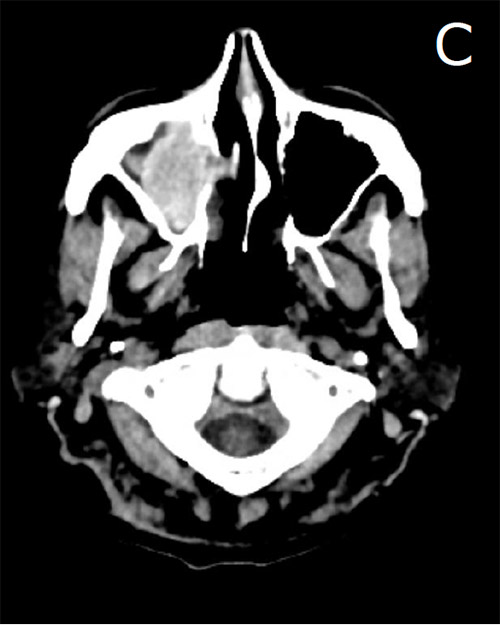
Figure C. Axial Head CT. Complete Opacification of the right maxillary sinus.
Hospital Course
Hospitalization Day 1: Patient urgently transferred to Strong Memorial Hospital and started on steroids
Hospitalization Day 2: Rheumatology is consulted for a concern for sarcoidosis which was unlikely to them given lack of other organ involvement and lack of response to steroids. Hematology is consulted given a concern for HLH. Infectious disease consulted.
Hospitalization Day 3: Patient transferred to MICU for shock and found to have active retroperitoneal bleed requiring embolization of L5 spinal artery by IR. Patient started on anakinra. CBC with differential showing yeast under microscope. Amphotericin started.
Hospitalization Day 4-6: Yeast on peripheral smear, elevated beta-d-glucan results, histoplasma antibodies detected, TTE with vegetation found
Hospitalization Day 7: Patient and family elect for comfort-oriented approach and patient is transferred to palliative floor
Discussion
Sarcoidosis and disseminated histoplasmosis can look identical with noncaseating granulomas and PTH-independent hypercalcemia occur in both. Marrow granulomas warrant fungal stains, culture, and Histoplasma antigen before steroids. Asplenia impaired organism clearance and removed splenomegaly as a diagnostic criterion.
Ferritin of 70,050 µg/L with pancytopenia and LDH near 3,000 should prompt an HScore and a trigger search. Circulating yeast on smear marks high organism burden with antigen EIA over 90% sensitive in disseminated disease, antifungals should not await serology.
Immune control must be infection-safe. Anakinra bridged treatment without the cytotoxicity of etoposide. Empiric steroids may have contributed further fungal spread.
Conclusions
In adult secondary HLH, extreme hyperferritinemia with granulomatous marrow disease should prompt an immediate search for an occult infectious trigger since empiric steroids can worsen the infection, and survival depends on early treatment of the trigger and controlling immune activation with an infection-safe agent simultaneously.
References
Hage CA, Carmona EM, Epelbaum O, et al. Microbiological Laboratory Testing in the Diagnosis of Fungal Infections in Pulmonary and Critical Care Practice. An Official American Thoracic Society Clinical Practice Guideline. Am J Respir Crit Care Med. 2019;200(5):535-550.
Shelly Verma, M.D.1; Lindsey Dressler, M.D.2; Alexandru Mihaila3; Rachel D. Fogley, M.D.1; Manali Shah, D.O.1; Kingshuk Mazumdar, M.D., M.B.A.1; Debra M. Ogie, M.D.1; Robert C. Block, M.D., M.P.H.1; Erika R. Drury, M.D.1
1Department of Medicine, University of Rochester Medicine, Rochester, NY; 2Department of Neurology, University of Rochester Medicine, Rochester, NY; 3University of Rochester School of Medicine and Dentistry, Rochester, NY, United States
Introduction
- Hyponatremia – serum sodium <135 mmol/L, most common electrolyte disorder
- Pseudohyponatremia – serum sodium reported as falsely low, while sodium level is physiologically normal Serum osmolality is normal (280-295 mOsm/kg H2O) and osmolar gap may be elevated
Clinical Vignette
HPI: 71F presented for hyponatremia of 121 mmol/L noted on outpatient labs obtained prior to scheduled ERCP. Denies headache, nausea, lethargy. Reports sufficient oral intake.
PMH and Medications: Recurrent choledocholithiasis s/p multiple ERCPs and biliary stent placements (on ursodiol 300mg BID), non-obstructive CAD (on aspirin 81mg daily), HFrEF (on furosemide 40mg daily, metoprolol succinate 25mg BID, potassium chloride 20 mEq daily), T2DM (on glargine 40 units nightly, lispro 2-5 units 4 times daily before meals/nightly), osteoporosis (on cholecalciferol 2,000 units daily), mixed connective tissue disease (on prednisone 5mg daily), atrial flutter s/p ablation, spinal stenosis s/p lumbar fusion (on baclofen 10mg TID, gabapentin 600mg TID, tramadol 50mg TID prn), GERD (on pantoprazole 40mg BID)
Social History: No current alcohol use. Remote former tobacco use.
Physical Examination: BP 131/65 mm Hg, HR 75 bpm. Awake, alert, abdomen non-tender, no jaundice.
Physical Examination: BP 131/65 mm Hg, HR 75 bpm. Awake, alert, abdomen non-tender, no jaundice.
Discussion
LipoproteinX (LpX)
- Can accumulate in cholestatic liver disease
- Free cholesterol refluxes into circulation and binds with albumin, ApoC, ApoE, and phospholipids. Measured as hypercholesterolemia
- Cannot be cleared through LDL/ApoB receptor → non-atherogenic
- Diagnosis – lipoprotein electrophoresis or NMR spectroscopy
- Treatment – apheresis if severe; LDL-lowering therapies are ineffective
Pseudohyponatremia due to Lipoprotein X
- Increased lipid component from LpX reduces plasma water volume, but plasma water sodium concentration remains unchanged
- By indirect potentiometry (most commonly-used laboratory method), total plasma sodium concentration is spuriously reported as low
- Direct potentiometry directly measures plasma water sodium concentration, which would reveal normo-natremia
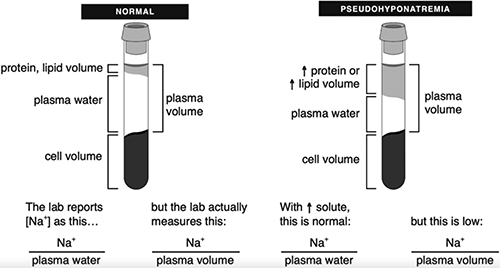
Faubel, S., & Topf, J. (1999). The fluid, electrolyte and acid-base companion. Alert & Oriented Publishers.
Conclusions
- Severe hypercholesterolemia will result in pseudohyponatremia by indirect potentiometry, the laboratory method typically used for measuring sodium concentration
- Hypercholesterolemia is not limited to hypertriglyceridemia
- Consider lipoprotein X accumulation from cholestatic liver injury as an etiology of pseudohyponatremia
- Timely recognition of pseudohyponatremia can:
- Spare patients from harm (avoid unnecessary/ineffective treatments and frequent venipuncture)
- Allow procedural interventions to proceed without delay
References
- Aziz, F., Sam, R., Lew, S. Q., Massie, L., Misra, M., Roumelioti, M. E., ... & Tzamaloukas, A. H. (2023). Pseudohyponatremia: mechanism, diagnosis, clinical associations and management. Journal of clinical medicine, 12(12), 4076.
- Ballard, M., & Chen, L. (2023). Pseudohyponatremia: a concise guide to diagnosis and management in clinical practice. The Journal for Nurse Practitioners, 19(10), 104800.
- Crook, M. A. (2013). Lipoprotein X: clinical implications. Annals of Clinical Biochemistry, 50(2), 93-94. Fortgens, P., & Pillay, T. S. (2011). Pseudohyponatremia revisited: a modern-day pitfall. Archives of pathology & laboratory medicine, 135(4), 516-519.
- Hussain, I., Ahmad, Z., & Garg, A. (2015). Extreme hypercholesterolemia presenting with pseudohyponatremia-a case report and review of the literature. Journal of Clinical Lipidology, 9(2), 260-264.
- Pourafkari, L., Cavalieri, C., Yavari, S. K., & Nader, N. D. (2022). Pseudohyponatremia Secondary to Hypercholesterolemia in the Setting of Intrahepatic Cholestasis due to Metastatic Liver Disease: A Case Report and Review of the Literature. Acta Medica Academica, 51(2), 128.
- Song, L., Hanna, R. M., Nguyen, M. K., Kurtz, I., & Wilson, J. (2019). A novel case of pseudohyponatremia caused by hypercholesterolemia. Kidney International Reports, 4(3), 491-493.
- Verbalis, J. G., Goldsmith, S. R., Greenberg, A., Korzelius, C., Schrier, R. W., Sterns, R. H., & Thompson, C. J. (2013). Diagnosis, evaluation, and treatment of hyponatremia: expert panel recommendations. The American journal of medicine, 126(10), S1-S42.
- Weisberg, L. S. (1989). Pseudohyponatremia: a reappraisal. The American journal of medicine, 86(3), 315-318.
QI
Kavya Bana1,2
1Department of Medicine, University of Rochester Medicine, Rochester NY; 2Department of Pediatrics, University of Rochester Medicine, Rochester, NY
Background
- Over 2 million people, disproportionately Black and Brown Americans, are incarcerated in the United States (US), this number has increased by 500% in the last 50 years, largely due to the “war on drugs”1,2
- Internal Medicine (IM) and Medicine/Pediatrics (MP) residents often care for patients who are incarcerated; yet many have never received any formal training on how to do so
- People who are incarcerated have a right to healthcare and essentially similar healthcare rights to those who are not; yet the belief that they cannot make their own healthcare decisions has led to wrongful deaths in the US3
Objective
- Describe development and effect of a stand-alone patient case-based didactic on caring for patients who are incarcerated in the inpatient setting
- Describe the basic rights of people who are incarcerated, their legal origin, and specific policies applicable to Strong Memorial Hospital
Methods
- 45-minute stand-alone case-based lecture given during IM R1 and R2-R4 mandatory education sessions
- Pre- and Post-Survey administered after sessions via Google Surveys with 35 pre-survey and 44 post-survey participants
Curriculum
Case 1
Arriving to a Rapid Response called for increasing respiratory requirements in a patient incarcerated and cuffed to the bed on the general medicine floors.
Utilizing real inpatient case examples to:
- Highlight the rights of patients who are incarcerated
- Answer common questions
- Emphasize where to find resources to look up questions as they arise
Case 2
Discussing goals of care for a patient who is incarcerated and has been on a ventilator without needs de-escalation for just over two weeks in the critical care unit.
Results
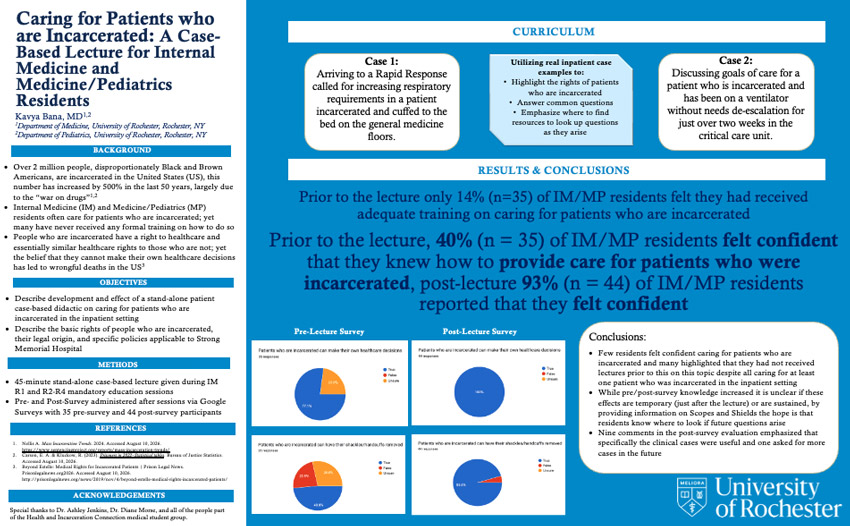
Prior to the lecture only 14% (n=35) of IM/MP residents felt they had received adequate training on caring for patients who are incarcerated.
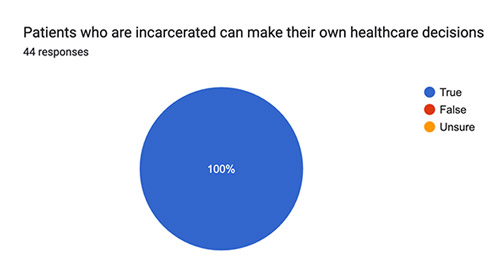
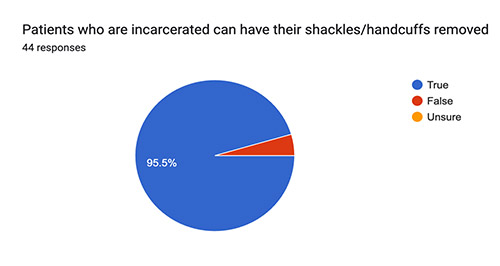
Prior to the lecture, 40% (n = 35) of IM/MP residents felt confident that they knew how to provide care for patients who were incarcerated, post-lecture 93% (n = 44) of IM/MP residents reported that they felt confident.
Pre-Lecture Survey
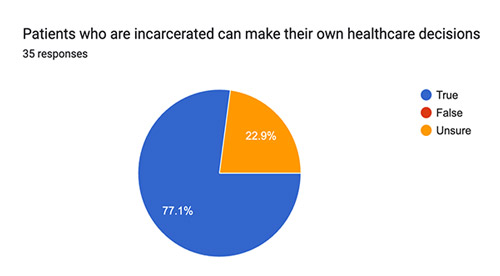
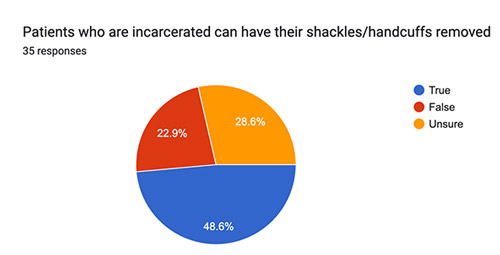
Post-Lecture Survey
Conclusions
- Few residents felt confident caring for patients who are incarcerated and many highlighted that they had not received lectures prior to this on this topic despite all caring for at least one patient who was incarcerated in the inpatient setting
- While pre/post-survey knowledge increased it is unclear if these effects are temporary (just after the lecture) or are sustained, by providing information on Scopes and Shields the hope is that residents know where to look if future questions arise
- Nine comments in the post-survey evaluation emphasized that specifically the clinical cases were useful and one asked for more cases in the future
K. Ng Brown, M.D.1; M. Derleth, M.D.1; A. Spike2; A. Kenney, M.D.3; C. Ebert, Esq.4; R. Devore LMSW5; P. Vermillion, M.D.3; K. Golden-Fitch5; M. Schlagman, M.D.6
1Internal Medicine Residency Program, University of Rochester Medicine; 2Public Health sciences University of Rochester Medicine; 3Palliative Care Division, University of Rochester Medicine; 4Finger Lakes Legal Care, LawNY; 5Strong Internal Medicine, University of Rochester Medicine; 6General Medicine Division, University of Rochester Medicine
Introduction
- Patients at Strong Internal medicine (SIM) face many barriers to adequate care and have complex medical conditions with high risk of critical illness.
- Our multidisciplinary Medical Legal Partnership (MLP) implemented multifaceted outreach in preparation for National Healthcare Decisions Day (HCDD) to raise awareness about health care proxies (HCP).
- Additionally, new protocols were implemented in clinic workflow to aid in prompting upload of HCP and advance care planning (ACP) documentation into patient charts.
Methods
- Awareness was raised using emails and fliers placed in patient rooms and clinic workspaces to promote curiosity and encourage HCP discussion during patient encounters
- On HCDD there were designated areas for legal personnel and clinic staff to assist patients with completing their HCP documentation
- To reduce time to HCP chart upload, in 2026 we adopted the workflow used by the Palliative Care Division to register Health Care Directives in the electronic health record.
- Data were analyzed using Epic Slicer Dicer, a self-service data exploration tool built into the electronic health record system.
Results
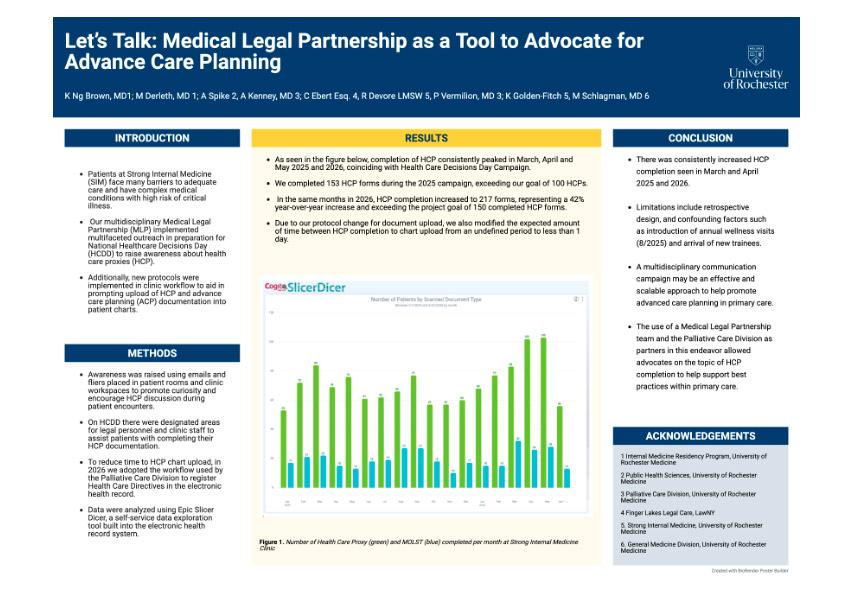
- As seen in the figure below, completion of HcP consistent peaked in March, April and May 2025 and 2026, coinciding with Health Care Decisions Day Campaign.
- We completed 253 HCP forms during the 2025 campaign, exceeding our goal of 100 HCPs.
- In the same months in 2026, HCP completion increased to 217 forms, representing a 42% year-over-year increase and exceeding the project goal of 150 completed HCP forms.
- Due to our protocol change for document upload, we also modified the expected amount of time between HCP completion to chart upload from an undefined period to less than 1 day.
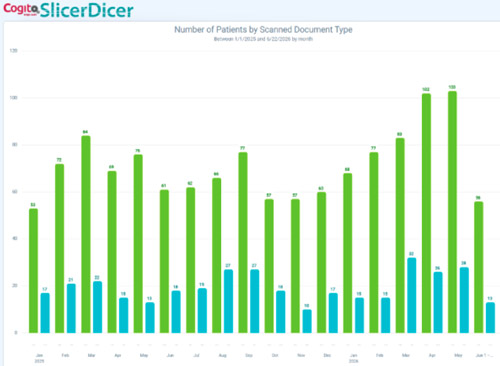
Figure 1. Number of Health Care Proxy (green) and MOLST (blue) completed per month at Strong Internal Medicine clinic
Conclusion
- There was consisstenly increased HCP completion seen in March and April 2025 and 2026.
- Limitations include retrospective design, and confounding factors such as introduction of annual wellness visits (8/2025) and arrival of new trainees.
- A multidisciplinary communication campaign may be an effective and scalable approach to help promote advanced care planning in primary care.
- The use of a Medical Legal Prtnership team and the Palliative Care Division as partners in this endeavor allowed advocates on the topic of HCP completion to help support best practices within primary care.
Md Hoque, M.D.
University of Rochester Medicine, Internal Medicine Program
Background
- Rural communities may experience delays in accessing medical care because of transportation barriers, geographic distance, and limited healthcare resources [1,3].
- Low literacy can limit access to written health information.
- A community-informed, low-literacy curriculum was developed to address both emergency preparedness and chronic disease management in rural Bangladesh [1,2].
Learning Objectives
The curriculum aimed to help participants:
- Recognize common medical emergencies, identify immediate actions, apply basic first-aid principles.
- Identify practical strategies for chronic disease management.
- Use visual tools to reinforce health knowledge at home.
Methods
3 workshops / 2 rural villages / Interactive discussion / Q&A
- Simplified, action-oriented teaching delivered in Bengali
- Women-only, men-only, and mixed-gender sessions
- Demonstrations using familiar household materials
Emergency Topics
- CPR • Bleeding/Burns • Dehydration • Stroke • Chest Pain
Chronic Disease Topics
- Diabetes • Diet • Foot care • Hypoglycemia • Leg swelling
Low-Literacy Tool
- Wordless, illustrated one-page emergency guide for home
Results
Community Engagement
- Approximately 90 community members participated
Community-Informed Adaptation
- Informal door-to-door invites before the workshops identified strong interest in:
Diabetes / Leg Swelling / Skin Conditions → Diabetes and edema education were incorporated into the curriculum (foot care, diet, prevention, medication)
Community Response
- Active participation in demonstrations and discussion
- Participants reported the workshops were useful, enjoyable, and relevant
- Visual demonstrations and repetition facilitated engagement across variable literacy levels
Key Lesson: Community input transformed an emergency-focused workshop into a broader acute + chronic health education program.
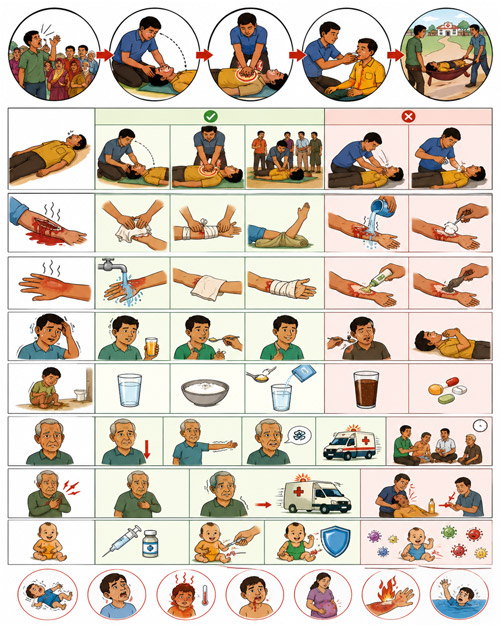
Fig. 1. Wordless, illustrated emergency-response guide distributed to participants for home use. Participants were encouraged to place the guide in an accessible location for quick reference.
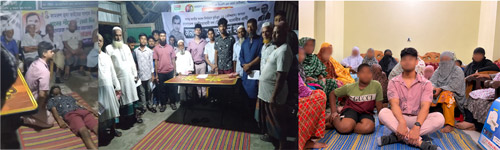
Fig 2: Photographs from two workshops used with permission.
Conclusion
- A culturally adapted curriculum integrating emergency preparedness with chronic disease management and prevention was successfully delivered across rural village settings in Bangladesh.
- Interactive teaching + wordless visual tools may help deliver practical health education in low-literacy communities.
- This model demonstrates how community input can transform a traditional health-education session into a locally relevant, low-literacy educational intervention.
Key Teaching Points
ASK → ADAPT → DEMONSTRATE → REINFORCE
- Ask: Identify community priorities first
- Adapt: Incorporate locally requested topics
- Demonstrate: Show practical actions
- Reinforce: Provide take-home visual tools
Next Steps
- Formal knowledge assessment • Local healthcare partnerships • Skin-condition module • Bangla educational videos • Expansion to additional villages and languages
References
- Kobashi, Y., Haque, S. E., Sakisaka, K., et al. (2024). Community-based intervention for managing hypertension and diabetes in rural Bangladesh. Tropical Medicine and Health, 52(1), 13. https://doi.org/10.1186/s41182-023-00574-0
- Das, S., Mia, M. N., Hanifi, et al. (2017). Health literacy in a community with low levels of education: Findings from Chakaria, a rural area of Bangladesh. BMC Public Health, 17(1), 203. https://doi.org/10.1186/s12889-017-4097-y
- Gray, C., Porter, G., Lobo, R., & Crawford, G. (2024). Development and evaluation of health education resources for culturally and linguistically diverse populations: A systematic review. Health Education Research, 39(2), 102–118. https://doi.org/10.1093/her/cyad015
Julia Mo, M.D.1; Prateek Navratan Daga, B.D.S., M.D.S.2; David Lent, D.N.P., M.S., R.N., C.N.L., NEA-BC, C.C.R.N., P.C.C.N.1; Jennifer Rappleye, B.S.N., R.N., C.C.R.N.1; Maricelle Abayon, D.M.D., M.S.2; Nisreen Al Jallad, D.D.S.2; Shasha Cui, Ed.D., M.B.A.2; Jin Xiao, D.D.S., M.S., Ph.D.2; Anthony Pietropaoli, M.D.1
1Department of Medicine, University of Rochester Medicine, Rochester, NY; 2Eastman institute for Oral Health, Rochester, NY
Background
Health care-associated infections (HCAIs) are defined as infections that occur after 48 hours of receiving health care in a hospital or other health care facility, or within 30 days of receiving health care. HCAIs impact one in 31 hospitalized patients in the United States [1]. Prior studies have investigated the effect of altering environmental and patient care factors to reduce incidence of HCAIs, including methods to disinfect hospital room surfaces [3], optimize patient bathing materials [4], and encourage oral hygiene [5]. Oral health status is an important risk factor for the development of HCAIs for intensive care unit (ICU) patients, including ventilator-associated pneumonia (VAP), non-ventilator associated pneumonia (NVAP), central-line associated bloodstream infection (CLABSI) and acute otitis media (AOM).
Objectives
- Survey stakeholders to identify gaps in current oral care protocol
- Develop, implement, and refine a risk-based dental hygiene protocol for patients in the ICU to reduce incidence of VAP and NVAP
Development
Survey Stakeholders
Eastman Dental team meets with ICU nursing and distributes a REDCap survey to staff from all ICUs (3-1800, 4-2800, 636i, 7-1600, 8-1200, 8-1400, 8-1600, 8-3600) assessing current knowledge and practice for oral care each ICU unit.
Identify Caregaps
Collect baseline data via REDCap for:
- Frequency of oral care for ventilated and non-ventilated patients
- What tools are used for oral care (manual vs. automatic toothbrush, toothpaste vs foam swabs) and how long they are used
- What areas of the mouth are assessed during oral care and what manifestations are recorded or acted on
- Confidence in providing oral care for patients in the ICU
Plan & Do
Proposed first PDSA cycle:
- Dental team takes clinical photographs of ICU patients on unit 8-1600 within a 2-hour period to collect information on baseline oral health.
- Patients are assessed for degree of dental and gingival disease
- Patients receive standardized oral hygiene protocol during regular care based on risk factors (intubated vs dependent vs independent)
- Collect data over 6 months on VAP and NVAP incidence
Future Directions
Study changes in trends of VAP and NVAP
References
- HAI and Antimicrobial Use Prevalence Surveys. Center for Disease Control; 2026. https://www.cdc.gov/healthcare-associated-infections/php/haic-eip/antibiotic-use.html
- Magill SS, O’Leary E, Janelle SJ, et al. Changes in Prevalence of Health Care–Associated Infections in U.S. Hospitals. N Engl J Med. 2018;379(18):1732-1744. doi:10.1056/NEJMoa1801550
- Han JH, Sullivan N, Leas BF, Pegues DA, Kaczmarek JL, Umscheid CA. Cleaning Hospital Room Surfaces to Prevent Health Care–Associated Infections: A Technical Brief. Ann Intern Med. 2015;163(8):598-607. doi:10.7326/M15-1192
- Martin ET, Haider S, Palleschi M, et al. Bathing hospitalized dependent patients with prepackaged disposable washcloths instead of traditional bath basins: A case-crossover study. Am J Infect Control. 2017;45(9):990-994. doi:10.1016/j.ajic.2017.03.023
- Ehrenzeller S, Klompas M. Association Between Daily Toothbrushing and Hospital-Acquired Pneumonia: A Systematic Review and Meta-Analysis. JAMA Intern Med. 2024;184(2):131. doi:10.1001/jamainternmed.2023.6638
Rahel Tekeste, MD, Joseph Petroff, MD, Aameera Khan, MD, MPH
Department of Medicine, Highland Hospital, University of Rochester Medicine
Objective
We assessed the frequency and efficacy of the COPD admission order set in inpatient management of COPD at Highland Hospital (HH).
Problem
- Chronic obstructive pulmonary disease (COPD) is the third highest contributor to global mortality, accounting for 3.4 million deaths in 2023.[1] The cost of COPD medical care for Americans 45+ years old is $24 billion each year, about a quarter of which ($6.3B) spent on inpatient care.[2] COPD readmissions are a significant contributor to high healthcare costs, prolonged hospital stays, and increased risk of mortality. Factors such as high disease burden, severe and frequent exacerbations, suboptimal antimicrobial/respiratory management, and incomplete respiratory pathogen vaccine implementation contribute to the relatively high readmission rates for COPD exacerbation.[3] Exact rates vary based on the study; regardless, lowering admission rates are key in improving the quality of life of these patients.[4]
- At Highland Hospital (HH), the 30-days readmission rate for FY2025 was 18.1%, which was above the target readmission rate of 15.12%.[5]
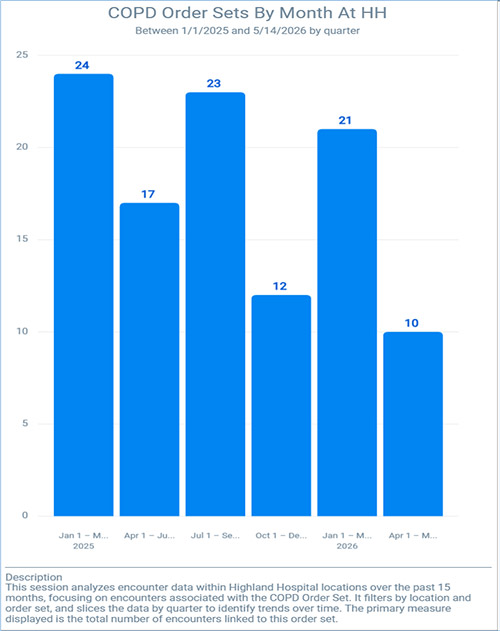
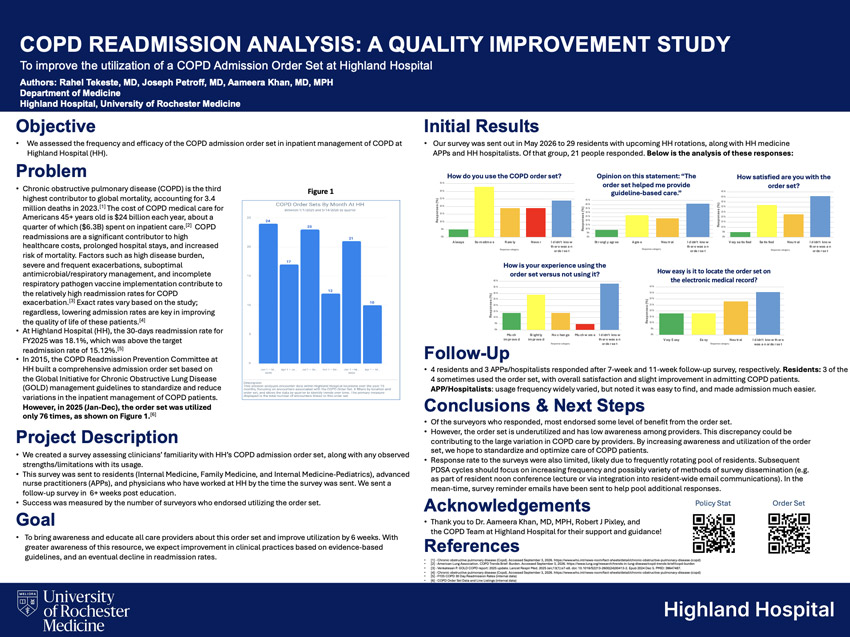
- In 2015, the COPD Readmission Prevention Committee at HH built a comprehensive admission order set based on the Global Initiative for Chronic Obstructive Lung Disease (GOLD) management guidelines to standardize and reduce variations in the inpatient management of COPD patients. However, in 2025 (Jan-Dec), the order set was utilized only 76 times, as shown on Figure 1.[6]
Project Description
- We created a survey assessing clinicians’ familiarity with HH’s COPD admission order set, along with any observed strengths/limitations with its usage.
- This survey was sent to residents (Internal Medicine, Family Medicine, and Internal Medicine-Pediatrics), advanced nurse practitioners (APPs), and physicians who have worked at HH by the time the survey was sent. We sent a follow-up survey in 6+ weeks post education.
- Success was measured by the number of surveyors who endorsed utilizing the order set.
Goal
To bring awareness and educate all care providers about this order set and improve utilization by 6 weeks. With greater awareness of this resource, we expect improvement in clinical practices based on evidence-based guidelines, and an eventual decline in readmission rates.
Initial Results
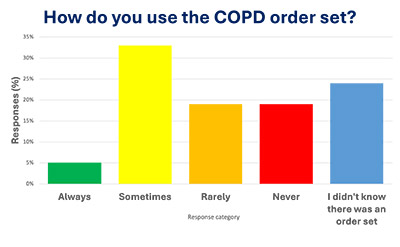
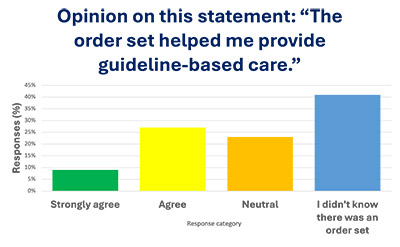
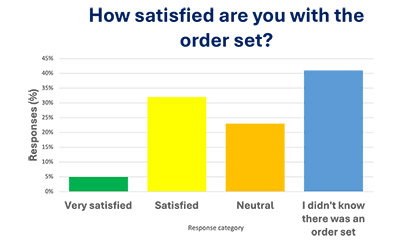
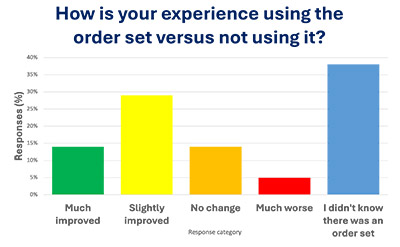
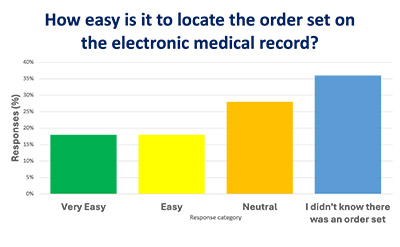
Our survey was sent out in May 2026 to 29 residents with upcoming HH rotations, along with HH medicine APPs and HH hospitalists. Of that group, 21 people responded. Below is the analysis of these responses:
Follow-Up
4 residents and 3 APPs/hospitalists responded after 7-week and 11-week follow-up survey, respectively. Residents: 3 of the 4 sometimes used the order set, with overall satisfaction and slight improvement in admitting COPD patients. APP/Hospitalists: usage frequency widely varied, but noted it was easy to find, and made admission much easier.
Conclusions & Next Steps
- Of the surveyors who responded, most endorsed some level of benefit from the order set.
- However, the order set is underutilized and has low awareness among providers. This discrepancy could be contributing to the large variation in COPD care by providers. By increasing awareness and utilization of the order set, we hope to standardize and optimize care of COPD patients.
- Response rate to the surveys were also limited, likely due to frequently rotating pool of residents. Subsequent PDSA cycles should focus on increasing frequency and possibly variety of methods of survey dissemination (e.g. as part of resident noon conference lecture or via integration into resident-wide email communications). In the mean-time, survey reminder emails have been sent to help pool additional responses.
Acknowledgements
Thank you to Dr. Aameera Khan, MD, MPH, Robert J Pixley, and the COPD Team at Highland Hospital for their support and guidance!
References
- Chronic obstructive pulmonary disease (Copd). Accessed September 3, 2026. https://www.who.int/news-room/fact-sheets/detail/chronic-obstructive-pulmonary-disease-(copd)
- American Lung Association. COPD Trends Brief: Burden. Accessed September 3, 2026. https://www.lung.org/research/trends-in-lung-disease/copd-trends-brief/copd-burden
- Venkatesan P. GOLD COPD report: 2025 update. Lancet Respir Med. 2025 Jan;13(1):e7-e8. doi: 10.1016/S2213-2600(24)00413-2. Epub 2024 Dec 5. PMID: 39647487.
- Chronic obstructive pulmonary disease (Copd). Accessed September 3, 2026. https://www.who.int/news-room/fact-sheets/detail/chronic-obstructive-pulmonary-disease-(copd)
- FY25 COPD 30 Day Readmission Rates (internal data)
- COPD Order Set Data and Line Listings (internal data)
Shelly Verma, M.D.; Thomas Carroll, M.D., Ph.D.
Department of Medicine, University of Rochester Medicine, Rochester, NY
Introduction
Resident physicians want more hands-on training for serious illness/palliative care conversations1,2
- Residents prefer case roleplay over didactics3
- Prior coaching sessions increased residents’ self-reported preparedness for conversations3
Methods
- Participants: PGY 1-4 internal medicine and internal medicine/pediatrics residents
- Intervention: Advanced Communication Training (ACT) for serious illness conversations
- Half-day session with a trained faculty facilitator and patient actors
- Applying ‘MVP Steps’ and ‘3E Skills’ in simulated patient encounters with real-time feedback, facilitated by faculty/peers
- Pre- and post-intervention (3 month) surveys
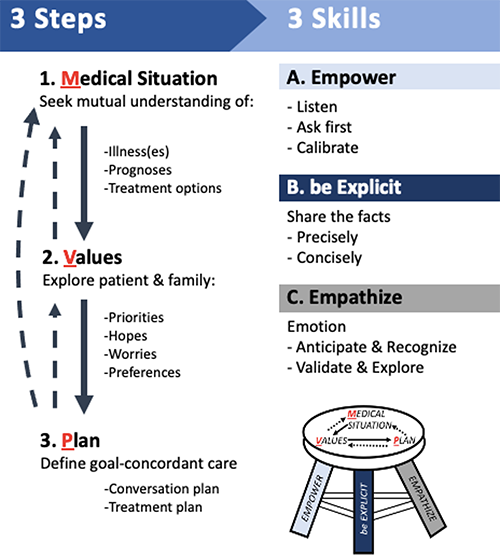
Results
Question: What skills have been helping your engagement in serious conversations to go well? Results: Open-ended responses; ACT-specific skills (‘MVP Steps’ and ‘3E Skills’) noted in color
Baseline Pre-Intervention
n=122 (total number of skills named)
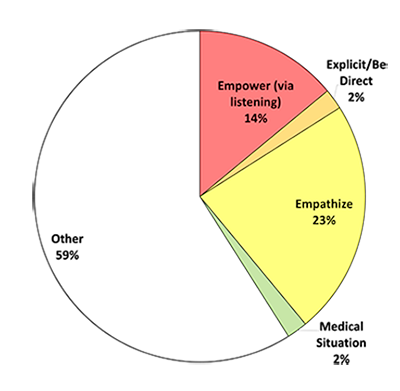
3 Months Post-Intervention
n=134 (total number of skills named)
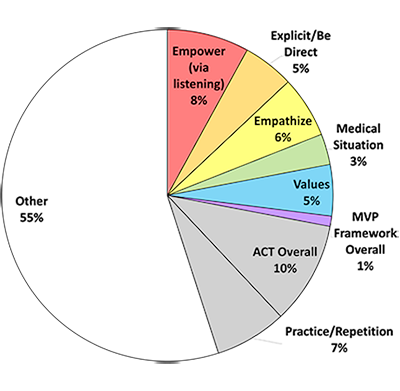
Question: Question (3 months post-ACT): Moving forward, which skills/experiences would help improve your engagement in serious illness conversations?
Skills to Improve Engagement in Serious Illness Conversations
n=75 total skills named

Discussion
- Pre-ACT – empathy and listening were the 2 most-cited helpful skills for serious illness conversations, identified by internal medicine residents
- 3 months post-ACT – greater variety in helpful skills taught in the ACT training and a shared vocabulary to articulate helpful skills
- Post-ACT, practice/repetition accounted for 40% of the total skills/experiences cited that would facilitate improvement in serious illness conversations
- Simulated encounters with patient actors during ACT training may have prompted an interest in further practice as an avenue for improvement
- More opportunities for supervised practice and feedback could help meet residents’ needs and improve their engagement in serious illness conversations
Future Directions & Limitations
- Real-time data collection (Ecological Momentary Assessment) to record ACT skills utilized in serious illness conversations
- Standardized assessment/scoring of observed conversations and providing structured feedback
- Limitations: self-reported data, relied on participants’ recollection
References
- Aziz, F., Sam, R., Lew, S. Q., Massie, L., Misra, M., Roumelioti, M. E., ... & Tzamaloukas, A. H. (2023). Pseudohyponatremia: mechanism, diagnosis, clinical associations and management. Journal of clinical medicine, 12(12), 4076.
- Ballard, M., & Chen, L. (2023). Pseudohyponatremia: a concise guide to diagnosis and management in clinical practice. The Journal for Nurse Practitioners, 19(10), 104800.
- Crook, M. A. (2013). Lipoprotein X: clinical implications. Annals of Clinical Biochemistry, 50(2), 93-94. Fortgens, P., & Pillay, T. S. (2011). Pseudohyponatremia revisited: a modern-day pitfall. Archives of pathology & laboratory medicine, 135(4), 516-519.
- Hussain, I., Ahmad, Z., & Garg, A. (2015). Extreme hypercholesterolemia presenting with pseudohyponatremia-a case report and review of the literature. Journal of Clinical Lipidology, 9(2), 260-264.
- Pourafkari, L., Cavalieri, C., Yavari, S. K., & Nader, N. D. (2022). Pseudohyponatremia Secondary to Hypercholesterolemia in the Setting of Intrahepatic Cholestasis due to Metastatic Liver Disease: A Case Report and Review of the Literature. Acta Medica Academica, 51(2), 128.
- Song, L., Hanna, R. M., Nguyen, M. K., Kurtz, I., & Wilson, J. (2019). A novel case of pseudohyponatremia caused by hypercholesterolemia. Kidney International Reports, 4(3), 491-493.
- Verbalis, J. G., Goldsmith, S. R., Greenberg, A., Korzelius, C., Schrier, R. W., Sterns, R. H., & Thompson, C. J. (2013). Diagnosis, evaluation, and treatment of hyponatremia: expert panel recommendations. The American journal of medicine, 126(10), S1-S42.
- Weisberg, L. S. (1989). Pseudohyponatremia: a reappraisal. The American journal of medicine, 86(3), 315-318.
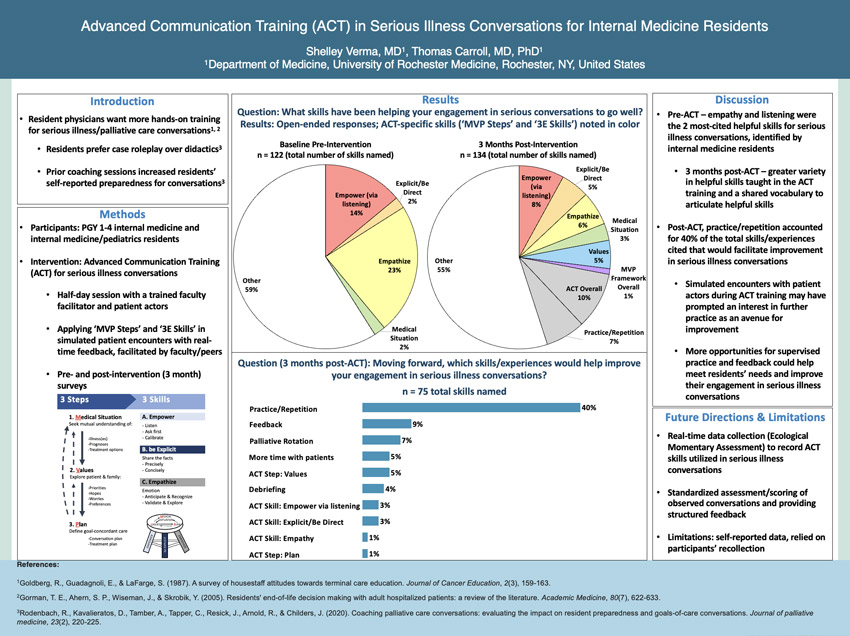
Zachary Williamson, D.O.; Oliva Sorci, M.D.; Ava Wexler, M.D.; Tanya Bruckel, M.D.
Department of Medicine, University of Rochester School of Medicine and Dentistry, Rochester, NY
Background
Colorectal cancer (CRC) screening reduces CRC related morbidity and mortality,1 yet screening rates remain below national targets in many primary care clinics.2 Reasons for low screening rates can vary widely between practices, however structural, logistical, and knowledge barriers are often reported by patients.3
The fecal immunochemical test (FIT) is a non-invasive stool test that can be performed yearly for CRC screening.4 The logistics of this test initially appears simple, as all that is needed is submission of a stool sample to the lab for evaluation. However, there are many barriers to performing FIT that often get overlooked. In our practice currently, if a stool sample kit is not given to a patient during the time of their visit, they must first visit the lab to obtain the collection kit, bring the kit home to obtain the sample, and then return to the lab to submit. This is a total of two trips to the lab just to provide a sample, which can become a barrier for many patients in our clinic due to lack of reliable transportation.
Our initiative attempts to increase CRC screening rates at our resident internal medicine practice through educating providers of the availability of FIT collection kits through electronic communication. We hypothesize that if patients receive FIT collection kits in clinic, that this would increase CRC screening through reduced logistical burden on the patient.
Objectives
Our objective was to improve CRC screening rates through decreasing logistical burden to patients by educating providers of the availability of FIT collection kits in clinic.
Methods
This quality improvement project was conducted at Strong Internal Medicine (SIM) resident clinic. Baseline quarterly CRC screening rates were obtained from clinic quality metrics. In January 2026, an e-mail was distributed to both clinic providers and clinic staff highlighting the availability and location of FIT collection kits and encouraging their use for eligible patients and those ordered to perform a FIT. CRC screening rates were again reviewed six months following the intervention and compared with pre-intervention rates.
Results
Baseline CRC screening rates were 58.50% (3142/5371) in Q3 2025 and 58.24% (3176/5453) in Q4 2025. Following the January 2026 intervention, screening rates increased to 58.65% (3216/5483) in Q1 2026, 59.59% (3272/5491) in Q2 2026, and 60.10% (3344/5549) year-to-date, corresponding to an absolute increase of 2.02% from the pre-intervention quarter. A Pearson Chi-Square test was performed from Q4 2025 (pre-intervention) to QTD with a resulting P-value of 0.031 and 95% CI 0.34-3.70.
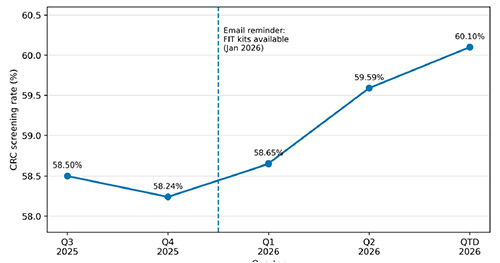
Figure 1. CRC Screening Rates Before and After FIT Kit Availability Awareness Intervention
Conclusions
- A simple, no-cost educational intervention to increase awareness of FIT collection kit availability was associated with a modest and statistically significant improvement in CRC screening rates.
- Increasing provider awareness of existing clinic resources may represent an easy and scalable strategy to increase CRC screening.
Limitations
We were unable to determine which colorectal cancer screening modalities contributed to the observed increase, as modality specific data (e.g., FIT testing versus colonoscopy or other approved screening methods) were not available. Therefore, we cannot conclude that the improvement in screening rates was directly attributable to increased FIT kit utilization.
References
- US Preventive Services Task Force. Screening for Colorectal Cancer: US Preventive Services Task Force Recommendation Statement. JAMA. 2021;325(19):1965–1977. doi:10.1001/jama.2021.6238
- Amboree TL, Montealegre JR, Parker SL, et al. National Breast, Cervical, and Colorectal Cancer Screening Use in Federally Qualified Health Centers. JAMA Intern Med. 2024;184(6):671–679. doi:10.1001/jamainternmed.2024.0693
- Jones RM, Devers KJ, Kuzel AJ, Woolf SH. Patient-reported barriers to colorectal cancer screening: a mixed-methods analysis. Am J Prev Med. 2010 May;38(5):508-16. doi: 10.1016/j.amepre.2010.01.021. PMID: 20409499; PMCID: PMC2946825.
- Castells A, Quintero E, Bujanda L et al. Effect of invitation to colonoscopy versus faecal immunochemical test screening on colorectal cancer mortality (COLONPREV): a pragmatic, randomised, controlled, non-inferiority trial. The Lancet, 2025; 405, 1231-1239
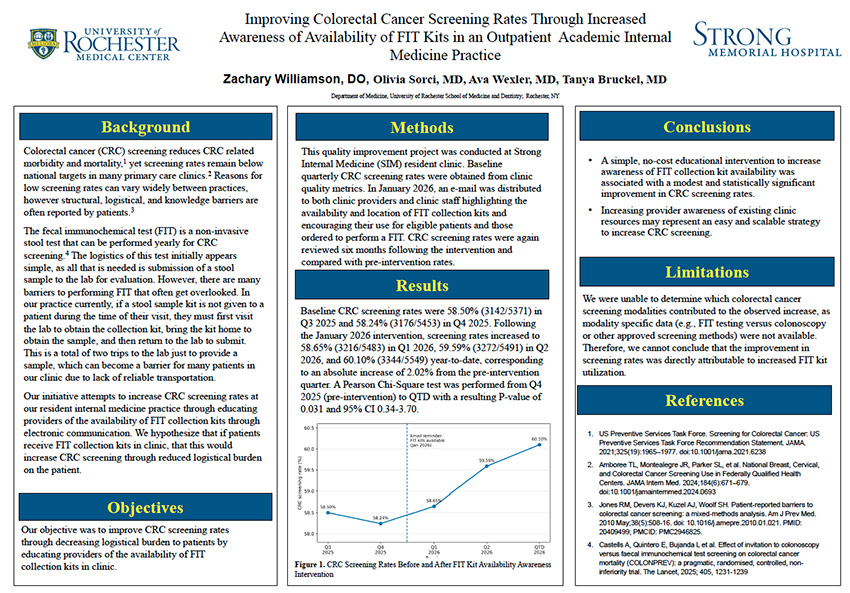
Past Award Winners