

ROChester Stimulating Access to Research during Residency (ROC StARR) Training Program
ROChester Stimulating Access to Research during Residency (ROC StARR) Training Program
Health and Immune Function Across the Lifespan
The Departments of Medicine, Pediatrics and Dermatology were awarded a prestigious NIH R38 grant that provides financial and mentoring support for residents to pursue an additional year of training focused on research (80% research/20% clinical) to study immune-related diseases. This is a wonderful opportunity for residents interested in pursuing an academic career in most clinical specialties to build research skills, find research mentorship, and enhance their CVs in advance of fellowship training or other career pursuits.
The goal of this new multidisciplinary ROChester Stimulating Access to Research during Residency (ROC StARR) Health and Immune Function Across the Lifespan grant is to train a diverse pool of physician-scientists to lead the development, implementation, and evaluation of new approaches to diagnose, treat and prevent autoimmune, allergic, inflammatory, and infectious diseases across the age spectrum. ROC StARR will train medicine, pediatrics, medicine-pediatrics and dermatology residents in 3 defined pillars along the full biomedical research continuum, with an emphasis on translational bench science, clinical research and trials, and health equity research and implementation science. Selected residents will engage in a team science guided mentoring program, with protected research blocks during their residency program and a research focused additional 1 year guided by a team of 35 multi-disciplinary faculty preceptors.
This research training program is funded by a R38 award (R38AI188561) from the National Institute of Allergy and Infectious Diseases, with an award period of 12/1/24-11/30/29. The R38 StARR program will support resident-investigators from the following participating departments at University of Rochester School of Medicine:
- Internal Medicine
- Dermatology
- Pediatrics
- Pathology
Each resident-investigator will engage in 1-2 years of 80% dedicated, protected research time. They will craft a research plan commensurate with their interests and prior experiences that may involve further training, coursework, workshops, and career development. The program will extend the residency by a minimum of 12 months, which is equally the case between residency programs; an additional 12 months of research is optional.
Leadership
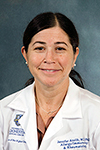
Jennifer Anolik, MD, PhD
Professor and Chief, Department of Medicine, Allergy/Immunology and Rheumatology (SMD)
Program Director (Contact PI), R38
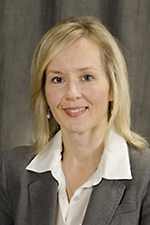
Kirsi Jarvinen-Seppo, MD, PhD
Professor and Chief, Department of Pediatrics, Division of Allergy and Immunology
Program Co-Director, R38
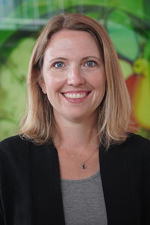
Candace Gildner, MD, PhD
Assistant Professor, Department of Pediatrics, Pediatric Hospitalist (SMD)
Associate Program-Director, R38
Training Pillar Leadership
We offer three Training Pillars for our Resident-Investigators: Translational Research, Clinical Research, and Health Equity Research and Implementation Science. These Pillars incorporate subject applicable research projects with paired didactics to the Resident-Investigator depending on their prior training, research questions and projected future academic trajectory. Research interests may bridge across pillars allowing tailoring of the curricular components to meet the Resident-Investigators training needs.
- Training Pillar A: Translational Research. Bridges the gap between basic science and the clinic and facilitates flow of information and discoveries from “bench-to-bedside” and “bedside-to-bench.” As such, translational science is critical for identifying how mechanistic laboratory findings can be used to improve human health and for clinical observations to inform our understanding of fundamental biologic processes. Leads: Drs. Laurie Steiner, Professor of Pediatrics and Ben Korman, Associate Professor of Medicine.
- Training Pillar B: Clinical Research. The clinical research pillar will provide exposure to collaborative research across multiple areas related to infectious diseases, autoimmune diseases, or inflammation of soft tissues and solid organs. Trainees will have opportunities to pursue research along three pathways (1) Clinical Outcomes (Lead: Dr. Julie Ryan Wolf, Associate Professor of Dermatology), 2) Epidemiology of Disease and Population Health (Lead: David Dobrzynski, Assistant Professor of Medicine, Infectious Diseases) and 3) Clinical Trials (Lead: Dr. Angela Branche, Associate Professor of Medicine, Infectious Diseases).
- Training Pillar C: Health Equity Research and Implementation Science. Implementation science (IS)—a rapidly growing field facilitates and evaluates the uptake of evidence-based practices and novel processes to improve healthcare. Implementation science integrates evidence-based research findings into healthcare practice and policy. Our trainees expressed high interest in this area and Health Equity Research (HER). Several of our preceptors have research programs incorporating IS, often with a health equity lens. Leads Dr. Edith Williams, Associate Professor of Public Health and Medicine and Dr. Cynthia Rand, Professor of Pediatrics.
Mentors
Our mentors have been carefully selected and all conduct a broad range of research in 3 research pillars: translational, clinical, and health equity research, with an overall theme of immune and inflammatory disease.
See our list of 35 mentors and learn more about their research interests and opportunities for collaborations, including a diverse range of projects and fields available for a resident trainee.
Trainees
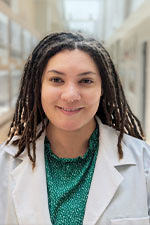
Trainee Name: Hannah Bell
Residency Program: University of Rochester Pathology
Project Title: Functional Characterization of Flk2/Flt3-Independent Neutrophils in Chemotherapy and Radiation-Induced Hematopoietic Stress
Primary Mentor: Craig Morrell
ROCStARR Pillar (Translational, Clinical, Health Equity): Translational
Pillar Leads: Laurie Steiner and Ben Korman
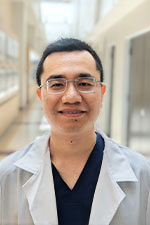
Trainee Name: Hangchuan Shi
Residency Program: University of Rochester Pathology
Project Title: Spatial transcriptomics in bladder cancer with discovery of novel muscularis propria, invasion-associated biomarkers, and immune components of the tumor micro environment
Primary Mentor: Hiroshi Miyamoto
ROCStARR Pillar (Translational, Clinical, Health Equity): Translational
Pillar Leads: Laurie Steiner and Ben Korman

Trainee Name: Felix Chin
Residency Program: University of Rochester Dermatology
Project Title: Engineering Stress Resistant Stem Cells and Exosomes for Lifespan Extension
Primary Mentor: Vera Gorbunova
ROCStARR Pillar (Translational, Clinical, Health Equity): Translational
Pillar Leads: Laurie Steiner and Ben Korman
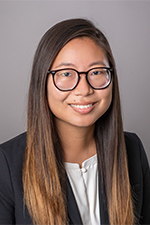
Trainee Name: Christine Kim
Residency Program: University of Rochester Internal Medicine
Project Title: Comparative Incidence of Influenza, SARS-CoV-2, and RSV Hospitalization in Vaccinated Adults and Mechanisms of Immune Escape
Primary Mentor: Angela Branche
ROCStARR Pillar (Translational, Clinical, Health Equity): Clinical
Pillar Leads: Julie Ryan Wolf, David Dobrzynski, and Angela Branche
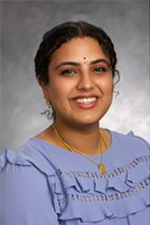
Trainee Name: Shri Karri
Residency Program: University of Rochester Internal Medicine Pediatrics
Project Title: Immunologic effects of CD19-T cell engaging antibody therapies in autoimmunity
Primary Mentor: Jennifer Anolik
ROCStARR Pillar (Translational, Clinical, Health Equity): Translational
Pillar Leads: Laurie Steiner and Ben Korman
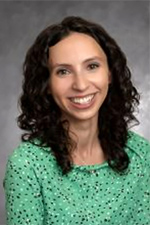
Trainee Name: Teaghen Buscemi-Kimmins
Residency Program: University of Rochester Pediatrics
Project Title: Clinical Effects of Local Housing Remediation on Asthma Outcomes
Primary Mentor: Jessica Stern
ROCStARR Pillar (Translational, Clinical, Health Equity): Health Equity and Implementation Science
Pillar Leads: Edith Williams and Cynthia Rand
Eligibility
Trainees may be in any year of their residency training (not including interns), but must have approval of their program director.
Prior research experience is NOT needed (we will tailor the program to all levels of experience!)
All trainees must be:
- Residents participating in internal medicine, pediatric, medicine/pediatric, dermatology or pathology residency training programs
- Able to commit at least 80% protected time for 1-2 years of continuous research
- An MD, DO or MD/PhD and must not have had more than one year of previous postdoctoral support from another NIH institutional training grant or individual NIH fellowship award.
- Citizens or permanent residents of the United States
- Physicians on temporary or student visas are not eligible
Applications
The ROC StARR Program offers financial and mentoring support for residents interested in pursuing a dedicated research year (80% research/20% clinical) focused on immune-mediated diseases.
Our faculty mentors offer a wide range of research opportunities, including translational, clinical, implementation science, and health equity research across various clinical specialties. We encourage you to review the list of faculty mentors and their research interests.
Application Process
Letter of Intent should include:
- The applicant’s CV
- A 1-page personal statement describing the applicant’s previous research experience, commitment to and interest in studying immune-mediated and inflammatory diseases, long-term career goals, and address how the ROCStARR program will help you achieve these goals
- The name of your research mentor (if you do not have a research mentor, please reach out to R38 leadership and we can help you identify one!)
Project Proposal (as invited) is limited to 2 pages and should include:
- Name of mentor and project
- Research question and hypothesis
- Project background (What is known about the field? What is the gap in knowledge that your project will address?)
- Project rationale (Why is your project important? How will it advance the field?)
- Project aims (What are your project goals?)
- Letter of support from your research mentor
- Letter of support from your residency program director stating that you are in good clinical standing
- Mentor’s biosketch
While we have a formal annual deadline, we also recognize that residency schedules and program logistics may vary. Therefore, we accept applications on a rolling basis depending on availability. Applications received after the stated deadline will be considered if program capacity allows.
If you have additional questions, please reach out to Candace Gildner, Jen Anolik, or Kirsi Jarvinen-Seppo.
We look forward to receiving your applications!
Program Structure
The ROCStARR program provides 12 - 24 months of at least 80% protected time for residents to perform research. Applicants interested in participating in the ROCStARR program are encouraged to notify their respective residency programs. ROCStARR leadership welcome questions and are happy to meet with interested residents at any time to discuss the program.
PGY-1 residents interested in participating in ROCStARR are encouraged to join the Pediatric or Medicine Residency Research Tracks and reach out to ROCStARR leadership. Applications are submitted in early winter of PGY-2 or PGY-3. Accepted residents will engage in professional development programs and courses to support their research goals, collaborate with mentors and R38 leadership to develop projects, create individualized learning plans, and establish a mentorship committee.
Example Program Structures for Internal Medicine and Pediatrics ROCStARR Residents*
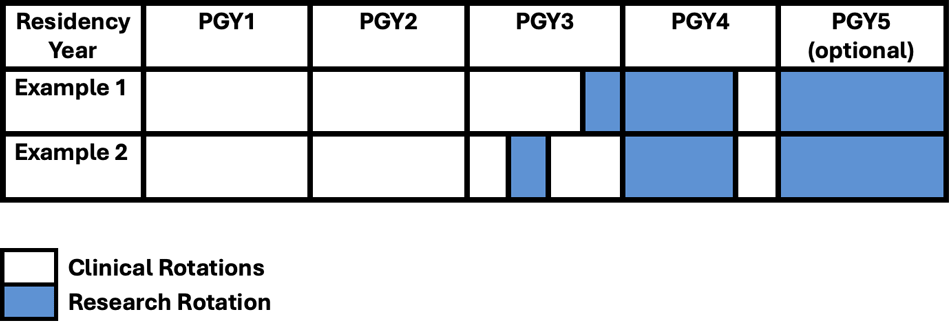
* Each resident will meet the Residency Program and R38 leadership to design an individualized schedule
The image above presents sample schedules for Pediatric and Internal Medicine ROCStARR residents. In both examples, residents focus on clinical rotations during PGY-1 and PGY-2.
- Example 1: Clinical rotations extend through the first three quarters of PGY-3, with research beginning in the final quarter of PGY-3 and continuing through the first three quarters of PGY-4.
- Example 2: Clinical and research time are integrated in PGY-3, with research occurring in the second quarter of PGY-3 and continuing through the first three quarters of PGY-4.
Both examples include an optional fifth year dedicated to 12 months of research.
PGY-2 residents interested in participating in ROCStARR are encouraged to discuss their research interest with their program director or ROCStARR leadership. Applications are submitted in the early winter of PGY-2, PGY-3, or PGY-4. Accepted residents will engage in professional development programs and courses to support their research goals, collaborate with mentors and R38 leadership to develop projects, create individualized learning plans, and establish a mentorship committee.
Program Structure for Dermatology and Internal Medicine/Pediatric Residents
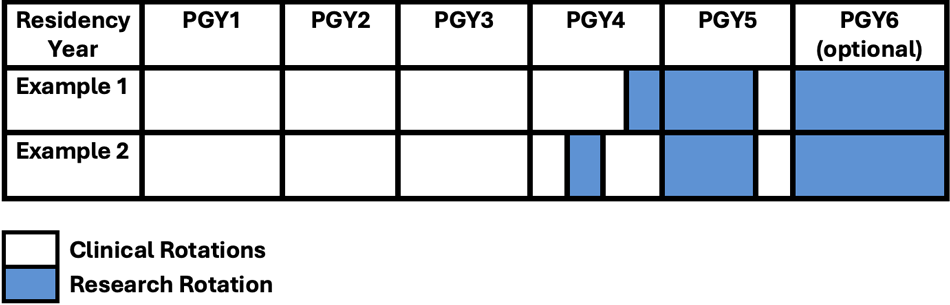
* Each resident will meet the Residency Program and R38 leadership to design an individualized schedule
The image above presents sample schedules for Dermatology and Internal Medicine/Pediatrics ROCStARR residents. In both examples, residents focus on clinical rotations during PGY-1 through PGY-3.
- Example 1: Clinical rotations extend through the first three quarters of PGY-4, with research beginning in the final quarter of PGY-4 and continuing through the first three quarters of PGY-5.
- Example 2: Clinical and research time are integrated in PGY-4, with research occurring in the second quarter of PGY-4 and continuing through the first three quarters of PGY-5.
Both examples include an optional sixth year dedicated to 12 months of research.
Benefits of the Program
- Resident Investigator Salary Costs: R38 will support 80% FTE for each resident trainee, per year. Stipend level will be commensurate with PGY levels and years of experience.
- Funds to Support Resident-Investigator Research: $20,000 per resident per year for supplemental resident research supplies. Supplies will be based upon each resident’s area of interests including, but not limited to, lab supplies, human subjects research costs, animal expenses, IRB fees, data sets, specimen processing, fees for core facility use, and other research-related costs. Each resident investigator will submit a detailed budget for approval by their Mentoring Committee and the Operations Committee.
- Funds to Support Resident-Investigator Conference Travel: Each trainee will receive $3,000 annually for travel expenses to attend or present research findings at domestic scientific conferences and to support short term courses or workshops to obtain research skills. Costs include hotel, meals, transportation, and registration fees.
- Increased competitiveness for URMC subspecialty fellowship programs
- Eligibility to apply for a new NIH early career award (K38 Stimulating Access to Research in Residency Transition Scholar)
Contact
For questions about the program and application information, please reach out to r38admin@urmc.rochester.edu.