
2025 Fellows
2025 Fellows
- Allen Anandarajah, MD, MS
- Stephen Artim, MD
- Susan W. Blaakman, PhD RN
PMHNP-BC FNAP FAAN - Nicole Dornbush, PharmD
Fellow Q&A
Click on a fellow below to learn more.
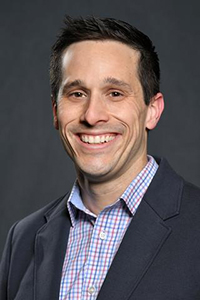
Stephen Artim: Emergency Medicine Wellness Committee
For Stephen Artim, MD, a member of the Emergency Medicine Faculty, getting the wellbeing conversation started among his colleagues led to a second conversation: What barriers prevent emergency department clinicians from engaging with wellbeing activities and initiatives? It’s an example of how a Wellbeing Fellowship can lead to fresh perspectives and boost engagement in the process.
How did your project begin?
Our initial goal was to create a multidisciplinary wellness committee for the emergency department. We invited all stakeholders, and we’re focusing on interpersonal and inter-team dynamics. We’ve been able to have several meetings, formalize and certify a charter, and start some productive discussions. Notably, we’ve been able to brings together numerous stakeholders, including nursing, technicians, registration staff, pharmacists, residents and attendings. We’re working to recruit additional staff colleagues.
Where did the idea of barriers to participation come from?
That evolved from the response when we first tried to organize the group. People were hesitant. So it became clear that my project also needed to focus on addressing that hesitancy, which springs in part from concerns that meaningful change won’t occur.
What comes next?
The Wellness committee will continue after the fellowship. We know we want to work on socialization, team recovery after tragic events and improved debriefings. We’d like to create a small workgroup of attendings to identify policies that we can suggest to local leadership—how we can support attendings who need time to recover and boost their longevity in the profession.
What were the benefits to you personally of participating in the fellowship?
It was very helpful to communicate with my co-fellows who were working on similar projects. Office of Wellbeing leadership also brought in great experts for us to hear from and interact with.
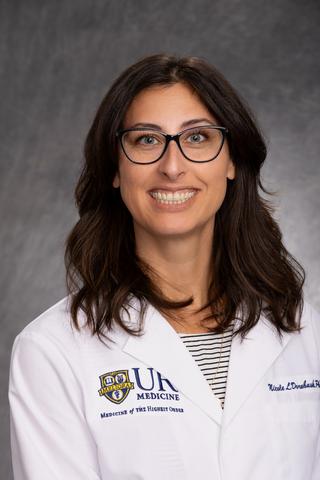
Nicole Dornbush: Specialty Pharmacy Recognition.
A simple discussion prompt earlier this year revealed an opportunity. Nicole Dornbush, Pharm.D, clinical coordinator for Specialty Pharmacy, asked her colleagues what made them feel valued at work, and the overwhelming response was recognition—and especially recognition from patients. Dornbush quickly realized her department was gathering significant amounts of positive feedback, but it wasn’t always being shared—and that there were many ways to gather (and share) more.
How will you measure success?
We did a baseline survey to see if recognition is already coming from patients, providers, and peers, and how Specialty Pharmacy personnel are receiving it. We asked how valued and appreciated each kind of recognition makes them feel, and what their job satisfaction and burnout levels are. We’ll re-survey at least three times as we implement our interventions. Our first survey had a 93.1 percent response rate, so our staff are really engaged with this project.
What are some of the existing and new sources of recognition?
We already conduct an anonymous patient satisfaction survey every year, and it’s full of compliments. But they generally have not been formally communicated to the individuals being recognized. So we’re compiling that information and sending it over to the UR Stars team to be formally entered into the UR Stars platform. We also have a signature form that goes out with every delivery, and even though there isn’t a prompt, patients often add compliments on the back—wonderful, kind thoughts that show patients really do appreciate the work we’re doing. We’re sending those to UR Stars as well, and we’re adding a prompt to the form with a QR Code linked to the UR Stars system. The UR Stars team has been an essential partner in the successful execution of this project.
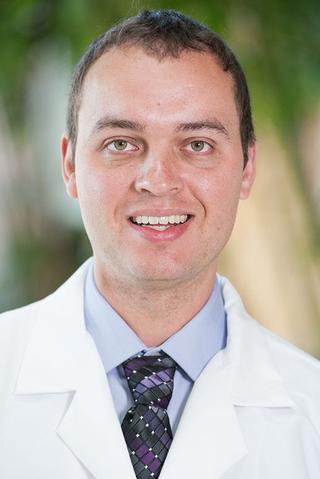 Wellbeing Fellow Mark Ettel, MD, associate professor of Pathology and Laboratory Medicine, isn’t tackling a traditional wellbeing project. But he believes his effort to improve lab processes will nonetheless offer big wellbeing dividends.
What does your project involve?
Essentially, we’re working to modernize the processes for working with our send-out lab to better support Pathology functions. We use a send-out lab for testing that’s too complex or esoteric to handle in-house, and a lot of those processes were built 20 or 30 years ago, before the molecular pathology revolution started. Back then, it took a national effort to sequence a single human genome. Now a lab can sequence multiple genomes in a day. Our processes need updating to match advancements like that.
How are you approaching it?
We’re looking at it as a process and quality improvement project. So, our first step was to make a process map to diagram what’s happening now. Based on this process map, we identified roadblocks, pain points, and redundancies such as unneeded paperwork. Our next step is to reach out to faculty in our department and in related areas such as oncology as we evaluate needs and potential solutions.
How does this connect with wellbeing?
If we improve a process that can contribute to burnout, then we should improve wellbeing, too. This will help Pathology faculty, but it could also improve things for the clinicians who rely on us for test results, staff and, ultimately, patients.
How has being in the fellowship helped make this project happen?
It has given me access to a group of leaders from across our institution. Pathology can feel a little siloed at times, and it has been helpful to hear outside opinions from wellbeing colleagues in other departments. These discussions have really highlighted how wellbeing needs and successes in our department are connected to wellbeing throughout the institution. Hearing from the speakers they’ve brought in has been great as well, as it has really helped me understand how leaders in this institution think about wellbeing and how they choose which projects to pursue to fulfill the URMC mission.
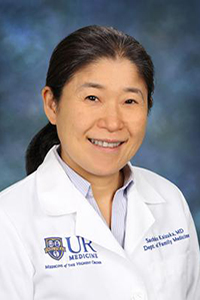
Sachiko Kaizuka: One-on-One Coaching
Massive programs and institution-spanning initiatives can often make a difference, but sometimes a one-on-one approach is the key to success. Sachiko Kaizuka, MD, associate professor of Family Medicine, applies that lesson in her work as associate director of informatics for Highland Family Medicine, and she also decided to make it the focus of her Wellbeing Fellowship.
What did your project involve?
I ran a pilot coaching program for two physicians and one nurse practitioner who were struggling with the electronic medical record, especially with keeping their work within work hours. I met with them each five to seven times over two to three months to provide coaching. We identified the goals at the beginning and then reverse-engineered how to get closer to them, building one new habit at a time, and then following up at the next meeting to see how it went. Very often this involved challenging our own limiting beliefs, or even changing the way we see things, too. We talked about ideal workflows, and how that differed from what they were doing. Then we tracked their monthly Wellbeing Index scores, the time the spent making notes, their pajama time and other metrics.
What were the results?
Even with just a couple months of coaching, all of them saw significant improvements in their WBI scores, from fives to ones, indicating significantly lower risk of burnout.
So, what's the secret?
It really comes down to what’s called human factors ergonomics. Basically, we all have habits we are not aware of that can work against our goals. One example is trying to finish notes right after seeing a patient instead of later, as many of us get in the habit of doing. Finishing them immediately reduces the cognitive load.
What comes next?
I hope to scale the program up in some way. I may work with people from outside my department. Eventually, I hope there can be some official FTE set aside for this kind of coaching—either to offer it to train people to do it.
How did the fellowship help you?
It definitely helped me keep the project moving forward by giving me deadlines and accountability. As others have noted, the chance to work with the other participants, and with Office of Wellbeing Leaders and the speakers they brought it, was also a big help.
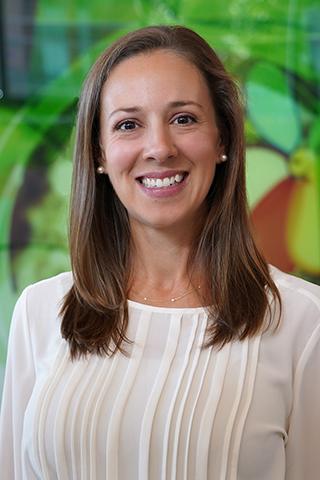 Want to organize a wellness retreat for your APP team but aren’t sure where to start? Kathleen McNamara, PA-C, can help. Her Retreat in Box Wellbeing Fellowship project won’t give you a literal box, but it will provide all the resources you need.
What have you put together, and how do you think it will help?
I am offering APP Retreat in a Box, a consult service to help plan your own department wellness retreat. There are many existing wellness resources at URMC available to leaders trying to plan a retreat, and I wanted to bring them together in one place to streamline the planning process. The service includes a menu of themes to pick from, including physical and mental health, social wellbeing, spiritual wellbeing, workplace environment, resilience, work-life balance, and meaning and purpose. There are also agendas for retreats of varying lengths. For example, the 30-minute version includes time for guided breathing, discussing clinical wins and mindfulness exercises. The four-hour retreat includes a full agenda, from a connection-themed breakfast to a movement session, reflection on ethical dilemmas, a creative expression workshop and resilience planning. Customizing the retreat to specific departments has been a more efficient use of time and helps bring wellness into our everyday clinical lives.
How is the project coming?
Retreat in a Box launched July 14! APPs can reach out to their APP Wellness Committee member or visit the APP intranet site for more information and to fill out the retreat pre-planning survey. My goal is to reach as many APPs as possible. I’m really excited to offer these resources. I hope improving APP wellness will help reduce burnout and create a culture of mindfulness with empathetic team connection.
How has being in the fellowship helped bring your project to fruition?
The OWB Wellbeing Fellowship has helped immensely with wellness-directed guidance in design thinking and improvement science to create APP Retreat in a Box. Participating in the fellowship has really helped me to see the bigger picture and expanded my knowledge of the depth and breadth of resources that are available at URMC. It has also been truly inspiring to work with the other fellows, learn about their projects, and share ideas with them.
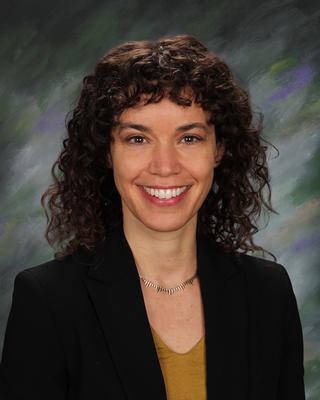 Physician and clinician wellbeing often grabs the headlines, but staff at all levels have wellbeing needs, too. That’s where Wellbeing Fellow Gretchen Roman, PT, DPT, PhD, assistant professor of Family Medicine comes in.
Tell us about your project and whom it will reach?
I’m partnering with Census Management and Support Services leadership and reaching out to staff across Census Management (referral intake and admitting), Environmental Services, Food and Nutrition Services, Patient Transport, and Supply Chain/Materials Management. We’re running focus groups with employees from these service areas to assess their wellbeing needs.
How have they been going?
We ran a total of seven from late September through early November, and we’ll present some results at the Wellbeing Symposium on Nov. 13. We’re trying to see if there is anything URMC can do to better support staff in these roles, to assess whether they feel valued, and whether they have suggestions. We’re also asking about the impact of past wellbeing initiatives and if they have suggestions for future ones. Once we understand their needs, I plan to seek continued funding to further this work and plan interventions.
Why did you choose to work with staff in these areas?
The research literature tells us that staff in these roles sometimes feel forgotten or overlooked in their own work environments by interdisciplinary colleagues, that their work is not as valued or seen as equally important as clinical staff, so we want to mitigate that if it’s happening here. Many wellbeing efforts, nationally and here at URMC, have focused on physicians and other clinicians, especially post- COVID, and staff in these roles may not always know what’s available.
How has being a wellbeing fellow impacted your project?
As an outsider to these service areas, it’s been tremendously helpful. Being a fellow helped me navigate the infrastructure, make needed connections, meet new people, and develop the rapport and trust necessary to move this project forward.