

2026 Fellows
2026 Fellows
Melissa Allen, MS
VC Administration
Sr. Director, Laboratory Services
Pathology and Laboratory Medicine
Program Administrator for Pathology and Laboratory Medicine Melissa Allen’s project stands at the nexus of wellbeing and technology. By deploying new software, she’s hoping to improve workflows, and therefore boost wellbeing.
Tell us about your project?
We’re piloting software called Imprativa, which makes log-ins simpler on shared workstations. This technology has been successfully rolled out across clinical areas external to pathology but was originally out of scope for pathology. It’s being tested in one of our patient service centers, as well as a couple of targeted workstations within the testing lab, and the hope is that it will have strong impact in areas like this where we have high-volume patient or sample throughput and many people using the same workstations. The feedback so far has been positive.
What inspried you to tackle a project in this area?
l started at URochester Medicine as a medical technologist, so I know first-hand the challenge and impact of constantly logging in and logging out during the course of a workday. I’ve always felt driven to find a way to improve efficiency, which we know has a significant impact on wellbeing. One way to accomplish this is to standardize technology as much as possible across all clinical areas.
Describe your experience in the fellowship?
I feel so fortunate to have had the opportunity to participate. It’s been a very rewarding experience. The other fellows are a great cohort, and we’re all very supportive of each other’s projects. It’s exciting to hear what they are doing and potential impact to their clinical specialties, and it’s been wonderful to work with the Office of Wellbeing Team, which has a lot to offer in terms of how to approach, assess, and show the value of wellbeing work. As the co-chair of our departmental wellbeing committee, my goal is to take the concepts I have learned in the fellowship back to my department in continued practice.
Kimberly Gergelis, MD
Radiation Oncology
Like many Wellbeing Fellows, Kimberly Gergelis, MD, assistant professor of Radiation Oncology, found herself drawn to wellbeing work through personal experience. As far back as medical school, she witnessed challenging patient interactions and unexpected losses that impacted both her and her peers. As an intern, she found herself stretched thin and without the time to process bad outcomes, leading to her own brush with burnout. As she moved into her residency at the Mayo Clinic, she acted, initiating a grant-funded wellbeing curriculum. She’s been eager to continue working on wellbeing since she arrived at University of Rochester Medicine three and a half years ago.
What does your fellowship project involve?
I’m attempting to enhance the professional fulfillment of the social workers who assist our patients. The idea grew out of a Quality Assurance and Performance Improvement project I led that was focused on making sure all patients who needed to come in for radiation treatments had access to transportation, and to refer them to Social Work to help arrange it if not. That’s an important area, but we heard from the social workers that transportation consults represent the majority of their work, and that they can in fact do a lot more.
And that’s where your project comes in?
Yes. We are assessing various social determinants of health of all new radiation patients and then making referrals to Social Work as needed for concerns like food insecurity, difficulty paying utility bills, and housing insecurity. We’re hoping that bringing those cases to Social Work will boost their professional fulfillment and also improve patient outcomes. Of course, we’ll also track any bandwidth issues that emerge and advocate for additional positions if needed.
How has the project been going?
This had been an idea for over a year, so we were able to move quickly on it. We already have a group of residents, physicians, nurses, and APPs screening patients and making referrals, and we’ll be sending out our first survey to gauge the results soon.
How has being in the fellowship helped you?
The mentorship, not only from leaders but from the other members of the cohort, has been wonderful. It’s great to have people to bounce ideas off of and to talk with about what’s working and what isn’t. Having colleagues who say this work matters and is important helps give me the energy and motivation to move it forward.
Megan Lyons, MD
Professor of Clinical Medicine, Clinton Crossings Internal Medicine
Medical Director for Clinical Operations,
URMC Primary Care Network
For Megan Lyons, MD, professor of Clinical Medicine, the Wellbeing Fellowship offered a chance to learn more about the science behind physician burnout and how to address it. And better yet—the fellowship gives her the chance to turn her curiosity into action.
You entered the fellowship with a project in mind. What do you hope to do?
I’m planning to address the issue of InBasket management for primary care physicians to attempt to reduce its contribution to burnout. Interestingly, research demonstrates some associations between high volumes of MyChart messages and higher risks of burnout.
Do you have any solutions in mind?
I believe there are a number of things to explore, including training for staff. We’ll look for ways to help them address the messages that fall within their scope of work or practice instead of automatically forwarding them to a physician. Coaching clinicians and educating patients around expectations, boundaries for appropriate use of MyChart messaging may also be part of the solution.
How did you become interested in the topic of Wellbeing?
It started out on a personal level—I’ve experienced burnout myself. I started reading about it and talking to my departmental leadership about it. That led to my role as associate medical director for my department, with a focus on clinician wellbeing, and to becoming the departmental representative to the Wellness Workgroup in 2020.
Aside from the opportunity to learn more about the science, what drew you to the fellowship?
It’s a great opportunity to work with experts in the field and to have time set aside to work on a topic that I’ve very passionate about.
Mallory Manning, PA-C
Lead APP
Hospital Medicine Division, Strong Memorial Hospital
When a program works, word spreads fast. Mallory Manning, PAC, heard about the wellbeing fellowship from one of last year’s participants, and, with a longstanding interest in the topic, she was eager to sign on as one of this year’s fellows.
What’s your background in Wellbeing work?
I’ve been involved in the APP Wellness Committee through the Sovie Center at Strong for several years. I work in Hospital Medicine, which can be fast-paced and a high pressure environment at times. Over the years, I've noted that the nature of inpatient medicine paired with off-shift and weekend work are all contributors to burnout, which increases job turn-over as well. I love what I do and the type of medicine that I practice, so I naturally became interested in ways to make it sustainable. When I heard about the opportunity to become a wellbeing fellow, it seemed like the perfect chance to learn more about wellbeing science and hopefully develop a project that could benefit the wellbeing of my colleagues.
The fellowship has just gotten underway, but do you have an idea for your project yet?
I’m still working on the details, but I want to base it around optimizing the Secure Chat experience for APPs. We constantly use it to communicate with nursing staff, attendings and other healthcare professionals. It is a great tool, but the volume of chats can become overwhelming at times. The Unified Clinical Communications team is doing a lot of work right now to optimize Secure Chat across the organization, and I would love to contribute to that effort while advocating for APP wellbeing.
What has your experience with the fellowship been so far?
A. We’ve had a few sessions so far, which has provided a great opportunity to meet the other fellows as well as Dr. Rooney and the Office of Wellbeing team. We’ve also received some expert and very welcomed advice on how to structure our projects. I’ve been a clinician for about 10 years, and I’ve been removed from the research arena for quite some time. The fellowship has been a good reintroduction to that world, and everyone involved has been super warm, encouraging and supportive.

Itza Morales
Senior Director of Operations
Strong Recovery/Addiction Psychiatry
Staff Wellness Officer, Psychiatry
Itza Morales, MSB, CASAC, senior director of Addiction Psychiatry, believes wellbeing should be on the agenda from day one. That’s why she has focused her fellowship project in part on orientations for new hires, with the goal of creating a greater sense of belonging to both a specific department and the institution as a whole.
How has your project been going?
My project is going well. We started quarterly, in-person new staff orientations in January 2026 to welcome employees to the Department of Psychiatry. I introduce myself as the Department’s staff wellness officer and share available resources, particularly those focused on wellbeing. Our Department Chair, Dr. Ben Lee, and CFO, Patrick Seche, make it a point to attend, and Chief Wellbeing Officer Craig Rooney, PhD, has also joined one of our sessions. We work closely with our Human Resource business partner, Kathleen Maurer, who also attends. The orientations provide an opportunity for new staff to meet departmental leaders and one another, something we did not previously offer beyond site-specific onboarding.
What are the next steps?
We’ll gather data from participants and assess what works and what we can improve. So far, the feedback has been positive.
How did you become involved in wellbeing projects?
Prior to the pandemic, one of our nurses was a WellU champion, and I saw the positive impact that was having and wanted to expand it to other staff. Eventually, I worked to establish a wellness room, converting an old storage closet into a little oasis with a sound machine and flameless candles. More recently, I was asked to take on the role of staff wellbeing officer for the department.
Describe your experience in the fellowship.
I’m grateful I’ve had the opportunity to participate. It’s a good mix of staff and faculty, and we’ve been able to learn together about what’s going on in our respective areas and how to build successful projects. It’s been wonderful to work with the Office of Wellbeing team. It’s a group filled with refreshing enthusiasm.
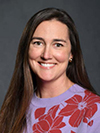
Emily Salib, MD
Assistant Professor, Medicine & Pediatrics
Department of Medicine, Highland Hospital
Medicine is filled with moments of wonder, small and large. Emily Salib, MD, assistant professor of Medicine and Pediatrics, knows first-hand the stress that comes with job, but she knows it also offers profound feelings of awe. And she believes capturing that feeling can enhance wellbeing.
How is your project exploring the idea of awe?
We’ll be working with Med-Peds residents in awe workshops, exploring their reactions to awe and what triggers it or evokes it in clinical settings. Research shows that even brief moments of awe can make people feel more connected to each other and the world, more curious, and more pro-social. So our hope is that if we can build awareness of it among physicians, it can help restore purpose, meaning and connection. As health care workers, we see people overcoming difficult conditions or situations and witness incredible acts of courage almost every day. So we want to see how we can make a little cognitive space to pause and appreciate that.
How have residents reacted?
They seem to respond to the concept. They’re engaged and sharing their own moments of awe, and there is real power in that sharing, making it seem more real and more meaningful. Part of the project will be looking at ways we can share awe.
What's it like being a wellbeing fellow?
It’s a chance to be part of a supportive and creative group, and it’s fun for us to come together every month, discuss our projects, get input, and hear from a diverse array of perspective and backgrounds. The Office of Wellbeing team is deeply interested in how they can help each of us succeed and excited to share what they know about the science of wellbeing.

Christina R. San Filipo, MS, RN, RNC-NIC
Nursing Professional Development Practitioner
Golisano Children's Hospital NICU
Code Blue is a familiar hospital call. Christina San Filipo, MS, RN, RNC-NIC, a nursing professional development practitioner in the Golisano NICU, plans to help introduce a new code to University of Rochester Medicine with the NICU wellness team: Code Lavender.
What is a Code Lavender?
Essentially, it’s a rapid response to offer support at the unit level following a critical incident. The idea for the unit code lavender arose from the unit wellness team, which I chair; so that’s what I’m looking to do with my fellowship project, support this work within my wellness team. We are developing a response team, response algorithm, and resource cart. The team would like to include self-care supplies in the cart that help foster meaningful conversations and bring staff back closer to their baseline, including dissolvable paper to write about whatever happened to let it go, stress balls, candy, journals, or even Legos to assemble.
What have you done so far?
We’re talking in the fellowship about what a Code Lavender team might look like, how we can measure success, and then I bring those ideas back to the unit’s Interdisciplinary Wellness Team. Usually, a Code Lavender involves nursing, chaplaincy, unit leadership, and sometimes palliative care, medical faculty, and therapists. We’re currently doing an inventory of available resources and discussing what might work well for our team.
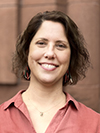
Brenda Tesini, MD
Associate Professor of Medicine, Pediatrics and the Center for Community Health and Prevention Medicine (primary),
Infectious Diseases
For Hospital Epidemiologist Brenda Tesini, MD, the path to wellbeing work ran through the COVID pandemic and its associated increases in burnout and distress. Now, as a wellbeing fellow, her project is tied to another familiar echo of those years: Hand hygiene.
Aside from the obvious disease-prevention aspects, how is hand hygiene tied to wellbeing?
I’m specifically looking at the Infection Prevention team tasked with improving hand hygiene rates across University of Rochester Medicine and how we can help them feel effective in that role. Unfortunately, we’re seeing stagnant or even declining rates of hand hygiene, which can be quite demoralizing for that team and others working to improve hand hygiene. So we want to develop a toolkit for our infection preventionists to use with the service line or section they are partnered with as a way of freshening our approach to hand hygiene, to improve communication, and to give people tools that work. We hope that will both boost the wellbeing of our team and improve hygiene rates overall.
How is the fellowship helping you with your project?
I came in with a strong sense that there is a clear patient-safety and business case for focusing on wellbeing. Data shows that burnout and staff wellbeing directly impacts hospital-related infection rates and our ability to do infection prevention work. The fellowship is giving me the opportunity to learn the science behind wellbeing, how to assess wellbeing on a broader level, and how to evaluate the effectiveness of interventions.
What has been your experience working with the other fellows?
I love it. When we enter that space for our monthly time together, I feel relaxed. You can see shoulders lowering as tension fades and a sense of community arises. It’s wonderful to feel that sense of support, to share our struggles, and to celebrate our successes. It has also been incredible to get to know all the folks in the Office of Wellbeing on a more personal level, to be able to go to them with any issues, and to join a network of wellbeing-minded colleagues that I know will continue long beyond the fellowship.