
Clinical Curriculum
Clinical Curriculum
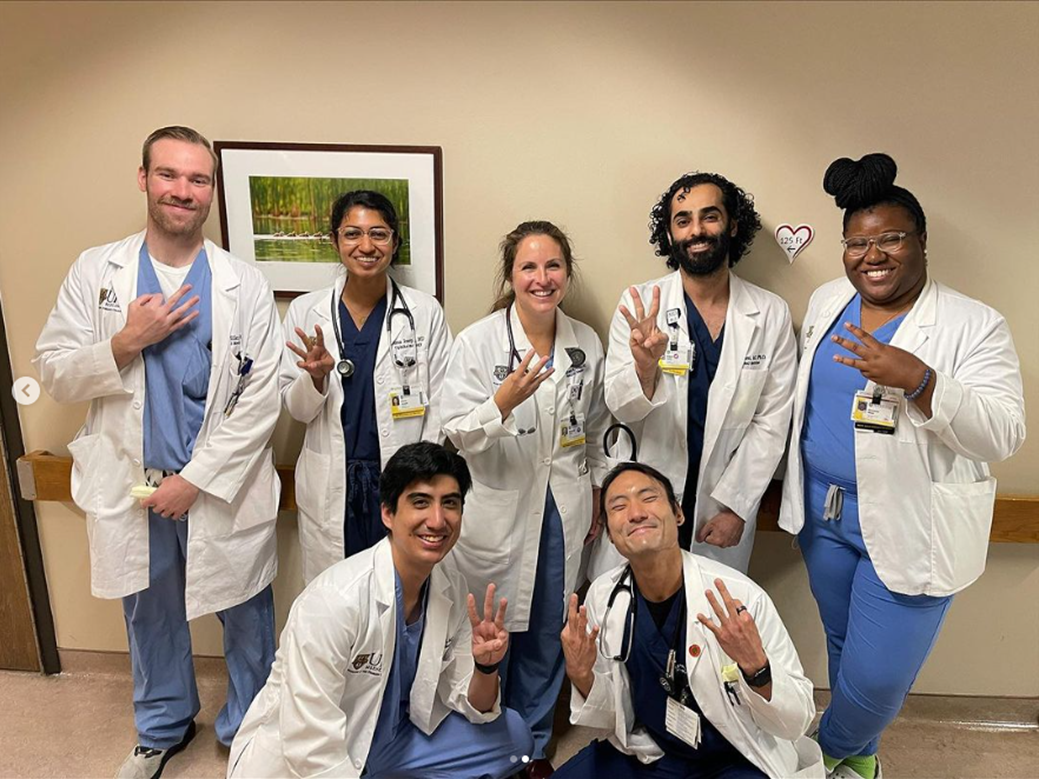
The University of Rochester’s clinical curriculum provides broad, well-rounded training in general internal medicine and subspecialty care across diverse inpatient and outpatient settings in urban, suburban, and rural communities. Our curriculum offers residents flexibility to explore a variety of career paths early in training and tailor elective experiences as their professional interests evolve. Graduates are well prepared for subspecialty fellowship training or independent practice in academic, community-based, and private practice settings.
Core Rotations
The core curriculum combines ambulatory and hospital medicine experiences with rotations in cardiology, emergency medicine, geriatrics, hematology-oncology, hepatology, critical care, neurology, palliative care, and perioperative medicine, providing a strong foundation in both general and specialty medicine.
| Rotation | PGY1 Weeks | PGY2 Weeks | PGY3 Weeks |
|---|---|---|---|
| Ambulatory Block | 12–14 | 12–14 | 12–14 |
| Emergency Medicine | – | – | 2 |
| Geriatrics | 2 | 2 | – |
| Hospital Medicine at FF Thompson Hospital | 2–4 | – | 2 |
| Hospital Medicine at Highland Hospital | 4 | 4 | 2–4 |
| Hospital Medicine at Strong Memorial Hospital | 6–8 | 6–8 | 6–8 |
| Hospital Medicine Evening/Night Float | 2 | 4 | 2 |
| Inpatient Cardiology (Heart Center) | 2 | 2–4 | 2–4 |
| Inpatient Hematology-Oncology | 4 | 2 | 0–2 |
| Inpatient Hepatology Co-Management | – | 2 | – |
| MICU | 4 | 4 | 4 |
| Neurology Consults | 2 | – | – |
| Palliative Care | – | 2 | – |
| Vacation | 4 | 4 | 4 |
| Longitudinal Ambulatory Electives | – | 3* | 3* |
| Traditional Block Electives | 6 | 10–12 | 10–12 |
*Each ambulatory elective built into the ambulatory blocks consists of a total of 12-14 sessions in that elective area over the course of the year.
Elective Curriculum
This program will give you as strong clinical training as any other program all while emphasizing a healthy work-life balance. Our program is well organized with strong leadership and extremely well supported within itself as well as by the hospital system."
Residents may choose from elective opportunities across all major internal medicine subspecialties in both inpatient and outpatient settings. Most elective rotations are two-week blocks, offering flexibility to explore areas of interest. In addition, second- and third-year residents participate in three longitudinal electives integrated into their ambulatory blocks, where they spend a half-day each week with a dedicated subspecialty faculty mentor, resulting in 12-14 continuity sessions over the academic year. These longitudinal electives provide sustained exposure to specialty practice, continuity with faculty and patients, meaningful mentorship, and valuable insight into the outpatient environments where much of modern medicine is delivered.
Our elective curriculum allows residents to personalize their training and explore interests beyond traditional internal medicine subspecialties. With dozens of elective offerings available, residents can gain experience in areas such as anesthesiology, community advocacy, global health, dermatology, digital health, point-of-care ultrasound, procedures, psychiatry, radiology, women's health, wound care, and more.