


Track Overview
The Child and Adolescent track provides specialized clinical training with children, adolescents, and families. Postdoctoral Fellows provide supervised care of children and adolescents experiencing a broad range of psychological disturbances, tailoring their caseloads to best align with their training goals and areas of expertise.
The training program emphasizes understanding children, adolescents and families from a developmental and systems perspective. Fellows receive intensive clinical training in a wide range of diagnostic skills and treatment modalities including individual, group, family, sibling, and parent, interventions.
All fellows have the opportunity to integrate both clinical and scholarly dimensions of the field and participate in a scholarly project consistent with their interests.
I chose to stay on for postdoctoral fellowship at University of Rochester Medicine because of the programs' supportive and collaborative culture and the ability to grow clinically in both breadth and depth of experiences. I appreciated University of Rochester Medicines' emphasis on tailoring my position to my strengths as well as my short-term and long-term career goals. I am ecstatic that I'm in a program that offers a balance of clinical work, research, and leadership experience, with mentorship that supports growth in each area. The fellowship has been a place where I can deepen my expertise and shape my future as a child clinical psychologist.
- Rachel Rivera, PhD, Clinical Psychology Postdoctoral Fellow, Child and Adolescent Track
Training Goals
The fundamental goals of the program are to enhance the fellow's knowledge base and clinical skills in psychopathology, assessment, consultation, treatment planning and implementation. In addition, the fellowship aims to enhance the fellow's competencies in program development, supervision, teaching and/or scholarship.
The fellows will take on increasing responsibility in a) patient care, b) training of residents and other mental health professionals, and c) program development and evaluation. Fellowships are designed so that fellows can pursue careers in patient care, teaching, research, and administration, and be eligible for New York State Licensure
Training Experiences
The combination of clinical and didactic work provides the in-depth biopsychosocial knowledge necessary to understand and treat child and adolescent psychopathology, considering both internal (cognitive, affective, dynamic and biologic) and external (familial, school, peers, community) factors. Intensive supervision is provided for the fellow's clinical work, including a minimum of two hours of weekly individual supervision from licensed clinical psychologists plus group supervision as appropriate.
An individualized learning plan is developed early in the fellowship to address each fellow’s interests and professional career plans. Fellows may be involved with one or more projects based on their interests. Fellows may also move into a teaching/supervisory role with trainees during the program. These teaching experiences are supervised by the Child and Adolescent training faculty and may include: diagnostic evaluations, psychological testing, individual and group psychotherapy, and parent consultation.
Core Clinical Concentrations
We have two core clinical concentrations in the child and adolescent fellowship track: Inpatient Care and Outpatient Care. Applicants should clearly identify which concentration(s) are of interest in their application materials.
Child & Adolescent Acute/Inpatient Care
URochester Medicine Golisano Children's
The Fellow in this concentration focuses on providing care to children and adolescents in the context of psychiatric crises. Fellows provide clinical care on the Child & Adolescent Psychiatric Inpatient Unit, including the Rapid Stabilization Pathway- a 3-day, ACT focused intervention for teens admitted with suicide risk. The fellow will work closely with a multidisciplinary team consisting of psychiatrists, social workers, nurses, and mental health therapists in a fast-paced acute environment.
The role of the fellow include 1) providing intensive treatment to children and families with the goal of crisis stabilization, and 2) program development and evaluation. Fellows will also have exposure to the Pediatric Consultation/Liaison service, an interdisciplinary team that provides psychiatric consultation and short-term treatment for pediatric patients on the Golisano Children's medical inpatient units.
Fellow's responsibilities also include participation in didactics, a mentored scholarly project, and supervision of other trainees/ mental health clinicians.
Pediatric Behavioral Health & Wellness Outpatient Services
URochester Medicine Golisano Children's
This concentration offers a wide variety of opportunities and allows for significant customization of the training experience. Applicants should clearly identify which major and minor rotations are of interest in their application materials. Fellows typically engage in 1 major rotation and 1-2 minor rotations during the training year.
Fellows will provide supervised clinical care and conduct program development/research in our state-of-the-art outpatient settings, integrated pediatric care settings, and/or our expanded school mental health program. Many of our therapy rooms are equipped with built-in, state-of-the-art AV equipment (B-Line Medical) for recording trainees' clinical contacts, enabling intensive clinical supervision. Fellows in this concentration participate in clinical research as members of the Innovation in Child Mental Health Care Delivery Lab.
Major Rotations - Outpatient
Major rotations within the Pediatric Behavioral Health & Wellness Outpatient Services are designed for fellows seeking to develop advanced proficiency and expertise in a specific area. Fellows are expected to demonstrate a foundational understanding or prior experience in these domains to maximize their training. Fellows typically spend 2-3 days/week in their major rotation.
UR-SOS provides advanced training for psychologists interested in school mental health, community-engaged care, implementation science, and systems-level intervention. Fellows engage in interdisciplinary school-based clinical services, consultation with school teams, and care coordination across educational and healthcare settings. They may also contribute to professional development for K-12 educators while working with urban, suburban, and rural school communities throughout the Finger Lakes region, including the Rochester City School District.
A distinctive feature of the UR-SOS fellowship is the opportunity to contribute to multiple federally funded initiatives designed to strengthen school and community behavioral health systems, particularly in rural and underserved communities. These include Connecting for Kids (C4K), an across-sector model that strengthens collaboration among schools, healthcare providers, and families, as well as the Mental Health in Schools Project ECHO, a tele-mentoring model that supports dissemination and implementation of evidence-based practices.
Fellows will contribute to project implementation, evaluation, and publication, and training or technical assistance. Additional opportunities included youth mental health promotion, substance use prevention, and efforts to expand evidence-based practices across school and community settings.
The GI Psychology service provides outpatient evaluation and treatment to patients diagnosed with a variety of GI conditions. Common referrals to the service include Disorders of Gut-Brain Interaction (DGBIs; e.g., irritable bowel syndrome, functional abdominal pain, rumination, functional constipation/encopresis), inflammatory bowel disease (IBD: including Crohn's disease and ulcerative colitis), and celiac disease.
Fellows will have the opportunity to consult and collaborate with a multidisciplinary team including GI providers, dietitians, child life specialists, social workers, and pelvic floor physical therapists. By the end of the training year, fellows will understand a variety of GI presentations and demonstrate advanced competence in delivering evidence-based treatment methods (e.g., gut-directed CBT).Fellows obtain specialized pediatric psychology training in one or more medical specialties, including: Neurology (e.g., FND treatment), Endocrinology (e.g., diabetes), Hematology/Oncology (e.g., BMT and gene therapy), Nephrology (e.g., kidney transplant), and Behavioral Sleep Medicine. Other specialties may be available depending on the applicant's interest. Fellows provide consultation and direct outpatient care within these divisions and collaborate with multidisciplinary care teams.
This major rotation requires prior experience in conducting independent autism evaluations. Fellows will gain advanced proficiency in both the diagnostic assessment and evidence-based treatment of Autism Spectrum Disorder and other Developmental Disabilities.
Fellows in this major rotation will develop advanced proficiency in providing outpatient care. Fellows can specialize their patient caseload to focus on specific populations (e.g., LGBTQ+ youth, early childhood), specific disorders (e.g., anxiety disorders, mood disorders, PTSD), and/or specific treatment approaches (e.g., individual, group, caregiver-focused).
PBH&W accepts a wide range of insurances, but a sliding fee schedule exists to enable families with no insurance, or limited financial resources, to access our services. The service has approximately 60,000 patient visits per year. Referrals for assessment and treatment are received from families, pediatricians, schools, and medical specialists within Golisano Children's.
Minor Rotations - Outpatient
Minor rotations offer fellows opportunities to gain exposure and foundational experience in areas where they may have little to no prior experience. Fellows typically spend 1/2-1 day/week in their minor rotation.
School Mental Health (Clinical/Consultation)
Focuses on direct patient care and consultation within school settings, distinct from the grant-funded initiatives, providing exposure to the practical application of school mental health services.
Infant and Early Childhood Mental Health (IECMH)
Provides foundational exposure to Infant and Early Childhood Mental Health principles and practices, including outpatient therapy and consultation in early childhood. May also include training in and provision of early childhood outpatient therapy, including Parent-Child Interaction Therapy, RUBI parent management training, Reflective Parenting, and consultation with caregivers in breastfeeding and lactation medicine.
Pediatric Specialty Clinics at Golisano Children's Hospital
Fellows can gain exposure to various pediatric subspecialty clinics, including Neurology, Endocrinology, Behavioral Sleep Medicine, Nephrology, Adolescent Medicine, and Consultation-Liaison (CL) services. This involves providing consultation and direct patient care within these divisions and collaborating with multidisciplinary care teams. The specific focus can be tailored to the fellow's interests.
Gastroenterology (GI)
Offers an introduction to the psychological aspects of pediatric gastroenterology, including treatment of common GI conditions and multidisciplinary collaboration.
Autism Spectrum Disorder (ASD)/Developmental Disabilities (DD) – Treatment
Focuses on the treatment aspects of Autism Spectrum Disorder and Developmental Disabilities for fellows who may not have extensive prior experience in independent evaluations.
Pediatric Behavioral Health & Wellness (PBH&W) Outpatient Services
Provides broad exposure to outpatient clinical care, allowing fellows to work with a variety of presenting concerns and populations. Fellows have the opportunity to tailor their caseloads to their training goals.
Integrated Primary Care (IPC)
Offers experience in providing mental health services within a pediatric primary care setting that serves patients and families who reside in suburban and rural communities.
Scholarship Opportunities
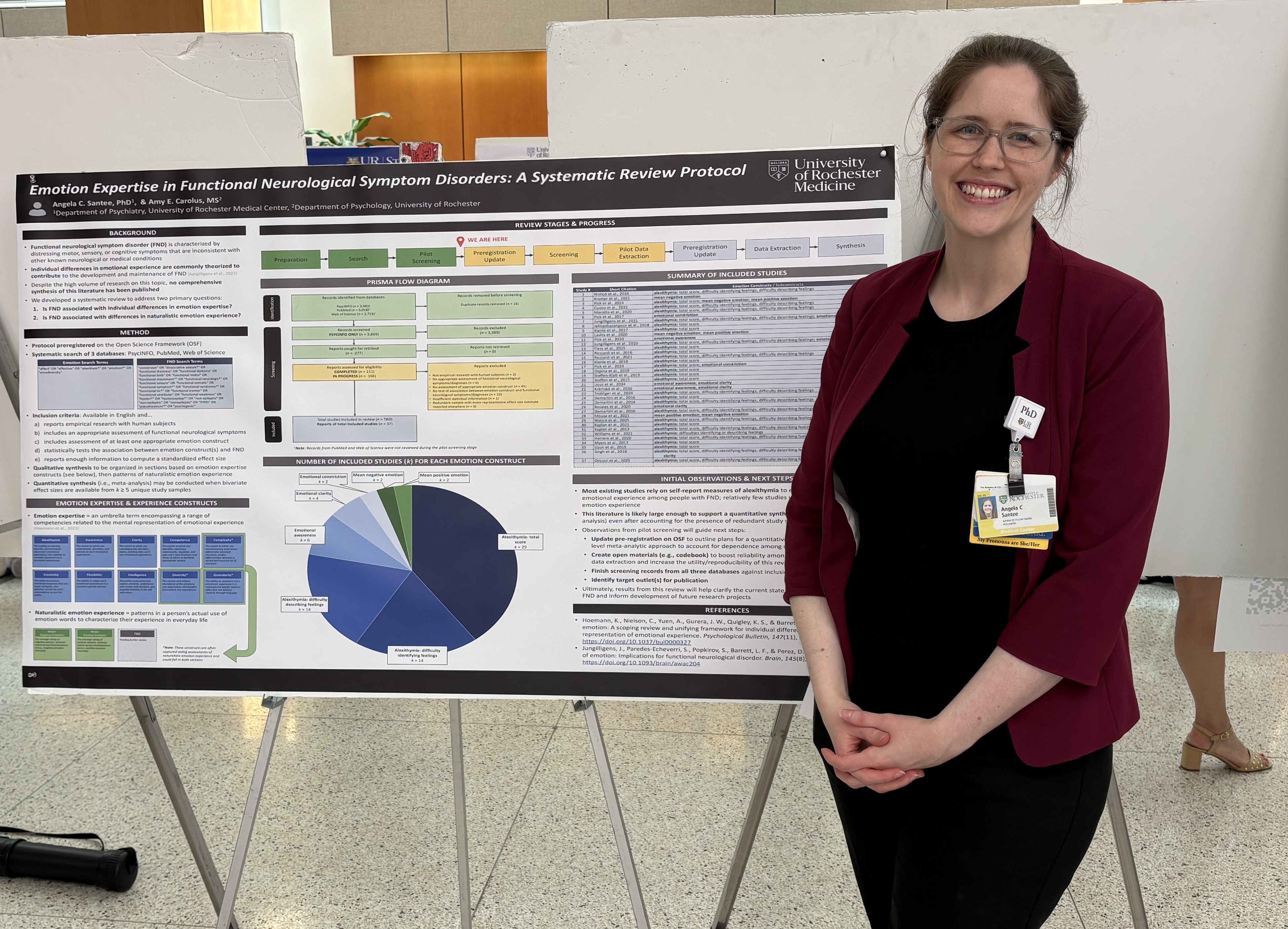
Child and Adolescent Fellows conduct a scholarly project. Past scholarly projects have included an evaluation of iMATTER (Improve Mindful Attention Enhance Relaxation) for inpatient adolescents, evaluation of an evidence-based components approach to assessment and treatment, and a project to educate teachers and school personnel about managing students in crisis. Fellows can also collaborate with faculty on existing research projects and develop their own lines of scholarly inquiry within those projects. See our Scholarly Activities page to view the projects.
Contact Us
If you have further questions, please feel free to contact us for more information:
Linda Brown
Psychology Training Program Administrator
Phone: (585) 275-3563
Fax: (585) 276-2292
Mailing Address:
University of Rochester Medical Center
300 Crittenden Boulevard, Box Psych
Rochester, NY 14642
Psychology Training Director: Jennifer West, Ph.D.
Fellowship Child & Adolescent Track Director:
Linda Alpert-Gillis, Ph.D.