

Track Overview
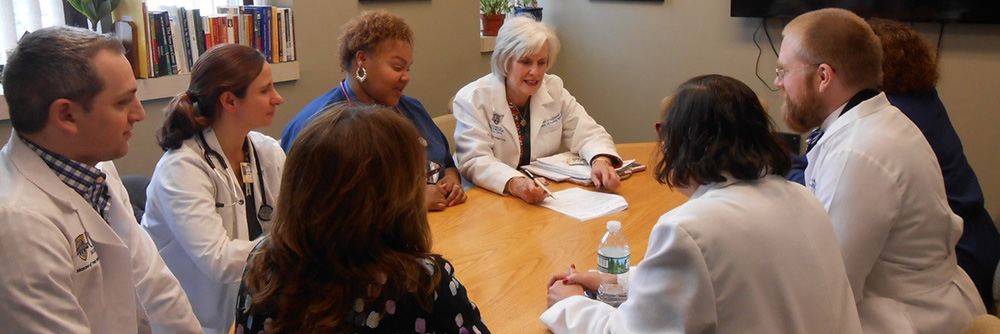
The Integrated Care Family Psychology Fellowship track prepares psychologists for clinical and academic roles in primary care and specialty care medical settings through education in family psychology and systems theory, interprofessional collaboration, and health psychology. Fellows provide assessment, consultation, and treatment to patients and families in a variety of health-related settings.
Fellows are regularly involved in teaching medical students, psychology interns, and medical residents and fellows in multiple medical settings. Fellows are encouraged to participate in scholarly activities related to providing biopsychosocial systems-oriented care in a medical setting.
Working in close proximity with clinicians from a wide range of disciplines also provides the fellow with opportunities for professional differentiation and professional identity development. All fellows participate in weekly individual and bi-monthly group supervision; at least two individual hours are provided by a licensed clinical psychologist.
The Integrated Care-Family Postdoc was invaluable for my development as a psychologist: Our faculty eagerly helped me expand my skills through coursework, live supervision, community partnerships, and interprofessional teaching. With their guidance, I became a more effective clinician; a more collaborative colleague; and a strong advocate for patients, their families, and their teams. Thanks to my training at URMC, I'm uniquely positioned as a systems-oriented pediatric and family psychologist, a medical educator, and a leader in pediatric integrated care.
- Rebecca Copek, Ph.D.
Training Goals
Our program is a one-year APA accredited program (as of 2023 cohort). Some trainees may wish to have additional training and with faculty agreement, remain for a second year.
ICF fellows focus on:
- Learning systems theory, systemic approaches, and family therapy skills that facilitate participating in a biopsychosocial approach to health and healthcare
- Developing collaborative skills in working with other health care professionals
- Identifying a specialty area of interest within health service psychology
- Engaging in scholarship (View Scholarly Activities )
- Learning communication coaching skills for use in teaching medical students and residents (View Communication skills resource)
Those interested in a second year of training seek advanced learning regarding systemic approaches, including application of family therapy, interdisciplinary collaboration and medical education, and leadership development.
Program Details
Medical Family Therapy and Integrated Care Training Options
Fellows in the Integrated Care Family Psychology track all participate in foundational classes that support their learning of medical family therapy during their 1-year fellowship.
- Foundations of Family Therapy and Integrated Care (3 credits) (Fall of the first year)
- Integrated Care and Medical Family Therapy Intensive (3 credits) (Summer of the first year))
Fellows interested in expanding their expertise and skill development in Medical Family Therapy may enroll in the Family Therapy Training Program’s post-degree training. The decision to pursue post-degree training has no bearing on recruitment to the fellowship.
Fellows are asked to confirm their interest in post-degree training no later than November 1st so that an appropriate curriculum can be built to meet their needs. Options are offered to provide fellows with levels of training that support their individual career goals while also giving them flexibility to control their out-of-pocket expenses.
As the cycle of courses traditionally takes 2 years to complete, this option is available to fellows who stay for a 2nd year or for those who may pursue the coursework with knowledge of greater out of pocket expense if not employed by the University. This certificate program is registered with the New York State Education Department as a license-qualifying program. The courses needed to complete the certificate may vary slightly depending upon whether they have completed other credit-bearing graduate courses that can be transferred and applied toward the certificate requirements. The courses most fellows take for the PDC include the two required courses:
- PSI 421 Foundations of Family Therapy and Integrated Care (3 credits)
- PSI 492 Integrated Care and Medical Family Therapy Intensive (3 credits)
and
- PSI 433 Fundamental of Medical Family Therapy and Mind-Body Integration (3 credits)
- PSI 566 Couples Therapy, Health and Illness (3 credits)
- PSI 548 Family Therapy Ethics and Professional Practice (3 credits)
- PSI Live Group supervision: Focus on assessment of couples and families (3 credits)
- PSI Live Group Supervision: Child-focused medical family therapy (3 credits)
Fellows may also choose from among the following electives in support of their professional goals:
- PSI Principles and Practices of Clinical Supervision (2.0 credits)
- PSI Affect in the Clinical Setting (2.0 credits)
- PSI 495 Systems Consultation and Interventions (2.0 credits)
- PSI Family Law, Policy, and Social Systems (3.0 credits)
Out of Pocket Costs for Tuition-Supported Psychiatry Training Offerings:
Integrated Care Family Psychology Track
Tuition benefits
Tuition benefits are included as part of the compensation package for departmental fellows. Fellows are eligible from their date of appointment to enroll in up to TWO 3-credit courses each semester (i.e., fall, spring, summer) throughout the course of the year. Your fellowship curriculum requires that you take TWO specific credit-bearing courses as indicated above. Credit-bearing graduate courses involve a significant weekly time commitment as each credit hour requires 15-hours of classroom instruction in addition to outside assignments. If you are interested in registering for a non-required course (i.e., as described above) you will need to seek approval from your Program Director who will help you determine if the course of interest would: support your learning plan; fit into your schedule; and not interfere with your ability to carry out your other fellowship responsibilities.
Out of pocket costs
The cost per credit hour through the University of Rochester School of Medicine & Dentistry is currently $2050* making the cost of a 3-credit course $6,150. The University tuition benefit covers 95% of the cost of courses that meet the IRS requirements for tax-exempt courses. (If courses are required as part of your curriculum, they are generally tax exempt.) The fellow is required to pay the 5% not covered by the benefit at the time of course registration. The Department of Psychiatry/Training Program will reimburse the fellow during the course of the semester for that 5% for any course that is required. Because reimbursement of this 5% exceeds the University’s benefit, the IRS tax law requires that it be reimbursed as additional compensation and taxed accordingly at a rate near 40%. This means that fellows will not be compensated in total for any course that they take whether or not it is required. For a 3- credit course ($6,150), the fellow would be required to pay 5% ($307.50) at registration. The additional compensation payment ($307.50) would be processed in the fellow’s paycheck and taxes will be withheld at a rate near 40% ($123.00). Thus, for a 3-credit course, the estimated out of pocket expense for a fellow would be approximately $123.
If a fellow is interested in pursuing an advanced certificate, this generally requires completion of approximately 7 courses or a maximum of 12 courses over 2 years; the estimated out of pocket expense would be approximately $1,476* for 12 courses. Trainees should meet with the Program Director and track leadership to discuss their interest in post-degree work and the expected timeline involved in this training based on their individualized needs.
*Note that this is based on the 2025-2026 tuition rate of $2,050/credit hour
This information is subject to change, please check with the program to verify current costs.
Training Experiences
The Integrated Care Family fellowship teaches trainees the needed skills to practice family and systems-oriented health psychology in a primary and specialty care setting. The focus is on using the biopsychosocial model, and providing collaborative clinical care with a variety of healthcare professionals. Fellows participate in seminars that highlight the generalist nature of working in primary care and help hone their clinical, collaborative, academic, and administrative skills.
Five major emphasis areas:
Each Integrated Care Family track emphasis area has specific clinical care settings and supervision. Not all emphasis areas are recruited for each year. Visit our How to Apply page for more specifics.
The Family and Internal Medicine (FIM) concentration includes intensive clinical training in integrated care, primary care behavioral health, medical family therapy, and medical education. The FIM fellow has opportunities to engage in consultation and collaborative care with physicians and other health professionals, interprofessional education, family therapy training, teaching, and scholarship in primary care settings. Time is divided between Highland Family Medicine (40%) and Highland Hospital (60%).
 Highland Hospital
Highland Family Medicine is an off-site, urban, primary care clinic that provides care to individuals from birth to late life. Here the FIM fellow provides behavioral health consultation and short-term (6-12 months) therapy to family medicine patients and families, many of whom are economically disadvantaged and/or from historically underserved populations with medical comorbidities. The fellow also participates in interprofessional education and psychosocial teaching with Family Medicine residents.
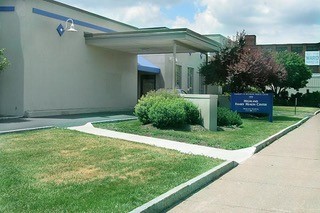 Highland Family Medicine
This focus includes intensive clinical training in integrated care in a Level 4 Comprehensive Epilepsy Center, housed in a large academic Neurology Department. There are many opportunities for collaborative care with physicians and other health professionals, interprofessional education, and teaching in a neurology program that draws patients from all of upstate New York. The fellow serves a critical role in interdisciplinary team based-care.
Time is equally divided between an off-site outpatient clinic and the inpatient epilepsy monitoring unit at URMC's Strong Memorial Hospital.
The fellow is trained to provide psychological diagnostic evaluations and psychotherapy to patients with functional neurologic disorders, other somatoform disorders (i.e., nonepileptic seizures, abnormal movement), and comorbid neurological and psychiatric conditions (i.e., epilepsy, Parkinson's disease, multiple sclerosis). The fellow is also trained in intensive short-term dynamic psychotherapy (ISTDP), a framework developed by Habib Davanloo. Other interventions that are utilized in the outpatient clinic include CBT, ACT, and family/couples' therapy. The fellow is also involved in providing communication coaching to neurology residents focused on optimizing physician-patient-family relationship skills.
This focus is in primary care (assessment and brief treatment using behavioral health interventions in a primary care setting). Specific training in this fellowship includes working with a diverse patient population at Strong Internal Medicine, a safety-net integrated primary care clinic that has been an accredited Level 3 Patient Centered Medical Home since 2011. The fellow will spend 50% time treating a broad range of patient care issues that present in primary care (depression, anxiety, grief, caregiver burden, adjustment to chronic disease, adherence issues, insomnia, family/relationship problems).
A portion of this clinical time will be devoted to same-day behavioral health consultation, brief assessment, and intervention with patients who present for their primary care visits. The fellow will also spend approximately 50% time devoted to Internal Medicine resident education via novel application of skills through clinical communication coaching and traditional didactic teaching. Coursework and professional seminars are dedicated to expanding knowledge base and skill development toward the application of integrated care psychology and medical family therapy principles.
Specific training in this area includes pediatric psychology, integrated primary care psychology, family and broader systems, and family psychology. Coursework and professional seminars are dedicated to expanding knowledge and skills in primary care psychology and medical family therapy principles. The primary placement for the pediatric fellow is in an urban family medicine clinic. The fellow provides therapy to children and their families, collaborates and consults with medical professionals as part of an interdisciplinary team, works with multiple systems such as schools and community agencies, and provides consultation and teaching to pediatric residents and primary care teams.
ICF fellows in the OB/GYN concentration can expect to receive specialized training in perinatal and reproductive mental health, integrated care, family systems psychology, including medical family therapy, and medical education. The OB/GYN fellow provides consultation, assessment, and treatment to obstetrics and gynecology patients and their families. Close collaboration with a team of healthcare professionals, including OB/GYNs, midwifery, nursing, social workers, and nutritionists, is an essential component of the role. Approximately half of the fellow’s time is spent providing individual, couples, and family therapy to a diverse, largely underserved population in an outpatient off-site clinic that provides general OB/GYN, high-risk pregnancy, family planning, and chronic pelvic pain care, among other services. The fellow will also gain experience providing brief supportive and skills-focused counseling and psychoeducational consultation via telehealth for patients and couples attending a specialty care Fertility Clinic. They may also have opportunity for supervised teaching and supervision experiences and often partner with Fellowship faculty working on ongoing scholarly projects, clinical quality improvements, and research.
Scholarship Opportunities
All Integrated Care Family fellows have the opportunity to participate in scholarship activities. Past projects have included exploration of smoking cessation and fertility, population health approaches to improve women’s health behaviors, examination of the qualitative use of cognitive screening, evaluation of training programs (including preparing master’s students to conduct clinical work, and medical residents to conduct a biopsychosocial interview). Fellows are able to collaborate with faculty on existing projects and to develop their own lines of scholarly inquiry in individual settings.
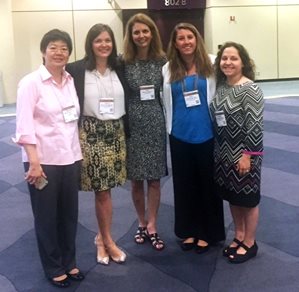
Photo: Drs. Magdalene Lim, Lauren DeCaporale-Ryan, Ellen Poleshuck, & Tziporah Rosenberg presented, Integrated primary care in family medicine, geriatrics, and women’s health: Leadership Opportunities Symposium at the American Psychological Association Annual Convention, Toronto, Canada.
Contact Us
If you have further questions, please feel free to contact us for more information:
Linda Brown
Psychology Training Program Administrator
Phone: (585) 275-3563
Fax: (585) 276-2292
Mailing Address:
University of Rochester Medical Center
300 Crittenden Boulevard, Box Psych
Rochester, NY 14642
Fellowship Adult Track Director: Tara Augenstein, Ph.D.
Program Director: Jennifer West, Ph.D.