Research Education News
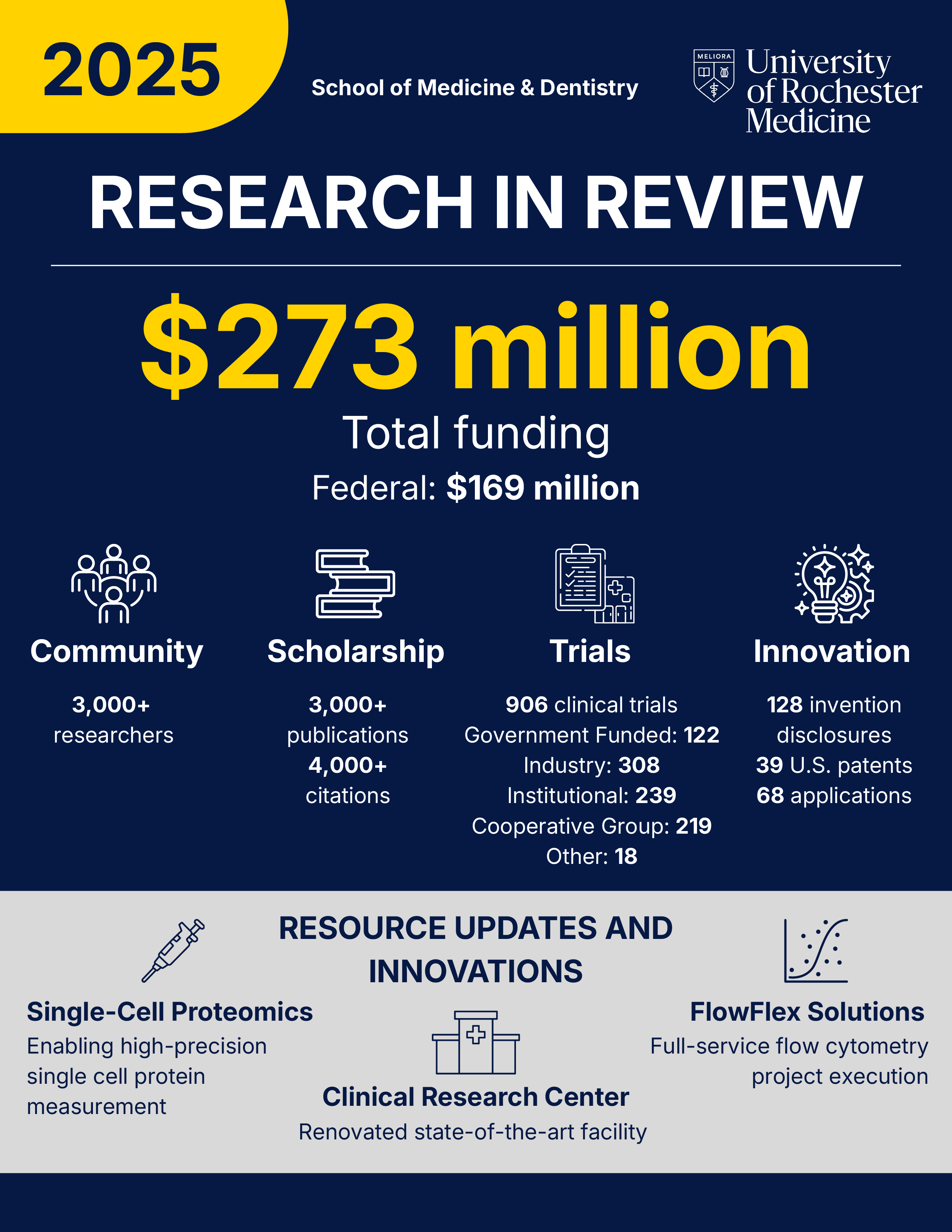
2025: SMD Research by the Numbers
Tuesday, April 28, 2026
The SMD research community continued to drive discovery and innovation in 2025. Here are a few highlights from last year.
The New Issue of Opportunities to Explore is Out Now!
Monday, December 8, 2025
Read the December 8-12, 2025 Issue
Where Research and Mentorship Shine: Highlights from the 2025 GEPA Awards
Monday, October 6, 2025
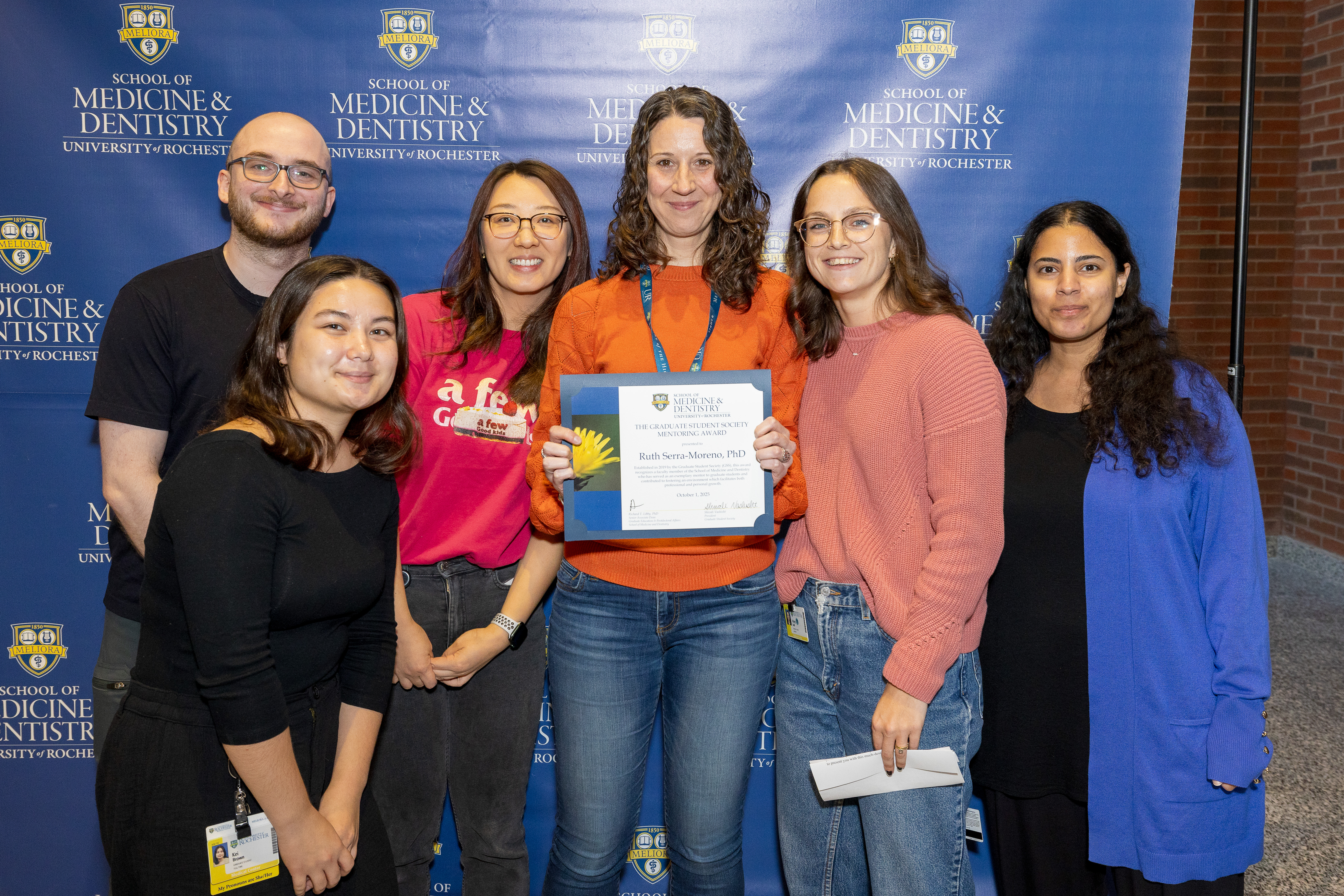
with members of the Graduate Student Society after receiving the GSS Mentoring Award.
Each year, the School of Medicine & Dentistry’s Office for Graduate Education and Postdoctoral Affairs honors the people who advance discovery and inspire others to do the same. The 2025 GEPA Awards Ceremony, held on October 1, recognized outstanding contributions in research and mentorship across our research community.
Below is the full list of awardees.
GEPA Awards 2025
Faculty Awards
| Award | Recipient |
|---|---|
| Excellence in Postdoctoral Mentoring | Mohammad Mehrmohammadi, PhD |
| Outstanding Graduate Program Director | Christopher Seplaki, PhD |
Postdoc Awards
| Award | Recipient |
|---|---|
| Outstanding Postdoc Mentor | Erin Davis, PhD |
| Outstanding Postdoc Researcher | Sonali Sharma, PhD |
| Community Impact & Advocacy Postdoc Award | Kathryn Toffolo, PhD |
Graduate Student Awards
| Award | Recipient |
|---|---|
| Graduate Alumni Fellowship | Jessica Fiser, Neuroscience |
| Community Impact & Advocacy Graduate Student Award | Sophie Troyer, Microbiology and Immunology |
| Irving L. Spar Fellowship | Catrin Zharyy, Neuroscience |
| J. Newell Stannard Scholarship | Jiwon Choi, Neuroscience |
| Merritt and Marjorie Cleveland Fellowship | Jessica Ogu, Neuroscience |
| Outstanding Student Mentor | Michael Giannetto, Neuroscience |
GSS Awards
| Award | Recipient |
|---|---|
| GSS Advocacy Award | Richard Libby, PhD |
| GSS Mentoring Award | Ruth Serra-Moreno, PhD |
| GSS Recognition Award | Leah Brown |
T32 Award
| Recipient |
|---|
| Mike McDermott, PhD |
| Robert Holloway, M.D., M.P.H. |
Fellowships & Scholarships
| Award | Recipient |
|---|---|
| Provost Fellowship | Jonathan Williams, Neuroscience |
| Provost Fellowship | Penelope Pando, Toxicology |
| Meliora Scholarship | Hiba Ahmed, Epidemiology |
| Meliora Scholarship | Jessica Ogu, Neuroscience |
| Meliora Scholarship | Jihad Gadsden, Pathology |
| Meliora Scholarship | Rosebell Onuma, Toxicology |
Celebrating the Legacy of David Oakes, PhD
Friday, October 3, 2025
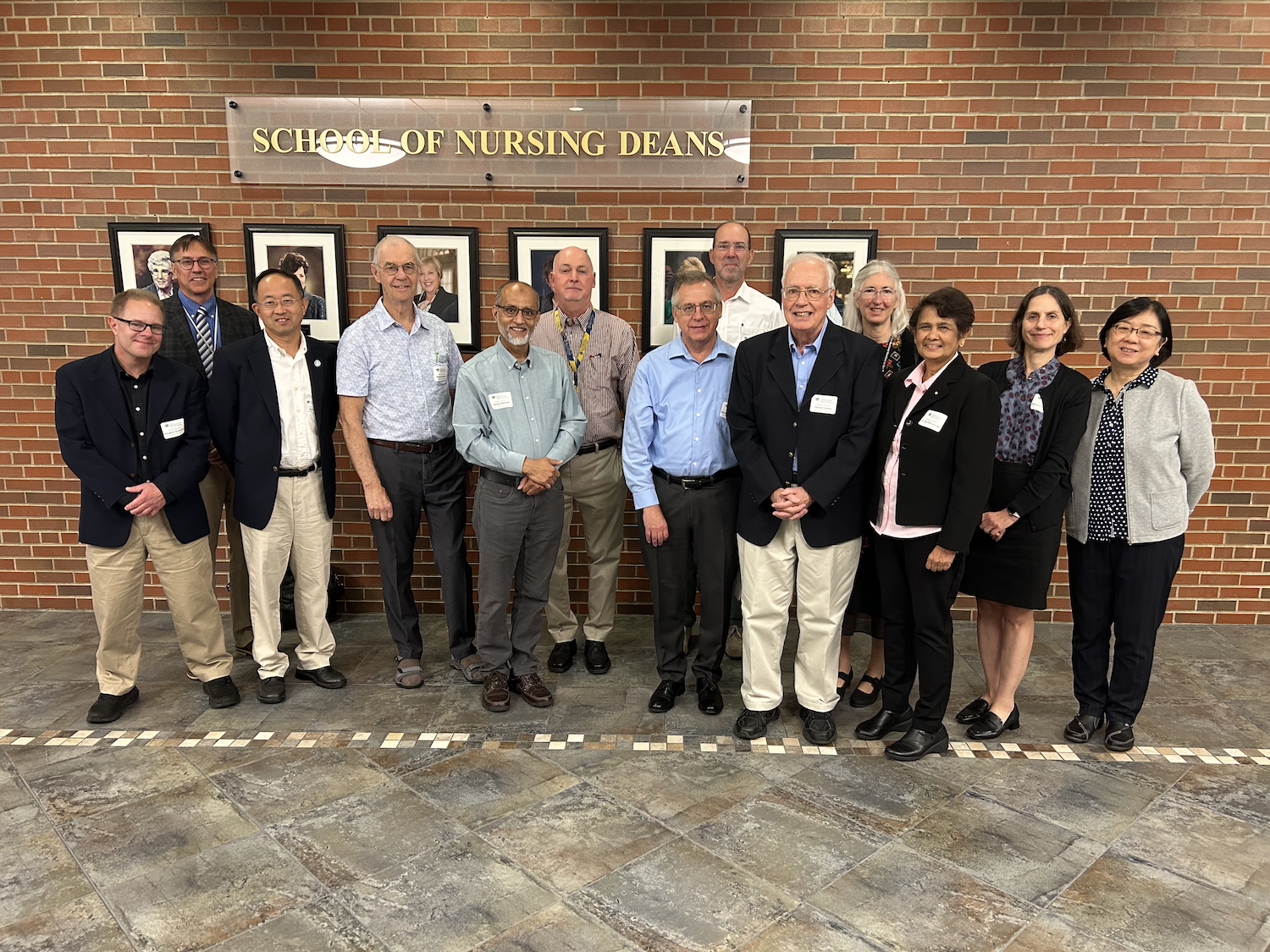
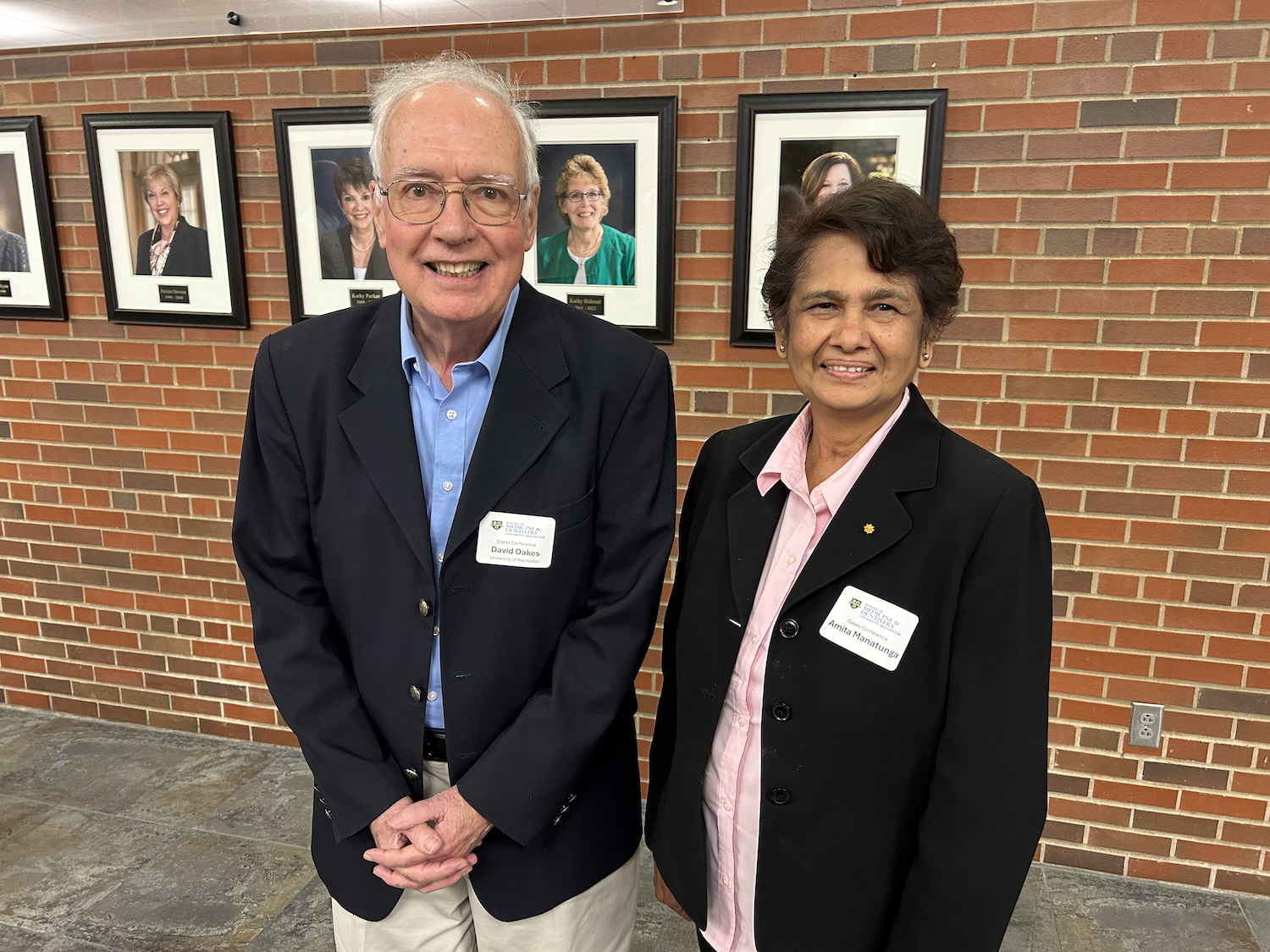
Last month, colleagues, collaborators, and former mentees from near and far came together to honor a scholar, mentor, and colleague whose impact has been felt across generations: David Oakes, PhD, Professor Emeritus of Biostatistics and Computational Biology.
For more than four decades, David’s work has advanced both science and people. His pioneering contributions to survival analysis have shaped the way we understand clinical trials and patient outcomes, and his collaborations with neurologists, cardiologists, and environmental health researchers have directly influenced new FDA-approved therapies.
But what stood out most at his retirement celebration were the stories of mentorship and humanity.
Steve Dewhurst, Vice Dean for Research, reflected on how David’s career has been defined not only by impactful science but also by the collaboration that made it possible.
“What makes you special is the collaboration you’ve done in your career,” he said. “Your work has led to FDA therapeutics. And the mentorship you’ve provided—former trainees speak so highly of you. You’ve built a true legacy.”
Amita Manatunga, Professor of Biostatistics and Bioinformatics at Emory University, and David’s first PhD student in the U.S., recalled his thoughtfulness as both a mentor and a person. She described him as “a true British gentleman, straight out of Masterpiece Theatre.” Soft-spoken but deliberate, “every comment mattered.”
She shared a story of when her son was born at Strong Memorial Hospital on the very day her dissertation proposal was due. David visited her and reassured her that presenting could wait. “He was the first guest my son ever saw,” she said. “David truly launched my career, and I will always be grateful for the start he gave me.”
In his own remarks, David showed his trademark wit. “Of course I did it all by myself,” he said before humbly crediting mentors such as Sir David Cox, as well as longtime colleagues Ira Shoulson and Arthur Moss for shaping his path.
University of Rochester Medical Center CEO and SMD Dean David Linehan, MD, wrote in his tribute, “Your impact, particularly in shaping what is now the Department of Biostatistics and Computational Biology, is truly immeasurable. Your groundbreaking work has led to advances in the treatment of cancer, cardiovascular disease, and neurological disorders, benefiting the scientific community and patients around the world.”
David leaves behind not only a body of scholarship but also a legacy of people, ideas, and collaborations that will continue to thrive.
Please join us in congratulating Dr. Oakes on a remarkable career and wishing him joy in his retirement.
Building the Blueprint: SMD Graduates Its First Genetic Counseling Master’s Students
Wednesday, June 18, 2025
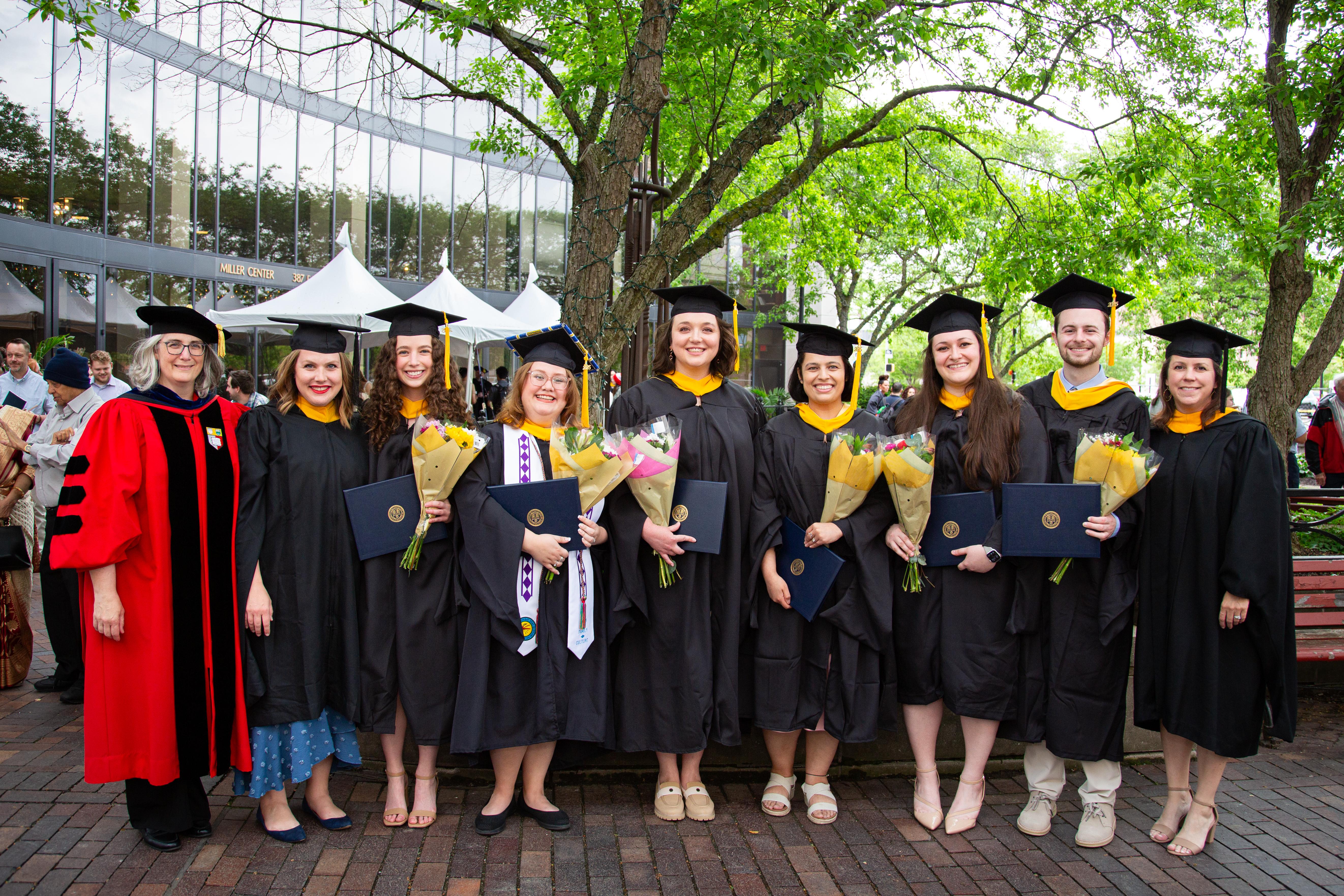
From left to right: Kimberly Fluet, Emily Calamaro, Abigail Hamilton, Emily Miller, Elizabeth Masteller, Srinka Arora, Jordan Lehman, Ben McPherson, and Audrey Schroeder.
One small step across the commencement stage, one big milestone for the School of Medicine and Dentistry. We’re proud to celebrate the first graduating class of our genetic counseling master’s students.
“We’ve reached a few big milestones during development and implementation of the program,” said program director Audrey Schroeder. “Welcoming our first cohort of students in fall 2023 and now celebrating their graduation is especially meaningful for our faculty, clinical partners, and the broader genetics community.”
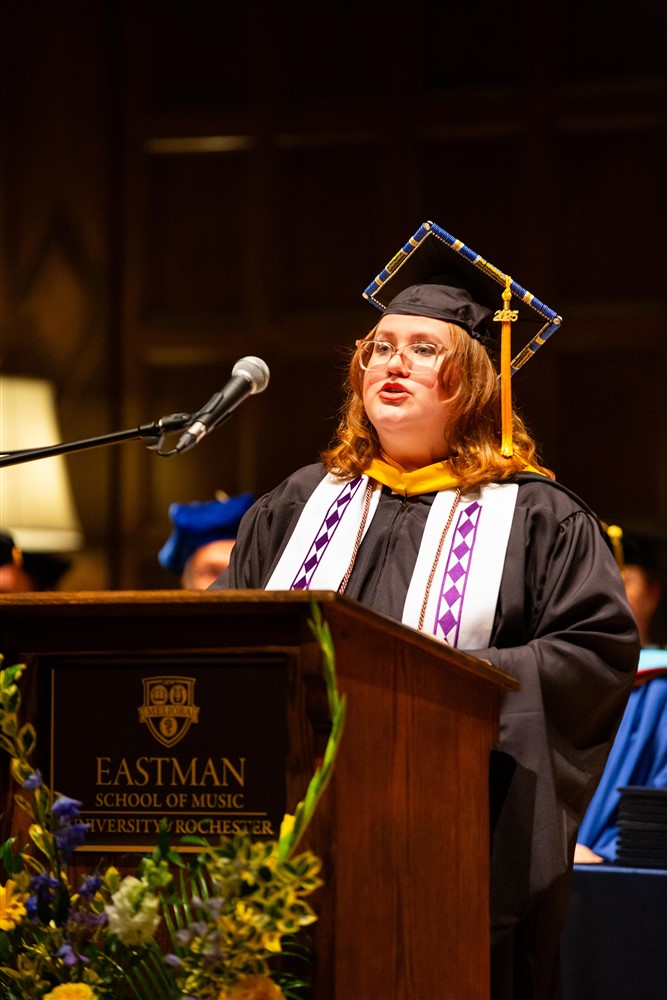
MSGC graduate Emily Miller speaking during the Master’s and
Advanced Certificate Commencement Ceremony on May 17, 2025
Our Master’s in Genetic Counseling is the first accredited genetic counseling master’s program in upstate New York and helps meet a growing need for highly trained professionals who can guide patients through complex genetic information and its impact on their health.
Students benefit from close collaboration with a wide range of genetics professionals at URMC, which is home to the largest number of clinical genetics professionals of any health care system in upstate New York. Through hands-on learning and clinical rotations, they gain experience in specialties including reproductive genetics, cancer genetics, cardiogenetics, neurogenetics, ocular genetics, inherited metabolic disorders, and more.
“The University of Rochester has been an ideal training site,” Schroeder added. “Our students work directly with genetics experts and have access to the full array of resources and support available through the School of Medicine and Dentistry.”
The milestone graduation was highlighted during the master’s and advanced certificate commencement ceremony, where a member of the inaugural class, Emily Miller, served as student speaker.
“Although only six of us in this room are actually earning the title ‘genetic counselor’ today,” she said, “each person before me exemplifies traits that are key to successful genetic counseling and key to a successful professional career of any kind: innovation, compassion, perseverance, and optimism.
The program welcomed its second cohort of seven students in the fall of 2024 and is poised for continued growth.
“Our graduates will go on to improve health care and access locally, nationally, and internationally,” said Schroeder. “We look forward to seeing the contributions they will make to the field of genetics and to the patients they will serve.”
Honoring excellence in mentoring, teaching, and research
Wednesday, April 30, 2025

Join us in congratulating this year's SMD faculty award winners!
SMD Faculty Mentoring Awards
Trainee Academic Mentoring Award in Clinical Programs
Joseph A. Nicholas, MD, MPH, ’01M (Res)
Professor of Medicine, William and Sheila Konar Family Professor in Geriatrics, Palliative Medicine and Person-Centered Care
Trainee Academic Mentoring Award in Basic Science
Marissa Sobolewski Terry, PhD
Assistant Professor of Environmental Medicine and Neuroscience
Faculty Academic Mentoring Award
Anne C. Nofziger, MD, ’00M (Res)
Associate Professor of Family Medicine
Lifetime Mentoring Award
Gary R. Morrow, PhD, ’88 (MS)
Professor of Surgery and Radiation Oncology, Dean’s Professor
Newly Named Professorships
Haggerty-Friedman Professor in Developmental/Behavioral Pediatric Research
- Suzannah J. Iadarola, PhD
- Ralph W. Prince Professor in Medicine Stephen R. Judge, MD ’06M (Res)
- Denham S. Ward, MD, PhD Professor Michael J. Scott, MB, ChB
- E. Philip Saunders Distinguished Professor Michael D. Maloney, MD, ’97M (Res)
- Pluta Professor in Breast Care
Anna C. Weiss, MD
Dean's Professors
Dean’s Professor, Public Health Sciences
- Elaine L. Hill, PhD
- Dean’s Associate Professor, Biochemistry and Biophysics
- Mitchell R. O’Connell, PhD
Dean's Teaching Fellow Awards
- Annabel S. Fu, MD, ’11M (MD), ’15M (Res) (Psychiatry)
- Karlo J. Lizarraga Mendoza, MD, MS (Neurology, Neuroscience)
- Sarah E. McConnell, PhD, ’10M (MS), ’13M (PhD) (Neuroscience)
- Erica O. Miller, MD, ’18M (Flw) (Medicine, Pediatrics)
#URochesterResearch
Research Update from Steve Dewhurst – Change and Uncertainty; Gratitude and Thanks
Thursday, December 5, 2024
Dear colleagues,
Last week, I bumped into a colleague on the way to the parking lot, and she shared with me her uncertainty and anxiety concerning the future of NIH and other federal agencies that are central to our research enterprise and academic mission. Many others have expressed similar concerns.
In that conversation, as we crossed Crittenden Blvd, I borrowed from a recent communication from the AAMC, which states succinctly that investment in NIH “results in saved lives, better health, economic growth, stronger local and regional economies, and U.S. global leadership in science and technology.” Those outcomes represent common ground that we can all get behind and provide the basis on which our outstanding Government Relations team will continue to advocate tirelessly for our research and academic missions.
Most importantly, as Sarah Peyre recently reminded me, we are tremendously resilient as a community and an organization—and while we may live in a world of perpetual change, our mission and our values remain constant.
Gratitude and Thanks
As we prepare for Thanksgiving, we have much to celebrate and be grateful for. For myself, some recent highlights include the Center for Visual Sciences retreat, held at the end of October, at which I heard some truly inspiring presentations by current and former graduate students, including Len Zheleznyak. Len is a serial inventor and entrepreneur and one of the founders of the UR spinout company, Clerio Vision. He spoke about the amazing support he got from his faculty mentors at CVS and how they continually went above and beyond for him. Similarly, Rushnan Islam—a current graduate student in Optics—shared with me the powerful sense of validation she gained from being named a co-inventor on a recent patent with her advisor, Wayne Knox.
Another highlight was the GEPA Awards Philosophy Meeting (Nov. 6), attended by both President Mangelsdorf and Dean Linehan, as well as by our newly minted associate dean for Research Mentorship, Nathan Smith, whose portrait, parenthetically, now graces the Flaum Atrium, thanks to the artistry of Charmaine Wheatley.
The creation of this new position underscores just how important mentorship is to the success and career development of learners, as noted by Tara Vrooman (a 2024 graduate of our Ph.D. program in Microbiology and Immunology and now an assistant professor at Westfield State University). Tara’s wonderful conversation with GEPA’s Jeff Koslofsky further highlights the importance of self-advocacy and bravery. Back in 2017, she took a chance at a Board of Trustees event and introduced herself to me, which opened a door for her to connect with one of the finest mentors at the Medical Center (and himself a UR PhD graduate), Scott Gerber, and ultimately to her current position, where she is pursuing her love for teaching.
I’m also excited about the recent NIH (NINDS) F99/K00 D-SPAN Award earned by Neuroscience PhD student Tori Popov, which will provide funding support for the rest of her PhD research and then an additional four years as a postdoc. I especially liked this portion of Tori’s LinkedIn post: “While it is easy to look at one’s success, I think it is just as important to be tenacious through the failures and note I was not awarded until the second time I applied for this incredible grant.”
That comment takes me back to where I started this message. Change and challenges are part of science. Our ability to navigate them successfully depends on the support of our colleagues and mentors and the resilience we derive from that support. As a community, we are unstoppable when we band together.
Steve Dewhurst, PhD
Vice Dean for Research, SMD
Vice President for Research, UR
GEPA Awards Recognizes the People Behind the Research at SMD
Monday, November 11, 2024
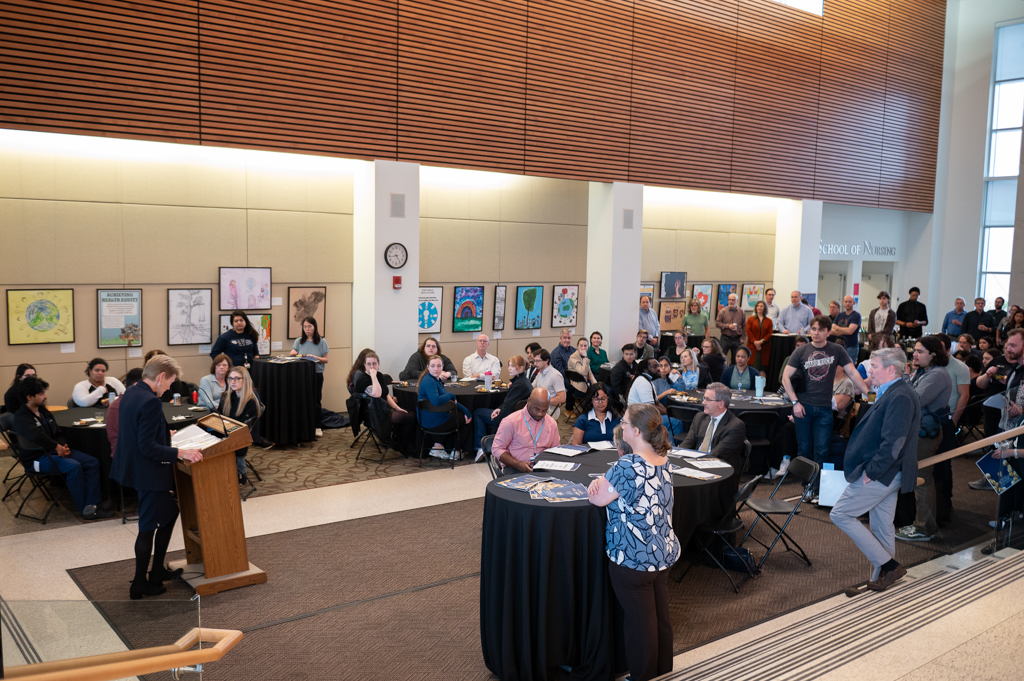
SMD’s Office for Graduate Education and Postdoctoral Affairs held their annual GEPA Awards Ceremony on November 6, 2024. With University, SMD, and Medical Center leadership in attendance, faculty, staff, and trainees were recognized for their outstanding work in research and mentoring.
“Your research, whether foundational, clinical, or translational, is truly transformative,” said Dr. David Linehan, URMC CEO and SMD Dean. “It directly impacts the health and well-being of our community, and it’s helping to shape the future of medicine and science globally.”
Below is the full list of awardees.
Incoming Graduate Student Achievement/Fellowship Awards |
Awardee(s) |
| Robert L. and Mary L. Sproull University Fellowship | Rachel Lombardo |
| Provost’s Fellowship | Deanna Abid |
| Graduate Alumni Fellowship Award | Deanna Abid |
| Merritt and Marjorie Cleveland Fellowship | Skylar DeWitt |
| J. Newell Stannard Graduate Student Scholarship | Veronica Gomes |
| Irving L. Spar Fellowship Award | Joanne Chiu |
| URSMD Meliora Scholarship | Jean Setenet |
Current Graduate Student and Postdoctoral Appointee Awards |
Awardee(s) |
| Outstanding Student Mentor Award | Taylor Jones |
|
Graduate Student Award for Excellence in Equity and Inclusion |
SACNAS |
| Melville A. Hare Award for Excellence in Teaching | Charkira Patrick |
| Melville A. Hare Award for Excellence in Research | Tina Bui-Bullock |
| Outstanding Postdoctoral Mentor Award | Courtney Jackson |
| Outstanding Postdoctoral Researcher Award | Elizabeth Abshire |
Faculty and Staff Teaching and Mentoring Awards |
Awardee(s) |
| Graduate Student Society Advocacy Award | Elaine Smolock |
| Outstanding Graduate Program Director Award | Robert Freeman |
| Outstanding Graduate Student Teacher Award | Xing Qiu |
| Outstanding Graduate Course Director Award | Dmitri Ermolenko |
| Outstanding T32 Program Director Award | Steve Georas & Michael O’Reilly |
| Graduate Student Society Mentoring Award | Thomas O’Connor |
| Graduate Student Society Recognition Award | Amber Rivera |
Design Your PhD to Achieve Your Career Goals, featuring Tara Vrooman, PhD
Thursday, October 31, 2024
Listen on Apple, Spotify, or YouTube Music.
Tara Vrooman, ’24M (PhD) is an Assistant Professor of Biology at Westfield State University, but her journey started with very different plans. As an undergraduate at the University of Rochester, Tara was originally on the pre-med track. However, an unexpected encounter at a university board meeting—while performing with the swing dance club—sparked a new passion for research, shifting her career trajectory.
Hands-on research experiences and strong mentorship shaped Tara’s journey. It started with participating in the Summer Scholars Program, which provided both financial support, professional development opportunities, and further reassurance that research was where she belonged. She eventually found her place in the Microbiology and Immunology program under the mentorship of Scott Gerber.
Her love for teaching came from tutoring as an undergrad, as well as being a teaching assistant through graduate school. Once she decided on pursuing a teaching career, she gained further experience as an adjunct professor teaching microbiology to nursing students at St. John Fisher.
Now in her full-time role, she’s still teaching microbiology to nursing students, often using creative tools like stuffed animal props to make complex concepts accessible and engaging for her students.
From her early days as an undergraduate researcher to becoming an educator, Tara’s story highlights the value of adaptability, active networking, and a willingness to explore new directions. Her experiences emphasize the importance of seizing opportunities, seeking mentorship, and making the most of available resources.
Key Takeaways
Stay Open to New Directions: Keep moving toward your end goals but keep an open mind about your path. Sometimes, exploring the unexpected can reveal passions you didn't know you had.
Make the Most of Resources: Use all available resources, including internships, teaching roles, and career services, to explore potential career paths and build relevant skills while you have the support of your undergraduate and graduate school environment.
Leverage Mentorship for Career Growth: Connecting with people in your field—whether at events, meetings, or online—can lead to meaningful mentorship. Seek mentors who support your career goals and are willing to help you gain the experience you need. Be proactive in asking for guidance and feedback.
Tailor Your Experience to Your Goals: Collaborate with your mentors and advisors to tailor your academic journey, actively seeking out hands-on experiences in areas like research, teaching, or internships. Developing a diverse skill set can lead to broader career opportunities.
Develop and Fine-tune Your Presentation Skills: Invest time in honing your communication skills, whether through presentations, public speaking, or writing. Conveying complex ideas clearly is crucial in any field.
Top Quotes
[09:33] “Even in high school, I would help my friends with their classes. And in college, I was a tutor… it’s something I’ve always enjoyed, but I never really thought of it as my future career until I started to work for the microbiology lab.”
[15:50] “We really tailored my graduate experience to what I wanted to do—towards teaching. So I was able to have a little bit of extra time to fit teaching into my schedule. And I’m really grateful that that was okay with [Scott] because… it really helped.”
[24:00] “Enjoy your time in graduate school and try and really make the most of it. Whether you know what you want to do in your future career... gain experience in that field if you can.”
Bridging Continents in the Quest for Cancer Cures
Thursday, August 22, 2024
Gary Hannon's journey from Dublin, Ireland, to Rochester, New York, reflects his dedication to advancing scientific discovery. Hannon, now a postdoc at the University of Rochester Medical Center, is making significant strides in cancer research under the mentorship of Associate Professor of Surgery Scott Gerber.
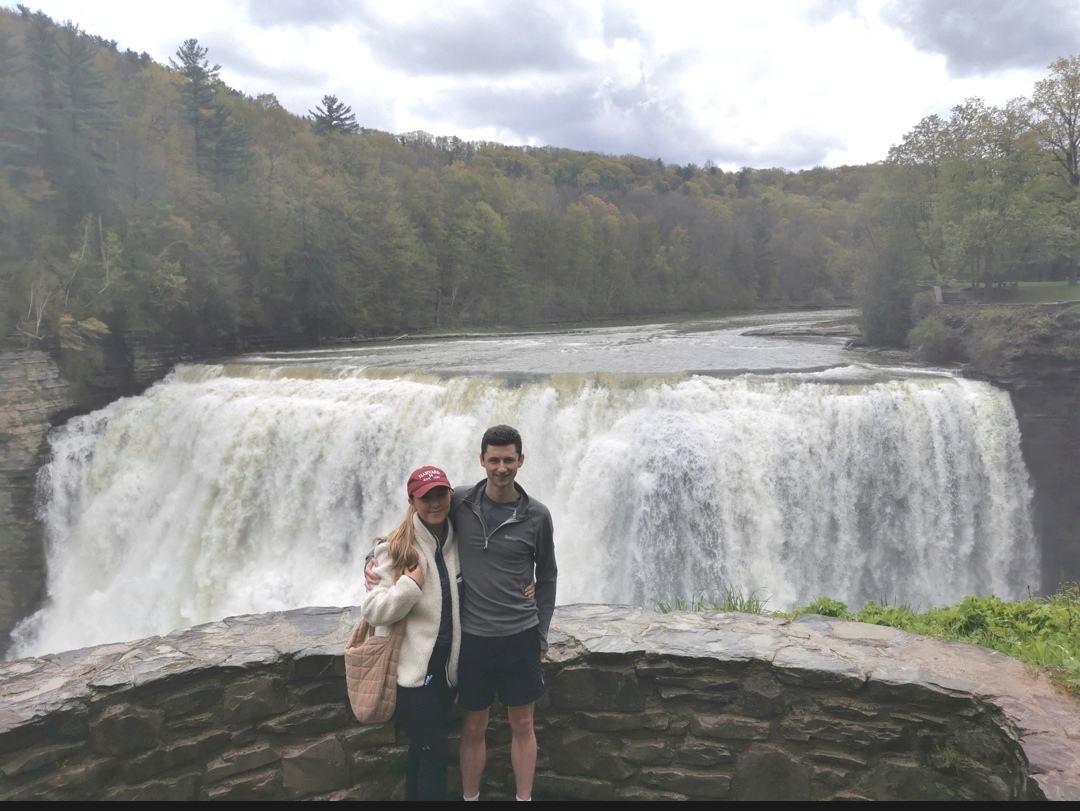
Gary and his wife, Alex, at their first visit to Letchworth State Park.

THE PATH TO ROCHESTER
Hannon's academic journey began at Trinity College Dublin, where he focused on developing innovative treatments for pancreatic cancer. During his PhD, he worked on a nanomedicine that could be heated with magnetic fields to burn tumors. This innovative approach sparked his interest in understanding the immune system's response to cancer treatments.
A connection with a friend working in Scott Gerber's lab here in Rochester led to a pivotal career move. "I knew Scott's work through my friend, who was a graduate student in his lab," Hannon said. "We lived just ten minutes apart in Dublin, and I admired the groundbreaking research coming out of Scott's lab."
After a series of discussions and fellowship proposals, Gerber invited Hannon to join his lab as a postdoc. "It all happened very quickly, but it was an opportunity I couldn't pass up,” he said.
CUTTING-EDGE CANCER RESEARCH
In the lab, Hannon focuses on testing immunotherapies in combination with radiation to treat cancer in animal models. His current project leverages mRNA technology (similar to that used in COVID-19 vaccines) to code for a protein called IL-12, a cytokine that can bind to multiple immune cells in the tumor and re-wire them to create an environment that supports anti-tumor immune responses.
“We inject this mRNA vaccine directly into the tumor, generating a protein that activates the immune system,” Hannon explains. This localized approach helps overcome the systemic toxicity issues that were previously encountered when IL-12 was administered directly into the bloodstream.
“With this treatment alone, we could cure 30% of our mice of pancreatic cancer. Adding radiation boosts this to a 100% cure rate in our animal models,” he notes. The team is now working on treating advanced disease with metastasis to the liver, showing promising results.
This research is not just confined to the lab. Hannon and his team are preparing for clinical trials with pancreatic cancer patients in the next few years.
LIFE IN ROCHESTER
Relocating to Rochester was a significant transition for Hannon and his wife, Alex, who were living in his parents’ attic in Dublin to save money. “We moved to Rochester in the space of about two months. It was a massive change, but over time, we’ve fallen in love with the city,” he says.
He credits Rochester's welcoming community and collaborative academic environment for making the transition smoother.

Gary’s Gaelic Football Team after their first win.
Hannon appreciates Rochester’s blend of urban and natural environments. “Rochester has a unique charm,” he explains. “It’s a quieter city compared to Dublin, but it has everything you need. The cost of living is fantastic, which was a significant factor for us. Plus, there’s a great sense of community here.”
Hannon has immersed himself in local activities, joining a kickball team with graduate students, playing Gaelic football, and exploring the city's cultural scene. "The Lilac Festival was a highlight for us, and we've enjoyed discovering local music venues and festivals. It's a city that grows on you."
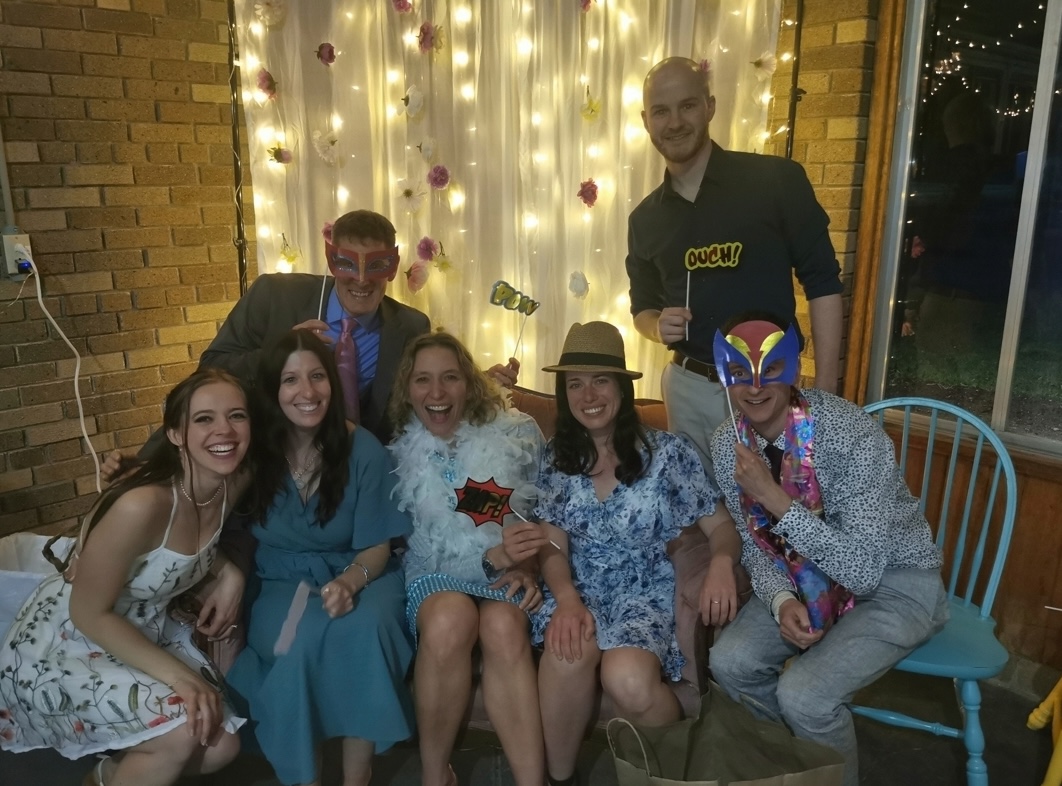
Scott Gerber lab members pose after a grad student’s wedding.
MENTORSHIP AND RELATIONSHIP WITH SCOTT GERBER
Mentorship has been a cornerstone of Hannon's postdoctoral experience. "Scott is an amazing mentor," Hannon says. "His primary focus is getting you to your next career step; he's always thinking about your future."
Gerber's approach is both hands-on and tailored to each individual's goals. He takes a personal interest in each of his students, ensuring they have the resources and opportunities to succeed.
Hannon also has a mentorship role within the lab. "Scott encourages everyone in the lab to mentor students, which fosters a supportive learning environment," he says.
This collaborative nature extends beyond the lab, fostering partnerships with other research groups and industry leaders. "We collaborate closely with AstraZeneca, testing their treatments and presenting our research annually," Hannon notes. "Scott's connections provide a valuable glimpse into the industry and open up potential career paths."
SCIENTIFIC PARTNERSHIPS
Sharing knowledge is at the heart of scientific advancement, and Hannon's experience at the University of Rochester exemplifies this. "I have worked closely with both the Genomics Research Center and Flow Cytometry Resource during my time here," he says. "In both cases, I have found these core facilities to be hugely helpful and always available to answer questions. They provided multiple trainings on everything from instrumentation to data analysis. This was particularly helpful for me when I started to analyze transcriptomic data for the first time, which can be quite challenging for a beginner. Both of these resources have been pivotal to the success of my research to date."
As he continues his research, Hannon remains optimistic about the future. "I've been lucky to see great stories come out of research I've been involved in," he says. "It makes the job so much easier when you know there's a potential benefit. I'm excited to see what the future holds."
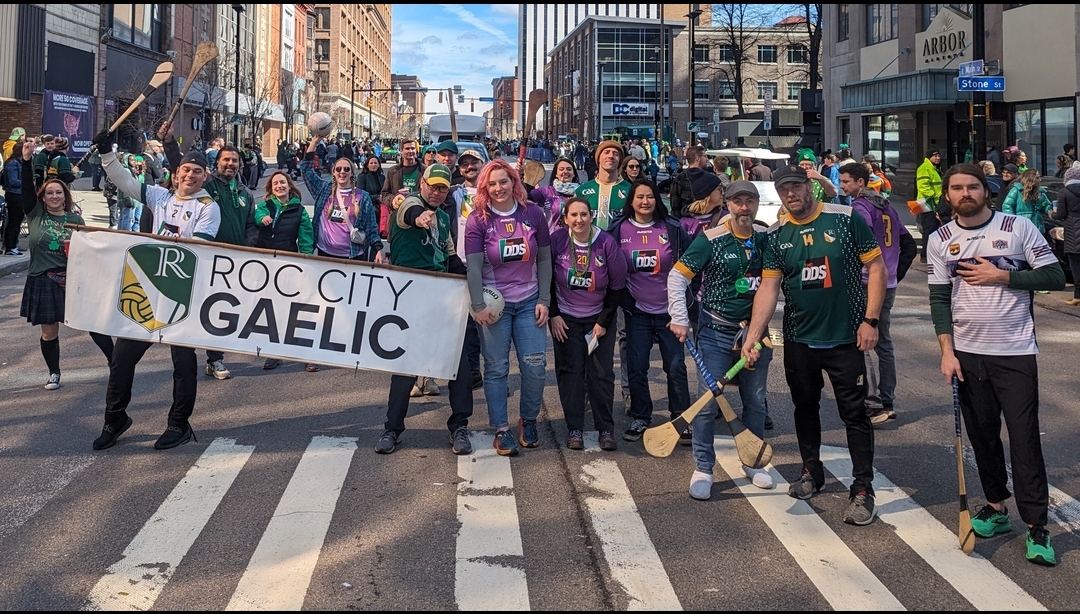
Gary’s Gaelic Football Team at the St. Patrick’s Day parade in 2024.
This piece was edited by Megan Crawford with editorial assistance from AI technology.
Research Update from Steve Dewhurst – Major Wins, DEI Efforts, Trainee Shout-Outs
Tuesday, July 30, 2024
Dear colleagues,
I’m writing this note on a beautiful summer evening, having just watched a truly remarkable video of last month’s announcement of the single-largest gift in University history.
Tom Golisano’s extraordinary $50 million commitment will support the creation of the Golisano Intellectual and Developmental Disabilities (IDD) Institute, and will dramatically improve the lives of people with IDD. I was especially moved by the words of our own John Foxe, as well as those of Special Olympics gold medalist and health messenger Emily Brushafer, whose comments can be accessed in the final 6 minutes of the video. Emily’s remarks will melt your heart, while John’s words are a reminder of what great leadership is about: framing values and goals that inspire and elevate. As he says:
“It’s a truism that the test of a great society is to be found in the ways it treats its most vulnerable, and here at the Golisano IDD Institute, we will hew to a simple but powerful maxim: that no person shall be defined by their limitations, but rather by their possibilities.”
A second major win for the University was the announcement of the new Center of Excellence in RNA Research and Therapeutics (CERRT), which will be co-led by Lynne Maquat and Eric Wagner, along with colleagues at the University at Albany. CERRT’s mission is to develop RNA-based therapies and train the next generation of New York’s biotechnology workforce, and its establishment builds on the success and pioneering research of dozens of scientists in our Center for RNA Biology.
Some more personal wins
While new institutes and centers provide essential fuel for our research enterprise, the ultimate success of our research mission depends on the hard work and creativity of hundreds of individual investigators and research groups. One such investigator is Bridget Young, an assistant professor of Pediatrics, who was awarded her first NIH R01 grant earlier this month. That personal milestone is every bit as important as any new institute or center. Similarly, the way in which we conduct ourselves—and the culture that is created as a result—is also profoundly important. So, I want to take a moment to celebrate a small but powerful example of that, as expressed in the following email:
“My name is Suzanne Price (Landy) and I am a research administrator in ORPA…I just wanted to let you know (that)…Dr. (Jen) Gewandter, who is an associate professor in the Department of Anesthesiology and Perioperative Medicine, is really outstanding to work with… She is patient, kind, and always grateful to ORPA for our input in her projects. I am very appreciative of the opportunity to work with her.”
What I liked best about Suzanne’s note is that it draws attention to Jen’s behavior when she didn’t think anyone was looking. She acted with kindness, patience and gratitude simply because those are the right things to do.
DEI efforts in full swing this summer
Several SMD programs help high school and college students from groups historically underrepresented in biomedical fields explore and experience careers in research, including Summer Scholars, PREP, NEUROEAST, and NEUROCITY. Importantly, these programs are only possible because of the personal dedication and caring of our faculty, staff, and trainees.
I’m very grateful to the individuals who direct and administer these programs, and to the mentors who provide outstanding research experiences for the trainees they support. And I’m especially grateful to Jacques Robert and Elaine Smolock, the co-directors of our NIH PREP program, whose competitive renewal application received an impact score of 13 earlier this month. It’s still too early to know if that will translate into another five years of funding, but it’s a terrific score for a program that “has outstanding outcomes with a success rate of 90% of trainees matriculating into graduate schools”, according to the review panel.
I also want to draw attention to our amazing community of Deaf scientists, and to their achievements, including a recent first NIH R01 award to Wyatte Hall, assistant professor of Public Health Sciences. I was fortunate enough to accompany a cohort of our outstanding Deaf postdoctoral fellows to the IRACDA meeting in Chapel Hill last month, and to have the opportunity to get to know them a little better.
One more thank you
Last week, the University was impacted by the global CrowdStrike IT outage that affected millions of computers around the world. I want to call out the incredible work of the Office of Research IT (ORIT) in fixing research computers across SMD. The ORIT team has updated, one by one, hundreds of research computers in coordination with their colleagues in the Medical Center’s Information Systems Division (ISD). We are very fortunate to have such a dedicated IT team supporting research. If you are still having issues with your computer, please email smdithelp@urmc.rochester.edu (emails are monitored M- F from 8 a.m. to 5 p.m.).
Trainee shout-outs
Finally, I’d like to highlight some of the achievements of our trainees, including the following:
- Katherine Escalera-Rivera (Anolik lab), TashJae Scales (Harris lab), Leon Harvey (Boutz lab) have been accepted into the prestigious Scientist Mentoring & Diversity Program (SMDP) for Biotechnology.
- Paige Nicklas (John Foxe lab) won first place in The Scientist’s inaugural "What's Your Story" competition, with her story: Be My Vole-entine: How Love and Loss Change the Brain.
- Kristina Fenner (Lawrence lab) received the Weiss Toxicology Scholar Award.
- Elizabeth Plunk (Majewska Lab) awarded the William F. Neuman and Margaret W. Neuman Award.
- Allison Ryan (Minsoo Kim lab) received the Pamela Delp Polashenski M.D. Breast Cancer Research Trainee Grant from the Breast Cancer Coalition of Rochester.
- 2024 PhD Award recipients:
- The Vincent du Vigneaud Award - Allison Murphy, Neuroscience
- The Wallace O. Fenn Award - Linh Le, Neuroscience
- The Leadership Award for Excellence in Equity and Inclusion - Adrian Molina Vargas, Genetics: Concentration in Bioinformatics
Upcoming events/milestone
Registration for our biannual DEAF ROC conference is now open. The conference will be held at UR on Aug. 29 and at Rochester Institute of Technology (RIT)’s National Technical Institute for the Deaf (NTID) on Aug 30.
In 2025, we will launch a new and revitalized School of Medicine website that will serve as a gateway to our world-class research, educational programs, and community outreach initiatives. The goals of the new website include:
- Highlight pathways through the student/trainee application process.
- Enrich the user experience with engaging learner stories.
- Showcase key differentiators, such as research activities, community outreach, and comprehensive resources.
- Focus on data security and accessibility compliance.
- Create automated workflows to ensure information is accurate.
- Move toward a unified look and feel across all digital platforms.
Be on the lookout for more updates regarding the new SMD site in the fall.
Steve Dewhurst, PhD
Vice Dean for Research, SMD
Vice President for Research, UR
BioRender Premium Now Available Institution-Wide at No Charge
Friday, July 12, 2024

Sample graphic from the BioRender website.
The University of Rochester has acquired an institution-wide license for BioRender Premium, a software that creates scientific illustrations, posters, and presentations.
To create your login and start using these tools, visit the UR BioRender portal. There is an advanced virtual training session, BioRender 201, on Wednesday, July 17. An introductory video is also available, "5 Minute Crash Course – Getting Started with BioRender."
"There’s a growing emphasis on visual science communication. Journals and conference organizers are encouraging the use of visuals and graphical abstracts," says Neuroscience PhD candidate Makenna Cealie in a recent BioRender blog post.
"Plus, it seems that figures in recent publications are more effective than before. I especially see an increased use of schematics with thoughtfully chosen colors and labels — compare this to older papers, sometimes with only black and white images or no graphical abstracts or schematics."
If you have questions, contact SMDITHelp at smdithelp@urmc.rochester.edu.
Stefan Burde ’95M (PhD) on Having Confidence in Your Competence
Friday, July 12, 2024
Listen on Apple, Spotify, or YouTube Music.
In this episode, Jeff interviews Stefan Burde, a 1995 PhD graduate of Pathology. Originally from Germany, Stefan moved to the United States after high school, following his mother's relocation to Niagara Falls, Stefan was drawn to Rochester through personal connections and local opportunities.
He pursued his advanced degree after completing his undergraduate studies and a co-op program that combined work experience with academic learning. After completing his PhD, Stefan leveraged his advisor's connections to secure a postdoctoral appointment at Los Alamos National Laboratory, where he continued his work in molecular diagnostics.
His career path then led him to various industry positions, including roles at Bayer Biological Products, BioMathieu in France, and several startups in the Raleigh-Durham area. Stefan's adaptability and willingness to seize serendipitous opportunities significantly shaped his professional journey.
Currently, Stefan is the Director of Global Strategic Business Development for In Vitro Diagnostics at TÜV SÜD located in Germany, where he conducts conformity assessments for medical devices and in vitro diagnostics for companies aiming to launch their products in the European Union.
Stefan shared valuable insights and advice for current and prospective graduate students, emphasizing the importance of building confidence in one's competence, recognizing and leveraging your extensive research experience, and developing soft skills alongside technical expertise.
Stefan's experiences underscore the significance of industry connections, continuous learning, and maintaining a strong network to achieve career success in the sciences.
Key Takeaways
Have Confidence in Your Competence: Cultivate a strong belief in your technical knowledge and decision-making abilities, especially when transitioning from receiving knowledge to applying it. Acknowledge the value of your extensive research experience during your PhD and/or postdoc years when presenting yourself to potential employers or making important decisions in your career.
Embrace Serendipity and Adapt to Opportunities: Be open to changes in your career goals and seize opportunities, even if they seem tangential to your initial path. Be prepared to take advantage of serendipitous opportunities that align with your interests and skills. Flexibility can lead to fulfilling career trajectories.
Value Soft Skills: Invest time in developing soft skills such as communication, teamwork, and leadership. These are essential for conveying complex messages and working effectively in teams, and are as crucial as technical expertise in the scientific field.
Pursue Continuous Learning and Build Confidence Through Practice: Stay informed about technological advances and emerging trends, such as AI, to remain competitive and innovative in your field. Confidence in your professional skills builds with practice and experience, much like any other skill. Keep practicing to enhance your expertise.
Cultivate Relationships: Engaging with clients and maintaining professional relationships are critical aspects of business development roles. Take advantage of educational and professional opportunities in your local area. Networking can lead to new opportunities and collaborations.
Engage in Mentorship: Seek mentorship and guidance, especially when transitioning to new roles or industries. Mentors can provide valuable insights and support during challenging decisions.
Top Quotes
[15:35] "It's kind of important to have a fair level of confidence in your competence. And I know that's really something that a lot of people struggle with, especially people that are just coming out of [school].”
[17:39] "Aside from the hard technical skills, you have to develop a lot of soft skills to be able to convey those messages in a way that they're received."
[22:05] "What I might have done more of [in grad school] is get a bit more into what an industry position looks like, what is the company going to be looking for, or what kinds of things will help you transition into the industry?"
[23:37] "Give yourself credit for what you actually do have in your background."
Uplifting the Next Generation: Russell Ledet's Inspiring Juneteenth Visit
Tuesday, June 18, 2024
Last week, we had the pleasure of hosting Russell J. Ledet, MD, PhD, MBA, for a Juneteenth celebration, where he reminded us all of the importance of uplifting and supporting the younger generation.
Dr. Ledet has not only been on the cutting edge of research in molecular biology and currently on a Triple Board residency at Indiana University, but he is also co-founder of The 15 White Coats helping underrepresented students pursue medicine through inspiration and support.
During his visit, we presented Dr. Ledet with our first Juneteenth Award for his activism, philanthropy, and inspiration, which have profoundly impacted and uplifted our community.
Hear him talk more about his message to our trainees, as well as what inspires him.
Jamie Butler ’02M (PhD) on Exploring the Unconventional
Monday, June 3, 2024
Listen on Apple, Spotify, or YouTube Music.
Jamie Butler, a 2002 graduate of our Biophysics program, has built a dynamic career at the intersection of science and technology. As the Vice President of Marketing at Hamamatsu, a leading company in light and technology products, Jamie leverages his extensive background in microscopy and biophysics.
Originating from Connecticut and initially attending Hamilton College for his undergraduate studies, Jamie's career journey took off in San Francisco where he engaged with emerging biotechnology firms.
His graduate experience at the University of Rochester, marked by practical lab work and valuable rotations, played a pivotal role in his professional development. Jamie's career path includes significant transitions from bench work to roles in sales and marketing, underscoring the importance of interdisciplinary skills and adaptability.
He credits collaborative opportunities at U of R and mentorship for his career progression. Jamie now offers insights and advice to aspiring scientists, emphasizing the value of asking questions, exploring unconventional paths, and fostering a rewarding work environment.
Key Takeaways
Find Your Passions: Be proactive in your academic and personal experiences to discover what truly excites you. These experiences can help you identify your specific interests and guide your career path.
Expand Your Skillset: Building technical skills and gaining practical experience can enhance your employability and open up diverse career opportunities you may not have even considered.
Get Comfortable in Your Environment: The support of a community can greatly influence your educational experience and career. Cultivate and nurture an environment that can help you thrive.
Build a Niche: Don't be afraid to ask questions and seek out areas where you can develop expertise. Finding a niche that aligns with your skills and interests can be transferable and valuable in new and unexpected ways.
Top Quotes
[05:09] "The work I was doing was really neat. It was bench work that then translated all the way up to production-level bioprocessing. So everything from Q vats and to flasks to then small fermenters to 100,000 liter fermenters that are in production in Iowa."
[09:11] "Microscopy was the theme throughout my career. The technology was easily as fascinating to me as the science itself."
[41:58] Explore the unconventional because you might find something that you really love. If you’re thinking it’s time to move away from the bench, what are some things you love about the bench — things you can take with you.
Mentorship, Teaching, and Leadership: Recognizing Our Outstanding Faculty
Monday, May 6, 2024
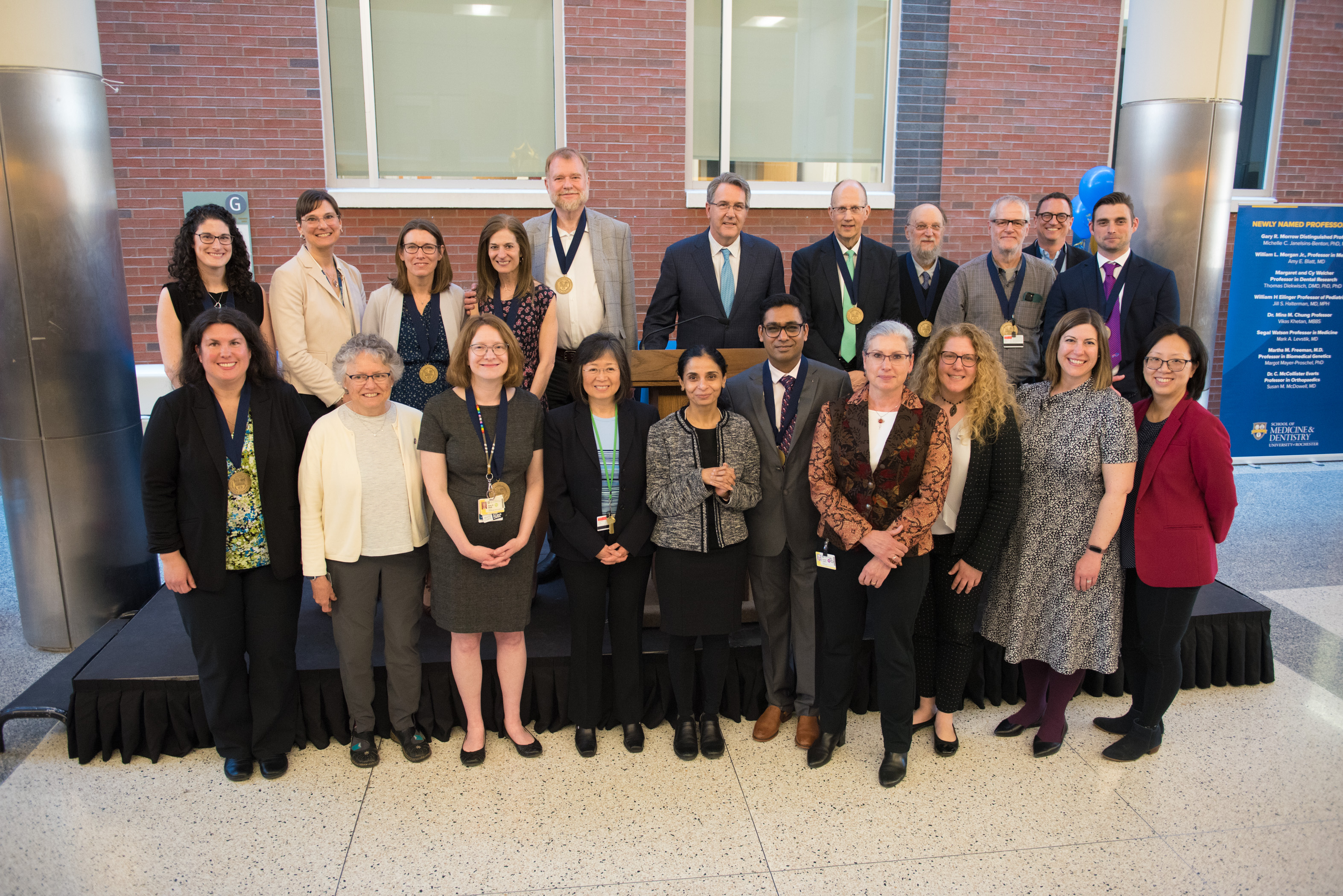 2024 Faculty Award Recipients with URMC CEO and SMD Dean David Linehan, MD (Top middle).
Congratulations to all of our faculty members who received mentoring awards, named professorships, and teaching fellow awards. They were honored in a celebration at Flaum Atrium on May 1, 2024. The full list of awardees is below:
SMD Faculty Mentoring Awards
- Faculty Academic Mentoring Award - Thu H. Le, MD, Professor of Medicine, John J. Kuiper Distinguished Professor and Chief, Division of Nephrology
- Trainee Academic Mentoring Award in Clinical Programs - Anne F. Brayer MD, Professor of Emergency Medicine and Pediatrics
- Lifetime Mentoring Award - J. Edward Puzas, PhD, Professor of Orthopaedics in the Center for Musculoskeletal Research
- Trainee Academic Mentoring, Award in Basic Science - Krystel R. Huxlin PhD, Professor of Ophthalmology and James V. Aquavella, MD, Professor in the Center for Visual Science and the Institute for Optics in Arts, Sciences and Engineering, in Neuroscience, and Director of Research in Ophthalmology
Newly Named Professorships
- Gary R. Morrow Distinguished Professor - Michelle C. Janelsins-Benton, PhD
- William L. Morgan Jr., Professor in Medicine - Amy E. Blatt, MD
- Margaret and Cy Welcher Professor in Dental Research - Thomas Diekwisch, DMD, PhD
- William H Eilinger Professor of Pediatrics - Jill S. Halterman, MD, MPH
- Dr. Mina M. Chung Professor - Vikas Khetan, MBBS
- Segal Watson Professor in Medicine - Mark A. Levstik, MD
- Martha M. Freeman, M.D. Professor in Biomedical Genetics - Margot Mayer-Proschel, PhD
- Dr. C. McCollister Evarts Professor in Orthopaedics - Susan M. McDowell, MD
- George Washington Goler Chair in Pediatrics - Matthew D. McGraw, MD*
- Northumberland Trust Professor in Pediatrics - James Palis, MD*
- Donald M. Foster, M.D. Professor in Biomedical Genetics - Douglas S. Portman, PhD*
- Albert and Phyllis Ritterson Professor in Microbiology and Immunology - Jacques Robert, PhD
- Paul N. Yu Professor in Cardiology - Spencer Z. Rosero, MD
- Dr. Elizabeth R. McAnarney Professor in Pediatrics funded by Roger and Carolyn Friedlander - Lauren G. Solan, MD, MEd
- Lindsey Distinguished Professor for Pediatric Research - Laurie Ann Steiner, MD*
- Frieda Robscheit-Robbins Professor - Christa L. Whitney-Milller, MD
*Previously recognized in 2023, receiving medallion in 2024
Dean's Professors
- Dean’s Professor, Ophthalmology - Ruchira Singh, PhD
- Dean’s Associate Professor, Pediatrics - Kristin M. Scheible, MD
- Dean’s Professor, Surgery - Gary R. Morrow, PhD, MS
Dean’s Teaching Fellow Awards
- Sarah Betstadt, MD, MPH (OB/GYN) Jenny Shen, MD (Hospital Medicine)
- Heather Reyes, MD, MEng (Pediatrics, Pediatric Critical Care)
- Theresa Bingemann, MD (Allergy, Immunology & Rheumatology, Pediatrics, Pediatric Allergy/Immunology)
Research Update from Steve Dewhurst
Tuesday, April 30, 2024
Grad Student Appreciation, Partnering to Improve Mentoring, and Revising our Research Misconduct Policy
Dear colleagues,
Scientific discoveries happen every day here at the Medical Center—and most of them depend on essential contributions from graduate students and other trainees/learners. So, it’s very appropriate that graduate student appreciation week was celebrated earlier this month. As someone whose own research career has benefited tremendously from the contributions of learners, I want to also add my own personal “thank you” to all of the students and postdoctoral fellows who I have had the privilege to work with over the past 33 years—along with the hundreds of current graduate learners at the Med Center.
Trainee Shout Outs
A testament to the high-quality work of our learners, the following individuals have recently been recognized for their research achievements:
- Ernesto Aparicio Puerta, a postdoctoral associate in Biostatistics and Computational Biology, who was recently awarded the highly competitive Marie Skłodowska-Curie Postdoctoral Fellowship
- Marielle Jensen-Battaglia, a Ph.D. student in Epidemiology, who won the One-Page PhD Public Policy Pitch Competition
- Evan Newbold, a Ph.D. student in Neuroscience, who was one of the winners of the University’s Edward Peck Curtin Award for Excellence in Teaching by a Graduate Student
One former trainee whose accomplishments were recently highlighted by the National Institute of Neurological Disorders and Stroke (NINDS) is our own Nate Smith – whose personal career journey is celebrated in one of the institute’s most recent success stories.
Partnering to Improve Mentoring
In the NINDS posting, Nate outlines his mentoring philosophy, noting that “as a PI, you must create an environment that allows your lab members to be their authentic selves…approaching your trainees with a positive and respectful attitude and meeting them where they are will nurture their growth and yield tremendous results.”
Nate’s words remind us that being a mentor to others is a privilege, something that is earned as an individual’s career progresses. Furthermore, as Nate points out, the establishment of a respectful partnership between learners and faculty is foundational to creating a culture of supportive mentoring. To that end, the learner-led Alliance for Diversity in Science and Engineering (ADSE) is working collaboratively with University administration to foster a collective culture that not only prioritizes research outcomes, but intentionally focuses on the mentorship responsibilities that are shared between PIs and grad students. A related goal is, in the words of ADSE President, TashJaé Q. Scales, to develop “a comprehensive plan delineating clear expectations for principal investigators and students within laboratory settings to cultivate a healthy environment conducive to student success.” We will share more details about these initiatives as they move forward.
Commencement Weekend and Other Upcoming Events
The University’s 174th Commencement Ceremony will be held at 9 am on May 17, marking the start of a weekend of events and celebrations that includes the doctoral graduation ceremony (May 17 at 2 pm), and SMD’s Masters and Advanced Certificate graduation ceremony (May 18 at 4 pm). I hope to see many of you there!
The registration for our biannual DEAF ROC conference is now open. The conference will be held August 29 and 30, at UR (Aug 29) and at Rochester Institute of Technology (RIT)’s National Technical Institute for the Deaf (NTID) (Aug 30). The theme of the conference is “Bridging the Gap: Empowering Deaf and Hard of Hearing Students in Hearing Research Environments”; keynote speakers will include the renowned deaf scientists, Carol Padden of UCSD and Bradley White of Gallaudet University. Additional keynote presenters will include Amie Fornah Sankoh, the first deaf, Black woman to earn a STEM doctorate, and Chris Woodfill, New York State’s first Interagency Coordinating Council Executive Director.
Changes on the Horizon
Research Misconduct (RM) policy: The NIH Office of Research Integrity recently announced its first major anticipated policy changes in nearly two decades, so this is a good time for us to likewise review and improve our RM policy. We will be working on this over the coming months, in collaboration with the Faculty Senate and with input from faculty and other stakeholders across the institution. Until then, our current RM policy remains in effect. Please be aware that you can report concerns regarding research integrity or misconduct via the University’s Integrity hotline.
Steve Dewhurst, PhD
Vice Dean for Research, SMD
Vice President for Research, UR
Brenda Santiago-Narvaez ’12M (PhD) on Becoming a College Professor and Mentorship
Tuesday, April 16, 2024
Listen on Apple, Spotify, or YouTube music.
Brenda Santiago-Narvaez's unique journey in the realm of science stands as a testament to the pivotal role of passion and perseverance in attaining professional success. A 2012 Microbiology and Immunology PhD graduate, Brenda is currently an associate professor of Biology at Rollins College in Orlando, Florida. Her role encompasses both teaching and research, where she oversees the microbiology coursework for majors, conducts classes, and runs her research lab to guide undergraduates in scientific inquiry.
Brenda's trajectory was shaped by undergraduate research opportunities, particularly her involvement in the Summer Scholars and PREP programs here at the University of Rochester, which not only sharpened her research skills but also reinforced her determination to earn a PhD in Microbiology and Immunology.
Brenda's fascination with science was sparked during her childhood, partly due to her father's passion for the subject and his efforts to foster informal science education at home.
Despite her love for science and her parents' support for her educational aspirations, Brenda recalls the tough decision she had to make between continuing her studies and contributing financially to her family. This experience exemplifies Brenda's belief in the importance of inclusive and supportive educational environments.
She spearheads initiatives like the STEM Hub at Rollins College, creating spaces for community-building among students from diverse backgrounds. This dedication mirrors her focus on mentorship in academia, emphasizing that it's not just academic performance but also the sense of belonging that propels students forward in their careers.
Key Takeaways
Seek Out Research Experience early in your academic journey: Explore the subjects that intrigue you and allow yourself to explore them—they're invaluable for developing your skills and can boost your confidence.
Embrace Mentors: A great mentor can shape your career and life. Remember, these relationships can transform your path, offering guidance and support where you need it most.
Let Passion Inform Your Career: Recognize that your educational and career path is deeply personal and may not always be linear. Follow what genuinely interests you to find both personal fulfillment and professional success.
Value Representation in Academia: It can be powerful to see yourself reflected in your mentors and in roles you aspire to. Strive for diversity in your academic and professional circles and embrace the unique perspectives and opportunities that diverse experiences bring.
Recognize External Challenges: Academic pursuits don't exist in a vacuum. Students often face pressures outside of the classroom, and acknowledging these challenges for yourself and others is crucial for a realistic approach to work-life balance, education, and career planning.
Top Quotes
-
[04:35] "I feel like as a kid I was very inquisitive and I always was constantly asking questions about the things that I observed. I was raised in a household where my dad had a lot of random science facts about random things. He just liked to read a lot and learn a lot, even though he was not college-educated. And that sparked that kind of natural ability of me to ask questions and be curious about the world."
-
[07:50] "Economically, going to college was a big sacrifice from my end because I could … have been a member of my household that contributed to our needs. We were highly dependent on government assistance when it came to where we lived, as well as government assistance for our food...My decision to go to college and study full time was very connected with a sense of guilt, if I’m honest.”
-
[23:00] “An important part about seeing others that are very much like you is also understanding the fact that you as a person are a package. You have your culture, you have your societal experiences, you have your background. When you are part of a minoritized group, sometimes feeling different makes you think that you’re not going to be enough in many ways. Seeing people very much like you and seeing yourself reflected in those individuals and seeing that they’ve accomplished many things and that they have been successful is extremely important.
-
[32:10] "The path doesn't have to be linear, but if you are persistent, if you're committed to doing something and you're passionate about and you work hard to develop the skills that you need to succeed, then it's definitely possible."
Nazish Jeffery ’21M (PhD) On Responding to Rejection and Her Path to Science Policy
Tuesday, March 19, 2024
Listen on Apple, Spotify, or YouTube Music.
Nazish Jeffery, a 2021 graduate of our Biochemistry and Molecular Biology program, has charted her career path at the intersection of science and policy. Currently serving as the Bioeconomy Policy Manager at the Federation of American Scientists in Washington D.C., Nazish is a local native from Henrietta who has now successfully transitioned from graduate trainee to a vital role in science policy.
She bridges the gap between scientific research, policy formulation, and implementation, drawing on her experiences to address challenges within the scientific community and advocate for policies that promote innovation and support the scientific ecosystem.
Her prior role as a scientist in process development at Bluebird Bio in Cambridge, Mass. enriched her understanding of commercial and operational challenges in scientific research and solidified her passion for integrating science with policy to effect meaningful change.
Nazish's progression from graduate student to science policy highlights the importance of exploring interdisciplinary fields and being proactive in career development. Venturing into industry after her PhD, her role as a process development scientist broadened her insight into the business side of science. Her journey exemplifies the power of intentional career planning, the necessity of adaptability when facing professional challenges, and the crucial role of effective communication in advancing science and benefiting society.
Key Takeaways
Explore Interdisciplinary Fields: Embrace the merging of your interests to forge a distinct career path. Nazish's discovery of science policy—a field that marries her passion for science with her interest in policy—underscores the significance of delving into interdisciplinary areas that resonate with your personal and professional goals.
Network and Engage: Forge connections within and beyond your academic environment. Actively seek opportunities to understand various career paths and nurture mentorships and support networks that foster your growth. Nazish attributes her success in pursuing alternative career paths to the encouragement and support from her mentors.
Adapt and Be Resilient: Prepare to navigate and surmount the hurdles inherent in competitive arenas. Rejections can test your self-perception and determination. Nazish's experiences of facing challenges along her journey stress the need for resilience, flexibility, and the readiness to seize new opportunities when they present themselves.
Develop Your Skills Strategically: Cultivate a diverse skill set that is relevant across multiple roles. Nazish's progression from academia to industry, and subsequently to policy work, illustrates the importance of versatile skills like communication, program management, and an understanding of industry intricacies.
Communicate Effectively: Develop your prowess in articulating complex scientific ideas to varied audiences. Proficiency in communication is vital not only in science policy but also in any profession that requires making your work comprehensible to those without a scientific background.
Top Quotes
- [05:02] "I really do love science, but I like the translation of science a little bit more. It kind of pushed me into pursuing what my passion was, which was science policy."
- [05:44] "We're bridge builders between communities, especially for people working in academia and industry in the sciences, helping them voice the challenges they're facing on a day-to-day basis in their field, and potentially helping them figure out ways that government can step in and help alleviate those problems, provide more funding, or provide more opportunities for innovation."
- [17:29] "It's all about how you market your skillset. There's a lot of research and it's really scientific, but there are many other things we're learning along the way that apply to many different jobs."
- [29:19] "The best thing you can do is talk about your science to people who don't know science. If you want to grow your communication skills and better understand your own work, the best way to do it is to try to explain it to someone who doesn't know any science at all."
Connect with Nazish on LinkedIn.
Ian Krout ’22M (PhD) on Honing Your Skills Beyond Research
Monday, February 26, 2024
Listen on Apple, Spotify, or YouTube Music.
Ian Krout, a 2022 graduate of our Toxicology Ph.D. program, currently serves as a postdoctoral fellow at Emory University School of Medicine and an assistant professor at Kennesaw State University.
In this episode, he discusses his current role as a bench scientist, primarily focusing on sequencing and data analysis, contributing to research investigating how pesticide exposure may interact with the gut microbiome to influence the progression of neurodegenerative diseases.
Reflecting on his academic career, Krout explains how he discovered the Toxicology program at the University of Rochester and why he chose it for his graduate training, highlighting the program's focus on collaboration, interdisciplinary work, and professional development. He also shares his experience in finding the right postdoctoral opportunity, emphasizing the importance of setting goals, seeking feedback from committee members, and exploring research that aligns with one's interests.
Krout offers advice to graduate students, encouraging them to maximize their educational experiences by leveraging available resources and embracing opportunities for personal and professional growth.
Key Takeaways
Intentionality in Career Planning: Take a deliberate approach to identifying and applying for postdoctoral opportunities. Setting clear goals and aligning them with your career aspirations helps you prioritize programs that offer meaningful advancement opportunities.
Utilizing Resources: Use the resources available at academic institutions; from career talks and workshops to faculty committees, you can gain valuable insights and personalized feedback on potential career paths.
Networking and Collaboration: Engage with your peers and faculty members in the academic community. Prioritize a collaborative environment and foster connections and partnerships with those around you. Be proactive in your engagement and take the initiative to maximize your learning and networking opportunities.
Reflective Practice: Introspection is crucial for your academic development and personal growth. Seize opportunities to develop and hone your skills beyond research so you can adapt to new roles and responsibilities, becoming a more well-rounded scientist.
Living in the Moment: Remember to appreciate the present while focusing on future goals. Enjoy your academic journey by finding a work-life balance that allows you to approach your studies enjoyably and sustainably. Value your holistic development as both a person and a scientist.
Key Quotes
- 06:56: "...the Toxicology program...being really unique and opposed to the other programs that I looked at and the fact that they focused on collaboration and interdisciplinary work as opposed to competition and sort of trapping yourself in one discipline, which I found with a lot of the other graduate schools I looked at. And so with that focus on collaboration, it made the program really welcoming and it made it so that interdisciplinary work could occur between labs, between graduate students even.
- 08:38: " I made it a point to try to take advantage of any career professional development opportunities that came my way. And a lot of that happened through myHub with Eric Vaughn and Elaine Smolock at the Writing Center. I participated in a number of career talks and professional development workshops that really allowed me to see the breadth of opportunities that were available for PhDs and hone in my own career aspirations. So utilizing all of these things made me just a more well-rounded scientist, not only because professionally I looked better, but I was taking the skills that I learned in things such as leadership and management workshops back to the bench."
- 09:00: "I also took part in the science communication group Thinkers and Drinkers, where we were able to focus on how do we communicate our science to individuals outside of the scientific field. So, not only was I doing the research, but I was working on how to communicate that research to others to make it so that my Ph.D. was not only at the bench but was also interactive with translating that research to individuals who are the constituency of the research that we're completing."
- 13:09: "Knowing what my goals were and knowing what I wanted to achieve in the next three and next five years really made it so that I could sort through my options as next steps and find something that fit my role."
- 21:08: “Don’t be afraid to reach out to people like Eric and Elaine. If you have an idea or you have something you need help with, they're amazing and more than willing to help. … reach out, get involved, do as much as you can."
Research Update from Steve Dewhurst
Thursday, February 8, 2024
Dear colleagues,
Twice a year—in February and in March—the Office of Graduate Education and Postdoctoral Affairs (GEPA) at the School of Medicine Dentistry (SMD) hosts "Discover UR SMD Weekend" for applicants to our PhD programs. The event provides an opportunity both to showcase research at the Medical Center, and to reflect on what makes UR a special place.
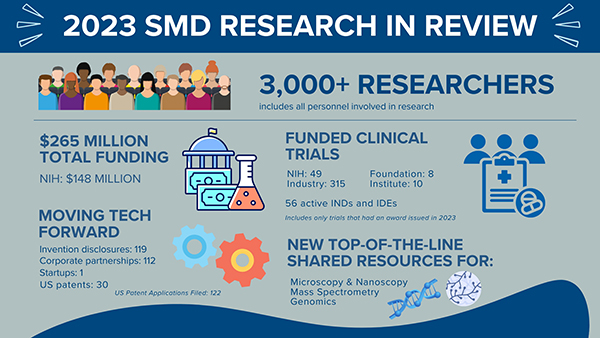
Highlights of SMD’s research activities in 2023 include a total of $265 million in research funding, and some 382 newly funded clinical trials (315 of them industry-supported)—underscoring the impact of the CTSI’s Office of Clinical Research, which is led by newly recruited director, Ashlee Lang. A related highlight is the growth of cancer-related funding at the Wilmot Cancer Institute to a record high of $30.3 million, including $13.1 million in support from the National Cancer Institute (NCI).
While funding is essential for the conduct of research, it is not what makes SMD special. Our special sauce, to use a signature phrase of one of my favorite people at UR, lies in the combination of our unique resources, our institutional culture, and above all, our people.
In that regard, new SMD Dean and URMC CEO, David Linehan, sets the tone. I’m excited that my new boss is an accomplished physician-scientist with a two-decade history of continuous research support from the National Institutes of Health (NIH). But, I’m even more excited that—in the words of my colleague, Calvin Cole (assistant professor of Surgery)—"he is a very caring individual" who "leads with his heart." If you haven’t already, check out Dr. Linehan’s message to all of our learners.
One of the best parts of Discover UR SMD Weekends are the dinners that faculty members host in their homes. Nathan Smith, associate dean for Equity and Inclusion in Research and Research Education regularly gathers students and faculty in his home because "it creates an environment that is warm and inviting, making it easier for visiting students, current students, and faculty to connect with one another." That experience was borne out in the words of one applicant who emailed Nate to say that "I was genuinely impressed by the sense of camaraderie and inclusivity within the program's group. The conversations I had with faculty and fellow applicants left me with a strong sense of community and belonging."
Finally, Discover UR SMD Weekends also provide an opportunity to put the spotlight on our amazing learners. A few examples include:
- John Miller, a PhD candidate in Microbiology and Immunology, won first place in the 2023 America's Got Regulatory Science Talent competition, held by UR CTSI. With his presentation "Stopping Runaway CAR-T Cells", Miller earned the opportunity to present directly to FDA representatives this spring.
- Lily Cisco, a graduate student in Cellular and Molecular Pharmacology and Physiology, worked with faculty members John Lueck and Charles Thornton to successfully reverse muscle dysfunction in myotonic dystrophy type 1 (DM1) in mice. In Lueck’s words, "She is a rockstar graduate student and surely a future leader in research."
- Raven Osborn, a 2023 graduate of the Translational Biomedical Sciences program, recently accepted a position at Eli Lilly and Company as a research advisor in Translational Pathology Bioinformatics. As Raven wrote on LinkedIn, this "role comes with so much professional and personal alignment.... I am overjoyed that all the advice about ‘good things being on the way’ has come to fruition." As one of her co-mentors, along with Juilee Thakar, I’m totally thrilled for her.
Steve Dewhurst, PhD
Vice Dean for Research, SMD
Vice President for Research, UR
* To report a concern about improper or unethical behavior, please call the Integrity Hotline at (585) 756-8888. You may also report concerns online.
Kaisha Gonzalez (‘12) on Being a Multidisciplinary Thinker
Thursday, November 30, 2023
Listen on Spotify, Apple or YouTube Music.
In this episode, we speak with Kaisha Gonzalez, PhD, a 2012 alum of the Microbiology and Immunology program, who has carved a niche for herself in the biotech diagnostics landscape.
Born and raised in Puerto Rico, Dr. Gonzalez is now a Senior Principal Scientist for Scientific Affairs at DiaSorin Molecular, LLC. Her work is essential in designing and producing in-vitro diagnostic reagents, contributing significantly to the fight against infectious diseases and advancing genetic testing.
Based in the Washington, D.C. area, her work bridges crucial gaps between research and development, marketing, and sales teams, ensuring that scientific developments are effectively integrated with customer needs and business strategies.
With a nod to the formative impact of a PhD, Dr. Gonzalez highlights that it’s not a guarantee of success but rather a key to unlocking opportunities by cultivating essential skills such as public speaking and writing. She champions the concept of a multidisciplinary mindset, suggesting that versatility is a valuable asset in the scientific industry. Additionally, Dr. Gonzalez encourages established professionals to mentor the next generation and recognizes the importance of fostering potential within the community, reminding us of the enduring influence of encouragement and support on a person's career trajectory.
Key Takeaways
Focus on Skills: Pursue a PhD not just for the title but for the diverse set of skills it imparts, from critical thinking to public speaking, which are assets beyond academia.
Embrace Versatility: Careers in science can be multifaceted, involving collaboration across various company departments and direct customer interaction. Be prepared to wear many hats. The interplay between research, development, marketing, and sales is where scientific innovation meets real-world application.
Never Stop Learning: The scientific field requires a commitment to ongoing education; science is ever-evolving, with new challenges and discoveries around every corner.
Cultivate a Multidisciplinary Mindset: Specialization is important, but breadth of knowledge can set you apart in any industry. Avoid the narrowing of expertise too much during graduate studies.
Mentorship and Potential: Recognizing potential in others and providing mentorship is critical for career development in any field. Lift others by recognizing and nurturing their talents.
Top Quotes
[19:11] “I did have this fork in the road where I did apply for a postdoc, and then I applied for this DNA analyst job, which is completely different. And I could just be more comfortable and go into that postdoc, which in all honestly was going to be like a revolving door for me...I was not going to gain new skills. So I decided to get outside of my comfort zone and choose the forensic [job] because I know if I go to this side, I’m going to learn new skills.”
[37:06] "You can be an expert of one single thing, but you can be actually an expert of many things. So when it comes to industry, that actually resonates very well, especially for the job that I do. I need to be an expert of many things in order to educate, create awareness, be helpful to my fellow internal teams.”
[38:15] "Look for the potential in others and actually pull it out. I think I would not be here if someone didn't see the potential. From the teacher who said You can be a really good scientist...and from my colleague who saw some potential in me during training and said Well, you could be really good in industry."
Trainees and Faculty Honored at 2023 GEPA Awards
Wednesday, November 8, 2023
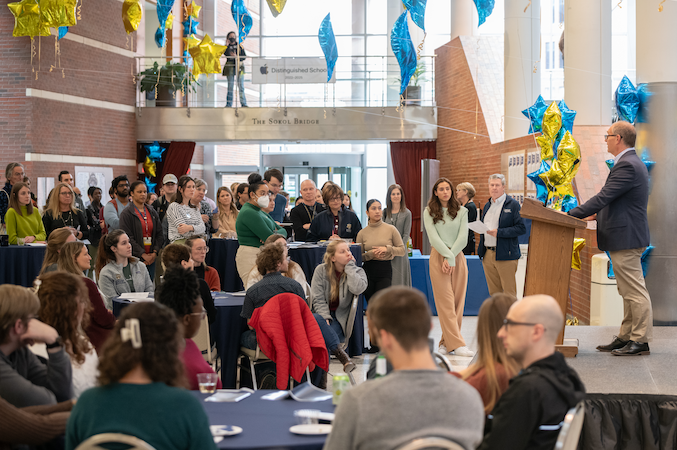
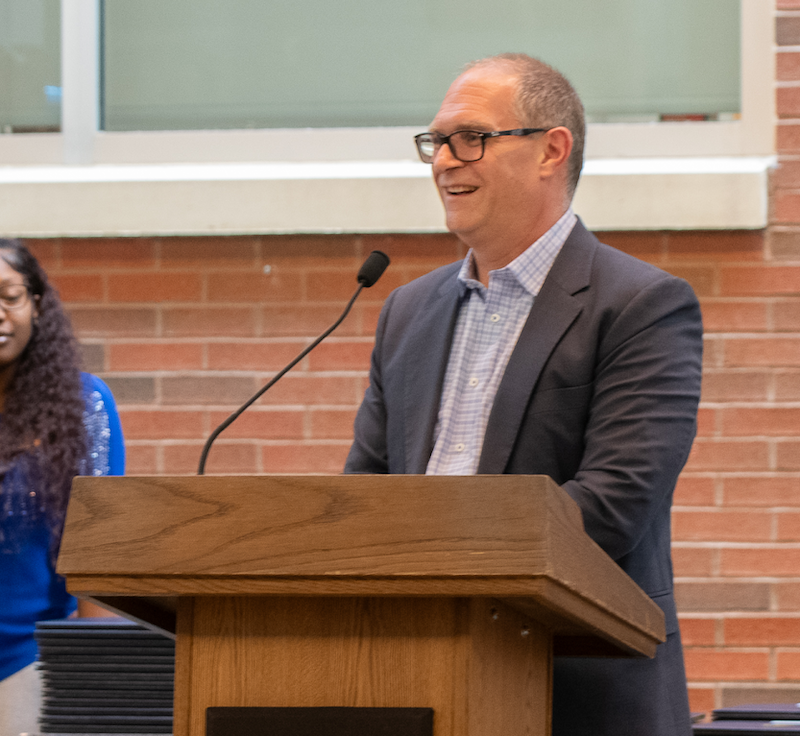
David Figlio speaks during the GEPA during the GEPA Awards and Philosophy Meeting
SMD’s Office for Graduate Education and Postdoctoral Affairs held their annual GEPA Awards and Philosophy Meeting on October 30, 2023. With SMD and Medical Center leadership in attendance, trainees and faculty were recognized for their outstanding work in research and mentoring.
University of Rochester Provost David Figlio acknowledged the crucial role the GEPA community plays in helping URMC reach its vision of being a preeminent biomedical research institution.
“Our learners and postdocs are the lifeblood of our research enterprise. You’re here to get an education, but you give the University so much in return,” he said.
Below is the full list of GEPA awardees.
Award |
Awardee(s) |
| Robert L. and Mary L. Sproull University Fellowship | Akhil Bandreddi Caio Tabata Fukushima |
| Provost’s Fellowship | Dylan Fredrick Raegan Myers Eli Sun |
| Graduate Alumni Fellowship Award | Aiesha Anchan |
| Merritt and Marjorie Cleveland Fellowship | Amelia Hines |
| J. Newell Stannard Graduate Student Scholarship | Carl Berggren |
| Irving L. Spar Fellowship Award | Nicole Popp |
| URSMD Meliora Scholarship | Catherine Caballero Wyatt Fales Gladys Leitch Emily Sorensen |
| Outstanding Student Mentor Award | Linh Le |
| Graduate Student Award for Excellence in Equity and Inclusion | Emily Quarato |
| Leon L. Miller Graduate Fellowship in Biophysics | Nino Kalandadze |
| Melville A. Hare Award for Excellence in Teaching | Sebastian Bosch Karli Sutton |
| Melville A. Hare Award for Excellence in Research | Michael Lutz, PhD |
| Outstanding Postdoctoral Mentor Award | Michael Isei, PhD |
| Outstanding Postdoctoral Researcher Award | Vikas Arige, PhD |
| Postdoctoral Appointee Award for Excellence in Equity and Inclusion | Jahaira Capellan, PhD |
| Outstanding Graduate Program Director Award | Joshua C. Munger |
| Outstanding Graduate Student Teacher Award | Marissa E. Sobolewski, PhD |
| Excellence in Postdoctoral Mentoring Award | Kirsi Järvinen-Seppo, MD, PhD |
| Outstanding T32 Program Director Award | Patricia M. White PhD & Craig Morrell, DVM, PhD Jacques Robert, PhD & Tim R. Mosmann, PhD |
| Graduate Student Society Advocacy Award | Nathan A. Smith, MS, PhD, |
| Graduate Student Society Mentoring Award | Anna Majewska, PhD |
| Graduate Student Society Recognition Award | Odyssey Harrington |
David Simon (’07) on Making Unique Mistakes
Tuesday, October 31, 2023
Listen on YouTube music.
David Simon, PhD, a graduate of our Microbiology and Immunology program, offers an inspiring journey from academia to real-world impact in the latest episode of The Next Step. Completing his PhD in 2007, David's early career saw him delve into postdoctoral research, but a transformative realization at the NIH drove him to think beyond the bench.
David’s contributions came to the forefront during the COVID-19 pandemic when he led teams at the Biomedical Advanced Research and Development Authority (BARDA) for Pfizer's COVID-19 vaccine distribution, earning a presidential commendation in 2021.
As prospective grad students consider their paths, David's trajectory serves as a testament to the possibilities beyond traditional academia. His roles at the Department of Defense and the Defense Advanced Research Projects Agency (DARPA) emphasize opportunities to apply academic learning to critical real-world challenges.
His recent transition to the startup world further showcases the diverse avenues available to trainees.
KEY TAKEAWAYS
Leverage the Problem-Solving Skills Acquired During Education: Having a PhD is not just about the specific field of study but about the analytical and problem-solving skills you've developed. It's about "how can you think about problems" as a scientist and adapt to new situations. So, irrespective of your specialization, always highlight your ability to approach and solve problems critically and innovatively.
Embrace Your Strengths and Work on Your Weaknesses: It's essential to acknowledge areas where you might not naturally excel and consciously work towards improving them. At the same time, lean into your strengths and make them central to your professional identity.
Learn to Collaborate: Graduate school will introduce you to diverse groups of people with differing opinions. Embrace this diversity and learn how to work harmoniously with everyone. It's essential to understand how to disagree without being disagreeable. The key is to foster an environment of discussion, debate, and, sometimes, dissension but always in a productive manner.
Acknowledge Others: As you progress in your career and possibly receive accolades or recognitions, always remember the contributions of those who supported you. Whether it's a team or a mentor, their input is invaluable, and recognizing their efforts promotes a healthy professional environment. Remember that individual accomplishments are often the result of collective efforts.
Always Ask Questions: Don't hesitate to ask questions when in doubt. There's a good chance someone else in the room might have the same question but is hesitant to voice it. Speaking up and seeking clarity is essential, both in an educational setting and in life. Remember, there's no harm in seeking understanding.
Seek Mentorship from Fellow PhDs: Seek guidance from fellow PhD holders. They've been through similar journeys and can provide advice, support, and insights based on their experiences. It's a mutual understanding, as many have felt the same uncertainties and challenges.
Bonus Advice - Make Unique Mistakes: David recalls a piece of advice from his mentor, John Frelinger: always strive to make unique mistakes. This concept encourages growth, innovation, and learning from one's experiences, which is pivotal for both personal and professional development.
TOP QUOTES
1. [03:21] “PhDs in my experience love helping other PhDs. I mean, if you go on to grad school, you want to help other people who are coming out of grad school, because my experience has always been nobody knows necessarily what they're going to do or what is available to be done…”
2. [09:10] "It's how can you think about problems in general as a scientist and have basic information and understanding and how to, more importantly, how to learn.”
3. [11:26] "... It might be 30 years, 40 years, or what people consider impossible. And I bring it to now, how can I put together the right team with the right technology to revolutionize…what is going on in science?"
4. [20:22] "I think that is also an important thing, how to learn, how to work with all kinds of people. I mean, in grad school, you will meet all kinds of people and often you agree with them, you disagree with them, or you don't like talking to them…those people are all going to be in your crew, in your life. So, you might as well get used to it.”
5. [30:23] “If you want ideas about what to do or how to break into something, just reach out. It's okay. We all have felt that way. We all felt lost at some point. And so, we always need the other PhDs to help us."
SMD GEPA Welcomes New Director of Learner Life and Wellness
Monday, October 30, 2023
of Learner Life and Wellness
SMD’s Graduate Education and Postdoctoral Affairs (GEPA) office is pleased to welcome Amber Rivera as the new Director of Learner Life and Wellness. Amber brings over 15 years of experience in counseling, social work, and higher education, with a focus on mental wellness and supporting marginalized communities.
In her new role, Amber will be responsible for developing new wellness programming for our trainees as well as organizing events like orientation, commencement, and the GEPA awards.
She joins us from the Rochester Educational Opportunity Center at SUNY Brockport, where she counseled high school students
and those from marginalized communities in setting up their academic foundations and goals so they
could pursue opportunities in higher education.
Amber believes that a feeling of connection is essential for mental wellness, and she’s committed to developing programs and initiatives that will help our learners not only successfully transition to graduate school but thrive while they’re here.
“When we're talking about mental wellness, connection and belonging are a real focus of mine. It's hard to be successful in any endeavor when you don't feel that you belong or when it's not an inclusive environment for you,” she says. “I want to make sure that everyone feels like they have a place here.”

at the Rivera house.
Outside of work, Amber spends most of her time with her husband and three children. They love the Strong Museum of Play, and they all share a love for Star Wars.
“My kids have more anticipation for May the 4th than some of the major holidays,” Amber said. “We have a whole day planned out with movies, games, and food.”
If you see her on campus, be sure to say ‘hello’ — or better yet, ‘May the force be with you.’
Monique Mendes (’20) Talks Authenticity, Diverse Experiences, and Continuous Learning
Friday, October 6, 2023
Listen on YouTube music.
Meet Monique Mendes, Ph.D.: a passionate neuroscientist and advocate for underrepresented voices in the world of science. From delving into adult stroke studies as an undergrad to neonatal stroke questions and hemorrhagic stroke approaches, her diverse research projects have equipped her with a multi-faceted perspective.
Monique is currently a postdoctoral fellow at Stanford University. She received her doctorate from our Neuroscience Graduate Program in 2020, making her the first black woman to receive a Ph.D. in neuroscience at the University of Rochester, something that comes with rewards as well as challenges.
In this episode of The Next Step podcast, she talks about the responsibility that comes with being the first.
She also emphasizes the importance of research experience over GPAs when considering graduate admissions, suggesting that hands-on involvement and diverse research exposure are invaluable.
Monique fondly recalls her attendance at the Annual Biomedical Research Conference for Minority Students (ABRCMS), an event that not only boosted her confidence but also offered unparalleled networking opportunities. She met mentors, presented her work for the first time, and gained insightful feedback that shaped her further studies.
Later transitioning from the East Coast to the West Coast, Monique faced the challenges of cultural shifts, institutional differences, and balancing the demands of postdoc life.
Despite these challenges, her key takeaway for upcoming scientists is to be unapologetically genuine. In spaces often dominated by mainstream voices, Monique believes in the power and relief of being true to oneself.
Whether you're a budding scientist or just finding your footing, Monique's journey underscores the significance of authenticity, diverse experiences, and continuous learning.
KEY TAKEAWAYS
1. Value of Research Experience: GPA is important, but hands-on research experience often holds more weight in graduate admissions. Being able to discuss diverse research projects and their findings can set you apart.
2. Network: Attending conferences like ABRCMS can offer invaluable networking opportunities, introduce you to cutting-edge science, and boost your confidence in the academic world.
3. Embrace Independence and Challenges: Postdoc roles demand a higher degree of independence in research. While this can be challenging, it's also an opportunity to hone your skills and take charge of your career.
4. Mentorship Matters: As you progress in your career, making time to mentor younger students or peers becomes essential. It not only contributes to the academic community but also enhances your understanding of your field.
5. Stay Authentic: In academic spaces, it's essential to remain true to yourself. Authenticity can help in overcoming challenges and ensures that you make a unique contribution to your field.
TOP QUOTES
1. "I've always been fascinated with the brain. There are just so many unanswered questions, and I was eager to just dive into this world after that research experience. So, I decided to kind of move forward in that trajectory of pursuing a Ph.D. in neuroscience." (4:15)
2. "...it was scary. I'll be honest, and I know there are several people who are trying to make this decision, ‘do I stay home where I have family and I have the support system, or do I move to a completely different place with a different culture?’ And I have to say, I don't regret it." (6:44)
3. "I had a vague idea of what graduate school was supposed to be like and it was going to be hard, but I really did not understand the scope of it at all." (8:03)
4. “I don't know when it clicked for me that I started to be just unapologetically myself, you know, regardless of like what people think or what people say. I just started showing up as 100% me." (15:30)
5. “I think a combination of being a first-generation student and also being the first black woman to receive a Ph.D. contributed to those feelings of being an imposter. ... And I think I walked into the next neuroscience seminar; next time and was like, ‘Well, I don't think everyone in this room expects me to know every single thing about every topic in neuroscience.’" (22:30)
6. "I think the biggest thing, it goes back to the hesitation of being yourself. I would say I would encourage people to just be, you know, unapologetically themselves, especially underrepresented as women and students and people in the neurosciences and sciences in these spaces.”
A Springboard to Success: Carissa Childs (’05) on the Power of Alumni Networks and Hands-On Experience
Tuesday, October 3, 2023
Listen on YouTube Music.
Meet Carissa Childs, Ph.D., J.D.: once an aspiring marine biologist, now the Senior IP Counsel at Amgen, a biopharmaceutical powerhouse.
Her responsibilities include developing global patent strategies, counseling clients, and assessing possible IP rights infringements.
How did she traverse from marine biology to toxicology at the University of Rochester to the intricate world of intellectual property? The catalyst: an internship at the university's tech transfer office, which dealt with patenting and commercializing university-developed technologies. There, the allure of patenting and tech commercialization took hold.
Carissa began her journey as a patent agent, crafting and championing patent applications. To further her opportunities, Childs took the plunge into law school. Emerging as a patent attorney, she tackled responsibilities far beyond those of an agent. Every day, she dives deep, interacting with an array of technologies, emphasizing the beauty of lifelong learning.
For ambitious graduate students charting their courses, Carissa offers golden advice: tap into alumni networks for invaluable insights and immerse in as much hands-on experience as possible. And if IP intrigues you? A university tech transfer office might just be your springboard to success.
Top Takeaways
- Maximize Relevant Experience: Engage with university tech transfer offices. Volunteering in areas like patent application reviews or conducting prior art searches can set you apart in the job market.
- Leverage Science in Other Fields: Deep scientific understanding, combined with diverse field exposure, empowers individuals to translate intricate research into various other sectors and applications.
- Explore Biopharma's Flexibility: The biopharma sector is adaptable. With a solid base in science, transitioning to roles in legal, business development, or alliance management is very attainable.
- Harness the Power of Networking: Events and alumni connections are invaluable. Building relationships and seeking advice from experienced individuals can provide unmatched career insights and advantages.
- Recognize and Pursue Strengths: While foundational training is crucial, identifying and capitalizing on personal strengths and passions can lead to a more fulfilling and dynamic career path.
KEY QUOTES
"My career path has been very windy, but as I like to think of it, it's been one where I've kept my eyes open to different opportunities." (04:29)
"I learned going through academia that future in academia probably wasn't right. So I was certainly seeking out other opportunities." (07:06)
"Every day I learn something new in the realm of science, which I love because I'm learning all of this cutting edge science, but I'm not at the bench trying to do it myself because I wasn't the best at that. You have to find your strengths and you have to go with your strengths." (17:37)
"I think that our alumni are just a really valuable resource for trying to make decisions based on where you want to your next career. Move yourself." (19:57)
Toxicology Celebrates 50 Years of Training
Thursday, September 21, 2023
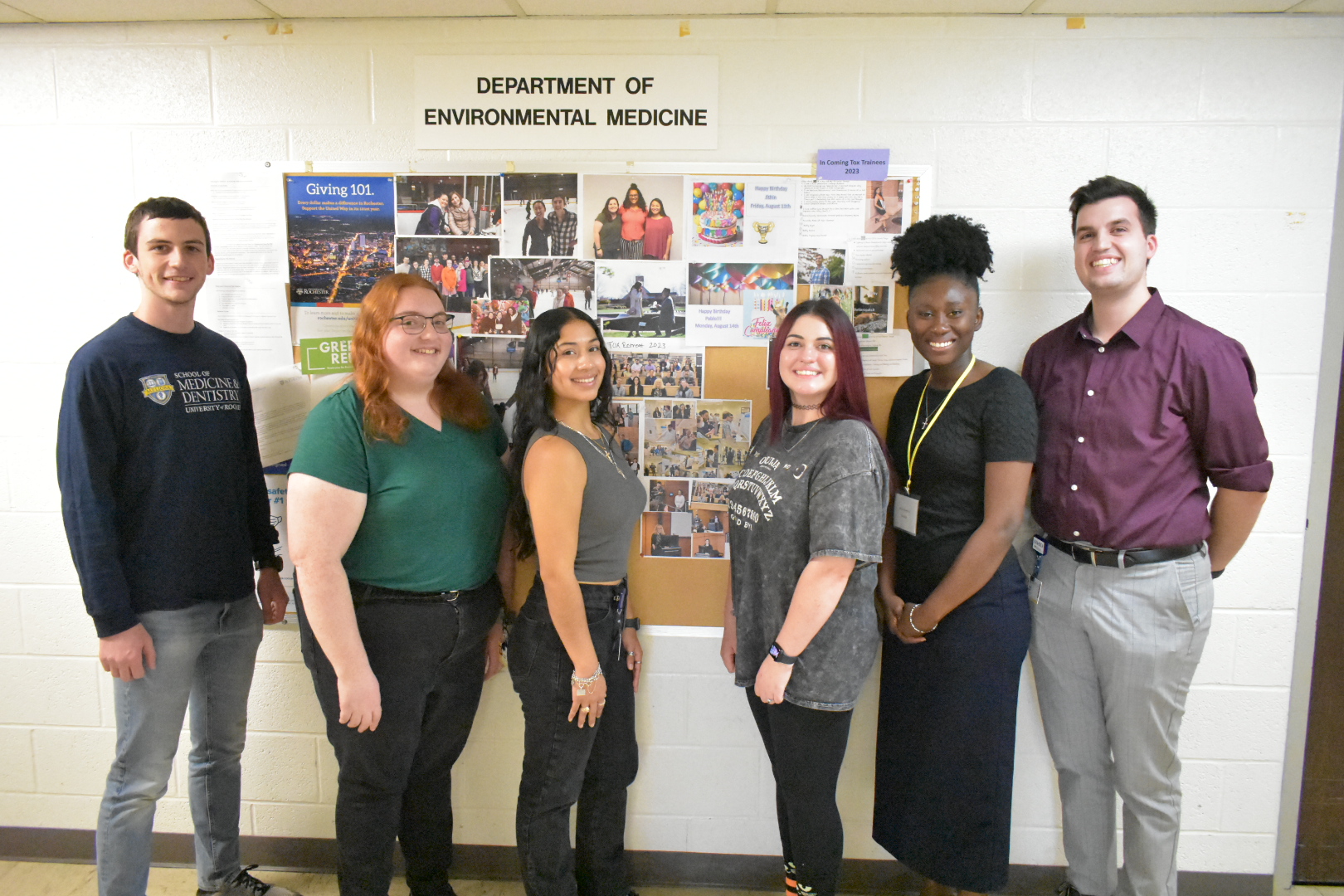
The latest cohort of Toxicology Ph.D. students
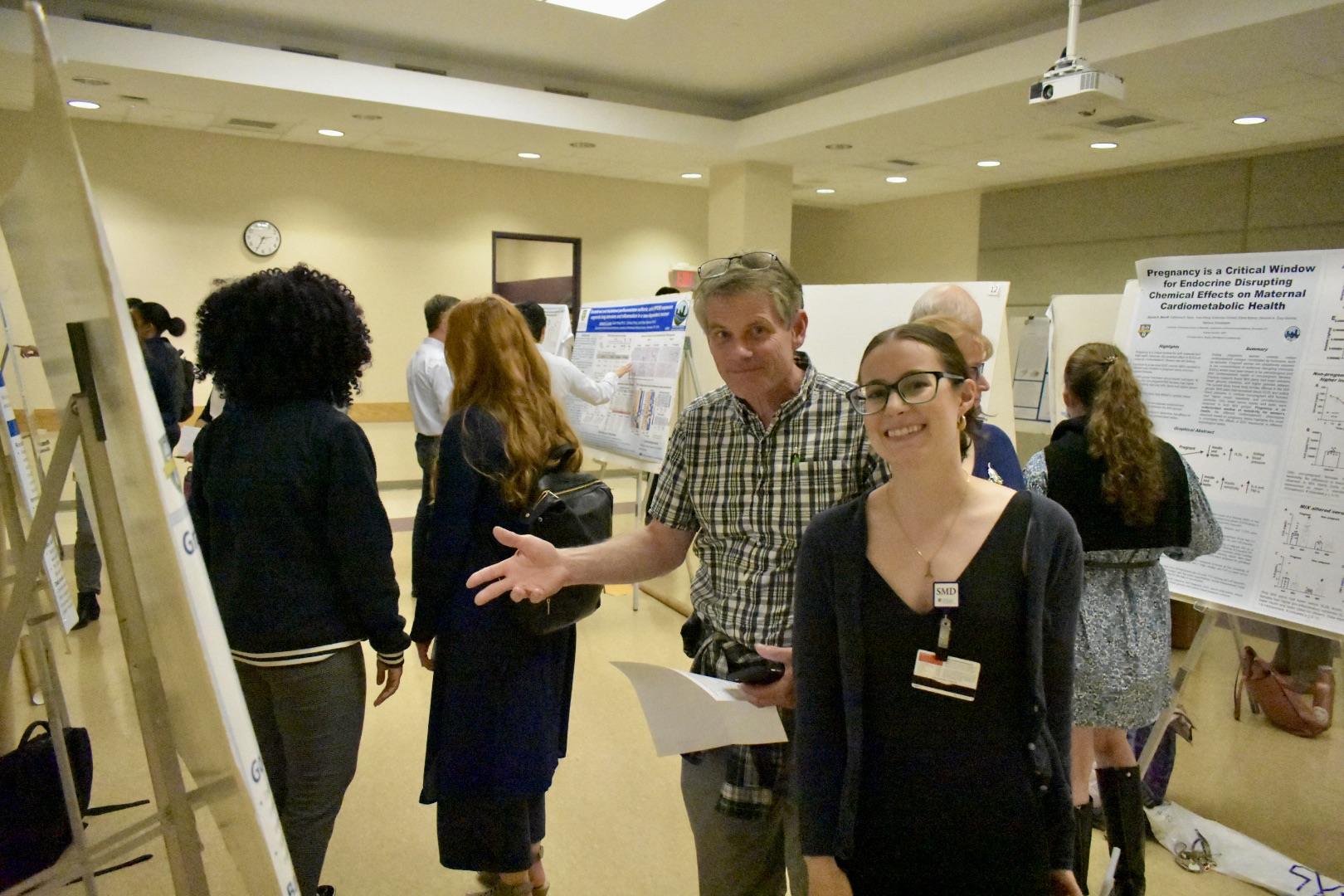
Matt Rand, Ph.D., co-director of the Toxicology program (left), with 3rd-year trainee Ryan Owens.
 Martha Susiarjo, Ph.D., associate professor of Environmental Medicine, hosted Toxicology trainees at her home in October 2022 to celebrate the start of fall with a pumpkin carving party.
In August, our Toxicology Ph.D. program’s T32 training grant was renewed for another five years, bringing them to 50 consecutive years teaching the next generation of trainees. Alums of the program have gone on to make important contributions in toxicology, environmental health, and public policy, dating all the way back to the Manhattan Project. Co-program director Alison Elder, Ph.D., says, “If this program was picked up and moved to another university, I’m not so sure it would have the same success.”
Toxicology Ph.D. program leaders credit the emphasis on interdisciplinary training and a strong sense of community for the program’s success. Students are exposed to a wide range of disciplines, including biochemistry, pharmacology, neuroscience, and epidemiology, which prepares them to address the complex challenges of the field. This, and the close-knit trainee cohorts, have been the program's backbone for five decades now.
“There's a willingness of our faculty and trainees to cross silos to get good science done, which benefits everyone," says Elder, associate professor of Environmental Medicine. “Toxicology is an applied science because trainees borrow from different fields to understand the impact of various stressors on living systems. The interdisciplinary training we give them is crucial.”
Faculty who support the program aren’t ‘jack of all trades’ scientists, as Elder likes to say. They lean on the expertise of colleagues, as well as their own, to bring everyone up to a higher level of rigor and discovery, including the trainees.
This also contributes to another key piece to the program's success, which is the camaraderie that’s felt from the moment you set foot on campus.
"We're fortunate to have small but tight cohorts of students," says Matt Rand, Ph.D., co-director of the program and an associate professor of Environmental Medicine since 2012. "I could feel it right away when I got here."
Even before prospective trainees accept, they’re invited to dinners at faculty homes during the interview process, creating a congenial and relaxed atmosphere for incoming students to get a sense of the type of people who conduct research and mentor trainees at SMD.
And when trainees eventually leave campus, they stay connected. For instance, the program recently developed a new course in risk assessment with input from alumni, several of whom serve as lecturers in the course.
"We send them out into the world, then they come back and help us," says Elder.
The field of toxicology has evolved significantly over the years, from evaluating very fundamental endpoints of toxic exposures, like birth defects or mortality, to more sensitive and widely applicable endpoints of, for example, behavioral deficits associated with neurological and/or developmental toxic insults.
Widening the lens even more is the move away from mortality and organ-specific toxicological endpoints towards a more holistic and mechanisms-driven approach that better enables translation to humans, always keeping in mind the central tenet of the field—it is the dose that makes something relatively more or less dangerous than something else.
Alumni regularly return to campus to give career and other lectures, serve as outside mentors for trainees, and are a great bridge for the program in staying on top of research trends, ultimately creating a better experience for the trainees.
Other longstanding training programs within the School of Medicine and Dentistry include:
- Medical Scientist Training Program – 48 years
- Immunology, Microbiology and Virology – 35 years
- Environmental Health Biostatistics – 29 years
Post-bacc Research Program Builds Community and Boosts Confidence for Students Attending Graduate School
Friday, July 14, 2023
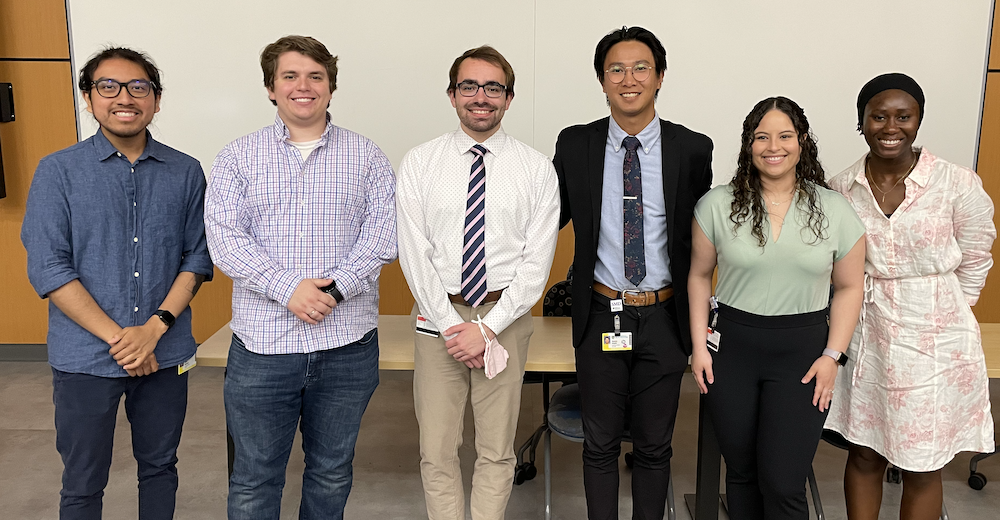
2002 group from left to right: Jose Reynoso, Jacob Cody Naccarato, Hunter Houseman-Eddings, Aaron Huynh, Lourdes Marianna Caro-Rivera, Jackie Agyemang
Aaron Huynh with mentors Annalynn Williams Ph.D. (left) and Michelle Janelsins, Ph.D. (right).
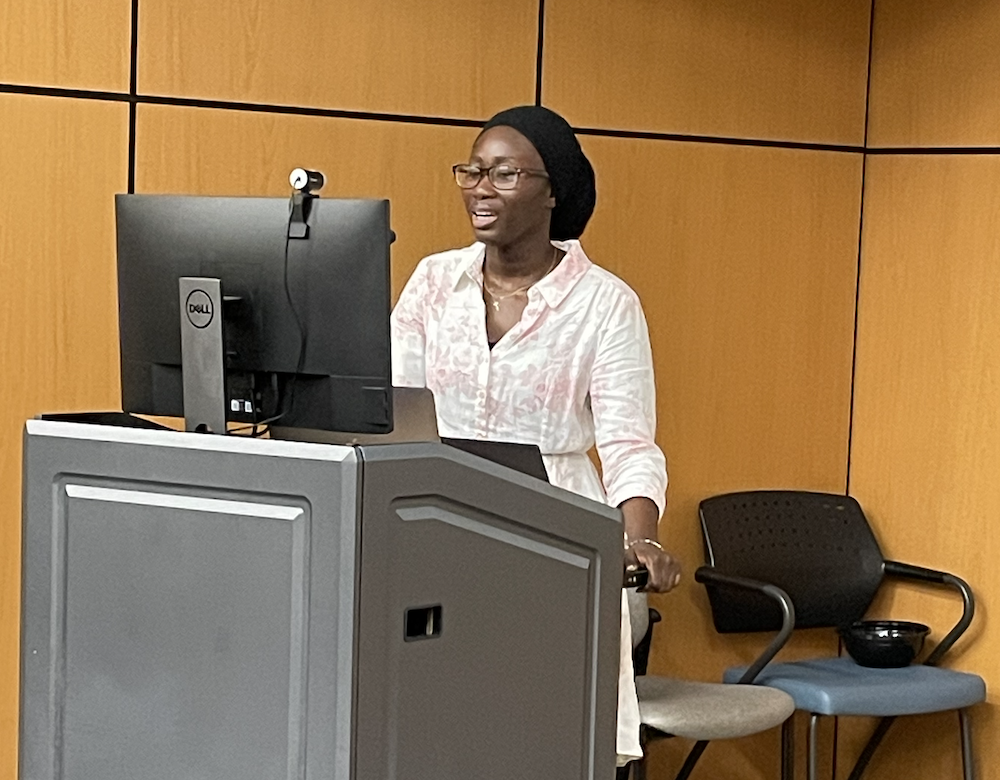
Jackie Agyemang presents her research project during the end-of-year PREP symposium
Congratulations to our 2023 graduating URMC-PREP Cohort! On June 13, they presented their research at the annual end-of-year symposium.
The Post-baccalaureate Research Education Program (PREP) offers a one-year biomedical research training opportunity to students from historically excluded and underrepresented groups who want to pursue a research doctorate.
Our goal is to prepare students for successful entry into competitive PhD programs, as well as for careers as outstanding research scientists and leaders in the biomedical community.
We're proud to say that many of our students will be pursuing various research opportunities here at the University of Rochester.
"What I think I'll remember most about my time in PREP is the compassion, patience, and support that I received from everyone," says Aaron Huynh, who will soon be pursuing a Ph.D. in our Neuroscience Graduate Program. "The goals I set for myself and with my mentors and the program directors were surpassed, and I am ecstatic to be able to stay at such a community that the University of Rochester has provided me these past five years."
In addition to community, Jackie Agyemang, who is sticking around to pursue a Ph.D. in Toxicology, says PREP boosted her confidence in attending graduate school.
"My PREP experience gave me a preview of graduate school. I had the opportunity to work on an intensive research project of interest while balancing my academics, and establishing myself as a budding scientist all in a year," she says. "Overall, I have reassured confidence that I am capable and qualified to be a successful graduate student."
As one group completes the program, we're excited to bring in our next cohort, who officially started on July 5.
From left to right: Jacob Morales mentored by Dr. John Lueck, Alesandra Martin mentored by Dr. Farran Briggs, Evelyn Pineda mentored by Dr. Benjamin Suarez-Jimenz,
Pavel Rjabtsenkov mentored by Dr. Wendi Cross, Lily Mussallem mentored by Dr. Minsoo Kim, Hunter James Houseman-Eddings mentored by Dr. Brian Ward, and Maeve Noel Sheehy mentored by Dr. Lauren Hablitz.
July 11, 2023: Research Update from Steve Dewhurst
Tuesday, July 11, 2023
Dear colleagues,
This past week, I’ve been thinking about two federal holidays—July 4th, which we just celebrated, and the prior Juneteenth holiday, which we celebrated on June 19. In fact, the two holidays have much in common since Juneteenth “marks our nation’s second independence day,” and is also known as “Emancipation Day, Freedom Day, Jubilee Day, Juneteenth Independence Day, and Black Independence Day”.
Juneteenth is especially on mind because of a recent Commentary in Cell that was co-authored by 52 Black scientists—including our own Nathan A. Smith and School of Medicine and Dentistry Ph.D. alumnus, Blanton Tolbert. Their article notes that “the date stands not for the ideals of where diversity in science should be but rather where they are. Work is required to get science to where it should be—a truly equitable space. It is not a matter of knowing what to do, as this has been clearly elucidated by countless individuals. Rather, it is one of deciding whether we will take the steps needed to achieve the ideals Juneteenth sets out.”
The article is important both as a roadmap of where we need to go and as a call for action at both the institutional and individual levels. I encourage everyone to read it if you haven’t done so already.
Major Advances in Muscular Dystrophy
One of the long-standing interdisciplinary research strengths at URMC is our program in neuromuscular disease, which brings together faculty from Neurology, Pediatrics, Pharmacology and Physiology, Biostatistics, and Computational Biology, the Center for Health and Technology (CHeT), and several other departments and centers.
What’s new, and remarkable, is that we now find ourselves with “a historically unique opportunity to establish targeted treatments for genetic neuromuscular diseases” (in the words of a group of pioneering URMC faculty members, led by David Herrmann). What they are referring to is a wave of ongoing or planned clinical trials that will determine the effectiveness of multiple new therapies for neuromuscular diseases that have previously proved very difficult to treat. If successful, these treatments will represent a “bona fide revolution of neuromedicine care….the ripples (of which) will reach far into the future.”
For many of our neuromuscular disease researchers, including Emma Ciafaloni and Charles Thornton, that revolution represents the fruit of literally decades of painstaking scientific and clinical work. Work that, for example, led to URMC’s participation as one of the first three sites in the nation to start dosing patients in a recent phase 3 clinical trial for Duchenne muscular dystrophy (DMD)—and ultimately led to the June 22 approval of the first gene therapy for the treatment of this disease.
IT Security – Protecting our House
At this point, most of us are familiar with the requirement to protect sensitive data and information used in research. However, cybersecurity isn’t just about HIPAA. It’s about the security of our entire information technology network and our entire community.
Any cyber or ransomware attack affects all of us—and threatens not only clinical data, but also financial data, research data, and even the very ability to conduct research in the first place.
This consideration is driving changes in IT security at universities and academic health centers across the nation, including URMC. Widely implemented measures include steps to decrease or eliminate the use of insecure portable devices such as unencrypted USB devices, as well as evolving IT security guidelines for international travel (which also serve to mitigate the risk of loss, seizure, or tampering with laptops, phones or other mobile devices during travel).
Importantly, the Office of Research IT is a key partner in the development of policies that may affect the research community, and a key source of guidance/assistance as they are implemented. If you have questions, comments or concerns, I encourage you to share them with Research IT and to help us develop policies that keep our community safe, but that have the least possible impact on our ability to do research.
Steve Dewhurst, PhD
Vice Dean for Research, SMD
Vice President for Research, UR
Childhood Hearing Loss Associate with Adverse Childhood Experiences
Friday, June 30, 2023
A new retrospective study led by Wyatte Hall, PhD, assistant professor of Public Health Sciences, and Shazia Siddiqi, MD, MPH, staff scientist in the Department of Obstetrics and Gynecology, suggests a link between factors associated with childhood hearing loss and adverse childhood experiences. Demographic factors of less severe hearing loss (16–55 dB), having a cochlear implant, and/or never having attended a school with signing access increased the likelihood of deaf adults reporting multiple adverse childhood experiences.
Study authors believe these factors may reflect societal pressures for deaf children to “pass for hearing” in ways that impact their language development and ongoing education.
Hall, Siddiqi, and co-author Timothy Dye, PhD, call for early interventions to support healthy home environments for deaf children. Hall and Siddiqi are former Rochester Postdoc Partnership fellows who completed their three year fellowships under the Dye’s mentorship.
Read More: Childhood Hearing Loss Associate with Adverse Childhood ExperiencesSummer Scholars Cohort Arrives at SMD: A Bright Future Ahead
Monday, June 5, 2023
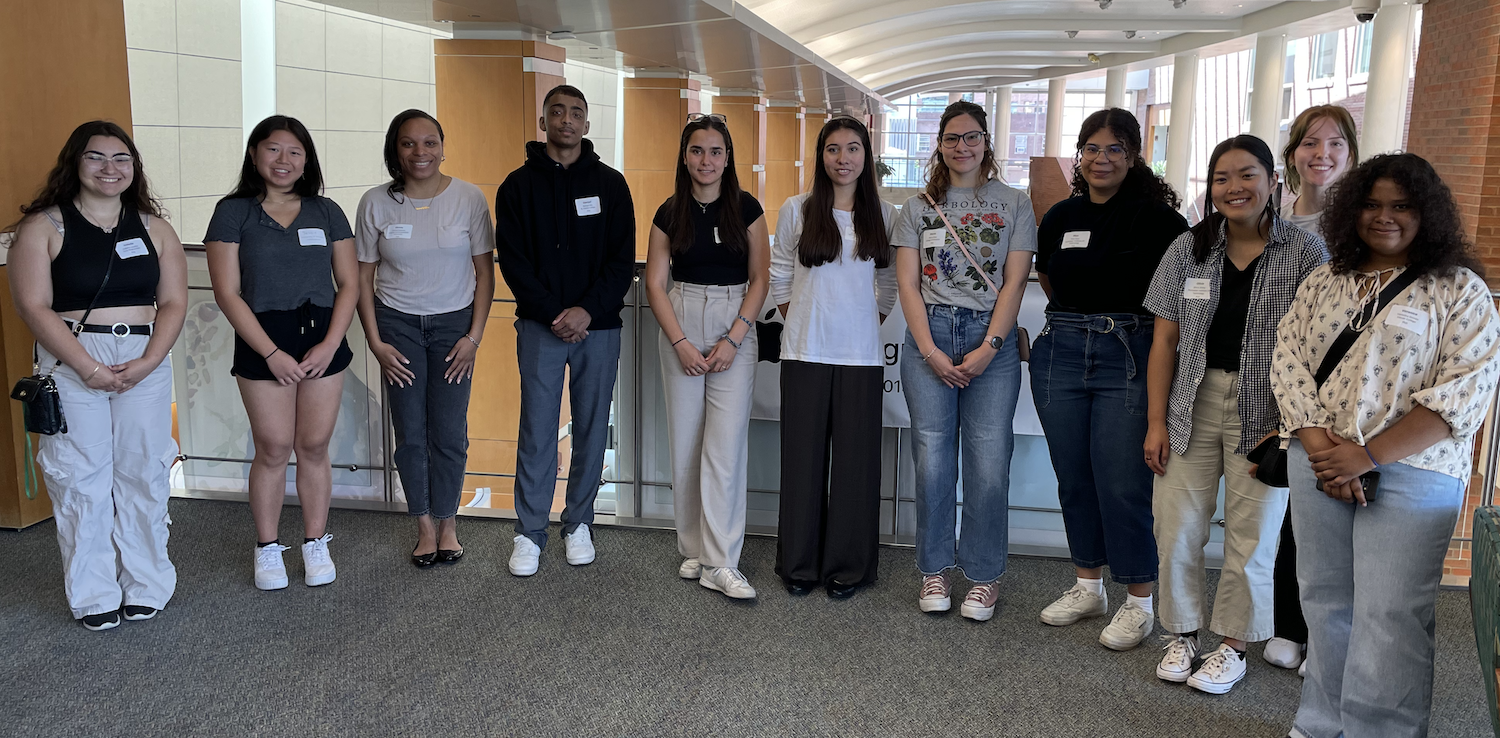
Scholars supported by SMD programs pause for a photo above Flaum Atrium following orientation on May 30, 2023.
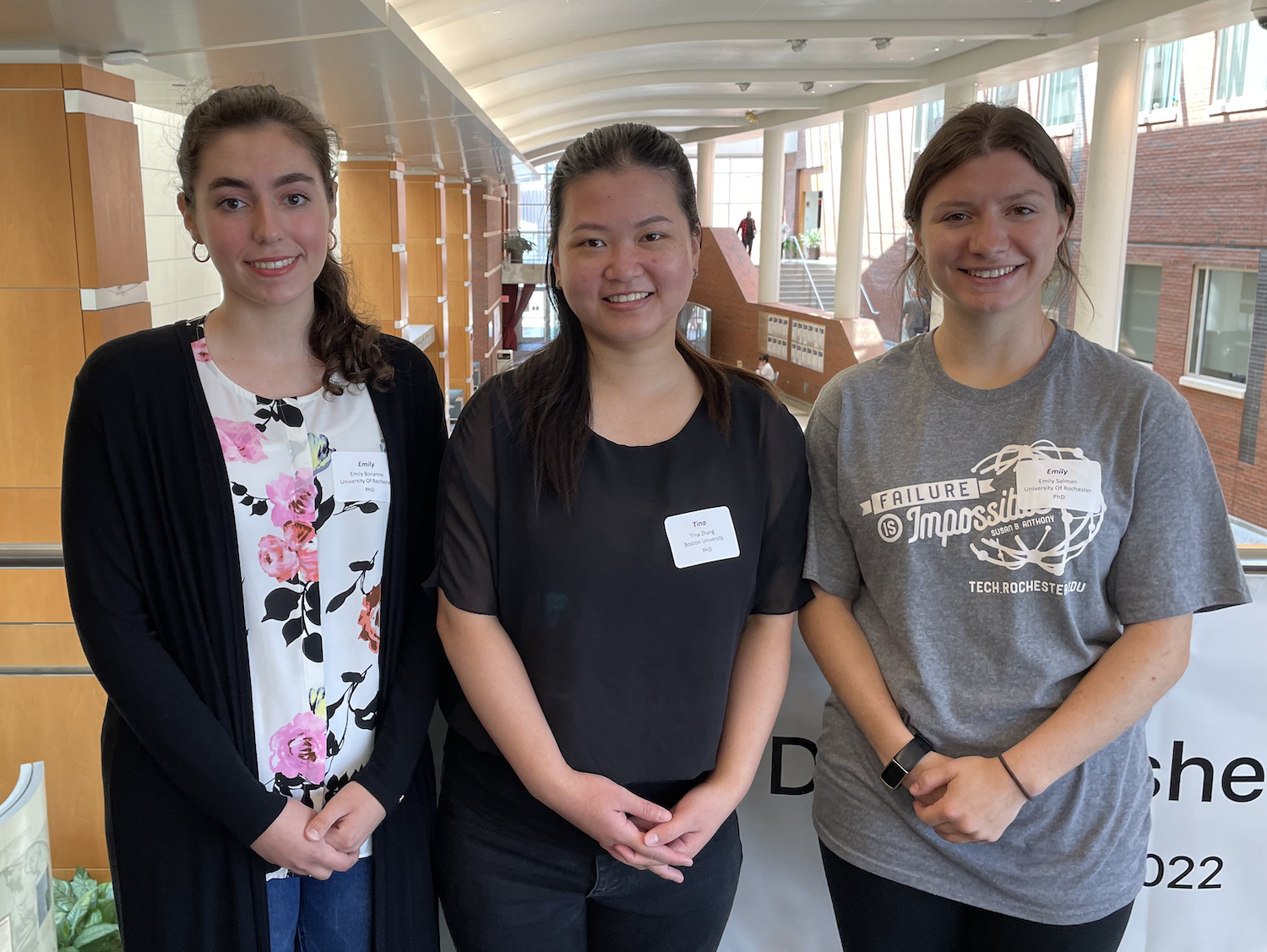
will be working at our Aab Cardiovascular Research Institute.
The School of Medicine and Dentistry is thrilled to welcome our 2023 Summer Scholars. Working under the direct supervision of faculty mentors, these 30 undergraduate students are joining us from all over the country for the next 10 weeks to gain research experience and professional development opportunities. The Summer Scholars Program is a diversity pathway building program designed to provide research and professional development opportunities to students from groups historically underrepresented in biomedical fields.
"Our program has been an excellent model for providing young aspiring scientists a hands-on research experience," says Elaine Smolock, Ph.D., co-director of the Summer Scholars Program and director of writing services and training grant development at SMD.
Through partnerships with the Rochester Institute of Technology and the City College of New York through our NeURoCity program, as well as our Medical Science Training Program, Aab Cardiovascular Research Institute, and NanoBuddies, which provides a training experience in the field of pharmacology, the program is able to offer a rich plethora of research experiences. Previous scholars have gone on to participate in various post-baccalaureate PREP programs here at the University and around the country, research fellowships and internships.
The program culminates in a poster session on August 3, 2023, which is open to the entire University of Rochester community.
Welcome to the 2023 Summer Scholars participants!
View list of 2023 Summer Scholars
Celebrating SMD Faculty Awards
Friday, May 26, 2023
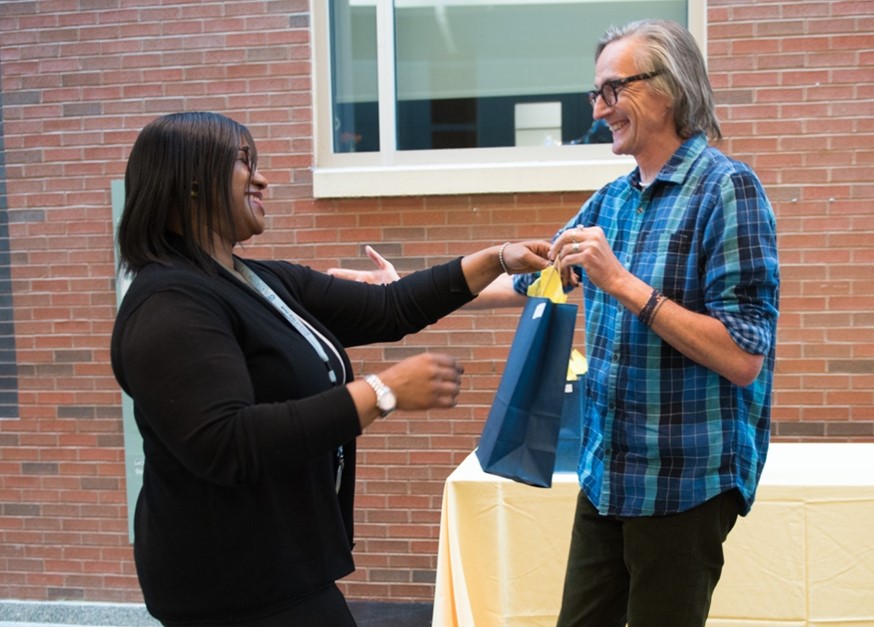 Vice Dean for Research Steve Dewhurst (right) congratulates Edith Williams, MD, PhD on being appointed Dean’s Associate Professor in Health Equity Research.
Congratulations to all of our faculty members who received mentoring awards, named professorships, and teaching fellow awards. They were honored in a celebration in Flaum Atrium on May 17, 2023. The full list of awardees is below.
SMD Faculty Mentoring Awards
Thomas Caprio, MD – Faculty Academic Mentoring Award
Carla Casulo, MD – Trainee Academic Mentoring Award in Clinical Programs
Yeates Conwell, MD – Lifetime Mentoring Award
Toru Takimoto, DVM, PhD – Trainee Academic Mentoring Award in Basic Science
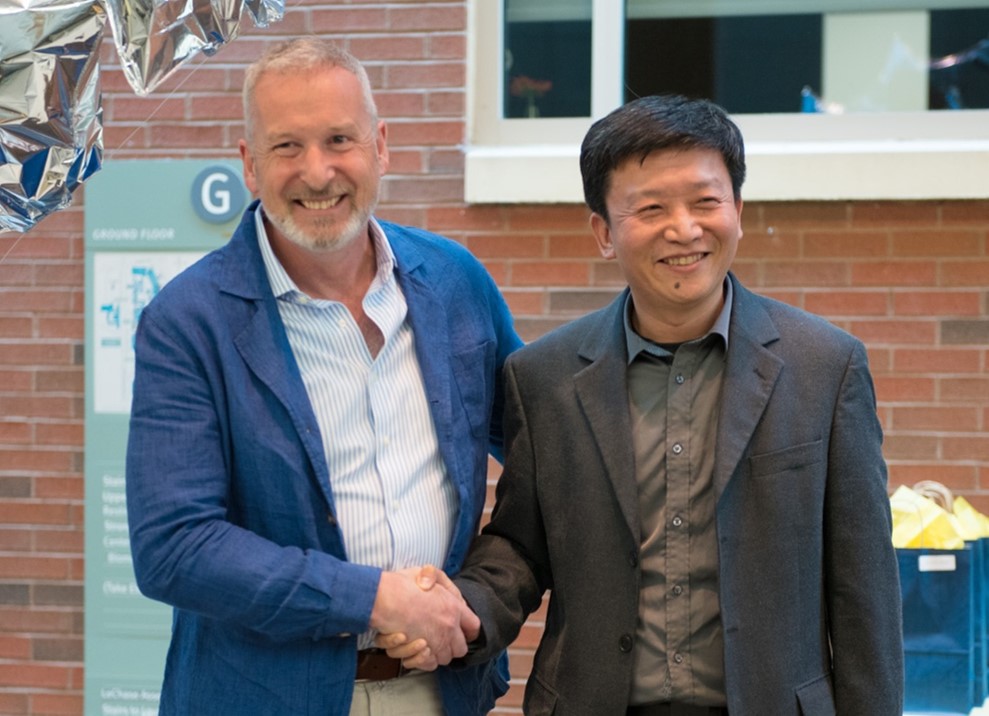
John Foxe, Ph.D., (left) director of the Del Monte Institute for Neuroscience, congratulates Kuan Hong Wang, PhD on being appointed Dean’s Professor.
Named Professorship Recognition
Anna Majewska, PhD - Dean’s Professor
Dennis Z. Kuo, MD, MHS – Purcell Family Distinguished Professor
Matthew D. McGraw, MD – George Washington Goler Chair in Pediatrics
Karen M. Mustian, PhD, MPH – Dean’s Professor
Joseph A. Nicholas, MD, MPH – William and Sheila Konar Professor in Geriatrics, Palliative Medicine and Person-Centered Care
James Palis, MD – Northumberland Trust Professorship in Pediatrics
Douglas S. Portman, PhD – Donald M. Foster, M.D. Professorship in Biomedical Genetics
M. Patricia Rivera, MD – C. Jane Davis & C. Robert Davis Distinguished Professor in Pulmonary Medicine
Lainie Friedman Ross, MD, PhD – Dean’s Professor of Health Humanities and Bioethics
Michael A. Scharf, MD – Mark and Maureen Davitt Distinguished Professor in Child and Adolescent Psychiatry
David M. Siegel, MD, MPH – Northumberland Trust Professorship in Pediatrics
Laurie Ann Steiner, MD – Lindsey Distinguished Professorship for Pediatric Research
Kuan Hong Wang, PhD - Dean’s Professor
Edith M. Williams, MD, PhD – Dean’s Associate Professor in Health Equity Research
Recognition of Dean’s Teaching Fellow Awards
Anne Nofziger, MD
Rita Dadiz, MD
Szilvia Arany, DMD, PhD- EIOH
Grace Black, MD – Pediatrics
Francis Coyne, MD – Internal Medicine and Pediatrics
Chris Tarolli, MD - Neurology
Raven Osborn, Ph.D. Delivers Graduate Student Address at Commencement
Tuesday, May 16, 2023
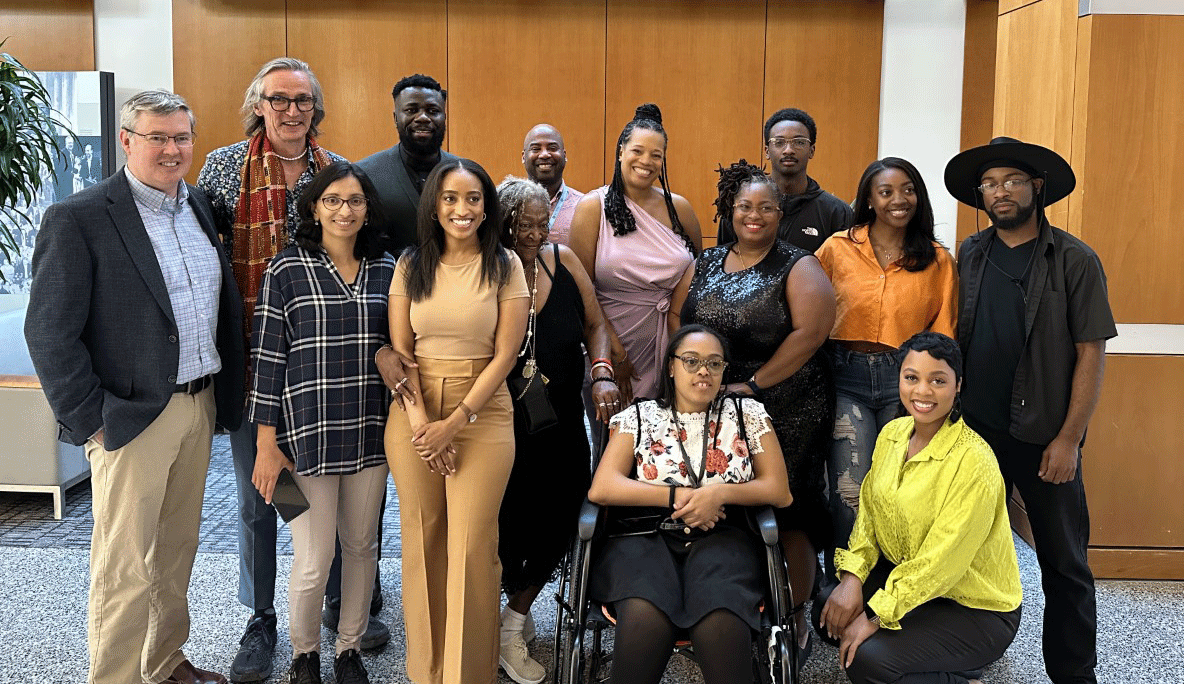 Raven Osborn, Ph.D., (middle row third from left), celebrates with her family during the Ph.D. Award Presentation and Reception on Thursday, May 11. Raven received The Leadership Award for Excellent in Equity and Inclusion.
Raven Osborn, a Translational Biomedical Science Ph.D. graduate, gave the graduate student address at this year's commencement.
Her research focuses on developing network and statistical models to understand how the virus that causes COVID-19 evades the innate immune system. She co-founded and eventually presided over the University of Rochester's chapter of the Alliance for Diversity in Science and Engineering.
During her time here, she won two awards recognizing her research and five awards recognizing her commitment to inclusion in STEM fields.
In her speech, she talked about overcoming self-doubt, as well as the importance of community.
“You will go further if you lock arms with the people around you, and you teach others to do the same through actions first. And finally, if you don't remember anything else from this speech, please remember to pick up the phone for the people you love.”
Check out the full speech on YouTube.
Nicole Wilson, M.D., Ph.D. Looks at Long-term Psychological Effects of Childhood Trauma
Friday, April 14, 2023
Nicole Wilson, M.D., Ph.D., assistant professor in the departments of Surgery, Pediatrics, and Biomedical Engineering led a study of young adults who were victims of violent injuries as children and found significantly higher levels of post-traumatic stress disorder (PTSD) in this group than the general population.
The study surveyed 24 respondents who were victims of gunshot, stab, or assault wounds as children between the years of 2011 and 2020. Of the participants, 15 suffered a gunshot wound, eight suffered a stab wound, and one was assaulted. Respondents were primarily teenagers at the time of injury, with a median age of 16.6 years. An average of six years had passed from the initial injury to the time respondents were contacted for the study.
Read the full article in the URMC Newsroom.
Nathan Smith, Ph.D. says stars in the brain may be information regulators
Tuesday, April 11, 2023
Long thought of as “brain glue,” the star-shaped cells called astrocytes—are members of a family of cells found in the central nervous system called glial that help regulate blood flow, synaptic activity, keep neurons healthy, and play an important role in breathing. Despite this growing appreciation for astrocytes, much remains unknown about the role these cells play in helping neurons and the brain process information.
“We believe astrocytes can add a new dimension to our understanding of how external and internal information is merged in the brain,” said Nathan Smith, MS, PhD, associate professor of Neuroscience at the Del Monte Institute for Neuroscience at the University of Rochester.
He and fellow authors from the Center for Translational Neuromedicine at the University of Copenhagen highlight this in an opinion article in Trends in Neuroscience.
Read the full article in the URMC Newsroom.
The Misunderstood Reason Deaf Children Fall Behind: Rhode Island PBS Weekly
Tuesday, April 11, 2023

Many students arrive at the Rhode Island School for the Deaf, which serves students from preschool through high school, with little to no language. Wyatte Hall, Ph.D., an expert of language deprivation and assistant professor of Public Health Sciences at the URMC, knows that delayed language acquisition causes other problems, and is preventable. "We already know how to prevent these problems: You give deaf children sign language... Options are framed as 'or' -- that you have to pick ASL or English spoken language… It does not have to be that way. It can be 'and.' You can have ASL and English."
Hall was also the first graduate of the Rochester Postdoc Partnership, a one-of-a-kind postdoctoral training program for deaf or hard-of-hearing scientists run jointly by URMC and the National Technical Institute for the Deaf at RIT.
Watch the full story from Rhode Island PBS Weekly.
April 11, 2023: Research Update from Steve Dewhurst
Tuesday, April 11, 2023
Dear colleagues,
Last week (April 2- April 8) was graduate student appreciation week, a national celebration of graduate students and the many essential contributions they make to academic and research communities across the country – including this medical center.
A highlight was the finals of the Three Minute Thesis (3MT) competition, at which students from across the University summarized their doctoral research in a three minute presentation. I was blown away, not only by the quality of the speakers and their research, but also by the sheer breadth of their scholarship. The overall winner, Fatma (Betul) Zeyrek, spoke about her work on early childhood moral development and the complex reasons that kids agree to do what their parents ask them to (most of the time…). Two SMD students also received awards – Gabrielle Kosoy, who won 2nd place overall, and Sara Blick-Nitko, who was the joint winner of the People’s Choice Award.
Graduate Education and the 2030 UR Strategic Plan
Graduate students are also at the core of the UR’s 2030 Strategic Plan. While the plan is still being refined based on feedback from the University community, its five overarching goals are clear. One of these is to re-imagine undergraduate and graduate education and to ensure that all students “feel a sense of belonging” and have “access to high-impact learning experiences” that prepare them for their future careers.
One step towards this is a new partnership between the office of Graduate Education and Postdoctoral Affairs (GEPA) and Archer Career, which will assist learners with preparing for networking opportunities, internships, job shadowing, job searches, and more. Eric Vaughn in GEPA made this happen with the help of a Burroughs-Wellcome grant he secured (thank you, Eric!) and a first cohort started last month. A second cohort will start in May; if you’re interested, please contact Eric.
More About the 2030 UR Strategic Plan and How it Relates to the Medical Center
The cornerstone of the 2030 UR Strategic Plan is to enhance our research enterprise and our global reputation by investing in areas of distinction that provide opportunities for innovation, discovery, and transdisciplinary collaboration. Medical Center researchers will play key roles in the following areas:
- Biomedical and Healthcare Innovation
- Just and Equitable Societies, which is highly relevant to URMC’s new Office of Health Equity Research, as well as the UR CTSI’s ongoing Health Research Diversity Initiatives, and many other URMC programs. Promoting vitality and aging through the work of the UR Aging Institute is one example of how Medical Center researchers will contribute in this area.
- Digital and Data Sciences, including Artificial Intelligence (AI), Augmented Reality (AR) and Virtual Reality (VR) and the technologies and tools necessary to analyze massive data sets.
A Last Thought: Commencement
Finally, the University’s 173rd Commencement Ceremony for undergraduate and graduate students from all schools will be held on Friday, May 12 and kicks off a weekend of graduation ceremonies and celebrations that continue through Sunday, May 14.
For the students who’ll be walking across a stage next month, in front of family and friends, I offer my congratulations and my appreciation: For the countless hours you put into your research; for the difficult times when things weren’t going well, but you stuck it out and made it work; for the support you both gave and received along the way.
Take a moment to savor what you’ve achieved.
Steve Dewhurst, PhD
Vice Dean for Research
Wyatte Hall Joins Congressional Briefing on Language Access for Deaf Children
Friday, February 24, 2023
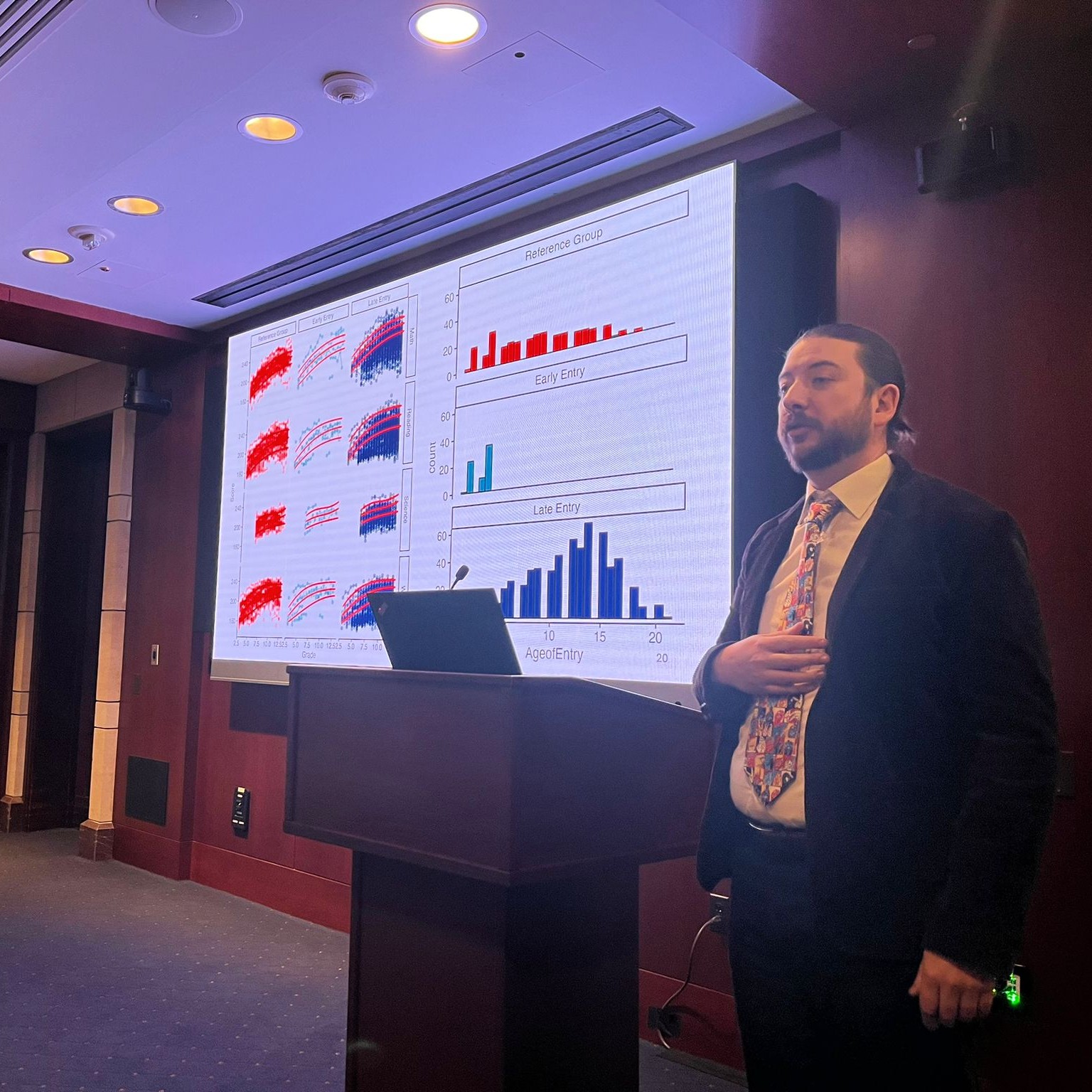
Education and Advocacy Summit
Wyatte Hall, Ph.D., assistant professor of Public Health Sciences at the University of Rochester Medical Center (URMC), took part in a congressional briefing at the U.S. Capitol on February 22 to advocate for earlier and better language access for deaf children. The briefing was part of the eighth annual Education and Advocacy Summit hosted by the Conference of Educational Administrators of Schools and Programs for the Deaf.
Hall, who is also an assistant professor in Neurology, Obstetrics and Gynecology, Pediatrics, and the Center for Community Health & Prevention at URMC, has studied the prevalence and impact of language deprivation on deaf children and adults for almost 10 years. While most children share a common language with their parents and have access to that language from infancy, the majority of deaf children are born into hearing families that use spoken language and many have delayed access to language.
Read the full article.
Paula Vertino Named Senior Associate Dean for Basic Research
Thursday, January 19, 2023
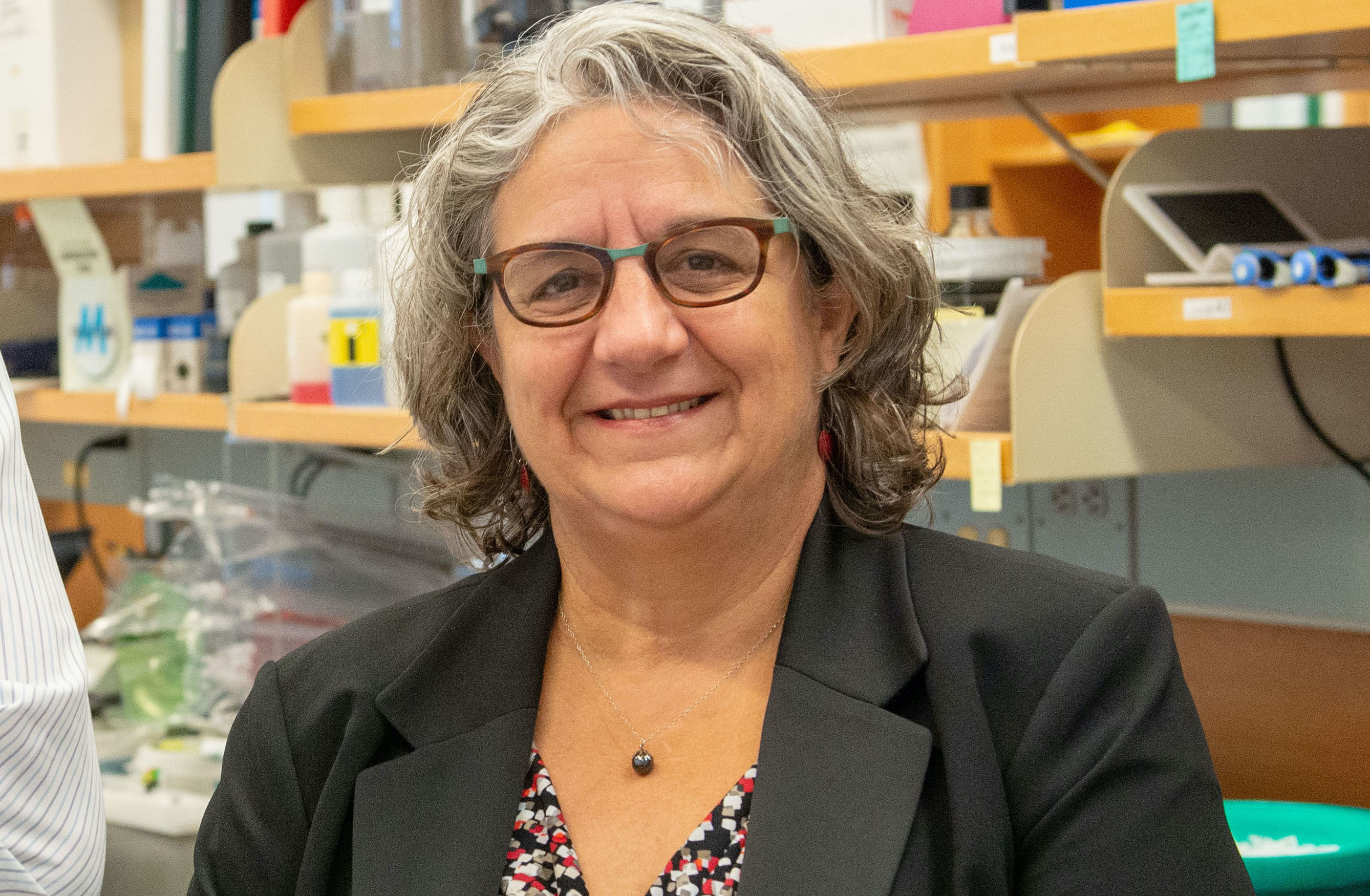
Paula Vertino, Ph.D., an accomplished cancer research scientist and leader at the Wilmot Cancer Institute at the University of Rochester Medical Center, has been appointed senior associate dean for Basic Research effective February 1, 2023.
Vertino was recruited to Wilmot in 2018 to transform its research endeavors by breaking down silos and promoting collaboration and team science. She enjoys identifying commonalities and bringing people together in a “grass roots” approach.
She sees her new role as an opportunity to interact more broadly across the Medical Center to enhance cross-programmatic communication; to work with institutional leadership to create an environment that fosters faculty and trainee success; and to further integrate the basic and clinical research enterprise – something that’s been top-of-mind since she joined the University.
Read the full article in the URMC Newsroom.
January 27, 2023: Research Update from Steve Dewhurst
Tuesday, January 17, 2023
Traditionally, as a new year starts, we take a moment to reflect on the year that just ended – and on the year to come. As we come to the end of this first month of 2023, it seems timely to do so now.
Jeff Koslofsky in Graduate Education and Postdoctoral Affairs created this terrific infographic which presents some of the key facts and figures around our research mission in 2022. What isn’t captured in this image is the tremendous amount of creativity, innovation, hard work and passion that faculty, staff, and learners pour into their science.
For many of us, research is also deeply personal. If you have a few minutes, this inspiring December news piece on Arielle Sheftall’s research is exemplary of that.
Sheftall, a 2022 recruit in the department of Psychiatry, recently received one of only four NIH Director’s Transformative Research Awards; the $4M grant will fund her research on using digitally enabled peer-to-peer support, as well as at-home nerve stimulation, as early intervention approaches for teenagers at high risk for suicide.
Another theme that emerges from the year-in-review is that of mentoring, and its critical importance to the success of all members of our SMD research community. In October, Nikesha Gilmore, a faculty member in the Wilmot Cancer Institute (Wilmot) and the department of Surgery coauthored a guest editorial for The Hematologist, together with two colleagues at Duke University and the University of North Carolina. The article addresses the unique challenges faced by Black faculty in academia, and the negative impact of systemic racism and bias. It also identifies mentorship as an important part of the solution. As Gilmore notes, mentorship “can keep people from saying – ‘I’m done. I’m not doing this anymore.’” In a November news feature on this article, Gilmore adds that:
“You need a mentor to say, ‘I have faith in you. You can do this.'”
I couldn’t agree more.
Importantly, Gilmore also credits her own mentors at the U of R for the positive effect they have had on her career success, including Jacques Robert (her PhD mentor), as well as Michelle Janelsins-Benton and Supriya Mohile, scientific leaders within Wilmot, and key contributors to her subsequent growth as an early stage faculty member. That’s making a positive difference, and something we can all aspire to.
Looking to the year ahead, we’ll be continuing with hybrid work in many venues, but in others, we’ll be moving to increasing levels of in-person participation. As many of us know first-hand, in-person professional scientific meetings are back, as are in-person social gatherings, as exemplified by the December SMD Philosophy meeting, which was a celebratory gathering of our research community. That community building effort needs to continue and redouble, particularly for those who have recently joined the SMD research family and who have not (yet) had opportunities to build in-person peer connections and support networks.
Over the next several months, University-wide strategic planning efforts will also continue to move forward. A central aspect of the plan will be to strengthen our reputation as a leading global research University, while also: providing outstanding educational opportunities for our learners; investing in health and healthcare; supporting the success and well-being of our people; and continuing our commitment to diversity, equity, inclusion and justice, across all the University’s missions.
In the short-term, our PhD applicant interview weekends are just around the corner, on February 3-4 and March 3-4. I encourage you to participate actively in that process, and to help our interviewees understand what’s special about doing research here.
Finally, I want to thank each of you for the little things you do every day to make this place better; the small gestures or kind words that make others around you feel valued and welcome. It’s those small details that linger in the heart.
“I’ve learned that people will forget what you said, people will forget what you did, but people will never forget how you made them feel.”
- Maya Angelou
Steve Dewhurst, PhD
Vice Dean for Research
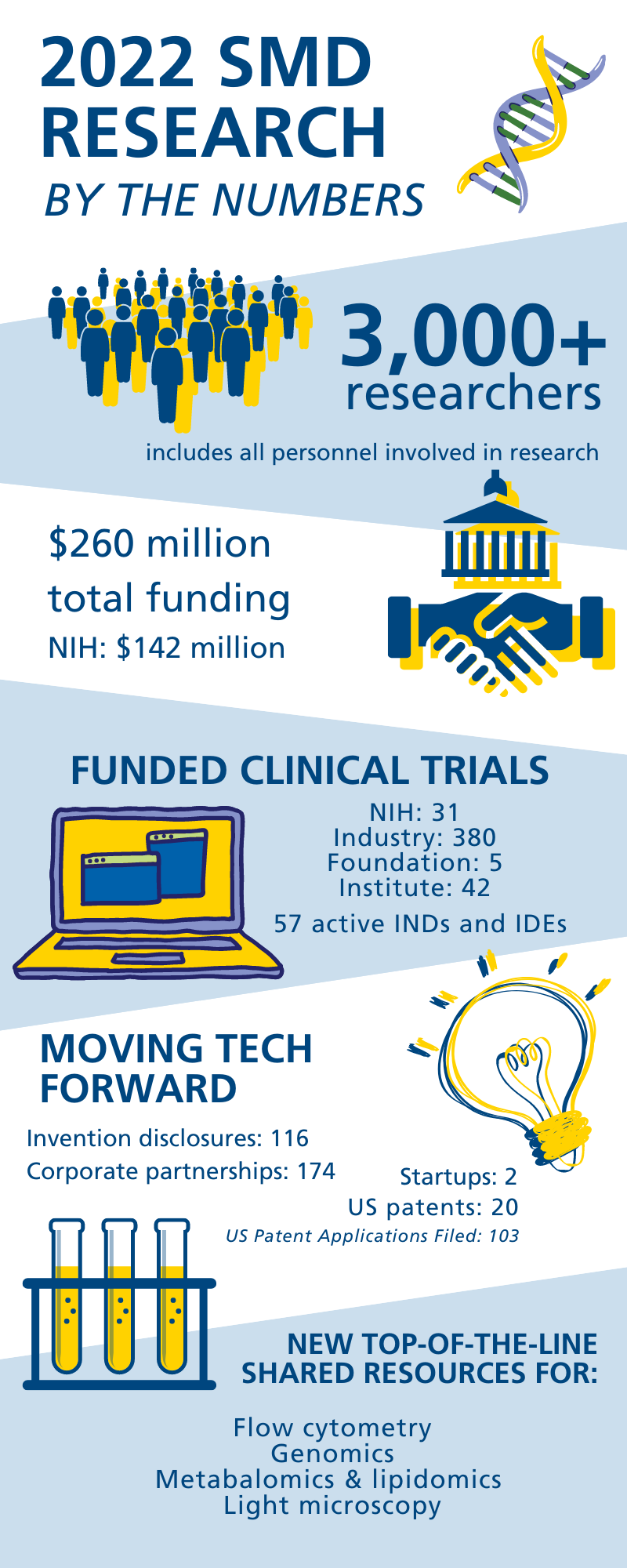
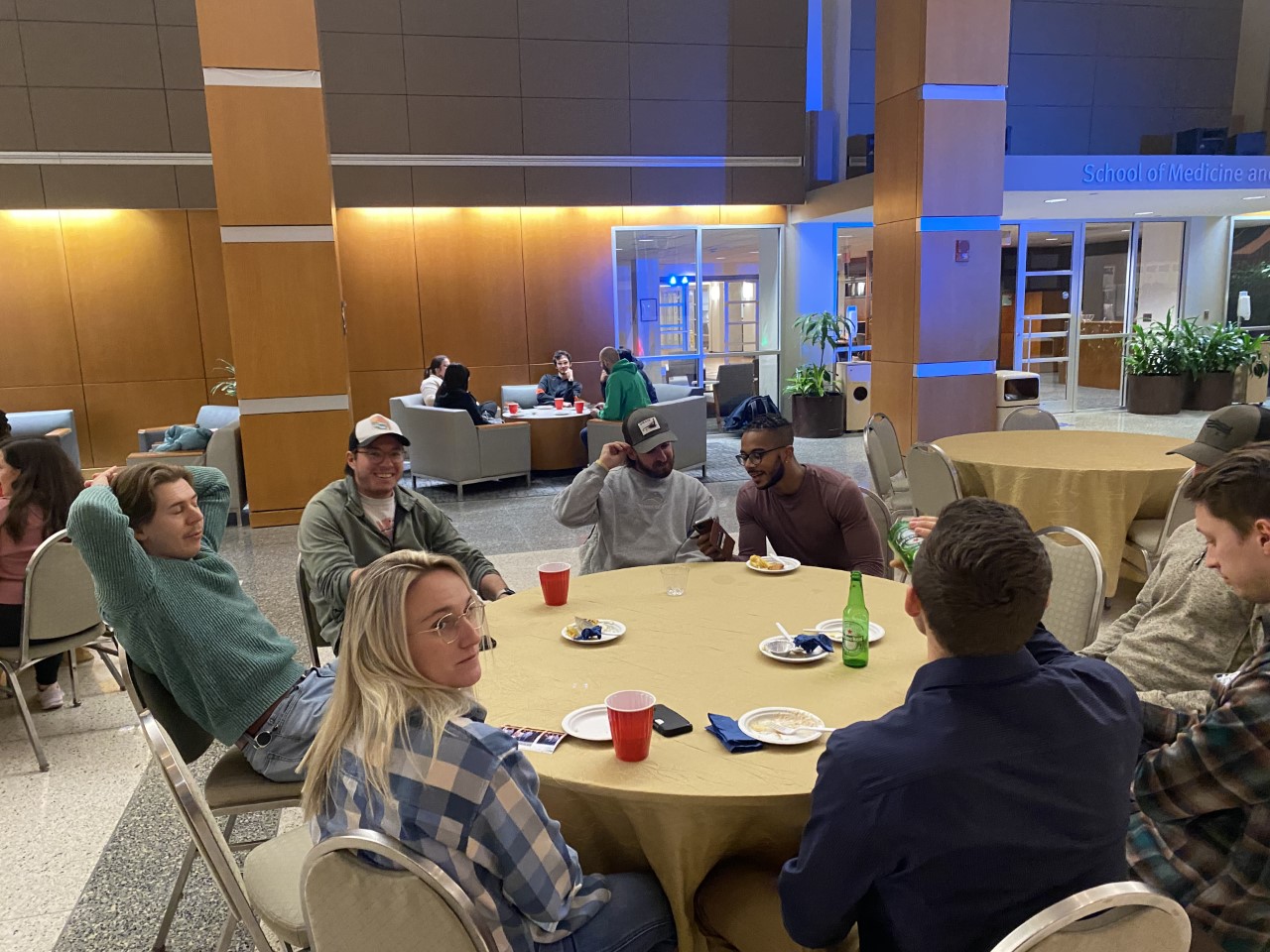
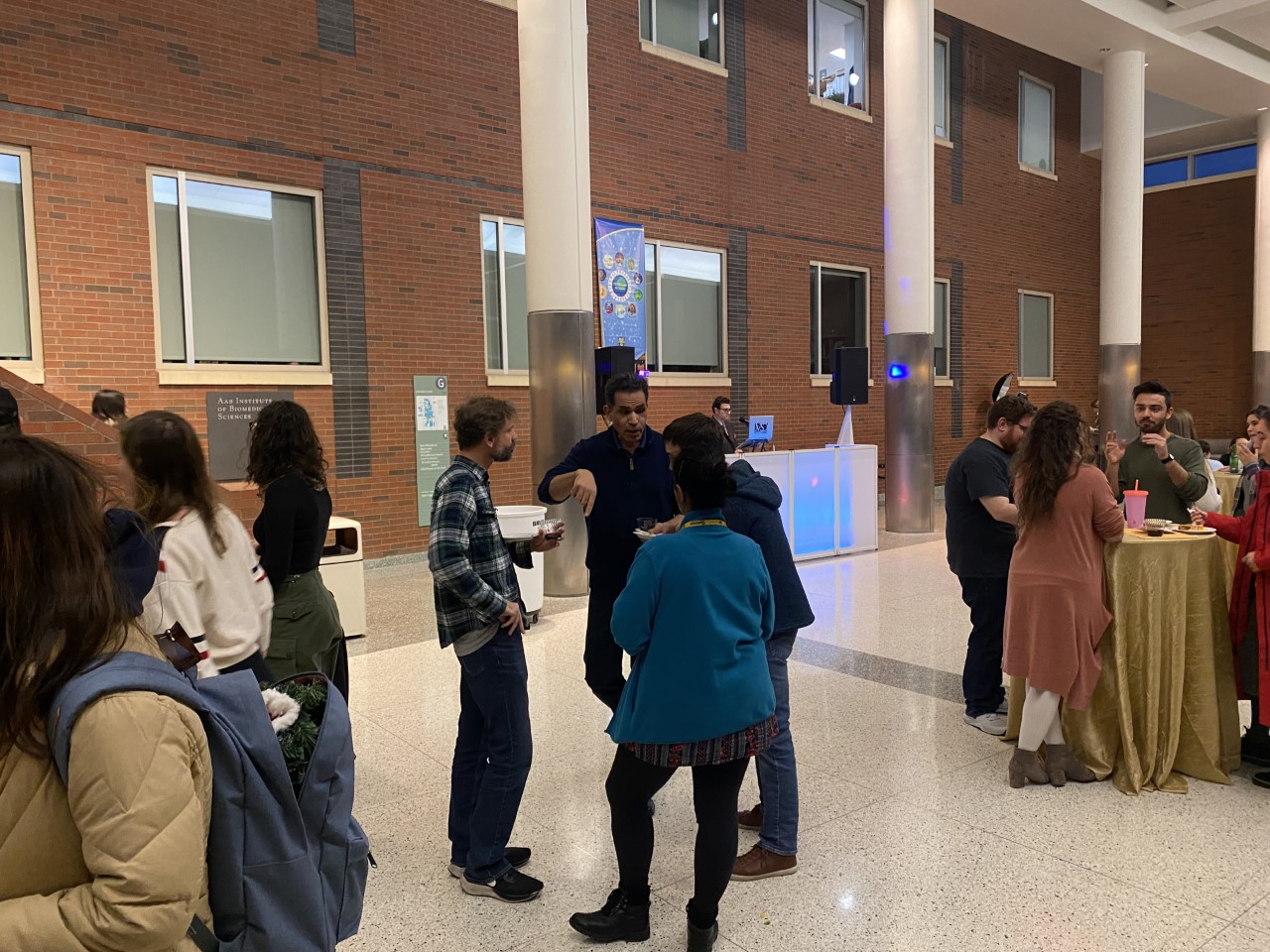
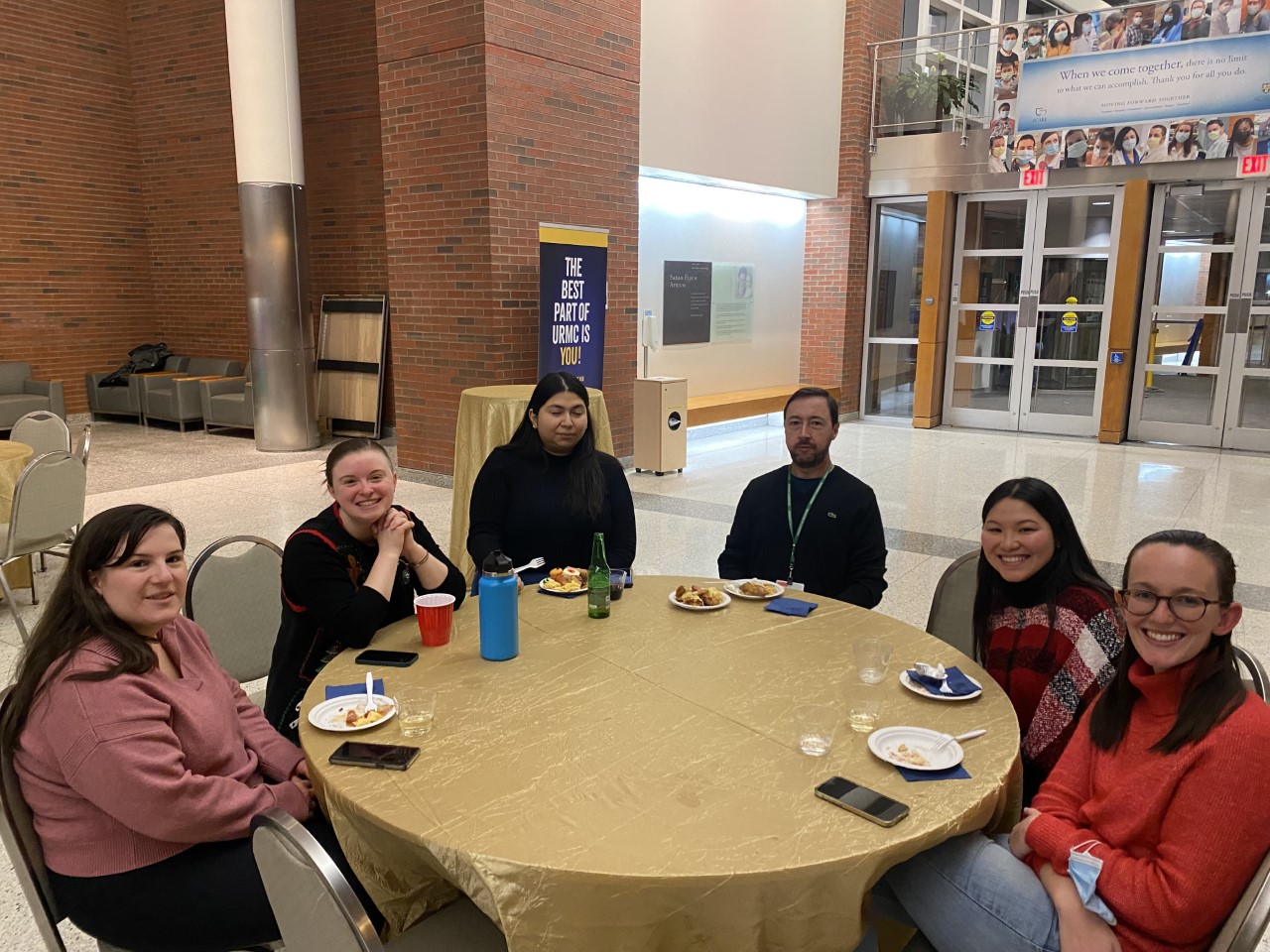
E’Lissa Flores, Ph.D (’18) Talks Authenticity, Moving from L.A. to Rochester, and Keys to Networking
Wednesday, January 4, 2023
"What sets you apart is who you are and how you work with others."
E'Lissa Flores, Ph.D., a 2018 graduate of our Translational Biomedical Science program, credits being her authentic self as a big reason she's in a career she loves today.
Flores recently joined us for a live LinkedIn career discussion to talk the importance of authenticity, as well as:
- Her role as scientific program manager at the Health and Environmental Sciences Institute (HESI) and what it's like working in the non-profit sector
- How our PREP program helped launch her into her Ph.D.
- Overcoming imposter syndrome through the help of mentors
- The importance of networking and not just re-connecting with colleagues when you need something
- What she did to get better at science communications
- Moving from Los Angeles to Rochester, and more
Check out the full replay on our LinkedIn page.
PREP Scholar Aaron Huynh Wins Fan Favorite Award at Wilmot Scientific Symposium
Monday, November 28, 2022
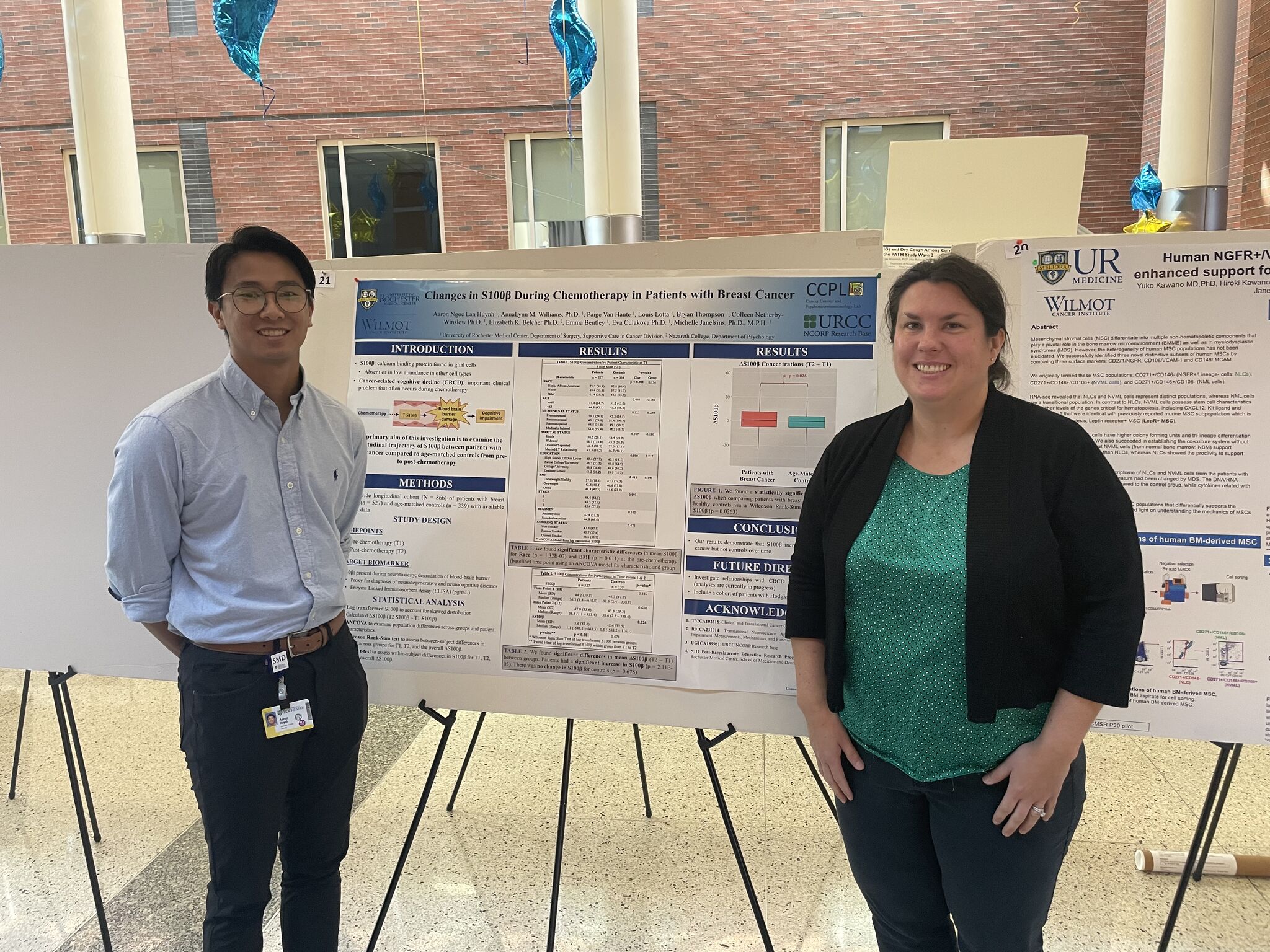
Congratulations to our URMC-PREP scholar Aaron Huynh on receiving the Fan Favorite award for the 27th Wilmot Cancer Institute Scientific Symposium Poster Session earlier this month. Aaron is working on investigating the longitudinal trajectory of changes in S100β in patients with breast cancer.
Huge thanks also go out to his PREP mentoring team of Michelle Janelsins, Ph.D., M.P.H.(pictured here on the right), Annalynn Williams, Ph.D., and Lou Lotta.
Best of luck to Aaron as he applies to Ph.D. programs and continues his research in relation to neurocognitive outcomes of patients with breast cancer.
Longtime Veterinarian Diane Moorman-White Retires After 31 Years
Thursday, November 10, 2022
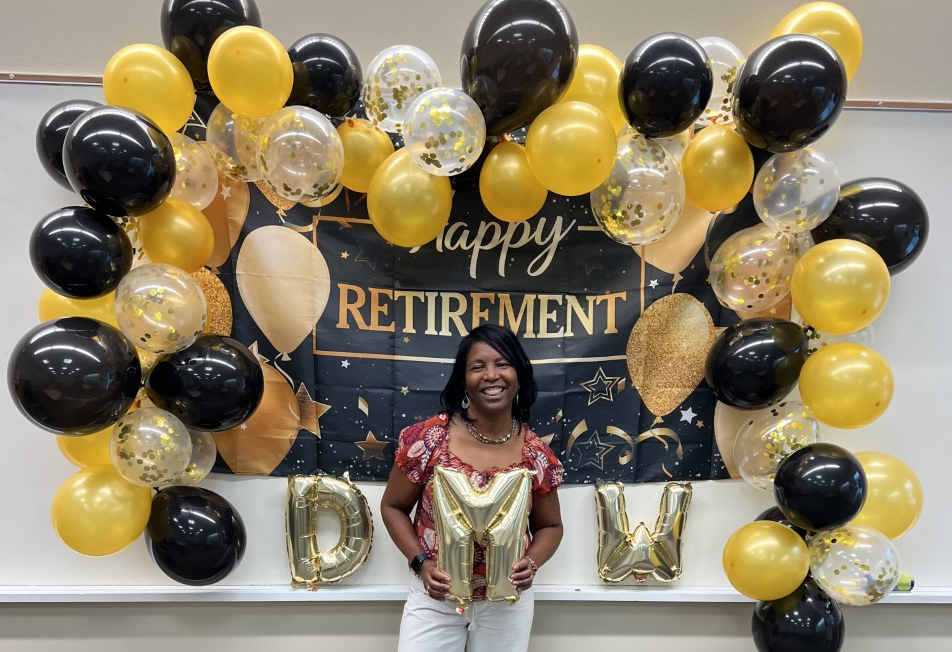
Diane Moorman-White during her retirement celebration in September 2022.
"I really feel in the 31 years I've been here, supporting the amazing, dedicated researchers...I feel that I have made a difference."
The collaboration between the animal care group and the research community is just one of the many fond memories Diane will take away as she closes the chapter on her career at URMC.
She first arrived at the University in 1991 as part of the Comparative Medicine residency program. From the beginning, Diane has been a valuable partner to everyone in our research community, from working with PIs and trainees to developing animal protocols to help them determine the appropriate animal model for their work.
She ensured our researchers abided by necessary regulations, including providing our animals with clean housing and proper care at all times.
“Genuine.” “Caring.” “A special talent.” These are just a few of the ways Jeff Wyatt, D.V.M., M.P.H., professor, and director of Comparative Medicine describes Diane, who he recruited to the residency program 31 years ago.
"Her compassion to the researchers and the animals [was] always up front," he says.
That compassion reaches beyond the University and into the broader Rochester community. Diane recently began a partnership with the Arc of Monroe, inviting a young woman with a genetic condition to support animal care in her department. Diane worked with Jeff to create a job description to hire her as an employee, and she now works part time building mice cages.
"She loves it," says Diane. "I see her elsewhere wearing her University of Rochester sweatshirt. She's just amazing."
"It's one of Diane's proudest moments," says Wyatt.
Diane hopes her work with the Arc will continue even though she's no longer at the University. "In the spirit of diversity and inclusion, if we can get more people in to help us out, that would be awesome," she says.
Diane's passion for her work and ability to bring people together will certainly be missed, and we wish her well in retirement.
Congratulations, Diane!
Jarvinen-Seppo Lab Talks Researching Food Allergies in Children
Monday, November 7, 2022
Members of the Jarvinen-Seppo Lab joined our latest Twitter Spaces discussion to talk about their work in researching food allergies in children.
Joining the discussion were:
- Kirsi Jarvinen-Seppo M.D., Ph.D., associate professor, Chief of Pediatrics Allergy & Immunology Division, PI.
- Antti Seppo Ph.D., research associate professor, scientist, lab director.
- Erin Davis Ph.D., nutritional scientist, post-doc.
- Courtney Jackson Ph.D., immunologist, post-doc.
Hear the team talk about the farming lifestyle effect, what some of their findings are in recent studies, what work still needs to be done, and more.
The full interview is available for replay on Twitter.
Indigenous Health Disparities Course Coming to UR in Spring 2023
Monday, October 31, 2022
Course aims to teach students the real histories of American Indian and Alaska Native people, and how many health disparities remain today due to injustices and trauma of the past.
As our University works to expand its commitment to indigenous studies, Dean S. Seneca, a Buffalo native whose family origins lie with the Seneca Nation of Indians in Western New York, will help shape our future public health leaders by teaching real histories of indigenous peoples. The CEO and founder of Seneca Scientific Solutions+, Dean Seneca has taught a similar course at the University at Buffalo; the new class will be open to undergraduate and graduate students at UofR this spring.
Students will take a close look at key eras and significant legislation passed in indigenous history to better understand the resulting public health impacts. The course will go through events such as the Removal Act of 1830 – the "Trails of Tears" in which thousands of American Indians were forced to move from the southeastern United States to west of the Mississippi River.
Such events resulted in a long history of chronic health issues for Native Americans, as well as a much higher rate of substance abuse compared to the general U.S. population, according to American Addiction Centers.
"We've survived this trauma, but we've never healed from it," says Seneca. "By the end of the class, I've created ambassadors to Indian health. I've created advocates."
Through exploring the social determinants of health, intergenerational trauma, and health equity, Seneca hopes this information will help future public health professionals improve the lives and well-being of indigenous people.
"I'm so thankful and appreciative of the University of Rochester for bringing a course like this to the university," he says. "We as a state and as a region are going to be much better off for it."
Awards and Philosophy Meeting Recognizes Faculty and Trainee Achievements
Thursday, September 29, 2022
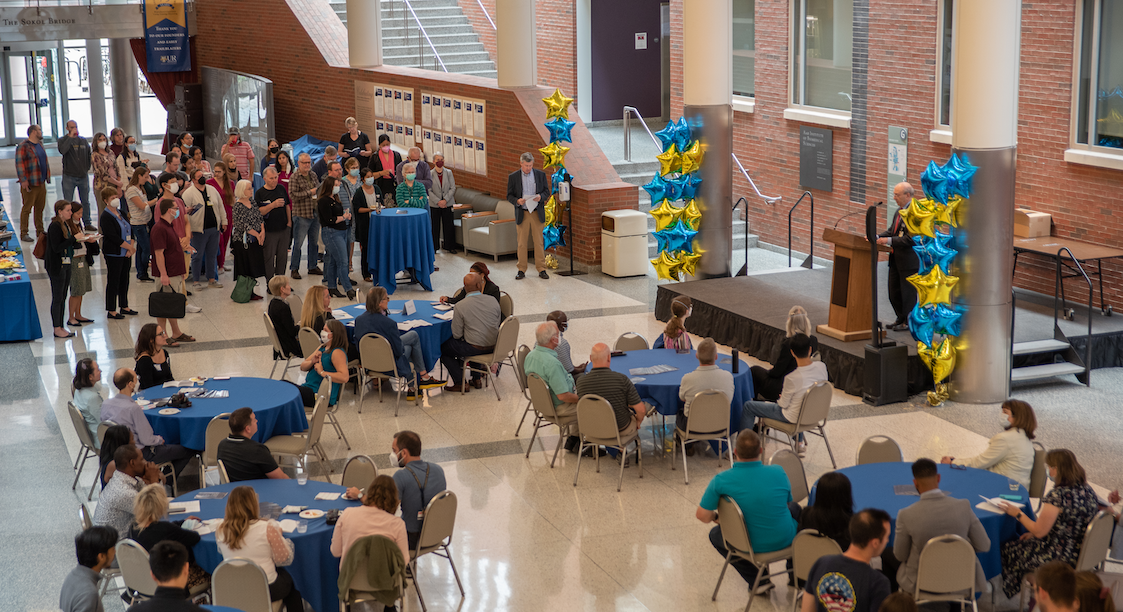
GEPA kicked off the academic year at the Awards and Philosophy meeting on September 13. The event recognized the many accomplishments
of our faculty and learners, and toasts the start of the academic year.
Below is a list of faculty and trainees that were honored for various achievements during the ceremony.
Graduate Student Achievement/Fellowship Awards
| Robert L. and Mary L. Sproull Fellowship | ||
|---|---|---|
| Knickole Bergman | Toxicology Graduate Program | |
| Renae Duncan | Cell Biology of Disease Graduate Program | |
| Provost's Fellowship | ||
|---|---|---|
| Mariah Marrero | Neuroscience Graduate Program | |
| Tanique McDonald | Neuroscience Graduate Program | |
| Graduate Alumni Fellowship | ||
|---|---|---|
| Samantha Muscat | Cell Biology of Disease Graduate Program | |
| Merritt and Marjorie Cleveland Fellowship | ||
|---|---|---|
| Michael Lim | Neuroscience Graduate Program | |
| J. Newell Stannard Graduate Student Scholarship | ||
|---|---|---|
| Tanique McDonald | Neuroscience Graduate Program | |
| Irving L. Spar Fellowship | ||
|---|---|---|
| Mariah Marrero | Neuroscience Graduate Program | |
| Outstanding Student Mentor Award | ||
|---|---|---|
| Emily Przysinda | Neurobiology & Anatomy Graduate Program | |
| Graduate Student Award for Excellence in Equity and Inclusion | ||
|---|---|---|
| Bryan Redmond | Neurobiology & Anatomy Graduate Program | |
| Leon L. Miller Graduate Fellowship in Biophysics | ||
|---|---|---|
| Megan Miaro | Biophysics, Structural & Computational Biology Graduate Program | |
| Melville A. Hare Award for Excellence in Teaching | ||
|---|---|---|
| Jordana Schmierer | Microbiology & Immunology Graduate Program | |
| Melville A. Hare Award for Excellence in Research | ||
|---|---|---|
| Megan Dunagan, PhD | Microbiology & Immunology Graduate Program | |
| URSMD Meliora Scholarship | ||
|---|---|---|
| Alissa Beam | Biochemistry, Molecular & Cell Biology Graduate Program | |
| Andrea Campbell | Neuroscience Graduate Program | |
Postdoctoral Achievement Awards
| Outstanding Postdoctoral Mentor Award | ||
|---|---|---|
| Rianne Stowell, PhD | Department of Neuroscience | |
| Outstanding Postdoctoral Researcher Award | ||
|---|---|---|
| Anne E. Nichols, PhD | Center for Musculoskeletal Research | |
| Postdoctoral Appointee Award for Excellence in Equity and Inclusion | ||
|---|---|---|
| So Young Choe, PhD | Department of Psychiatry | |
Faculty & Staff Teaching and Mentoring Awards
| Graduate Alumni Award | ||
|---|---|---|
| Michelle Dziejman, PhD | Department of Microbiology & Immunology | |
| Outstanding Graduate Course Director Award | ||
|---|---|---|
| Alexandra M. Livingstone, PhD | Department of Microbiology & Immunology | |
| Excellence in Postdoctoral Mentoring Award | ||
|---|---|---|
| Sally W. Thurston, PhD | Department of Biostatistics & Computational Biology | |
| Outstanding T32 Program Director Award | ||
|---|---|---|
| Paul Dunman, PhD and Brian M. Ward, PhD | Department of Microbiology & Immunology | |
| Graduate Student Society Advocacy Award | ||
|---|---|---|
| Angela Glading, PhD | Department of Pharmacology & Physiology | |
| Graduate Student Society Mentoring Award | ||
|---|---|---|
| Steven R. Gill, PhD | Department of Microbiology & Immunology | |
| Graduate Student Society Recognition Award | ||
|---|---|---|
| Mary H. Church | Offices for Medical Education, previously with Office for Graduate Education & Postdoctoral Affairs |
|
Check out a few photos from the event on our Instagram.
Jennifer Stripay, Ph.D. ('16) Talks Seizing Opportunity, Going from Bench to Scientific Communications
Wednesday, September 21, 2022
Jennifer Stripay, Ph.D.
Jennifer Stripay, Ph.D. is a 2016 graduate of the Neuroscience program, and currently works as the scientific communications lead at St. Jude Children's Research Hospital.
Jennifer joined SMD for our very first Twitter Spaces event to chat about:
- Her career journey
- Why Rochester is the best place for science
- Her mindset after finishing her PhD and going into a job search
- The importance of informational interviewing
- Translating your skills as a PhD student to fit other career opportunities
- Why having scientists working in communications and other sectors is so important
- And much more
Check out the full conversation on the SMD Twitter page.
Anne Nichols, Ph.D., receives K99/R00
Friday, September 2, 2022
Congratulations to Anne Nichols, Ph.D., for her recent K99/R00 Pathway to Independence Award from The National Institutes of Health. Dr. Nichols is a research assistant professor in the Center for Musculoskeletal Research.
She also did her post-doc here at SMD, and is excited to continue her work studying how cells in the tendon contribute to healing.
If you see Dr. Nichols around campus, she loves talking kayaking, the Rochester food scene, as well as Finger Lakes wineries.
Lynne Maquat Receives Advisory Appointment at International Centre for Genetic Engineering and Biotechnology
Thursday, August 11, 2022
 Lynne E. Maquat, Ph.D., the J. Lowell Orbison Endowed Chair and Professor of Biochemistry and Biophysics, Oncology and Pediatrics at the University of Rochester School of Medicine & Dentistry has been elected a member of the Council of Scientific Advisers (CSA) of the International Centre for Genetic Engineering and Biotechnology (ICGEB). Also the founding director of the University of Rochester’s Center for RNA Biology, Maquat will serve as a member of the Council for a term of three years, beginning in July 2022.
The ICGEB is an intergovernmental organization that runs over 45 state-of-the-art laboratories in Trieste, Italy, New Delhi, India and Cape Town, South Africa. If forms an interactive network with close to 70 member states, and plays a key role in biotechnology by promoting research excellence, training, and technology transfer to industry. The Council of Scientific Advisers is composed of fifteen “eminent” scientists who are active in the life sciences at the international level. Maquat will work together with fellow advisors to provide ICGEB member states with effective training programs and dedicated research projects.
Maquat taught RNA biology to students and scientists from third world countries at the ICGEB center in Trieste for many years. Here is a sample of her talks from 2014 and 2016:
Effects of SINES on Human mRNA Metabolism
Nonsense-Mediated mRNA Decay and Human Disease
With this appointment, Maquat has held a dozen international advisory positions since 2000. In addition to the ICGEB, she is currently a member of the Scientific Advisory Board for the Max Planck Institute for Molecular Genetics in Berlin, Germany and a member of the Medical Advisory Board for the Canada Gairdner International Awards and The Gairdner Foundation in Canada.
Maquat is the second member of the University of Rochester community to be elected a member of the Council of Scientific Advisers. Arthur Kornberg, M.D., who earned his medical degree from the School of Medicine & Dentistry in 1941 and went on to receive the Nobel Prize in Physiology or Medicine in 1959, served as a scientific advisor to the ICGEB from 1995 to 2005.
Advancing Biomedical Research Through CART
Thursday, July 28, 2022
The Center for Advanced Research Technology (CART) is a great resource for the SMD research community. Take a look inside the facilities of CART and discover how they partner with principal investigators to propel research into new territories, unlocking key discoveries.
Last year, CART supported 313 grants and 259 principal investigators with their equipment, personnel and data analysis.
Learn more at cart.urmc.edu.
SMD’s Eric Vaughn Awarded BWF Grant
Tuesday, July 5, 2022
Congratulations to our own Eric Vaughn, M.Ed., director of career services at the School of Medicine and Dentistry, for receiving a Burroughs Wellcome Fund (BWF) Career Guidance for Trainees grant! BWF awards this grant to help professionals in the biomedical sciences run a career development activity that serves trainees at the institution.
Vaughn will get the opportunity to gain new skills and experiences in the area of research evaluation through a three-day workshop later this summer. Upon completion, he will receive $15,000 to further enhance career development efforts here at SMD.
"I am really excited to receive the Burroughs Wellcome Fund grant," says Vaughn. "I look forward to taking what I learn and creating a new career-focused activity to assist the SMD trainees in exploring career opportunities."
Dr. Snigdha Alur-Gupta has been selected as a 2022 CREST scholar
Thursday, June 30, 2022
The CREST program started in 2005 as a partnership between NICHD and the American Society for Reproductive Medicine (ASRM) to train reproductive endocrinologists (and subsequently, family planning and urology endocrinologists) in the conduct of clinical research. The program accepts approximately four to six scholars each year. As of 2021, approximately 80 scholars have participated in the CREST program, with many continuing to be involved in clinical research including Dr. Wendy Vitek.
Edith Williams Named Founding Director of the New Office of Health Equity Research
Monday, June 27, 2022
After a comprehensive search, a founding director has been named for the new Office of Health Equity Research, which is housed in the University of Rochester Clinical and Translational Science Institute and is a crucial part of the University of Rochester Medical Center’s Equity and Anti-Racism Action Plan. Edith M. Williams, Ph.D., associate professor of Public Health Sciences at the Medical University of South Carolina, will take up the role on September 1, and will also be appointed associate professor in the Departments of Public Health Sciences and Medicine (Allergy, Immunology and Rheumatology), pending URMC Board approval.
Read More: Edith Williams Named Founding Director of the New Office of Health Equity ResearchOne fond farewell brings another warm welcome for PREP scholars
Monday, June 13, 2022
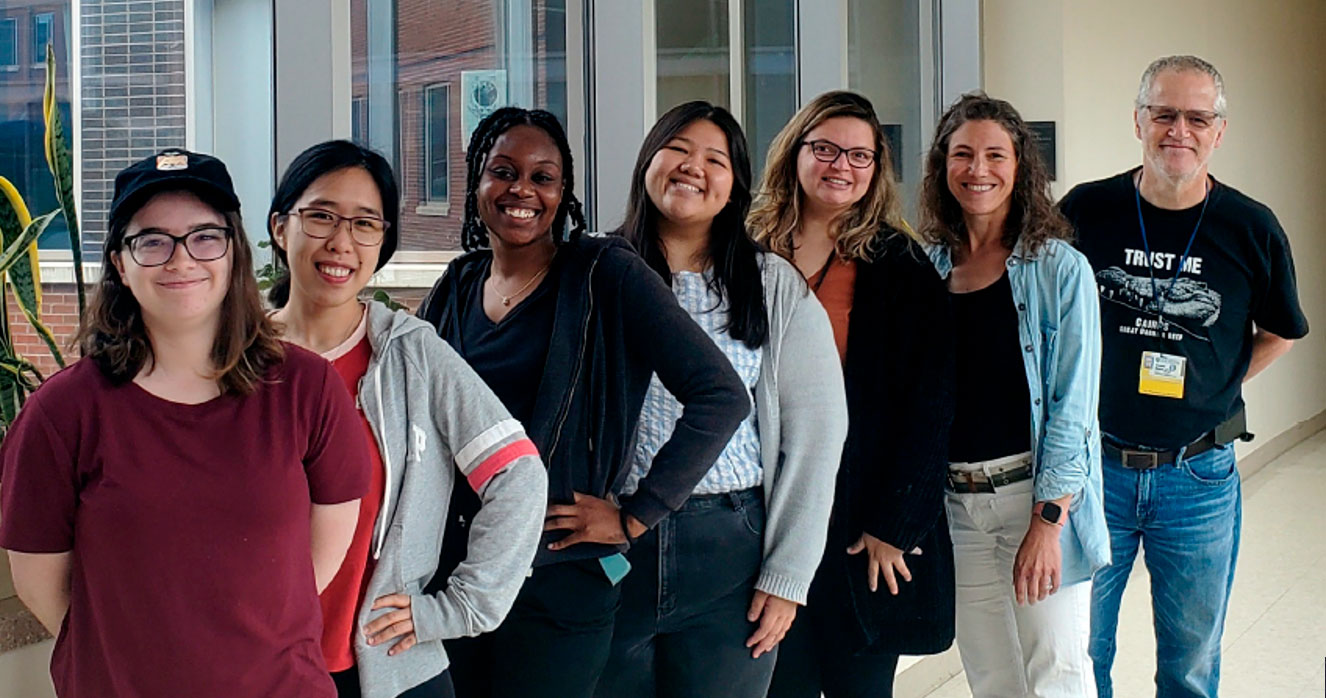
2021-22 PREP cohort from left to right: Jaclyn McCoy, Jia Mei, Tanique McDonald, Helen Chan, Bianca Flores and program directors Elaine Smolock, PhD and Jacques Robert, PhD.
As the 2021-22 Post-baccalaureate Research Education Program (PREP) cohort ends their training this month, SMD is pleased to share that scholars are entering graduate programs that are diverse in both geographic location as well as research.
This year’s cohort will enter programs focused on infectious disease, microbiology, neuroscience, and pharmacognosy across the country including California, New York, Oregon, Tennessee, and Texas.
“In addition to their research success, our scholars have participated in science communication internships developing curriculum for middle school students, been offered provost and training grant fellowships, and have published and presented at multiple meetings and seminars,” said Elaine Smolock, co-director of the PREP program and senior associate for research educational programming and grant development at SMD.
The PREP program is designed to encourage students from historically excluded groups who hold a recent baccalaureate degree in the biomedically-relevant sciences to pursue a research doctorate, and to prepare these trainees for careers as outstanding research scientists and leaders in the biomedical community.
Working directly with faculty mentors, scholars had the opportunity to work on dynamic projects, immersing themselves in research environments and learning how to communicate their results.
Jia Mel, a member of 2021-22 cohort and soon-to-be graduate student at Vanderbilt University, says her research experience in Dr. Paul Dunman’s lab was very rewarding. She worked on projects focused on novel combinations of antibiotics for drug discovery.
“The PREP experience has definitely prepared me to become an independent researcher for graduate school,” she said.
She even had the honor of publishing a first author paper during her PREP year.
“These scholars have exceeded our expectations, and we are excited to see how they contribute to biomedical research in the future,” said Smolock.
The new cohort officially begins on July 5. Here’s a quick look this year’s group:
|
Scholar |
Mentor |
College |
|
Jacob Cody Naccarato |
Bin Zhang |
UNC Chapel Hill |
|
Jackie Agyemang |
Martha Susiarjo |
St. Mary’s College of Maryland |
|
Hunter Houseman |
Brian Ward |
University of Illinois |
|
Aaron Huynh |
Michelle Janelsins |
University of Rochester |
|
Lourdes Marinna Caro Rivera |
Paul Dunman |
University of Puerto Rico Mayaguez |
Welcome to Our 2022 Summer Scholars
Tuesday, May 24, 2022
2022 Summer Scholar
The School of Medicine and Dentistry is excited to welcome the next group of Summer Scholars for 2022! The 27 incoming students make up the largest cohort on record. This year’s group includes students from seven different states, as well as Puerto Rico, representing 15 different universities.
Over the course of the 10 weeks, trainees participate in research/educational seminars and presentations on graduate school and careers, as well as construct a poster outlining their research.
Read More: Welcome to Our 2022 Summer ScholarsDream Engineers: Rochester Postdoc Partnership Scholar Featured on Full Measure News
Wednesday, May 18, 2022
For as much time as we spend sleeping and dreaming, and as long as we’ve studied both, they largely remain ever-mysterious, their exact function and purpose elusive. Michelle Carr, Ph.D., a postdoc in the Rochester Postdoc Partnership, spoke with Full Measure News about the science of sleep, dreams and dream engineering - the idea that one might be able to control their dreams to improve their lives.
Read More: Dream Engineers: Rochester Postdoc Partnership Scholar Featured on Full Measure NewsDoctoral Students Showcase Research in Under Three Minutes
Monday, April 11, 2022
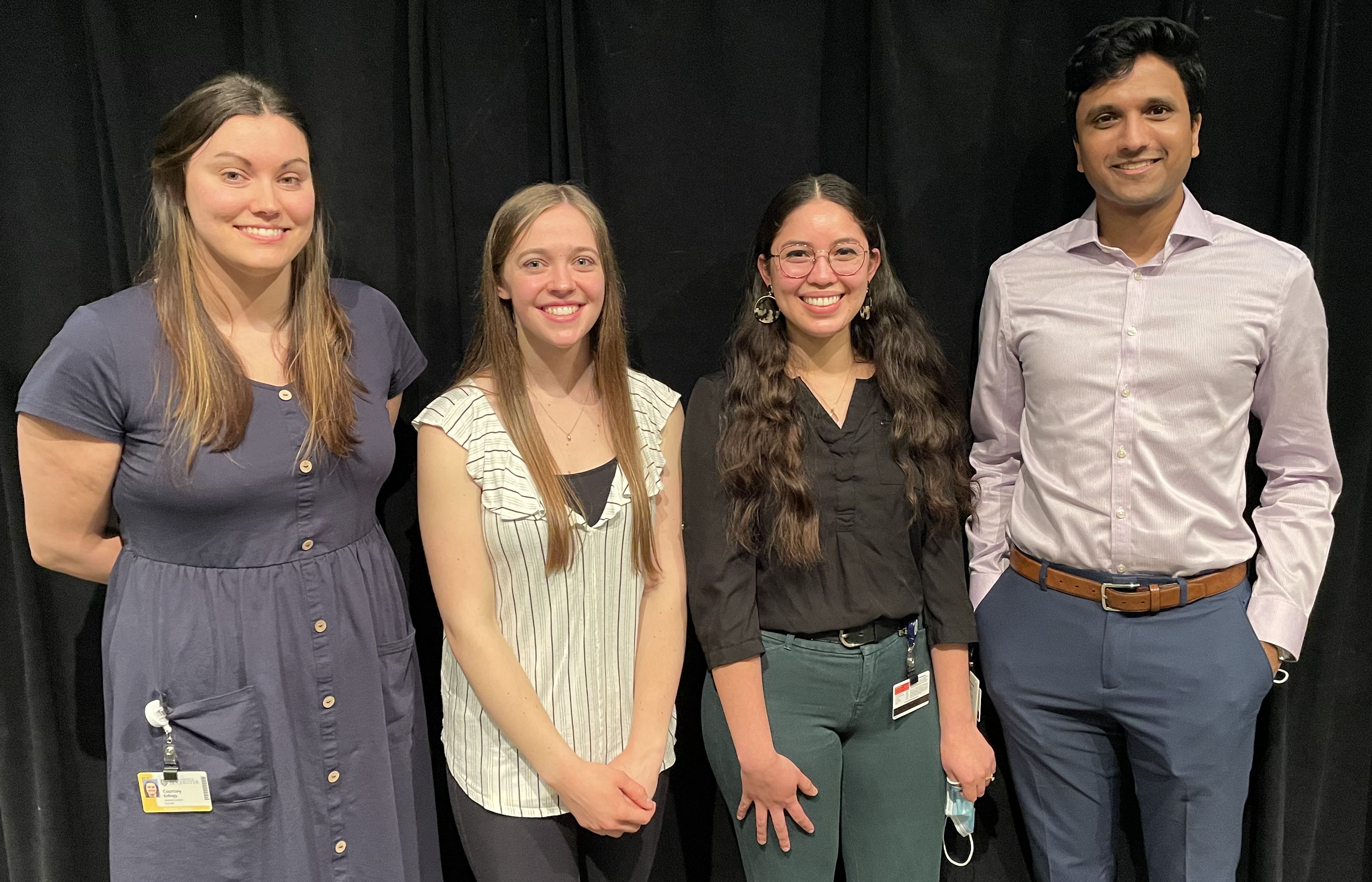
A typical 80,000-word thesis takes roughly nine hours to present. The Three Minute Thesis (3MT) is an academic competition that challenges doctoral students to describe their research within just three minutes to a general audience. Challenge accepted by eight Ph.D. students out of both SMD as well as Arts, Sciences, and Engineering during the event on April 6. Participants were judged on various criteria including comprehension, as well as communication and engagement. Congratulations to the winners!
- People’s choice: Raquel Ajalik, Biomedical Engineering, AS&E, “About time we start-a-tendon clinical trials-on-a-chip” - $250 research travel award
- Tie for second place: Uday Chockanathan, Neuroscience, SMD, “Population coding deficits in Alzheimer’s disease” and Courtney Kellogg, Cell Biology of Disease, SMD, “Are your Hair Cells there?” - $500 research travel award
- First place: Tara Vrooman, Immunology, SMD, Investigating the Long-Term Effects of SBRT/IL-12 Therapy in a Murine Model of Pancreatic Cancer - $750 research travel award
Check out a few pictures from the event on the SMD Instagram page. And you can learn more about 3MT and check out previous winners here.
Rochester Postdoc Partnership Alum Stands in Smithsonian
Tuesday, March 8, 2022
During the month of March, you could bump into University of Rochester alumna Tiffany Panko, MD ('16), MBA, in the Smithsonian's If/Then She Can national exhibit - or at least her life-sized statue. Panko became an American Association for the Advancement of Science If/Then ambassador during her time in the Rochester Postdoc Partnership program, which is the nation's only biomedical postdoc program tailored for deaf scientists.
Read More: Rochester Postdoc Partnership Alum Stands in SmithsonianSarah Latchney, PhD: Teaching to Learn
Thursday, February 17, 2022
Sarah Latchney, Ph.D., is right where she had hoped to be: teaching science at a small, public, liberal arts college.
In the summer of 2019, she was hired as faculty at St. Mary’s College of Maryland. As an assistant professor of Biology and Neuroscience, she predominately teaches introductory-level biology for all incoming Biology and Neuroscience students as well as several introductory and advanced courses in the Neurosciences.
Latchney says she caught the teaching bug after designing and teaching a 200-level undergraduate course in toxicology as part of her training in the Rochester Postdoc Partnership (RPP) program.
Read More: Sarah Latchney, PhD: Teaching to Learn“It was a course that I developed from scratch on my own,” Latchney recalls. “Through that experience, I learned what it truly means to teach at the college level – to be the sole instructor of record and everything that goes into designing a course, implementing it, and interacting with students. It was a lot of work but also lots of fun.”
2021: SMD Research by the Numbers
Thursday, February 10, 2022
Looking at the year that just ended, we have much to celebrate here at SMD. Check out some of our research highlights from 2021!
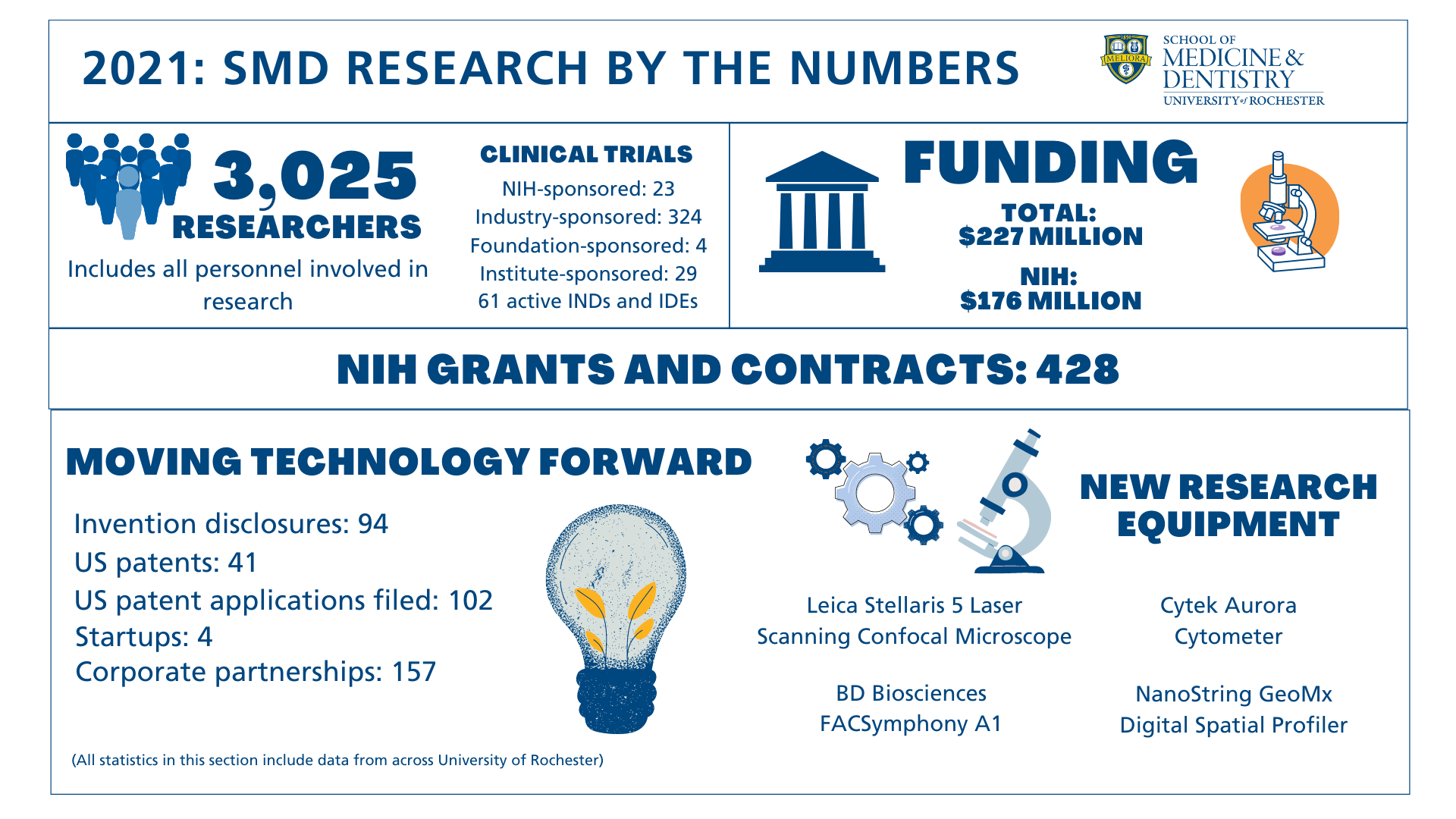
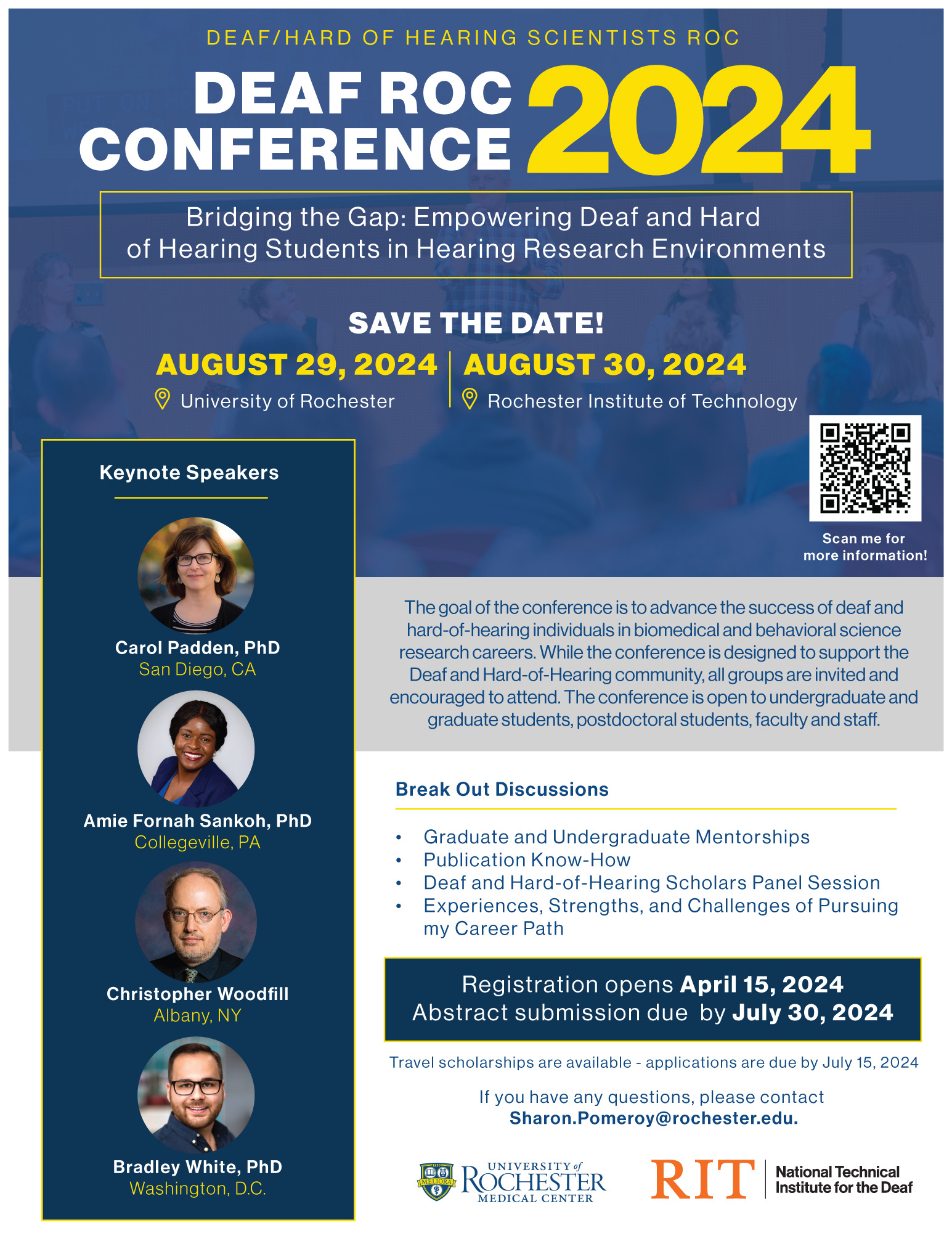
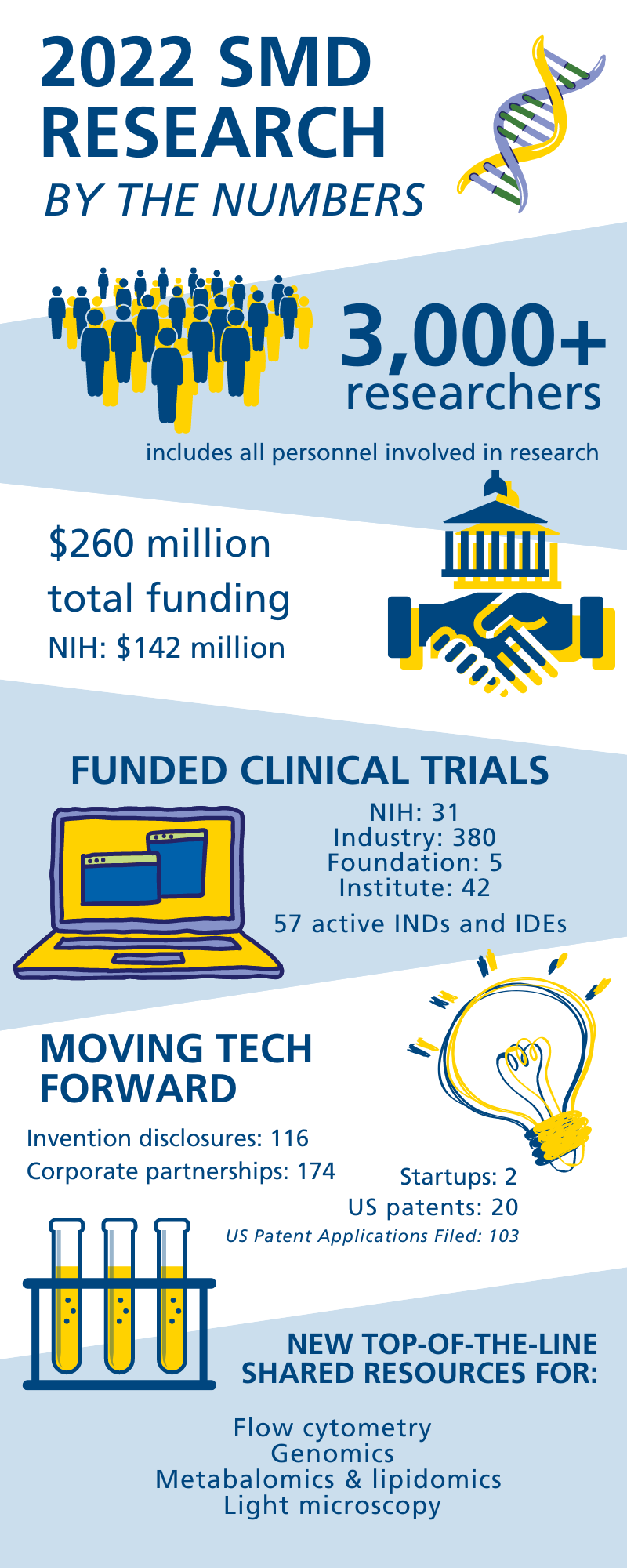
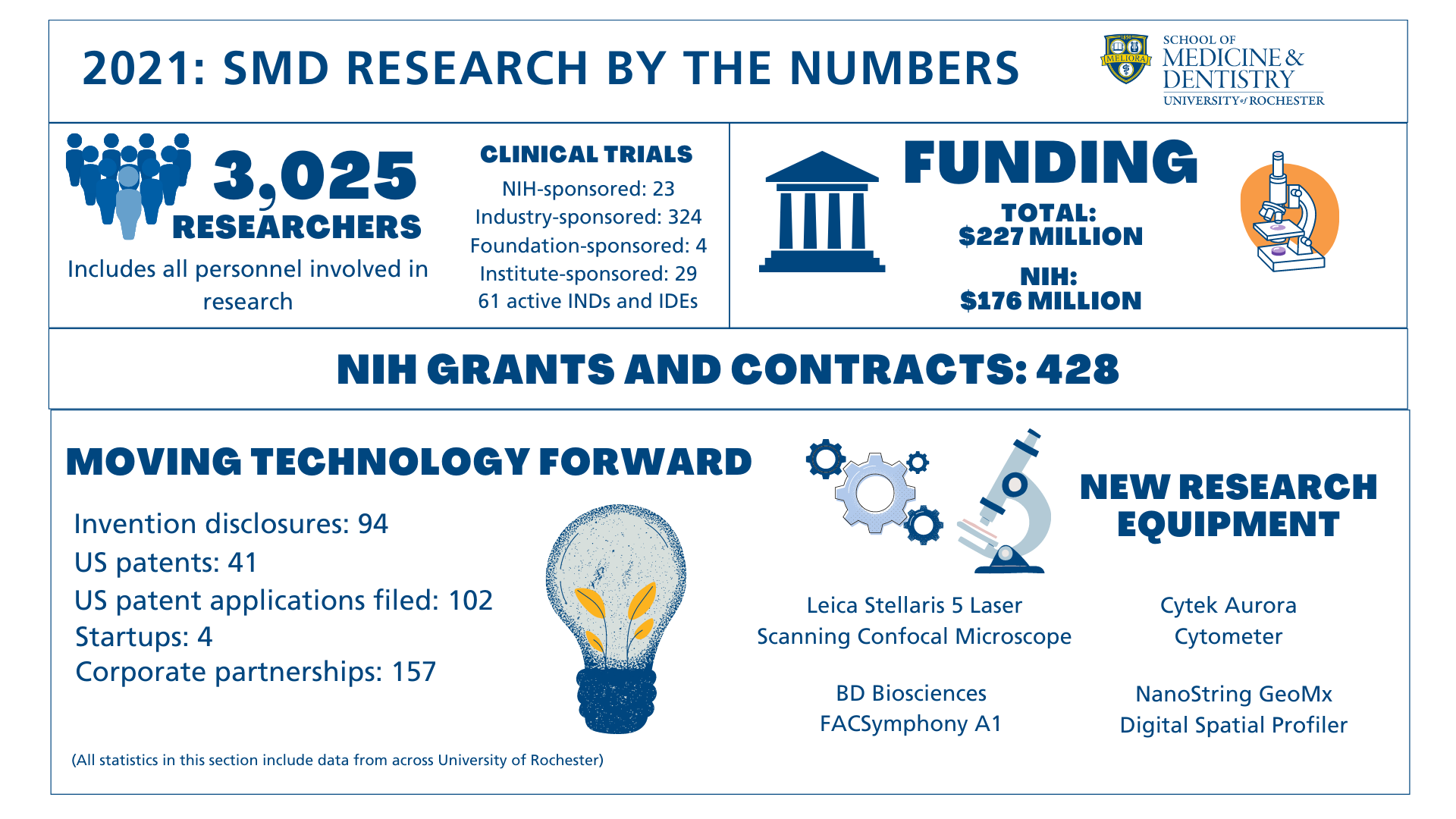
URMC Researchers Work to Address Head & Neck Cancer Survival Disparities in Western NY
Friday, January 28, 2022
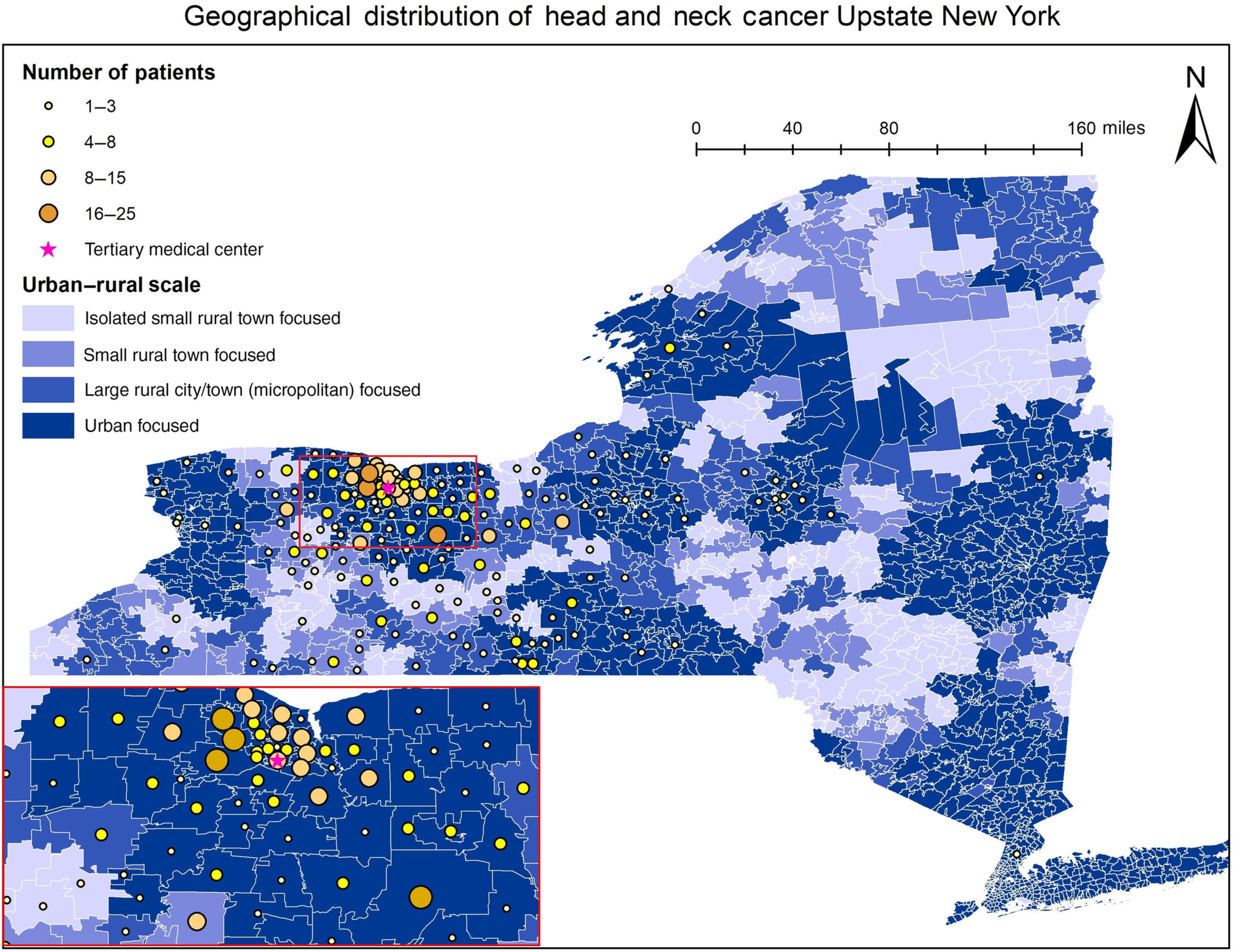
A new study from researchers at the University of Rochester Medical Center (URMC) is shedding light on head and neck cancer survival disparities in Western New York.
Residence in more rural areas of the state is associated with lower five-year overall survival among head and neck cancer (HNC) patients, according to the study published in the journal Head & Neck. It reviewed cases from Wilmot Cancer Institute ranging from 2011 to 2019 and found that HNC patients residing in smaller and more isolated rural towns have double the mortality over a five-year period compared to more urban areas of the state.
Read More: URMC Researchers Work to Address Head & Neck Cancer Survival Disparities in Western NYIn the Pocket: RNA Binding Discovery Supports ‘RNA World’ Theory of Early Life on Earth
Friday, January 14, 2022
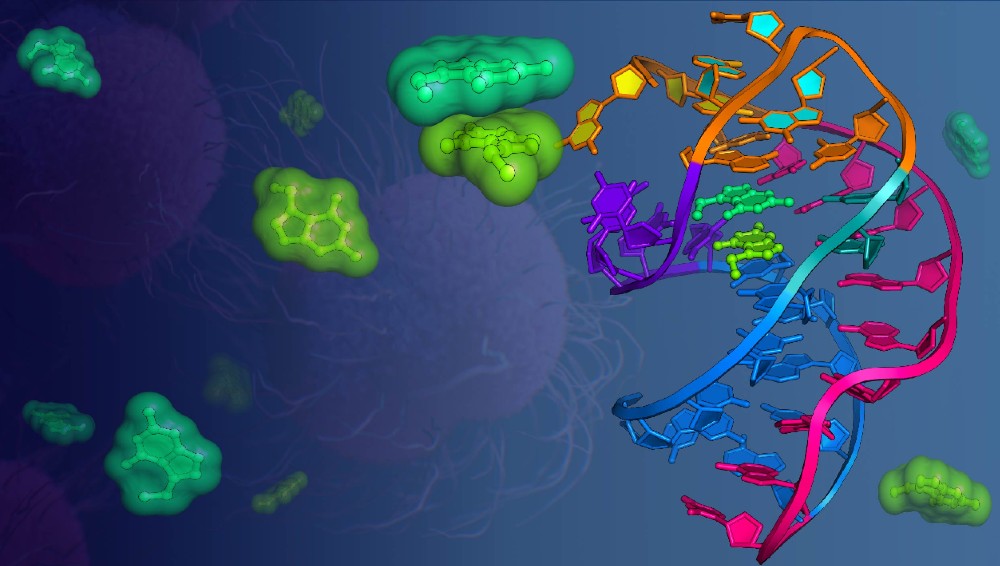
RNA biologists at the University of Rochester Medical Center (URMC) have discovered that RNA, the chemical cousin of DNA, can bind two metabolites (small molecules) at the same time in a single binding pocket, causing those molecules to interact. This discovery, published in Nature Communications this week, could lead to new antibacterial drugs while helping to fill a gap in the controversial “RNA world” theory, which suggests that RNA molecules enabled life to evolve on Earth 3.5 billion years ago.
Read More: In the Pocket: RNA Binding Discovery Supports ‘RNA World’ Theory of Early Life on Earth
“Education is key.” Neuroscientist Nathan A. Smith, Ph.D. ('13), returns in leadership role
Thursday, January 13, 2022
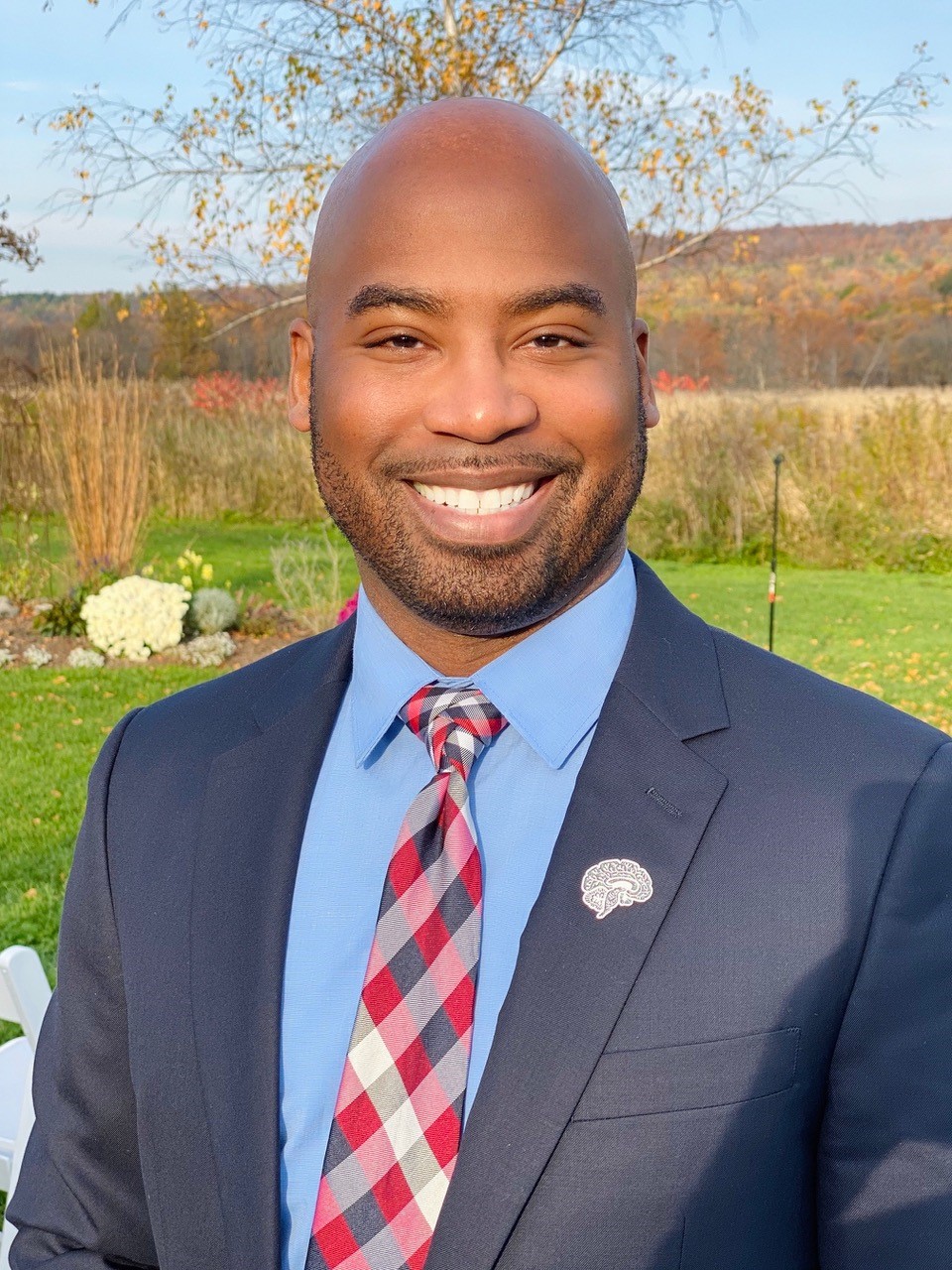
Nathan A. Smith, M.S. (’10), Ph.D. (’13), is returning to the University of Rochester as an associate professor of Neuroscience and associate dean for Equity and Inclusion in Research and Research Education in the School of Medicine and Dentistry.
The first Black graduate of the Neuroscience Graduate Program at the University of Rochester, Smith sees his return to campus as a way to make sure the bright minds in underserved communities have equal education opportunities. He is eager to begin working closely with current learners and being a role model for them and finding ways to enhance the recruitment of postdoctoral fellows, graduate students, and faculty of color, as well as women.
“I believe in the mission at the University of Rochester School of Medicine and Dentistry and the Del Monte Institute for Neuroscience,” Smith said. “I think that by putting the right people at the table, we can make a substantial change in the areas of diversity, equity, and inclusion. I want to be a part of that and make sure we get it right. Rochester has the potential to be the blueprint for other organizations. To set an example and change the future of science for all.”
Postdoctoral trainee Choongheon Lee and Neuroscience Graduate Program student Anjali Sinha lead new research focused on the entry of drugs into the inner ear
Friday, January 7, 2022
The study, titled Characterizing the Access of Cholinergic Antagonists to Referent Synapses in the Inner Ear, looks to understand the rules governing drug entry into peripheral sensory end organs.
Vestibular and auditory dysfunction and their associated clinical manifestations represent a significant and increasing health burden, according to Lee and his team. Selective pharmacological targeting of distinct cellular mechanisms in the inner ear, while avoiding similar targets in the central nervous system (CNS), might offer a set of viable clinical tools and specific treatment strategies.
Read More: Postdoctoral trainee Choongheon Lee and Neuroscience Graduate Program student Anjali Sinha lead new research focused on the entry of drugs into the inner earSpiritual Well-Being in Family Caregivers for Those with Parkinson’s
Wednesday, December 15, 2021
Benzi Kluger, professor in the Department of Neurology and Medicine and director of the Palliative Care Research Center and Neuropalliative Care Service at URMC, recently studied predictors of spiritual well-being in family caregivers for individuals with Parkinson’s Disease. His work appeared in the Journal of Palliative Medicine.
Kluger has been doing work specific to palliative care for people with Parkinson’s for almost 10 years, but says his work can be applied to those caring for individuals with dementia, brain cancer, ALS and other chronic illnesses.
His team collected data on spirituality 1 in hopes to more quickly be able to anticipate and identify people who are at risk for poor spiritual well-being and determine what can be done to build up resilience.
Read More: Spiritual Well-Being in Family Caregivers for Those with Parkinson’sVera Gorbunova, Ph.D. Kicks off Dean's Lecture Series
Sunday, December 12, 2021
Vera Gorbunova, Ph.D. is a Doris Johns Cherry Professor of Biology and Medicine and is co-director of the University of Rochester Aging Research Center. Her research is focused on understanding the mechanisms of longevity and genome stability and on the studies of exceptionally long-lived mammals. Her work has received awards from the Ellison Medical Foundation, the Glenn Foundation, the American Federation for Aging Research, and the National Institutes of Health.
Gorbunova gave the inaugural lecture of the newly established Dean's Lecture Series on Dec. 6, 2021. The series is intended to showcase high-caliber research and high-impact topics in clinical medicine and related biomedical fields. The presentations are targeted to a broad audience of investigators and trainees from multiple areas of clinical medicine, public health, and life science research, as well as for interested members of the university community and the public at large. The George D. and Freida B. Abraham Foundation are sponsoring this series.
Check out the full replay of Gorbunova's lecture: Mechanisms of Longevity: Lessons from Long-Lived Mammals with Vera Gorbunova, Ph.D
Stay tuned for information on future Dean's Lecture Series events.
Represent UofR in This Year’s STAT Madness Bracket Competition
Thursday, December 2, 2021

This year marks the sixth annual STAT Madness competition, where universities, medical schools, and nonprofit research institutions compete for recognition that they have produced the most exciting biomedical discovery or innovation of the past year. We want Rochester to be represented and we need your help!
Have you and your lab or team worked on a particularly interesting, innovative or cool project in the past year? If you have, please send a high-level synopsis (3-5 sentences) to myhub@urmc.rochester.edu by December 31, 2021 to be considered for entry into the competition. Please do not fill out the entry form on the STAT Madness site. Our Communications team will submit up to three entries on behalf of SMD. To learn more about the competition check out the official rules and FAQs.
During the competition, we’ll be posting all about your extraordinary science on the SMD social media channels, encouraging the entire UofR community to get behind your work and vote. Let’s go Rochester!
Grant to Combat Vaccine Hesitancy in Adolescents
Tuesday, November 16, 2021
Researchers in Environmental Medicine have received an award from NIH to address vaccine hesitancy and improve health literacy among middle and high school students. The team will work with Rochester-area teachers and health professionals to teach students about how COVID-19 spreads, how COVID testing works, what RNA is, and how the vaccine works.
Read More: Grant to Combat Vaccine Hesitancy in AdolescentsAll eyes on vision restoration with latest NEI Audacious Goals Initiative Grant
Tuesday, November 9, 2021
Juliette McGregor, Ph.D., assistant professor in the Department of Ophthalmology, leads one of three new projects funded by the National Eye Institute's Audacious Goals Initiative (AGI) aimed at testing regenerative therapies for blindness due to retinal degeneration and monitoring transplanted cells as they integrate with host tissues.
UR Researchers Part of Effort to Create Atlas of Cells to Study Age-Related Diseases
Monday, November 8, 2021
University of Rochester scientists are part of a consortium of institutions recently awarded $31 million to build a molecular atlas of human senescent cells. These cells, which are not very well understood, are believed to contribute to a number of age-related diseases, including chronic lung disease, cardiovascular disease, dementia, and cancer.
Read More: UR Researchers Part of Effort to Create Atlas of Cells to Study Age-Related DiseasesPediatric Practice Provides Roadmap for COVID-19 Vaccination of Patients and Caregivers
Monday, October 18, 2021
Golisano Children’s Hospital (GCH) Pediatric Practice in Rochester, NY demonstrated success in vaccinating eligible patients as well as their caregivers by offering the vaccine to both during pediatric visits and provides a model for addressing vaccine hesitancy and barriers, according to an October 8th article published in JAMA Pediatrics’ Viewpoint.
Read More: Pediatric Practice Provides Roadmap for COVID-19 Vaccination of Patients and CaregiversAnn Falsey, M.D. Recognized for Leadership in RSV Research
Tuesday, October 12, 2021
 Ann Falsey, M.D., was recognized for her contribution to research on the respiratory syncytial virus (RSV) during IDWeek, the largest annual gathering of infectious disease researchers in the U.S. Falsey delivered the named John F. Ender Lecture and also presented new clinical trial results on an RSV vaccine being developed by Janssen.
Lancet Review: Mental illness and suicide among physicians
Thursday, October 7, 2021
Dr. Ronald Epstein, M.D., professor in the department of Family Medicine, and other researchers highlight the need for individual and organizational interventions to better protect the mental wellbeing of physicians in a new review featured in The Lancet.
Read More: Lancet Review: Mental illness and suicide among physiciansThree PhD Students Honored with SMD Equity and Inclusion Award
Tuesday, September 28, 2021
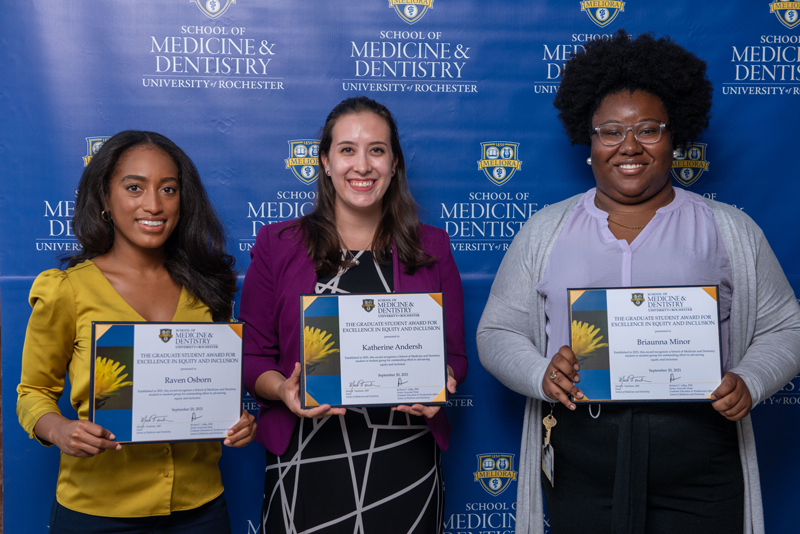
The School of Medicine and Dentistry (SMD) welcomed students, honored excellence, and marked the official start of a new academic year with Opening Convocation held on Sept. 20.
Read More: Three PhD Students Honored with SMD Equity and Inclusion AwardA record-breaking start for 155 new SMD graduate students!
Tuesday, September 14, 2021
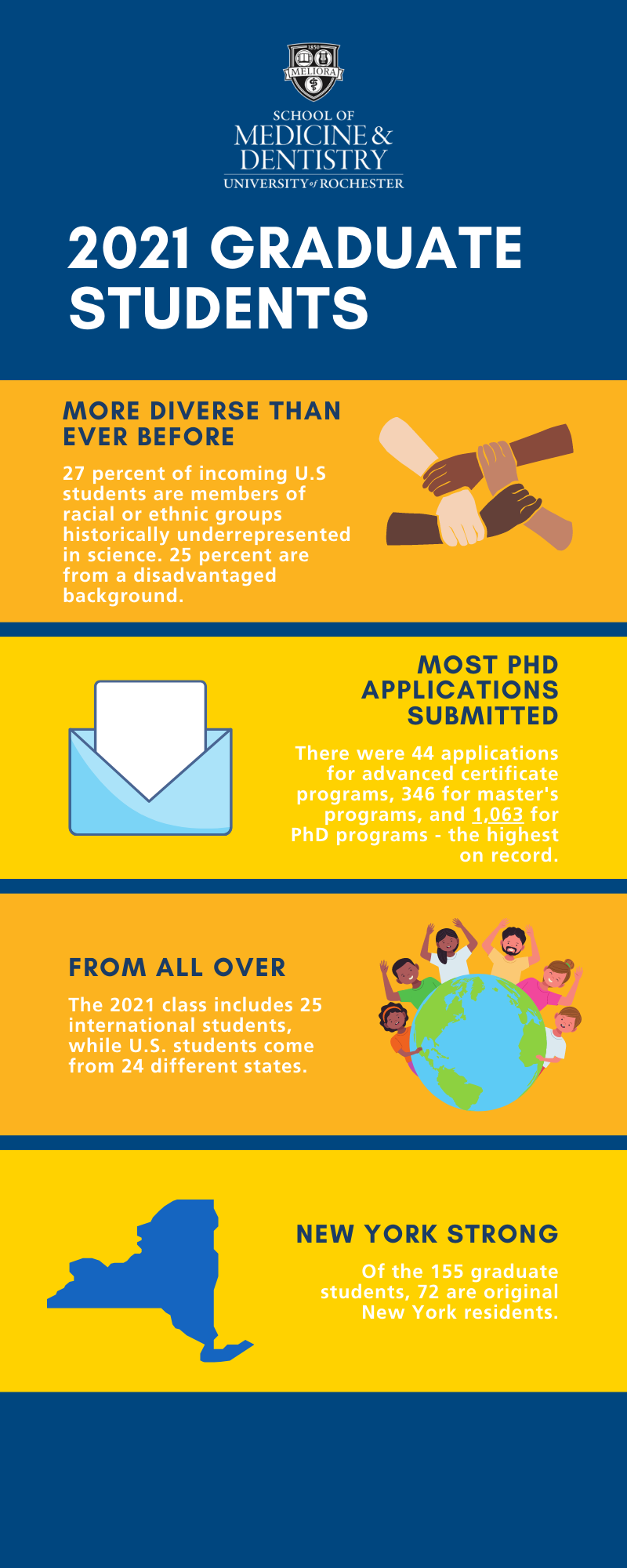
Despite being in the midst of a worldwide pandemic during our 2021 graduate school application cycle, the University of Rochester School of Medicine and Dentistry received 1,063 applications for Ph.D. programs – the highest on record. In addition, there were 346 applications for master’s programs and 44 for advanced certificate programs.
Grad students are helping make research more accessible
Monday, September 13, 2021
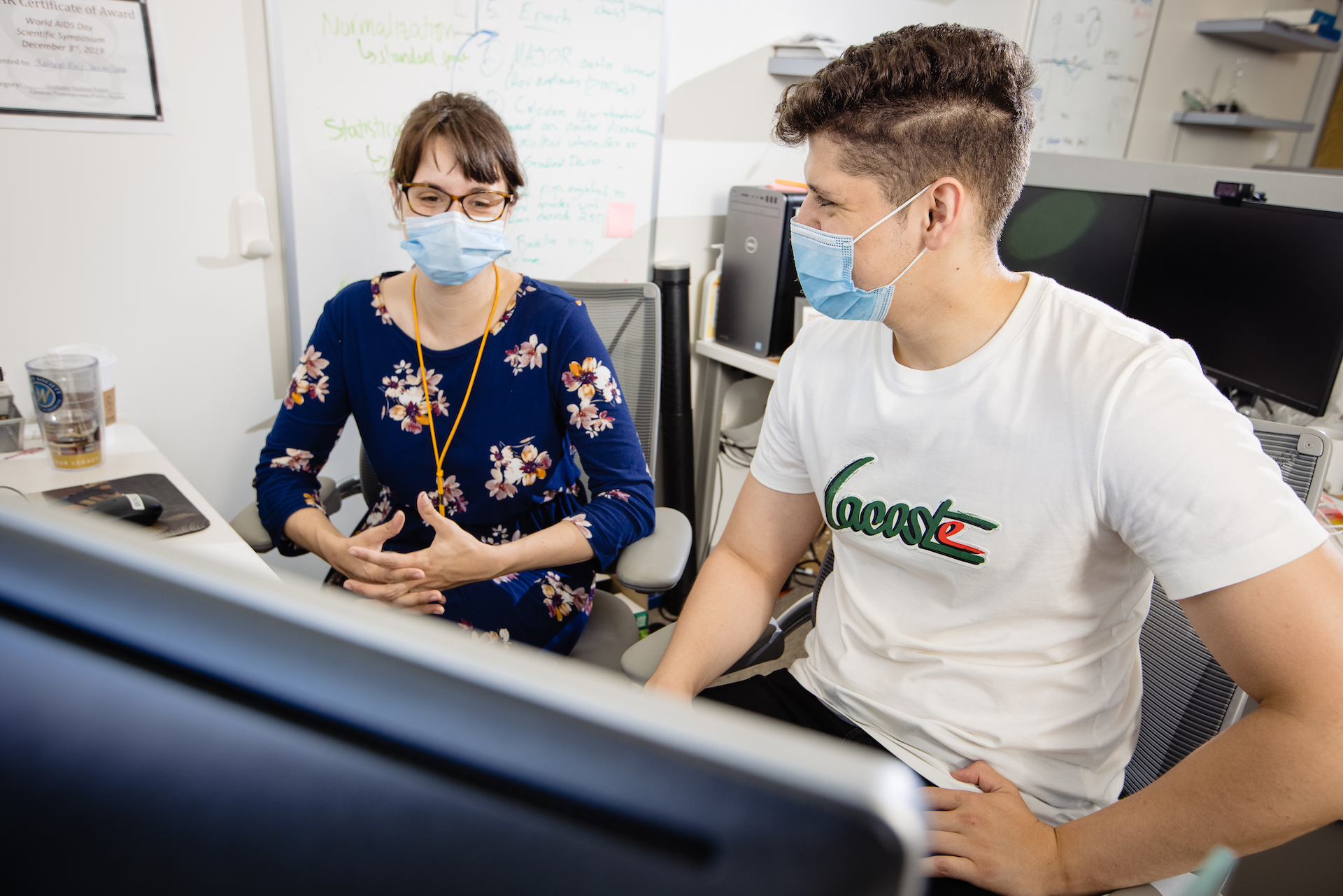
Mark Stoessel and Kathryn-Mary Wakim, part of the Neuroscience Graduate Program at the University of Rochester, were bench mentors for two of the eight students in the NEUROCITY program.
Read More: Grad students are helping make research more accessibleRui Li, PhD candidate in epidemiology, leads study on recovery process from moderate to severe chronic pain later in life.
Friday, July 23, 2021
In a study led by Rui Li, PhD candidate in epidemiology, researchers look at the recovery process from moderate to severe chronic pain later in life, highlighting physical activity and sleep quality as important avenues for recovery.
Read More: Rui Li, PhD candidate in epidemiology, leads study on recovery process from moderate to severe chronic pain later in life.Clinical Cardiovascular Research Center Awarded $17M in New Grants
Thursday, July 15, 2021
The University of Rochester Clinical Cardiovascular Research Center (CCRC) has received fve new grants totaling more than $17 million over five years from both the National Institutes of Health (NIH) and Abbott. The grants will support research in treatment of atrial fibrillation (AF), device therapy for heart failure, and management of Left Ventricular Assist Device (LVAD) patients. https://www.urmc.rochester.edu/clinical-cardiovascular-research/news.aspx
Read More: Clinical Cardiovascular Research Center Awarded $17M in New GrantsUR Graduate Women in Science (GWIS) 2021 Mentoring-Up Resolution Challenge CONTEST RESULTS
Monday, May 24, 2021
Congratulations, Mentoring-Up Resolution Challenge Winners!
Full-time UR grad students (gender-inclusive) in biomedical, biological, or chemical sciences took charge of their futures by setting and, through mentoring-up, achieving professional and personal goals for Spring 2021. Participants submitted their goals in a January write-up and progress reports on their professional goals in May. The anonymous faculty evaluation committee selected finalists to present on May 20th. All four presenters were selected to win $1500 ea. in technology-related (hardware, software, and/or peripherals) prizes. Of note, submissions for this contest were received from graduate students of 12 different programs!
Graduate Women in Science Receives 2021 Best of Rochester Award
Tuesday, May 4, 2021
Graduate Women in Science has been selected for the 2021 Best of Rochester Award in the University category by the Rochester Award Program.
Each year, the Rochester Award Program identifies companies that we believe have achieved exceptional marketing success in their local community and business category. These are local companies that enhance the positive image of small business through service to their customers and our community. These exceptional companies help make the Rochester area a great place to live, work and play.
Various sources of information were gathered and analyzed to choose the winners in each category. The 2021 Rochester Award Program focuses on quality, not quantity. Winners are determined based on the information gathered both internally by the Rochester Award Program and data provided by third parties.
About Rochester Award Program
The Rochester Award Program is an annual awards program honoring the achievements and accomplishments of local businesses throughout the Rochester area. Recognition is given to those companies that have shown the ability to use their best practices and implemented programs to generate competitive advantages and long-term value.
The Rochester Award Program was established to recognize the best of local businesses in our community. Our organization works exclusively with local business owners, trade groups, professional associations and other business advertising and marketing groups. Our mission is to recognize the small business community's contributions to the U.S. economy.
Researchers find breastfeeding linked to higher neurocognitive testing scores
Monday, April 26, 2021
New research finds that children who were breastfed scored higher on neurocognitive tests. Researchers in the Del Monte Institute for Neuroscience at the University of Rochester Medical Center (URMC) analyzed thousands of cognitive tests taken by nine and ten-year-olds whose mothers reported they were breastfed, and compared those results to scores of children who were not.
"Our findings suggest that any amount of breastfeeding has a positive cognitive impact, even after just a few months." Daniel Adan Lopez, Ph.D. candidate in the Epidemiology program who is first author on the study recently published in the journal Frontiers in Public Health. "That's what's exciting about these results. Hopefully from a policy standpoint, this can help improve the motivation to breastfeed."
Hayley Martin, Ph.D., a fourth year medical student in the Medical Scientist Training Program and co-author of the study, focuses her research on breastfeeding. "There's already established research showing the numerous benefits breastfeeding has for both mother and child. This study's findings are important for families particularly before and soon after birth when breastfeeding decisions are made. It may encourage breastfeeding goals of one year or more. It also highlights the critical importance of continued work to provide equity focused access to breastfeeding support, prenatal education, and practices to eliminate structural barriers to breastfeeding."
Researchers reviewed the test results of more than 9,000 nine and ten-year-old participants in the Adolescent Brain Cognitive Development (ABCD) study. Variations were found in the cumulative cognitive test scores of breastfed and non-breastfed children. There was also evidence that the longer a child was breastfed, the higher they scored.
"The strongest association was in children who were breastfed more than 12 months," said Lopez. "The scores of children breastfed until they were seven to 12 months were slightly less, and then the one to six month-old scores dips a little more. But all scores were higher when compared to children who didn't breastfeed at all." Previous studies found breastfeeding does not impact executive function or memory, findings in this study made similar findings.
"This supports the foundation of work already being done around lactation and breastfeeding and its impact on a child's health," said Ed Freedman, Ph.D., the principal investigator of the ABCD study in Rochester and lead author of the study. "These are findings that would have not been possible without the ABCD Study and the expansive data set it provides."
Ian Krout wins the People’s Choice award for SOT’s 3 Minute Thesis, 2nd place in the University of Rochester's 3 Minute Thesis Competitions
Thursday, April 15, 2021
Ian Krout
Congratulations to Ian Krout for winning the People's Choice award for SOT's 3 Minute Thesis and 2nd place in the University of Rochester's 3 Minute Thesis Competitions! Krout is a 3rd year Toxicology student, in Matt Rand's Lab, whose interests lie in both methylmercury toxicity as well as the gut microbiomes role in the field of toxicology. His research is focused on elucidating the microbial mechanisms of the gut that give rise to inter-individual differences in methylmercury elimination from person to person. It is focused on investigating the bacterial species at play in the microbiome, the mechanisms used for biotransformation, and what this means for the overall elimination rate and subsequent toxicity of differing mercury compounds.
Congrats Ian!
Wedekind lab research featured on the cover of JBC “The Year in JBC: 2020" issue
Friday, February 12, 2021
Congratulations to Shashank Chavali, Dr. Sachitanand Mali, Dr. Jermaine Jenkins, Dr. Rudi Fasan, and Dr. Joseph Wedekind for being featured on the cover of JBC "The Year in JBC: 2020" issue. Their recent research article, published in the Journal of Biological Chemistry (JBC) December 4, 2020 issue, titled "Co-crystal structures of HIV TAR RNA bound to lab-evolved proteins show key roles for arginine relevant to the design of cyclic peptide TAR inhibitors" has been selected as the representative 'RNA' article for 2020 retrospective collection called "The Year in JBC: 2020."
The cover art below, shows a collage of fluorescence complementation experiments between the [4Fe-4S]-transferring NFU1 and potential partners (performed by Roland et al.), crystal structure overlays of HIV-1 TAR RNA with lab-evolved TAR-binding proteins (reported by Chavali et al.), nonmelanized yeast cells (explored by Chrissian et al.) and a cryo-EM structure of STEAP1, now thought to function as a ferric reductase in heterotrimer form (reported by Oosterheert and Gros). Artwork created by EJ Marklin.
Read More: Wedekind lab research featured on the cover of JBC "The Year in JBC: 2020" issue
Lynne Maquat Awarded 2021 Wolf Prize in Medicine
Tuesday, February 9, 2021
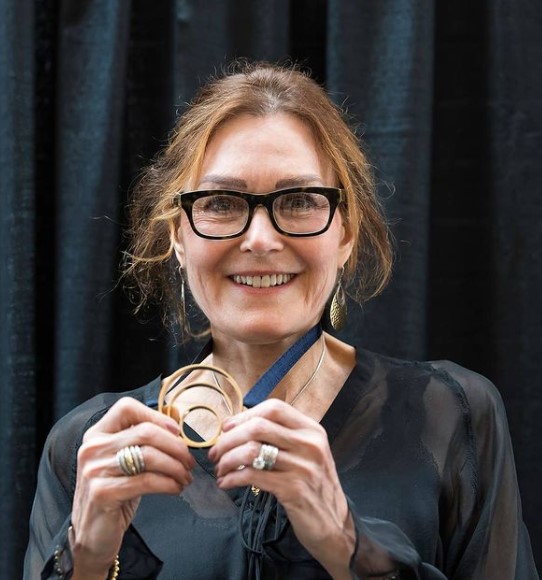
Lynne E. Maquat, Ph.D., the founding director of the Center for RNA Biology at the University of Rochester, was honored with the 2021 Wolf Prize in Medicine. The acclaimed international award is given to outstanding scientists from around the world for achievements that benefit mankind.
Maquat was selected for "fundamental discoveries in RNA biology that have the potential to better human lives." She has spent her career deciphering the many roles that RNA plays in sickness and in health, and is well known for her discovery of nonsense-mediated mRNA decay or NMD. One of the major surveillance systems in the body, NMD protects against mistakes in gene expression that lead to disease. Maquat's lab also revealed that NMD helps our cells adjust to changes in development and in their environment, and more rapidly respond to certain stimuli.
Maquat shares the award with Joan Steitz, Ph.D., Sterling Professor of Molecular Biophysics and Biochemistry at Yale School of Medicine and Adrian Krainer, Ph.D., St. Giles Foundation Professor and Cancer Center Deputy Director of Research at Cold Spring Harbor Laboratory. Steitz and Krainer were also honored for discoveries in RNA biology.
The Wolf Foundation, which celebrates exceptional achievements in the sciences and the arts, is based in Israel, where Maquat's quest to unravel the intricacies of NMD began. In 1980 she traveled to Jerusalem to retrieve bone marrow samples from four children suffering from thalassemia major, the most severe form of the inherited blood disorder thalassemia. Maquat wanted to learn why the children's marrow contained no beta-globin protein, which is necessary for the oxygen-carrying function of red blood cells. Her 1981 breakthrough manuscript, "Unstable beta-globin mRNA in mRNA-deficient beta0 thalassemia," published in Cell, was the first to reveal the role of NMD in human cells and how it can lead to disease.
"Lynne's work on nonsense-mediated mRNA decay is the bedrock of an ever-growing body of research on how mRNAs are monitored and regulated," said Mark B. Taubman, M.D., dean of the University of Rochester School of Medicine and Dentistry. "Her dedication to her science and to the field of RNA biology has opened the door to the development of RNA-based therapeutics for a wide range of disorders that you can't reach with conventional drugs. We're thrilled that her contributions are being recognized with this prestigious award."
RNA secured its place in the public eye in 2020 with the development and approval of multiple mRNA COVID-19 vaccines. Years of research by Maquat, Steitz and Krainer helped set the stage for the rapid development of these vaccines.
The J. Lowell Orbison Endowed Chair and Professor in the Department of Biochemistry and Biophysics at the University of Rochester School of Medicine and Dentistry, Maquat is the recipient of several other significant honors, including:
- Wiley Prize in Biomedical Sciences (2018)
- Vanderbilt Prize in Biomedical Science (2017)
- Canada Gairdner International Award (2015)
- RNA Society's Lifetime Achievement Awards in Service (2010) and in Science (2017)
- Election to the National Academy of Medicine (2017), the National Academies of Sciences (2011) and the American Academy of Arts and Sciences (2006) More about Nonsense-Mediated mRNA Decay
Winners of the Wolf Prize are selected annually by an international jury committee of the Wolf Foundation; prizes are awarded regardless of religion, gender, race, geographical region, or political view. The official announcement of this year's prize by the President of the State of Israel, Reuven Rivlin, was made on February 9, 2021.
Miriam Barnett chosen to be a 2021 ASPET Washington Fellow
Tuesday, January 19, 2021
Miriam Barnett
Miriam Barnett, a Pharmacology graduate student in Dr. Jean Bidlack's lab, was chosen to be a 2021 American Society for Pharmacology and Experimental Therapeutics (ASPET) Washington Fellow. The mission of the ASPET Washington Fellows Program is to enable developing and early career scientists interested in science policy to learn about and become more engaged in public policy issues. Miriam's selection was based on her strong interest in science and its intersection with public policy. As an ASPET Washington Fellow, Miriam will meet with congressional representatives and staff to advocate for the importance of biomedical research.
Daniel Steiner Wins The Sayeeda Zain Fall 2020 Travel Award
Friday, December 4, 2020
Congratulations to Dan Steiner for winning a Sayeeda Zain Fall travel award. Dan is planning to attend the SPIE Photonics West meeting, to be held at the Moscone Center, San Francisco, California, March 6-11, 2021, He states "I am excited to represent our department and present my work in San Francisco (virtually or otherwise) . Networking and reaching out to labs and PIs at this conference will help me learn more about the entrepreneurial side of science and how to develop my career after I defend." The Sayeeda Zain Travel Award honors the distinguished career and charitable life of Dr. Sayeeda Zain. The award is given in recognition of research excellence to support expenses associated with attendance at a scientific conference or corporate internship to gain practical experience. Dan Steiner is a Biophysics graduate student studying in Dr. Ben Miller's lab
Karl Foley, Receives NIH F30 Award
Thursday, November 19, 2020
Karl Foley, an MSTP graduate student, has received an NIH F30 award starting Feb 1, 2020 for his research in the Xia lab.
Project title: "Protein phosphatase 1 isoforms and human de novo mutations in synaptic plasticity"
Agency: NIMH (F30MH122046), $50K total/year for four years starting 2/1/2020
Congrats Karl!
Nazish Jeffery, Biochemistry Ph.D. Candidate Pens Guest Column in the Democrat & Chronicle on Scientists’ Need to Communicate Clearly to the Public
Monday, October 19, 2020
Nazish Jeffery
Graduate student Nazish Jeffery published an editorial-style column entitled "Scientists Must Communicate More Clearly" which appeared on the Opinion page of the Sunday, October 4th edition of the Democrat and Chronicle. Ms. Jeffery argues that scientist have a civic duty to clearly inform and educate the public and public officials with regard to the results of biomedical research. She states "As scientists, our civic duty becomes twofold. Not only must we better our understanding of the world through research, we also need to use our training and expertise to help inform who govern so they can craft policies that are scientifically sound." Ms. Jeffery will be taking a brief hiatus from her laboratory research in Michael Bulger's lab to remotely participate in an internship with the American Institute of Biological Sciences in Washington DC, where she will focus on science and public policy.
Dr. Robert Freeman Selected As 2020 Outstanding Graduate Course Director
Tuesday, September 1, 2020
Dr. Robert Freeman has been selected as this year's recipient of the Outstanding Graduate Course Director Award. Established in 2013, this award is based on the course's record of excellence based on course-instructor survey evaluations and letters of recommendation from students enrolled in the course.
This award comes with $1,000, to be paid as unrestricted education support monies (for education-related expenses such as travel to professional meetings, work-related computers, textbooks, courses, etc.) and is available immediately.
The award will be presented at the School of Medicine and Dentistry Convocation Ceremony. The Virtual Convocation Celebration will be posted to the following websites at 5pm on Monday, September 14th:
- https://www.urmc.rochester.edu/education/graduate.aspx
- https://www.urmc.rochester.edu/education/md.aspx
- https://www.urmc.rochester.edu/education.aspx
- https://www.urmc.rochester.edu/smd.aspx
The department would like to congratulate Bob on this recognition, as it is a well-deserved honor.
Halima Aweis Wins Graduate Alumni Fellowship Award
Tuesday, September 1, 2020
Halima Aweis has been selected by our faculty to be one of this year's recipients of the Graduate Alumni Fellowship Award. Graduate alumni in the School of Medicine and Dentistry established this fellowship award to recognize an incoming graduate student's promise for exceptional accomplishment in graduate study.
The award, which includes a monetary prize of $500, will be presented at the School of Medicine and Dentistry Convocation Ceremony. The Virtual Convocation Celebration will be posted to the following websites at 5pm on Monday, September 14th:
- https://www.urmc.rochester.edu/education/graduate.aspx
- https://www.urmc.rochester.edu/education/md.aspx
- https://www.urmc.rochester.edu/education.aspx
- https://www.urmc.rochester.edu/smd.aspx
Congratulations Halima!
Romeo Blanc Selected to be this year’s recipient of the Outstanding Postdoctoral Researcher Award
Tuesday, September 1, 2020
Post-doctoral associate, Romeo Blanc, in the lab of Dr. Joe v. Chakkalakal has been selected to be this year's recipient of the Outstanding Postdoctoral Researcher Award. This award was established in 2015 to recognize a School of Medicine and Dentistry postdoc for outstanding research contributions. The selection was based on the originality, creativity, and significance of your research accomplishment.
The award will be presented at the School of Medicine and Dentistry Convocation Ceremony. The Virtual Convocation Celebration will be posted to the following websites at 5pm on Monday, September 14th:
- https://www.urmc.rochester.edu/education/graduate.aspx
- https://www.urmc.rochester.edu/education/md.aspx
- https://www.urmc.rochester.edu/education.aspx
- https://www.urmc.rochester.edu/smd.aspx
Congratulations on being chosen for this award, Romeo!
IMV Grad Student Megan Ulbrich Wins the Melville A. Hare Award for Excellence in Teaching
Friday, June 5, 2020
Please join the department in congratulating Megan Ulbrich, this year's winner of the Melville A. Hare Award for Excellence in Teaching. This award is given annually by the Department of Microbiology and Immunology to a graduate student who has displayed outstanding qualities of mentoring and teaching in one or more MBI courses. The award will be officially conferred at URMC Convocation in the late summer.
Megan is currently an IMV graduate student in Michelle Dziejman's lab working on multidisciplinary approaches to uncover novel effector protein functions. Megan grew up in Buffalo, NY and received her B.S. in Microbiology from the University of Pittsburgh.
This week’s URMC Research Heroes featured the Maquat lab’s Tatsuaki Kurosaki, PhD, and Shuhei Mitsutomi, MS
Wednesday, June 3, 2020
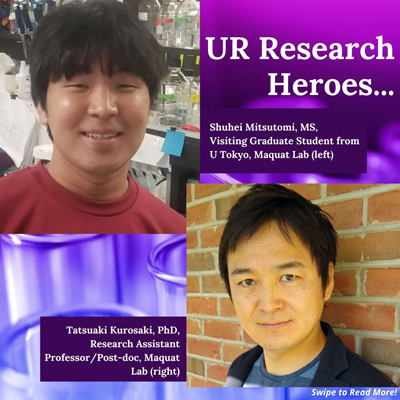
This week's URMC Research Heroes featured the Maquat lab's Tatsuaki Kurosaki, PhD, and Shuhei Mitsutomi, MS, who were recognized today for their work on SARS-CoV-2.
https://www.instagram.com/p/CA-QN7oAl07/
Both Tatsuaki and Shuhei have worked as members of the Maquat Lab (Center for RNA Biology and the Department of Biochemistry & Biophysics) during the sequestration on SARS-CoV-2, collaborating with a lab at Harvard to determine the mechanism by which the virus inhibits human-cell nonsense-mediated mRNA decay (NMD) so as to express and replicate its RNA efficiency.
From Tatsuaki: "Severe acute respiratory syndrome coronavirus 2 (SARS-CoV-2), which causes the coronavirus disease 19 (COVID-19) pandemic, is a novel enveloped RNA virus carrying a large (~30 kb) positive-sense single-stranded RNA genome. Although human cells innately have an RNA surveillance pathway called nonsense-mediated mRNA decay (NMD) that generally protects cells from infection by many different types of viruses, little is known about how SARS-CoV-2 inhibits NMD to proliferate in human cells. We hope that our research helps to elucidate the molecular mechanisms of SARS-CoV-2 proliferation in human cells, eventually contributing toward the development of therapeutic strategies to combat COVID-19."
Matthew Rook awarded a Joan Wright Goodman Dissertation Fellowship
Monday, June 1, 2020
Matthew L. Rook, M.S. (MacLean Lab) has been awarded a Joan Wright Goodman Dissertation Fellowship for 2020-2021! This fellowship was endowed by Joan Wright Goodman, PhD class of 1952, to support doctoral students across disciplines in the sciences. It is one of the University's most competitive dissertation fellowships and is given to students who display exceptional ability and promise. It is a testimony to the University's commitment to supporting your scholarship.
The award is $20,000, and must be used over at least 9 months between July 1, 2020 and June 30, 2021. Congrats Matthew!
Graduate Student Appreciation Week 2020
Tuesday, April 14, 2020
Celebrating the more than 600 graduate students and postdoctoral appointees at the University of Rochester School of Medicine & Dentistry. Meet some of our grad and post doc researchers.
Timmy Li, URMC Epidemiology PhD Graduate in NY Post as "Hero of the Day"
Monday, April 13, 2020
Volunteer EMT Timmy Li normally spends his free time treating injured runners and cyclists in Central Park.
But as the Big Apple gets crushed with 911 calls due to the coronavirus pandemic, he's now devoting his nights and weekends to far more serious emergencies, far outside the park's borders.
"When it was declared a pandemic, I told myself, 'as long I am not sick myself and as long as I'm available, I will continue to take shifts and calls,'" Li, 30, told The Post.
"Pretty much every 911 call right now is COVID related. Almost everything. We still have the injuries, the car crashes, but almost everything is a potential COVID call."
The Queens resident, who also works full-time as a clinical researcher at Northwell Health, is part of the Central Park Medical Unit, a team of 150 volunteer EMTs who typically patrol the park's 843 acres.
But as emergency calls skyrocket past previous records and hordes of EMTs call out sick, the team has now stepped up to handle emergency calls across Manhattan under the FDNY's Mutual Aid system.
"We're working almost 24/7," Li said. "It's definitely challenging, physically exhausting, and mentally exhausting knowing that a lot of people are dying."
The medic, who holds a doctorate in epidemiology, said his unit is used to disaster response, but the coronavirus is a whole different monster.
"We have responded to things like 9/11, Hurricane Sandy, the blackout and the heat wave last summer. And those feel a little different in that those, the risk of me getting infected or injured was low. But this is very real," Li said.
URMC-099 Combats Surgery-Induced Delirium, Cognitive Dysfunction in Preclinical Model of Orthopedic Surgery
Wednesday, November 6, 2019
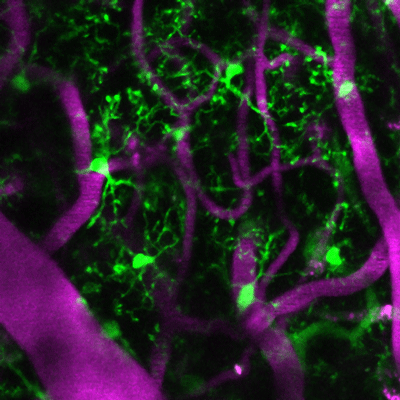
Living microglia, genetically marked to glow green, in the cerebral cortex with magenta colored blood vessels from a mouse treated with URMC-099.
A new study published in the Journal of Neuroinflammation found that prophylactic treatment with URMC-099 -- a "broad spectrum" mixed-lineage kinase 3 inhibitor -- prevents neuroinflammation-associated cognitive impairment in a mouse model of orthopedic surgery-induced perioperative neurocognitive disorders (PND).
PND, a new term that encompasses postoperative delirium, delayed neurocognitive recovery, and postoperative neurocognitive disorder, is the most common complication after routine surgical procedures, particularly in the elderly. Following surgery, such as hip replacement or fracture repair, up to 50 percent of patients experience cognitive disturbances like anxiety, irritability, hallucinations, or panic attacks, which can lead to more serious complications down the line. Currently, there are no FDA-approved therapies to treat it.
Developed in the laboratory of Harris A. "Handy" Gelbard, M.D., Ph.D., director of the Center for Neurotherapeutics Discovery at the University of Rochester Medical Center, URMC-099 inhibits damaging innate immune responses that lead to inflammation in the brain and accompanying cognitive problems. Using animal models of diseases like HIV-1-associated neurocognitive disorders, Alzheimer's disease and multiple sclerosis, Gelbard has shown that the compound blocks enzymes called kinases (such as mixed lineage kinase type 3, or MLK3) that respond to inflammatory stressors inside and outside cells.
Gelbard and Niccolò Terrando, Ph.D., director of the Neuroinflammation and Cognitive Outcomes laboratory in the Department of Anesthesiology at Duke University Medical Center, used an orthopedic surgery mouse model that recapitulates features of clinical procedures such as a fracture repair or hip replacement, which are often associated with PND in frail subjects. In a pilot experiment, they treated one group of these mice with URMC-099 before and after surgery, and another group prior to surgery only. Gelbard and Terrando's teams, including first author Patrick Miller-Rhodes, a senior pre-doctoral student in the Neuroscience Graduate Program working in the Gelbard lab at URMC, measured the following:
- How the surgery affected the central nervous system and the immune cells (microglia) that reside there was evaluated using stereology and microscopy.
- Surgery-induced memory impairment was assessed using the "What-Where-When" and Memory Load Object Discrimination tasks.
- The acute peripheral immune response to surgery was assessed by cytokine/chemokine profiling and flow cytometry.
- Long-term fracture healing was assessed in fracture callouses using micro-computerized tomography and histomorphometry analyses.
- For additional details see the "Materials and Methods" section of the study
The team found that the surgery disrupted the blood brain barrier and activated microglia (a first line immune responder present in the inflamed brain), which led to impaired object place and identity discrimination when the mice were subject to the "What-Where-When" and Memory Load Object Discrimination tasks. Both URMC-099 dosing methods prevented the surgery-induced microgliosis (increase in the number of activated microglia) and cognitive impairment without affecting fracture healing.
"A major concern regarding the use of anti-inflammatory drugs for PND is whether they will affect fracture healing. We found that our preventive, time-limited treatment with URMC-099 didn't influence bone healing or long-term bone repair," said Gelbard and Terrando, professor of Neurology, Neuroscience, Microbiology and Immunology, and Pediatrics at URMC and associate professor of Anesthesiology at Duke University Medical Center, respectively. "These findings of improvement in cognition and normal fracture healing provide compelling evidence for the advancement of URMC-099 as a therapeutic option for PND."
"Right now we have nothing to treat this condition," said Mark A. Oldham, M.D., assistant professor in the department of Psychiatry at URMC who treats patients with PND. "We work hard to provide good medical care, including helping people sleep at night and making sure they are walking, eating and drinking, but it isn't clear that these efforts have any meaningful long-term impact."
According to Oldham, recent studies that track patients following an episode of PND show that many of them don't resolve completely, and that they have a new cognitive baseline after delirium.
"It is increasingly an accepted fact that after delirium, people have suffered some kind of neurological insult, which leaves them cognitively or functionally worse off than before the incident," he noted.
Next steps for the research include identifying definitive mechanisms for pain modulation, immune cell trafficking and neuro-immune characterization in PND. Gelbard and Terrando are tackling some of these questions with funds from the National Institutes of Health (RO1 AG057525). The current study was also funded by multiple grants from the NIH (P01MH64570, RO1 MH104147, RO1 AG057525 and F31 MH113504). The University of Rochester has four issued U.S. patents and multiple issued patents in foreign countries covering URMC-099.
Medical Student Gordon Wong presents at the annual URMC Medical School poster session
Monday, October 21, 2019
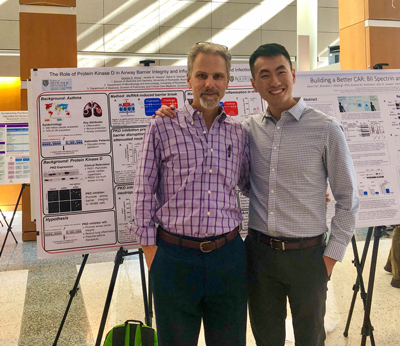
Dr. Georas (left) and Gordon Wong
Medical Student Gordon Wong presented a poster at the annual URMC Medical School poster session, describing his summer research project. Gordon studied how protein kinase D regulates airway inflammation and epithelial barrier integrity in mouse models of airway inflammation and viral infections. He made some very exciting discoveries, working with graduate student Janelle Veazey, specifically elucidating how protein kinase D controls the recruitment of neutrophils to the lungs.
Leigh Wexler Graduates!
Friday, September 6, 2019
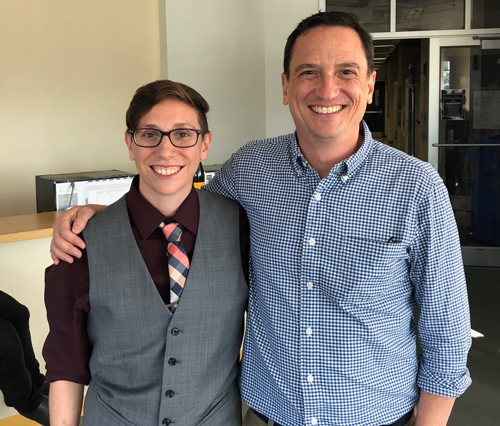
Dr. Leigh Wexler and Dr. Portman (From Left)
Congratulations to Dr. Leigh Wexler, who successfully defended their thesis this week, earning a Ph.D. in Genetics from the GDSC program. Leigh's thesis research in the Portman Lab focused on the regulation of neuronal circuit function and behavior in the nematode C. elegans. It's been known for many years that males of this species tend to leave a food source to find mates, but that depriving males of food causes them to reprioritize feeding behavior over exploration. One important component of this behavioral flexibility is regulated chemosensory function. Well-fed males detect food poorly, partly due to low expression of a food-associated chemoreceptor called ODR-10, but food-deprived males upregulate ODR-10, increasing food attraction and decreasing food-leaving behavior. In contrast, hermaphrodites (the female equivalent in C. elegans) are strongly attracted to food and exhibit high levels of ODR-10 expression even when well-fed.
Leigh's research probed the mechanism by which ODR-10 expression is influenced by feeding status in males. They found that signals through two conserved pathways, involving the TGFβ-family ligand DAF-7 and the insulin-like (IIS) receptor DAF-2, are important for keeping ODR-10 expression low in well-fed males. Further, Leigh found that males in which the IIS pathway is constitutively active fail to upregulate ODR-10 when starved. Interestingly, the DAF-7 signal appears to act upstream of IIS, indicating that a cascade of neuroendocrine interactions is necessary for repressing ODR-10. And DAF-7 does not act as a sensor of the starved male's physiological state, but rather conveys information about the presence of food in the environment.
Together, Leigh's research demonstrates that C. elegans males assess their external state, rather than their metabolism, when deciding whether to take the risk of leaving food to find a mate, and that this occurs through a multistep neuroendocrine feedback loop. Leigh's work also provides important insights into how internal and external states are integrated by the nervous system to influence gene expression, neuronal circuit function, and behavior. This work will appear in an upcoming issue of Current Biology. We wish Leigh all the best as she set out to Boston, to start her post-doctoral career in the laboratory of Max Heiman at Harvard.
Janelle Veazey Receives Outstanding Student Mentor Award
Wednesday, September 4, 2019
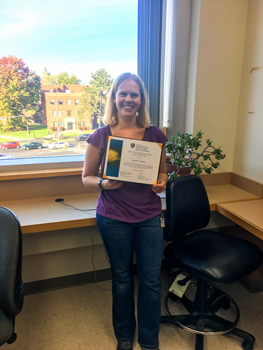
Janelle Veazey
Immunology Graduate Student Janelle Veazey received the Outstanding Student Mentor Award at the School of Medicine and Dentistry Convocation Ceremony on Wednesday, September 4th, Janelle was selected by the faculty of the Graduate Program in Microbiology & Immunology, in recognition of her outstanding commitment and dedication to mentoring undergraduate or graduate students. Congratulations Janelle!
Deb Fowell Authors Study on Immune Cell Navigation Systems
Tuesday, August 13, 2019
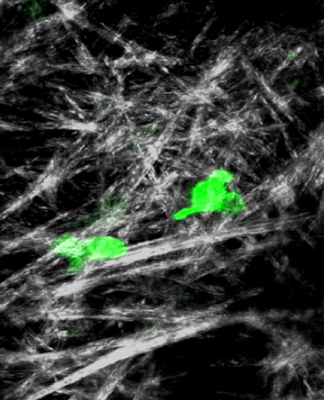
When immune cells get recruited to infections, tumors, or other sites of inflammation they exit the blood stream and begin searching for the damage. But how they effectively traverse the body's tissue and home in on their targets is unclear. A new study led by Deborah Fowell, Ph.D. suggests that T cells have distinct navigation systems that help them pinpoint their targets.
Fowell's research team, based in the David H. Smith Center for Vaccine Biology and Immunology in the Department of Microbiology and Immunology made the discovery by visualizing the immune system in real time using intravital multiphoton microscopy. The technology allows you to look directly into the skin and observe the dynamic behavior of immune cells 'live.' Their findings were published earlier this month in the journal Immunity.
"We thought that locating the infection foci was a passive event for immune cells; that they used the tissue as a scaffold to weave their way through this complex matrix to get to their target," said Fowell, Dean's professor in the Department of Microbiology and Immunology. "We discovered that they are pre-programmed to respond to certain cues within the tissue microenvironment that help them find their targets more efficiently."
The team hopes that discovering these specialized programs for migration in tissues will provide new therapeutic targets that enable manipulation of the immune response in a disease-specific or tissue-specific fashion, rather than globally suppressing the immune system. Possibilities include boosting protective immunity in diseases where the immune system is inefficient, such as chronic infections and tumors, and limiting immunity in diseases that are exacerbated by the immune system, like autoimmunity and heart disease.
Hen Prizant, Ph.D., a postdoctoral fellow in Fowell's lab and Alison Gaylo-Moynihan, M.D., Ph.D., a former student in the lab are co-first authors. Graduate students Ninoshka R.J. Fernandes, Hannah Bell, Dillon C. Schrock, Tara Capece, Brandon Walling, and Christopher Anderson contributed to the study. Faculty members David Topham, Minsoo Kim, Alan Smrcka and James Miller are also authors.
Fowell credits the new finding to the power of NIH Program Project Grants (P01), which allow faculty, trainees and students to explore uncharted scientific territory and branch out among different disciplines. For example, the team reached across Elmwood Avenue to have conversations with astrophysicists and engineers on River Campus about how objects move through and are found in space. The P01 that funded the research was awarded to Fowell (PI) and Kim, Topham and Miller in 2014.
Supriya Mohile Headlines MSTP 19th Annual Retreat
Monday, August 12, 2019
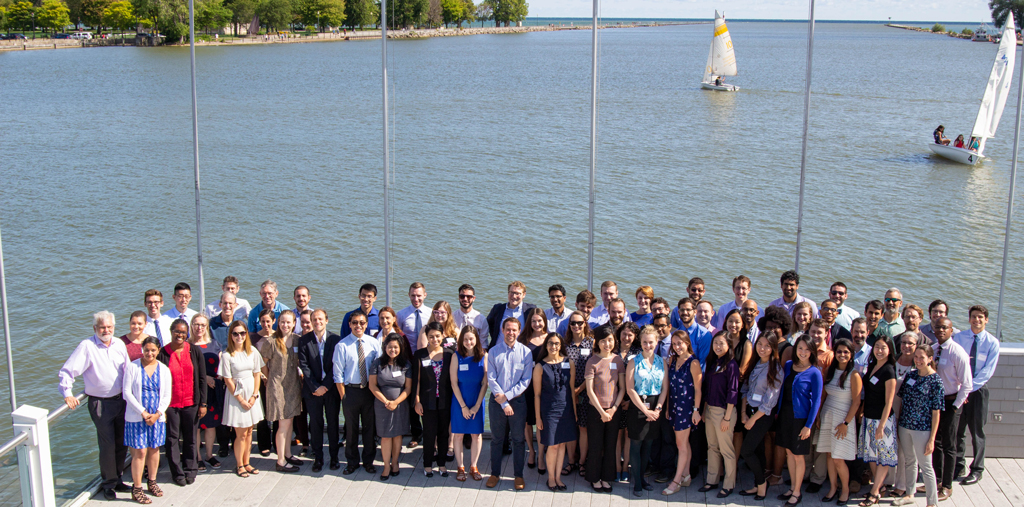
The Medical Scientist Training Program's 19th Annual Retreat was held on August 9, 2019, at the Rochester Yacht Club. The retreat is an opportunity for the student body to gather to discuss science and welcome the incoming class. This year, the MSTP welcomed six new students: Maya Anand (Columbia University), Thomas Delgado (University of Florida), Svetlana Markova (Kharkiv National Medical University), Michael Meadow (UCLA), Gavin Piester (University of Rochester), and Victor Zhang (University of Rochester).
2019 Incoming Students
This year's Keynote address was given by Dr. Supriya Mohile, Professor of Medicine and Surgery at the University of Rochester, and was titled "Improving Care Delivery and Outcomes for Older Patients with Cancer and their Caregivers." Dr. Mohile highlighted the need for geriatric assessments in oncology to properly address concerns such as tolerability and toxicity of cancer treatments. She described the large clinical studies that are ongoing which demonstrate the feasibility of implementing geriatric assessments in oncology and stressed the need for all clinicians who treat elderly patients to use tools available to them to address concerns that are unique to this population.
The morning science session concluded with short talks by several current MSTP students. Second year medical student Emily Isenstein discussed her work on proprioceptive and visual integration in children with autism, Fara Tolibzoda Zakusilo (G2) discussed the role for the extracellular matrix in Alzheimer's disease, Jesse Wang (G3) spoke about the development of a digital medical scribe, Booyeon Han (G4) described her work to understand the tumor-draining lymph node in pancreas cancer, and Aimee Morris (M4) spoke about resting state functional connectivity in focal dystonia.
Following lunch, Kerry O'Banion, MSTP director, gave an update on curricular changes occurring in the medical school, which was followed by a presentation by students who attended the National MD/PhD Conference at Copper Mountain in July. New students were elected to the MSTP student council to end the afternoon. We look forward to another exciting year for the MSTP!
SMD's Aleta Anthony Named Director of Equity, Inclusion & Research Education Support
Friday, August 9, 2019
 The Office for Graduate Education and Postdoctoral Affairs (GEPA) at the School of Medicine and Dentistry has announced the appointment of Aleta Anthony to the role of Director of Equity, Inclusion and Research Education Support.
The directorship is a newly-created position aligning with the University of Rochester and the Medical Center's broader mission to support equity and inclusion through strategic efforts, organizational programming, and inclusion initiatives. As director, Aleta will provide leadership and direction to GEPA to foster an environment where all members of the GEPA community are supported and acknowledged for diverse backgrounds and experiences.
In a commitment to promoting equity and inclusion for students and postdocs, Richard Libby, Ph.D., who is senior associate dean for GEPA, worked with the University of Rochester Medical Center's Office for Inclusion and Culture to create Anthony's new role.
Anthony joined the School of Medicine and Dentistry in 2017 as the director of graduate enrollment for Ph.D., master's, and certificate programs. In addition to her new role leading GEPA's equity and inclusion efforts, she will continue her work building and enhancing recruitment strategy for the school's biomedical sciences and health sciences graduate programs.
Single Brain Region is Key to Assessing the Impact of Repetitive Head Hits, Concussions
Wednesday, August 7, 2019
While a brain injury can be difficult to locate, new research identifies a single region of the brain that can be used to examine the impact of a concussion or repeated hits to the head.
The finding, published today in Science Advances, also supports the emerging idea that traumatic brain injury is not limited to people who sustain a concussion; it can result from repetitive head hits that are clinically silent--those that do not produce the visible signs or symptoms of a concussion. These subconcussive hits have been increasingly recognized as a potential threat to long-term brain health and as a possible cause of chronic traumatic encephalopathy (CTE).
Jeffrey Bazarian, M.D., M.P.H., professor of Emergency Medicine, Neurology, Neurosurgery and Public Health Sciences at the University of Rochester Medical Center and a co-author of the study says that the location of a brain injury varies widely from person to person. This is a major obstacle for physicians trying to diagnose brain injury using imaging techniques.
"This study is important because we found that no matter where the head gets hit, the force is translated into a single region of the brain known as the midbrain," noted Bazarian, who treats concussion patients and conducts research related to traumatic brain injury. "Midbrain imaging might be a way in the future to diagnose injury from a single concussive head hit, as well as from repetitive sub-concussive head hits."
University of Rochester fourth-year medical student Adnan Hirad, Ph.D., the first author of the research added, "Our findings do not dispute the fact that head-injury effects are distributed throughout the brain, but the midbrain may serve as a 'canary in a coal mine' in terms of identifying damage. From this study we know that the midbrain region, which is linked to brain functions often affected by a concussion, is the place to look to identify the impact of clinically defined concussions with visible symptoms and silent brain injuries that can't be observed simply by looking at or behaviorally testing a player, on or off the field."
Congratulations MJ
Thursday, July 11, 2019
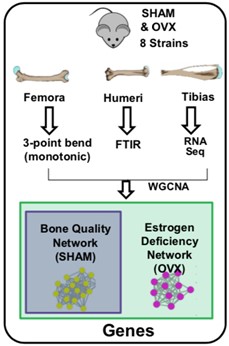 After successfully defending his thesis, MJ has completed the PhD portion of his MD/PhD studies. MJ's studies investigated the genetic basis of bone-matrix quality, an underappreciated property of bone that contributes significantly to bone strength and is of great clinical importance for understanding of bone pathology such as osteoporosis. MJ used both a classical population genetics approach as well as a systems genetics approach, and found that bone matrix characteristics such as morphology and matrix composition are indeed inheritable properties. In addition, using an estrogen-deficient model of post-menopausal bone loss, he was able to identify gene networks that may play an important role in osteoporosis. His results suggest that bone matrix quality is influenced by genetics and participates in maintaining tissue-level mechanical properties. Furthermore, identifying putative regulatory genes is clinically significant as they are presumptive targets for developing novel therapeutics. During his thesis work, MJ was the recipient of a CTSI Pilot Trainee Grant and scored a fundable F31 predoctoral fellowship from NIAMS. With his GDSC doctorate in hand MJ will return to medical school to obtain his M.D. Best of luck in your future ventures, MJ!!
Scott Friedland Defends Thesis
Thursday, July 11, 2019
This week M.D./Ph.D. student Scott Friedland defended his doctoral thesis. Arriving at the GDSC in 2014, Scott pursued his Ph.D. under the mentorship of Dr. Aram Hezel. As a student Scott was granted travel awards to a national physician scientist conference and selective course at Cold Spring Harbor Labs. His thesis, titled Arid1a, a subunit of the SWI/SNF chromatin remodeling complex, is a barrier to KrasG12D-driven tumorigenesis, studied the role of SWI/SNF, a chromatin remodeling complex, in pancreatic function and disease, which has implications for the fields of cancer and developmental biology. These findings may, in time, impact the treatment of diseases such as pancreatitis and pancreatic cancer. Scott will be reinitiating his medical education alongside the class of 2021 here at the University of Rochester School of Medicine, and is interested in pursuing a career as an oncologist and cancer researcher. Congratulations Dr. Scott Carl Friedland!
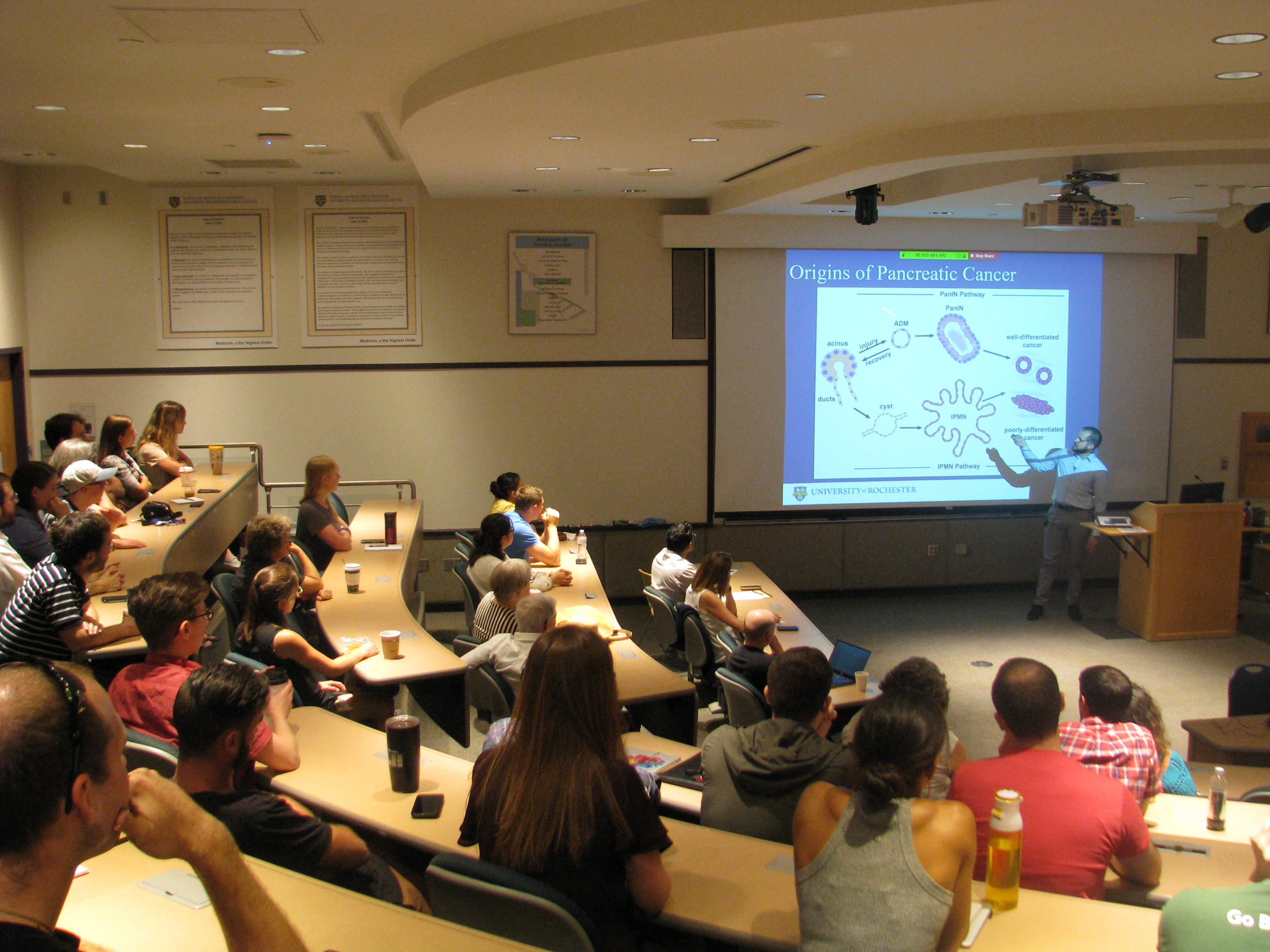 |
| 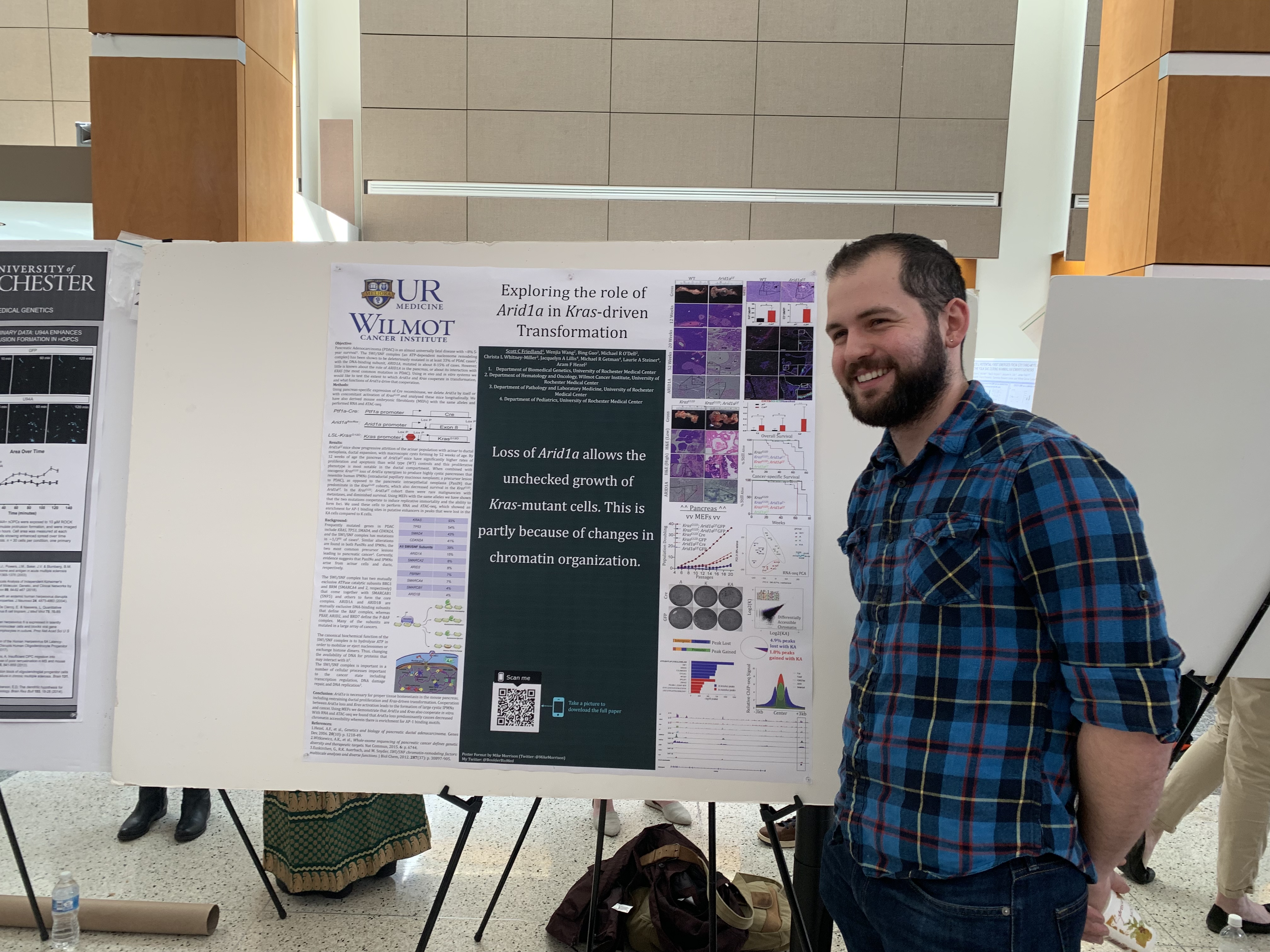
Study Points to Stabilization of TRAF3 Protein to Fight Age-Related Bone Loss
Wednesday, June 26, 2019
A new study led by Brendan Boyce, M.B.Ch.B.., professor of Pathology & Laboratory Medicine and the Center for Musculoskeletal Research and Zhenqiang Yao, MD., Ph.D., assistant professor of Pathology & Laboratory Medicine suggests that age-related osteoporosis could be prevented or treated through pharmacologic stabilization of the protein, TNF receptor-associated factor 3 (TRAF3).
The collaborative study was published in Nature Communications after five years of work by Boyce and fellow URMC researchers who note the need to better understand the mechanisms through which osteoporosis occurs in order to develop new drugs that can be given to help prevent or reverse the disease.
The study notes that the process by which young, healthy peoples' bones are naturally rebuilt, deteriorates as people age or go through menopause. Increased inflammation, or inflammaging, leads to an increase in bone-degrading osteoclast cells and a reduction in bone-forming osteoblasts, resulting in osteoporosis.
Existing treatments that prevent bone destruction offer long term solutions, but many patients are reluctant to take them because they fear side effects of the drugs, while bone forming drugs can be administered only for short periods to help patients suffering from chronic osteoporosis.
The paper shows that the protein, TGF-beta, which is released in increasing amounts from bone during aging, causes breakdown of TRAF3 in osteoblast precursor mesenchymal progenitor cells. This leads to a reduction in the number of osteoblasts and less bone repair and indirectly to increased numbers of osteoclasts and more bone destruction.
By stabilizing TRAF3 levels in bone cells through new drugs, the authors provide a novel mechanism for how treatments may offer a more long-term solution for patients. This is especially crucial as more people live longer and are exposed to a greater risk of fractures and early death.
Lemonade Stand Supports Efforts to Cure Childhood Cancer
Friday, June 21, 2019
For the 10th year in a row, Danielle Benoit, associate professor of biomedical engineering, and mentees from her lab will hold their fundraiser in support of Alex's Lemonade Stand Foundation and its efforts to cure childhood cancer. You can donate online or drop by the lab's lemonade stand from 10 a.m. to 1 p.m. Saturday, June 22, at the Rochester Public Market, 280 Union Street North or from 9 a.m. to 1 p.m. Sunday, June 23, at the Brighton Farmers Market,1150 Winton Road South.
Liwei Wang, Ph.D., Graduate of the Cellular and Molecular Pharmacology and Physiology PhD Program Wins the Fenn Award for Best Thesis
Thursday, June 20, 2019
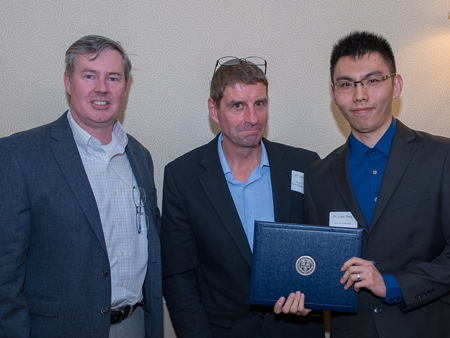 Liwei Wang, Ph.D. Graduate of the Cellular and Molecular Pharmacology and Physiology PhD Program won the Fenn Award for best thesis, the award was presented at the 2019 Commencement Dinner by Richard Libby, Senior Associate Dean for Graduate Education and Postdoctoral Affairs following an introduction from Dr. Wang's faculty mentor, Dr. David Yule.
The award was for Dr. Wang's thesis, entitled "Region-specific Proteolysis Differentially Regulates Inositol 1,4,5-trisphosphate Receptor Activity " Dr. Wang is currently a Postdoctoral Fellow in the laboratory of Prof. Stefan Feske at NYU, Langone Medical School. His current research involves investigating the role of ion channels in immunological tolerance and immunity.
About the Award
Dr. Wallace Fenn was a Professor of Physiology at the University of Rochester School of Medicine and Dentistry from 1924 to 1961. He served as the Chairperson of the Department of Physiology from 1924 to 1959 and thereafter until his death in 1971, he was appointed by the University to the position of Distinguished University Professor of Physiology. As well, Dr. Fenn served as the Associate Dean of Graduate Studies from 1957 to 1959.
To read more regarding this award, please visit the department of Biochemistry and Biophysics website.
A Graphic Design Revolution For Scientific Conference Posters
Tuesday, June 18, 2019
"Other templates didn't necessarily ask you to think about what you were putting on them because they allowed it all," says Derek Crowe, a PhD student in biomedical genetics in Hucky Land's lab with a former career in visual communication and design, "In order to use Mike's layout though, my hand is forced."
With the new template, scientists need to think about their core message, but some people have a difficult time figuring out how to do that, or how to use visuals to present their message. Without proper science communication training, even a better poster template doesn't work.
Crowe has taken matters into his own hands. Not only does he teach a course on visual communication for scientists at the University of Rochester, but he also shared his poster design tips online. In a nod to Morrison's "better poster", Crowe's is a "butter poster". He provides step by step instructions on how to organize the poster, and how to think about the content in a visual way.
"Like the graphic novel did for literature, visual languages have the power to add more dimensions to scientific storytelling," says Crowe, "I'm excited to see what happens as the greater science community begins to take advantage of well-established visual storytelling tools."
Romeo Blanc Receives Multiple Awards From the International Society for Stem Cell Research (ISSCR)
Thursday, June 13, 2019
Romeo Blanc postdoctoral fellow in the Chakkalakal Lab was the recent recipient of the Podium presentation, Travel award, and Merit Awards from the International Society for Stem Cell Research (ISSCR) for the upcoming annual meeting in Los Angeles CA, June 26 -- June 30, 2019.
The first award, called Travel Award, came from the ISSCR itself and covers registration and/or cash award. The second award, called Abstract Merit Award is made to highlight some outstanding selected abstract which is chosen by ISSCR as well.
Congratulations Romeo!
CMPP Students Host Guest Speaker Dr. Ehsan Sarafraz-Yazdi
Tuesday, June 11, 2019
To fortify the involvement of graduate students in academic affairs, the Department of Pharmacology and Physiology (CMPP) hosted student nominated guest speaker: Dr. Ehsan Sarafraz-Yazdi, Ph.D., M.P.H., Founder and CEO of NomoCan Pharmaceuticals, LLC. Dr. Yazdi was nominated by PhD candidate Edward Ayoub and chosen by CMPP graduate students to spend a day at URMC. During his visit, Dr. Yazdi connected with faculty and students, and presented a seminar highlighting a new microfluidic system to study anti-cancer drug responses ex-vivo. Dr. Yazdi also shared his vision and inspiration to start his own pharmaceutical company at a URBEST Career Story hosted by Dr. Tracey Baas. CMPP will continue to host a student-nominated guest speaker annually.
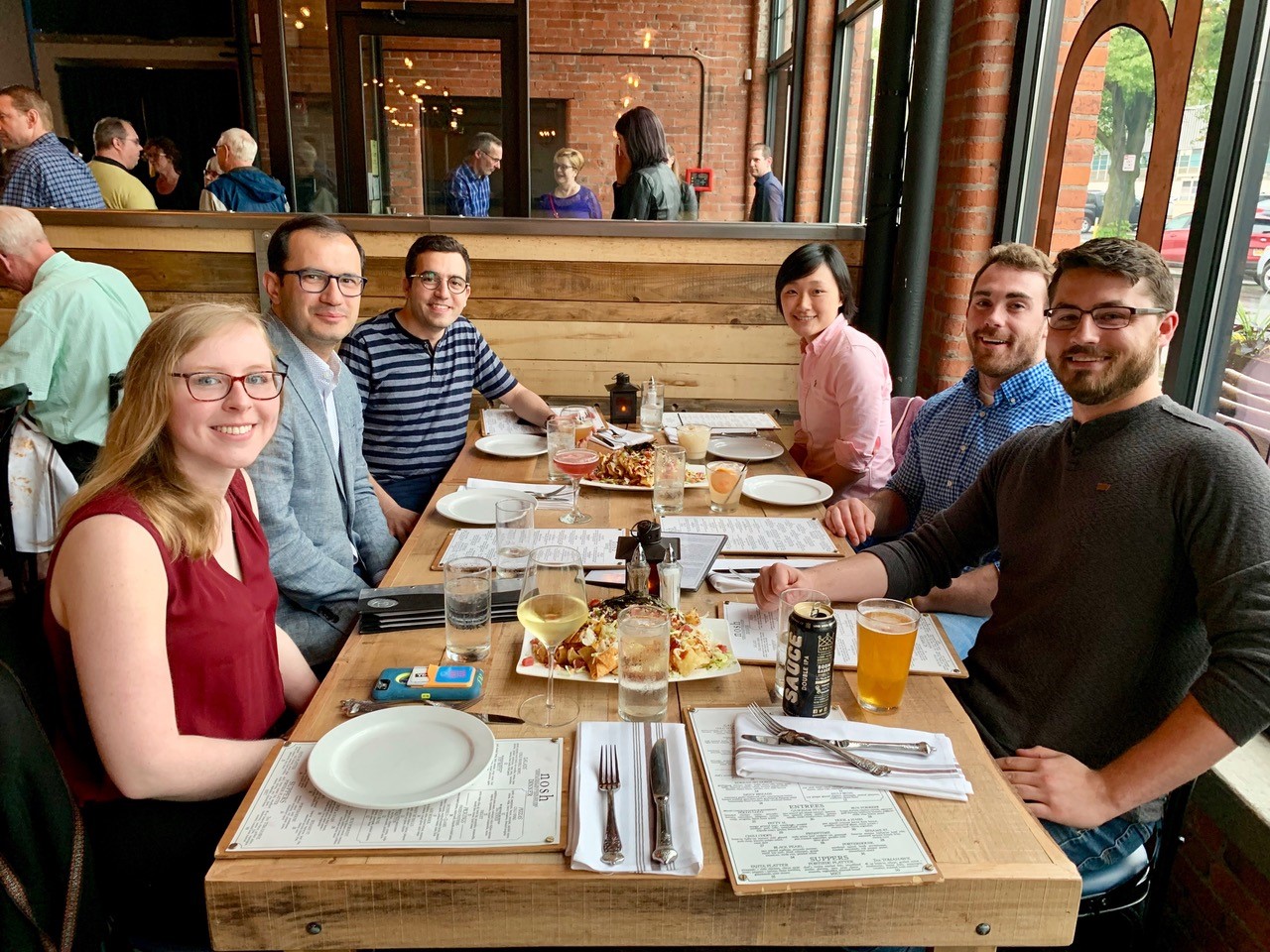
Left to right: Lily Cisco, Dr. Ehsan Yazdi, Edward Ayoub, Kai Ting Huang, Alexander Milliken, Matthew Rook
Upcoming Thesis Defenses
Friday, June 7, 2019
Rebeckah Burke, chemistry, "Colloidal Semiconductor Nanocrystals for Photocatalytic Proton Reduction." 10 a.m. June 11, 2019. 108 Goergen Hall. Advisor: Todd Krauss.
Philipp Birklbauer, mathematics, "Theoretical and Computational Explorations in Vector Spaces Over Finite Fields." 2:30 p.m. June 12, 2019. Hylan 1106A. Advisor: Alex Iosevich.
Molly McCann, epidemiology, "Degree of Bystander-Patient Relationship and Prehospital and Emergency Department Care for Opioid Overdose." 10 a.m. June 14, 2019. Helen Wood Hall | 1W 502. Advisor: Todd Jusko.
Jie Luo, biology, "The Role of Androgen Receptor in Different Prostate Cancer Therapies." 12:30 p.m. June 14, 2019. Room 2-6424 Medical Center. Advisor: Chawnshang Chang.
GDSC Student, Tom O’Connor Earns First Place in 2019 Sharing Your Science in A Social World Contest.
Monday, June 3, 2019
Finishing his first year of GDSC studies on a high-note, Tom O'Connor (member of the Chakkalakal & Dirksen Labs) together with his teammate Griffin Schroeder, have won first place in the 2019 'Sharing Your Science in A Social World' contest. Sponsored by URBEST, this contest encourages students to communicate their research to a broad audience using videography. For their entry, imbedded above, Tom and Griffin emphasized the work being done in the Noble Lab, where Tom worked during his first rotation. The video, URBEST 2019: Translational Science, highlights how the Noble Lab sets itself apart by re-purposing FDA approved drugs for different clinical applications, expediting the bench-to-clinic transition.
Congratulations Tom and Griffin!
Imaging That Twinkle in Your Eye: Assessing Vascular Health by Imaging Blood Cells in the Retina
Tuesday, May 14, 2019
.jpg)
Jesse B. Schallek, Ph.D., assistant professor in the Department of Ophthalmology, describes a new, noninvasive approach to assess vascular health in the journal eLife. Schallek's lab, part of the Flaum Eye Institute, developed a method to visualize how single blood cells flow through vessels of the eye using adaptive optics imaging.
The transparency of the eye provides a natural window to the retina, an extension of the brain. Vascular physiology is best studied noninvasively inside the living body, but seeing the details of how microscopic blood cells interact within the vasculature has not been possible with current tools such as fMRI. Schallek's team developed high-resolution adaptive optics combined with fast camera capture to visualize single-cell blood flow dynamics in the living mouse eye.
"We're able to image single blood cells and measure their speed. Remarkably, this can be achieved in vessels of all sizes, from the smallest capillaries to the largest retinal vessels," said Schallek. "This approach may eventually provide a view of patient vascular health without the need for blood draws or dyes.
Krystel Huxlin, Ph.D., Associate Chair for research in the Department of Ophthalmology adds, "This method has the potential to enable early diagnosis of cardiovascular disease and diabetic neuropathy, and will also be of interest to investigators studying blood flow in the context of stroke and neurodegenerative diseases like Alzheimer's.
The study was conducted in large part by Optics graduate students Aby Joseph and Andres Guevara-Torres. "My research interest involves using my physics/optics background to provide insights into biological questions," said lead-author Joseph. "This paper, at the intersection of physical sciences and neuroscience, provides a novel and noninvasive imaging approach that may advance our understanding of blood flow dynamics in brain and retinal vessels smaller than the width of a human hair.
Schallek's team, part of the Advanced Retinal Imaging Alliance (ARIA), is now deploying the method in healthy human eyes to establish metrics that will enable researchers to better elucidate the events that initiate and propagate disease. A pre-clinical investigation, funded by the Dana Foundation, is beginning to use this powerful approach to compare what happens in normal and diabetic retinas of human subjects. Schallek holds secondary appointments in the Department of Neuroscience and the Center for Visual Science. The research was funded by the National Eye Institute at the National Institutes of Health and by a Career Development Award from Research to Prevent Blindness.
UR CTSI Student Continues on the Road to Success
Monday, May 13, 2019
Kristen Bush Marshall received her Ph.D. in Translational Biomedical Science in January 2019 and is currently serving as a postdoctoral associate in the Rochester Center for Health Informatics under the mentorship of Martin Zand, M.D., Ph.D. She has just been matched with her top-ranked choice: a field assignment in Denver for a two-year Epidemic Intelligence Service Fellowship. This position with the local health department and the state pf Colorado Department of Public Health and Environment responds to local and state-wide outbreaks allowing Bush Marshall to use her knowledge of healthcare-associated infections.
May 10th: 8th Annual Lecture on Biomedical and Health Science Ethics
Friday, May 3, 2019
The 8th Annual Lecture on Biomedical and Health Science Ethics will be given by Daniel E. Acuna, assistant professor in the School of Information Studies at Syracuse University.
Attendance at the lecture, from 2-3 p.m. Friday, May 10 in the Class of '62 Auditorium (G-9425), is mandatory for Medical Center graduate students and postdoctoral appointees.
Acuna's lecture is entitled: "How to Catch a Scientific Figure Falsifier: Analysis and statistical reporting of potential figure element reuse and splicing across millions of images." This special lecture is part of ongoing instruction in responsible conduct of research (RCR) required of grad students and postdocs by the National Institutes of Health.
As part of ongoing efforts to satisfy this requirement, the University of Rochester sponsors periodic RCR lectures and workshops. In addition to completing the Ethics and Professional Integrity in Research Course (IND501/506), all graduate students and postdoctoral appointees are expected to participate in these lectures and workshops.
Refreshments will be available in Flaum Atrium following the lecture.
Upcoming PhD dissertation defenses
Friday, May 3, 2019
Valeriia Sherina, statistics, "Statistical Methods for qPCR Data Near the Limit of Detection." 11 a.m. May 10, 2019. Helen Wood Hall | 1W-509. Advisor: Matthew McCall.
Nicolas Riquelme Carrasco, economics, "Essays on Mechanism Design and Multiple Privately Informed Principals." 10 a.m. May 10, 2019. Harkness 113. Advisor: Paulo Barelli.
Emily Wu, microbiology & immunology, "Uncovering the Role of TNF-alpha in the Genesis of Inflammatory Interstitial Lung Disease in the TNF-Transgenic Mouse Model of Rheumatoid Arthritis." 1 p.m. May 17, 2019. Ryan Case Method Room 1-9576 (Medical Center). Advisor: Edward Schwarz.
BMB Graduates Receive College Prizes
Thursday, May 2, 2019
2019 College Prize Recipients
- Katherine Woo: Ayman Amin-Salem Memorial Prize
- Fayth Kim: the Janet Howell Clark Prize
- Nicholas Lim: Irene Bush Steinbock Award
- Kavya Bana: Helen S. Jones Memorial Fund
Next-Gen Women in Science: Dalia Ghoneim
Thursday, May 2, 2019
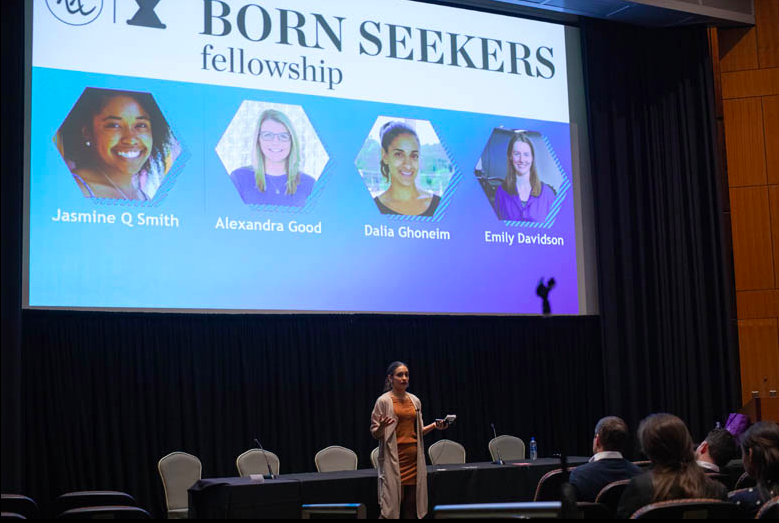
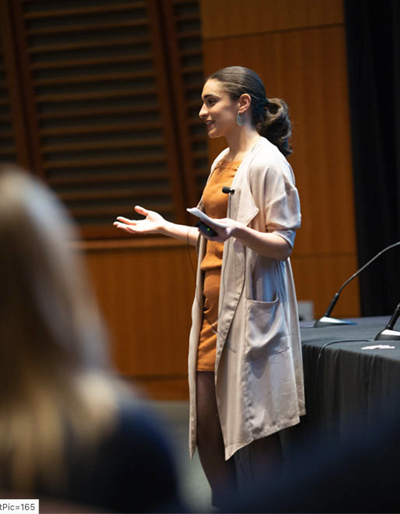
GDSC student Dalia Ghoneim from the Matthews lab was awarded the prestigious Perricone MD Born Seekers fellowship. The $20,000 award recognizes the inspiring achievements of young women in science, and is the culmination of the Scientista Foundation's video competition, in which young women tell their personal journey in STEM. Dalia was able to tell her remarkable story in the award-winning video clip with the help of two talented fellow GDSC-students: cameraman, sound expert and producer Adam Cornwell, and speech-editor Matt Ingalls. As a single mother of four, Dalia is now approaching the successful completion of her PhD in Genetics. She was invited to give her speech and accept her award at the Scientista Symposium 2019 in Boston, MA. The Scientista Foundation's vision is to support the next generation of female scientists -- and we can't wait to see what Dalia will do next! Congratulations!!
Congratulations to Sijiu Wang for receiving Mathematica summer fellowship!
Wednesday, May 1, 2019
This is a highly competitive program, which only accepts 1-3 fellows in healthcare unit nationally each year. The past awardees were all from top universities, including Harvard, U of Penn, and U of Chicago! With the support of this fellowship, Sijiu will be working on her own independent dissertation work and gaining additional experience from Mathematica researchers. Great work, Sijiu!
AnnaLynn Williams Receives Vincent du Vigneaud Award
Tuesday, April 30, 2019
AnnaLynn Williams, recent PhD epidemiology graduate, has been selected to receive this year's Vincent du Vigneaud Award which will be presented at the PhD Commencement Dinner on May 17th. This award "is presented annually to a graduating student whose thesis work is judged to be unique in potential for stimulating and extending research in the field.?" (See attached for more information about Dr. du Vigneaud and the award.) The selection committee has deemed her work as the best example of what this award represents. Please join me in congratulating AnnaLynn!
Jayme Olson earns (CTSI) Trainee Award
Tuesday, April 30, 2019
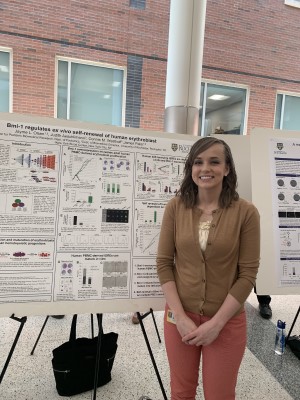 Jayme a GDSC-graduate student in the Palis Lab was recently awarded a Clinical and Translational Science Institute (CTSI) Trainee Award. This one-year fellowship will fund cutting edge work on the in vitro generation of human red blood cells. Cultured human red blood cells (RBCs) have the potential to serve as a supplemental source of blood for transfusion therapy, and as a tool for clinical and research diagnostic. However, a major barrier in generating sufficient numbers of cultured RBCs cells is the limited ex vivo self-renewal capacity of adult-derived erythroblasts. Work in the Palis Lab has identified Bmi-1, a member of the polycomb repressive complex 1 (PRC1), as a critical regulator of erythroid self-renewal. Bmi-1 also plays a role in normal erythroid precursor maturation. Jayme will test the hypothesis that Bmi-1 regulates erythroid self-renewal and terminal maturation using different PRC1 members. Ultimately, these proposed studies will pave the way for the generation of sufficient numbers of cultured RBCs for blood typing and transfusion therapy, as well as the establishment of in vitro models for the study of erythroid intrinsic diseases.
31st Genetics Day at the University of Rochester
Monday, April 29, 2019
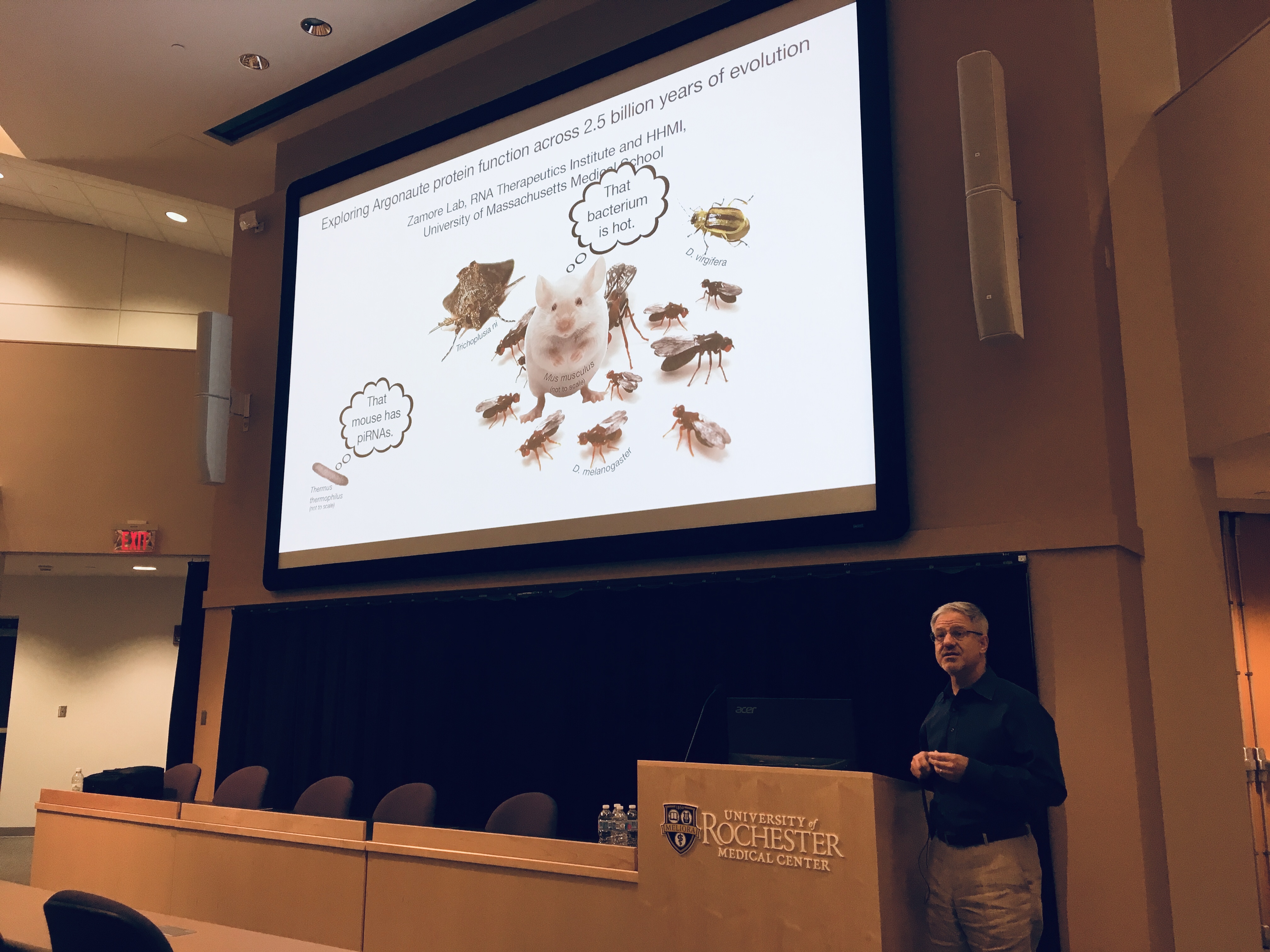 The University of Rochester hosted its 31st Annual Genetics Day Symposium with a poster session displaying genetics research from more than fifty post-doctoral fellows, graduate and undergraduate students. The meeting started with a strong lineup of faculty presentations, highlighting ongoing Genetics Research and as well as new faculty recruits. Speakers included Dr. Amanda Larracuente, Dr. Doug Anderson, Dr. Peng Yao, Dr. Xin Zhiguo Li and Dr. Paul Boutz. Keynote speaker Dr. Phillip Zamore, from the University of Massachusetts, delivered the 17th Annual Fred Sherman Lecture. This year's poster prizes were awarded to:
- Leigh Wexler: A male-specific neuroendocrine feedback loop couples food signals for feeding behavior in C. Elegans
- Matthew Tanner: Identifying sequence determinants of altered RNA splicing in myotonic dystrophy.
- Dr. Jacquelyn Lillis: Single-cell transcriptome analysis of embryonic erythro-myeloid progenitor cells reveals lineage heterogeneity.
- Jayme L. Olsen: Bmi-1 regulates human erythroblast ex vivo self-renewal.
- Anissa Elahi: Transglutaminase 2 as a therapeutic target to facilitate recovery after spinal cord injury.
- Zhengfen (Jeff) Liu: DNA damage-specific regulation of cell cycle checkpoint by γ-h2ax.
We congratulate each poster winner and look forward to the 32nd Genetics Day next year!
A link to additional Genetics Day 2019 photos can be found here.
'Longevity Gene' That Helps Repair DNA And Extend Life Span Could One Day Prevent Age-Related Diseases In Humans
Tuesday, April 23, 2019
Scientists studying longevity believe a gene could explain why some animals live longer.
In 18 species of rodents with varying life spans, researchers looked at sirtuin 6 (SIRT6), a gene that plays a role in bodily processes such as aging, cellular stress resistance and DNA repair.
Over time, DNA inevitably suffers what are known as double-strand breaks (DSBs) that can cause genes to mutate, triggering aging and diseases like cancer.
Dirk Bohmann, a professor of biomedical genetics at the University of Rochester Medical Center, explained in a statement, "[DSBs] are always going to be there, even if you're super healthy. One of the main causes of DSBs is oxidative damage and, since we need oxygen to breathe, the breaks are inevitable."
While animals with relatively short life spans don't have so many DSBs, Bohmann explained, "if you want to live for 50 years or so, there's more of a need to put a system into place to fix these breaks. The SIRT6 protein seems to be the dominant determinant of lifespan. We show that at the cell level, the DNA repair works better, and at the organism level, there is an extended lifespan."
To answer whether SIRT6 works harder in species that live longer, the team studied 18 rodents, from mice expected to live around three years to beavers and mole rats with life expectancies of up to 32 years. Animals with stronger SIRT6 proteins were found to live longer.
This was also apparent when they compared the molecular differences in the SIRT6 proteins of mice and beavers. And by dosing human cells and fruit flies with the SIRT6 from a mouse and a beaver, as expected, the scientists found the beaver protein was more potent than the mouse protein.
2019 Three Minute Thesis Winners
Monday, April 22, 2019
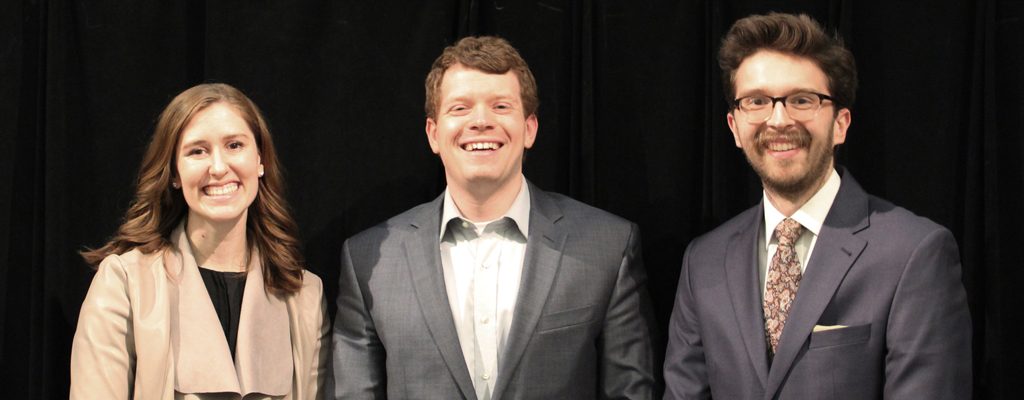
2019 Three Minute Thesis Winners, Emily Hangen, Greg Madejski and Brandon Berry
On April 4th, 2019 The University of Rochester held the 4th Annual Three Minute Thesis competition finals. Eight Finalists were selected and spoke for 3 minutes on their chosen research topic.
- Emily Warner, Neuroscience Graduate Student
"Memories can change the way we smell" - Brandon Berry, Pharmacology and Physiology Graduate Student
"Light Activated Mitochondria" - Emily Hangen, Arts, Sciences and Engineering
"Expectations: Helpful or Harmful?" - Rainier Barrett, Chemical Engineering Graduate Student
"Computer-Aided Drug Discovery: Machine Learning and Computational Chemistry"
- Nancy Cardona, Obstetrics and Gynocology Postdoctoral Fellow
"Determinants of urinary biomarkers of pesticide exposure among pregnant women in Costa Rica" - Greg Madejski, Biomedical Engineering Postdoctoral Associate
"Microplastics: In your food and water" - Elizabeth Anson, Human Development Graduate Student
"Youth Violence: Everything I needed to know, I learned in preschool"? - Kolja Keller, Philosophy Graduate Student
"Evidence First"
After careful deliberation by both the judging panel and the audience, the winners of the 2019 Three Minute Thesis competition were:
Judge's Winner: Emily Hangen
Judge's Runner-Up: Greg Madejski
People's Choice: Brandon Berry
Congratulations to Emily, Greg and Brandon! Video and Photos of the event can be found on the Three Minute Thesis Website
31st Annual Genetics Day Symposium
Monday, April 22, 2019
The Departments of Biomedical Genetics and Biology, with the support of the University Committee for Interdisciplinary Studies, host the 31st annual Genetics Day Symposium on Thursday, April 25, from 9:30 a.m. to 4 p.m. in the Class of '62 Auditorium and Flaum Atrium. This year's Fred Sherman Lecturer will be Phillip Zamore, a Howard Hughes Medical Institute investigator and professor of biomedical sciences at the University of Massachusetts Medical School, giving a talk titled "piRNAs and the Struggle to Reproduce."
Handy Gelbard Honored for Pediatric HIV/AIDS Research
Wednesday, April 17, 2019
Handy Gelbard, M.D., Ph.D., professor and director of the Center for Neurotherapeutics Discovery at URMC, is the 2019-2020 recipient of the Herman and Gertrude Silver Award, which honors individuals who have made significant contributions in the field of pediatric HIV and AIDS. The award is given by the Children's Hospital of Philadelphia (CHOP) and the Department of Pediatrics of the Perelman School of Medicine at the University of Pennsylvania. Past award winners include a Nobel laureate and HIV investigators from leading academic institutions, the National Institutes of Health (including the current directors of the Office of AIDS Research and the National Institute of Allergy and Infectious Diseases), and the Centers for Disease Control and Prevention.
For the past 10 years Gelbard's lab has been developing a compound called URMC-099, which dampens inflammation and has shown promise in reversing the neurological problems associated with HIV. Children with HIV who are taking combination antiretroviral therapies are extremely vulnerable to inflammation; the developing nervous system is of particular concern, as inflammation in the brain can lead to major cognitive problems.
The possibility of a new class of therapies that reduces the burden of neuroinflammation and supports normal synaptic architecture (the basis for learning and memory) offers considerable hope for children that are saddled with the unwanted burden of HIV, despite effective control of the virus.
Gelbard believes the path forward for URMC-099 as an adjunct agent for children living with HIV and neurologic disease will likely involve combination therapy with next generation antiretroviral agents. This is a priority in resource-limited settings such as Africa, and Gelbard is working with David Bearden, M.D., assistant professor in the division of Child Neurology at URMC to help advance uses for URMC-099 in pediatric patients there. Bearden's work is supported by a National Institute of Neurological Disorders and Stroke grant to Gretchen Birbeck, M.D., M.P.H., professor of Neurology and Michael Potchen, M.D., professor of Imaging Sciences. The work is also supported by the University of Rochester Center for AIDS Research.
Gelbard will receive the Silver Award in November during a two-day symposium at CHOP. He will present pediatric grand rounds describing his progress in inventing the class of compounds spearheaded by URMC-099 and its role in treating pediatric and adult HIV infection and its complications. He'll also give a seminar on current and future developments related to URMC-099 to attendees from multiple medical and scientific institutions in Philadelphia.
TBS Student is Finalist in "Shark Tank"-Style Competition
Monday, April 15, 2019
 Congratulations to Jesse Wang, a student in the UR CTSI Translational Biomedical Science Ph.D. program, who was one of four finalists in the ACP Innovation Challenge 2019. Wang presented his "digital scribe" technology at this "Shark Tank"-style competition hosted by the American College of Physicians, on Saturday, April 13. His digital scribe technology can capture statistical speech analysis and natural language conversation between a physician and patient and automatically update eRecord. The system would capture and document the appropriate information during a patient interview, alleviating physicians' workload.
URMC Trainee Travel Awards 2019
Monday, April 15, 2019
This award assists students and trainees at the University of Rochester School of Medicine and Dentistry to attend important national or international meetings at which they will present their research and make professional connections. Two awards of up to $1000 will be given this funding cycle: one for clinical research and one for basic sciences research.
This award is best suited to advanced students for whom conference attendance can be expected to have the largest career impact. The most competitive applications will be from presenting authors (either poster or platform presentations) who are in the mid to late stages of their educational experience. Apply by Friday, May 3, 6:00 pm.
Read the full RFA.
A prescription for physician frustration
Thursday, April 11, 2019
Jesse Wang remembers exactly when his crusade began.
The doctor he had seen since childhood turned a computer screen towards him during an office visit, in obvious frustration.
He couldn't get the program started to make the required entries in Wang's electronic medical record.
"This is absurd," his doctor said. "I just want to be able to talk to you like I used to."
Wang, who is pursing both a medical degree and a PhD in translational biomedical science at the University of Rochester, understands the frustration. Especially when he reads studies showing it's not unusual for physicians to be online maintaining patient e-records from 5 in the morning until 9 at night.
"It's not what I signed up for; it's not what any doctor signed up for," Wang says.
Thanks to Rochester's Medical Scientist Training Program, which allows him to combine his interest in medicine with his passion for coding, Wang is well positioned to do something about the problem.
He'll explain how, as one of four finalists in the ACP Innovation Challenge — a "Shark Tank"-style competition hosted by the American College of Physicians on April 13 in Philadelphia.
During an eight-minute pitch in front of a panel of judges — and an audience of 100 or more physicians — Wang will describe the virtual assistant he is creating. The device will use speech recognition and natural language processing to take over the job of maintaining patient e-records, freeing up physicians to concentrate on their patients.
"It would be like Amazon Alexa," Wang says. "There would be a little speaker in the room that would be recording while your doctor talks to you and, based on that conversation, the device would know what to enter into the e-record."
"I think the key that will make this work is that doctors are already encouraged to use what's called a patient-centric communication style."
For example, physicians are encouraged at the end of a visit to sum up a patient's concerns and their plan to address them. Physicians would use a phrase like "to make sure I understand." The virtual assistant would recognize the phrase as a cue to transcribe everything from that point to the next cue, such as when the physician says, "Do I have that right?"
The device would be less expensive than hiring a transcriptionist, Wang says, and less obtrusive for patients who find it hard enough to divulge personal health information when there's just a physician in the room.
He already has a prototype for transcribing the summary portion of a patient's visit.
'Seamlessly see what the problem is — and fix it'
Wang, who is from Westford, Massachusetts, came to Rochester after majoring in physiology and neurobiology at the University of Connecticut.
He is now in his fourth year of Rochester's Medical Scientist Training (MD/PhD) Program, which currently enrolls 66 students. The program incorporates the MD and PhD degrees into a cohesive curriculum that endows the select group of students with the clinical and basic science skills needed to understand disease and to translate that understanding into new therapies.
Students spend the first two years on their medical degrees, then complete their PhDs in four years before returning for the last two years of medical school.
Wang is pursuing his PhD in translational biomedical science under the direction of Henry Kautz, professor and former chair of computer science and founding director of the Goergen Institute of Data Science.
Wang is now thinking about forming his own company after he graduates. He would use his medical and computing background to pursue his virtual e-record assistant and other medical-related projects full time.
"Physicians go to programmers for help with a lot of things besides e-records. It might be for applications for telemedicine," Wang says. "But it can be hard for them to convey what they need to a programmer who doesn't have a medical background.
"I'll have that background. I'll be able to very seamlessly see what the problem is — and fix it."
Danielle Benoit ‘Embodies the Spirit’ of Teaching and Mentorship
Thursday, April 11, 2019
Danielle Benoit, an associate professor of biomedical engineering who has provided research experiences for more than 80 undergraduates in her lab, is the second recipient of the College Award for Undergraduate Teaching and Research Mentorship. (University of Rochester photo / J. Adam Fenster)
Danielle Benoit says it's "an outstanding opportunity for everybody involved" when undergraduates do research in her lab.
Former students Tim Felong '14, Amanda Chen '14, and Janet Sorrells '17 will all vouch for that.
"I wouldn't be in medical school right now if it weren't for Danielle's mentorship," says Felong, now at the University at Buffalo's Jacobs School of Medicine and Biomedical Sciences.
Chen, a graduate research fellow in biological engineering at MIT, says, "Danielle's lab was one of the biggest reasons why I chose to pursue a graduate degree. She gave me the opportunity to work on an independent project, publish a first-author paper, present at conferences, and more."
And, "the more time I spend in academia the more amazed I am with how Dr. Benoit managed to keep up with so many things," says Sorrells, now a graduate research fellow in bioengineering at the University of Illinois at Urbana-Champaign. "I'm very thankful for everything I learned from her."
Benoit, an associate professor of biomedical engineering, is this year's recipient of the College Award for Undergraduate Teaching and Research Mentorship at the University of Rochester.
The award, first presented last year, is funded by chemistry alumnus Frederick Lewis '68 (PhD) and his wife, Susan Rice Lewis. It salutes tenured faculty members in Arts, Sciences & Engineering who teach large, introductory classes as well as advanced seminars and independent study projects, and who mentor research experiences, especially those that involve laboratory training in the sciences and engineering. (Read more about this new award recognizing faculty for their mentorship. )
The award will be presented to Benoit at the Undergraduate Research Exposition on April 19 at the Welles-Brown Room of Rush Rhees Library.
Benoit "embodies the spirit of this award through her dedication to undergraduate learning through classroom teaching, research experiences, and mentoring," says Diane Dalecki, chair of the Department of Biomedical Engineering. "The research training and mentoring that undergraduates receive from Professor Benoit primes them for continued success as graduate students and throughout their professional careers."
For example, several of the undergraduate students from her lab, including Chen and Sorrells, have received prestigious National Science Foundation graduate research fellowships to support their graduate studies.
Teaching at 'multiple levels'
Benoit, who joined the University of Rochester in 2010, develops therapeutic biomaterials for tissue regeneration and targeted drug delivery. For example, she and her collaborators developed a device that selectively delivers drugs to sites of bone resorption to heal fractures and treat osteoporosis. She has also pioneered the development of hydrogel-based engineered extracellular matrices for bone and salivary gland tissue regeneration.
She has been lead, corresponding, or co-author of more than 70 papers in top journals; has received numerous grants, including an NSF CAREER award; has garnered nine approved or pending patents; and was recently elected a fellow of the American Institute of Medical and Biological Engineering.
She has provided research experiences for more than 80 undergraduates in her lab.
"For me, part and parcel of being a faculty member here is to teach on multiple levels, not just in the classroom but also in the lab, where I can teach undergraduate and graduate students alike the best, cutting-edge research practices," Benoit says.
Students say the benefits of working in the Benoit Lab extend beyond the research skills they learn.
"Danielle has always been my go-to mentor for all sorts of advice -- moral, social, intellectual -- and was a powerful advocate for me if I ever found myself in a challenging situation," Chen says.
Felong says he especially appreciated the "culture" of the lab, which was more like a "family environment. She takes the time to really get to know her students—their interests and hobbies. She hosts biannual parties, where you get to interact with her energy-packed, fun family. I think this openness and mutual appreciation for life inside and outside of work is really motivating for many people my age. I know it was for me."
Seeing the potential in students
In addition to mentoring students in her lab, Benoit teaches courses including Advanced Biomaterials, Controlled Release Systems, Research Methods, and, starting this spring, Cell and Tissue Engineering, which is the capstone course for biomedical engineering majors with concentrations in that subfield.
She also developed and taught for eight years a biomaterials course, required of all biomedical engineering majors, that typically enrolls about 70 students. She designed the laboratory components of the course so they would dovetail with a biomedical computation and statistics course students take at the same time.
"Students complete laboratories in biomaterials one week, and then analyze data they collected by applying statistical approaches from the other course the following week," Dalecki says. "This is an excellent pedagogical approach for students to understand how concepts they're learning in different classes combine to enhance their skills as an engineer."
Sorrells served as a teaching assistant for the biomaterials course under Benoit. She says Benoit brought the same level of "engagement" to the course that she brings to her lab. "She collected student feedback often and took it very seriously, trying different things to see how to best educate students and equip them with skills like scientific writing and knowledge of biomaterials."
Benoit also supervises a senior design team each year, meeting with teams at least weekly, guiding them in their design and engineering, and mentoring them on teamwork and project management.
Perhaps the ultimate measure of a good teacher is the ability to inspire, motivate, and serve as a role model.
"Danielle suggested that I apply for the Research Initiative Award for Undergraduates, which is much like a grant application," Felong says. "I never would have thought that I had a shot at winning that grant, but I applied and ended up getting it." Benoit, as well as Andrew Shubin '16 (PHD), '18M (MD), the graduate student with whom Benoit paired Felong in her lab "saw potential in me that I didn't see in myself."
Chen says she "often reflects on mentorship behaviors that I hope to build into my own management style -- now as I work with undergraduate trainees (at MIT), but also in my future career. And I find myself often thinking back to my experiences in Danielle's lab."
Research Roundup: Stephen Dewhurst Explores the Latest Bench-to-Bedside Projects
Monday, April 8, 2019
Transitions and Trials
Stephen Dewhurst, Ph.D., Vice Dean for Research
Almost 10 years ago, Brad Berk had the idea that the Medical Center should position itself to take a lead in the new field of cell-based therapies by constructing a manufacturing facility that could produce those cells under the highly regulated conditions that are required by the FDA. Brad's vision was that, by doing this, we would enable UR to deliver first-in-human therapies to patients.
Fast forward, and the facility we built -- the Upstate Stem Cell cGMP Facility (USCGF) -- is working in coordination with Torque Therapeutics (Cambridge, MA) to produce modified T cells that are being infused into cancer patients as part of a clinical trial that started earlier this month.
As with most research partnerships, our relationship with Torque is fundamentally a relationship between people, and an expression of trust in the team led by USCGF Director Luisa Caetano-Davies. It's worth noting that only two years ago, Luisa was a postdoctoral fellow in Chris Proschel's lab. Her subsequent success and growth are the combined result of a lot of hard work, intelligence and -- in no small measure -- opportunities created by our URBEST program.
The Torque trial is a huge step for the USCGF because it represents the first time that a cell-based product produced by our facility has been administered to human subjects. But it's also an important step for our Medical Center, when viewed in the broader context of our evolving approach to clinical trials.
Pat Ames is heading up a new Office of Clinical Research, working with Martin Zand, Steven Wormsley and many others to lead the implementation of a clinical trial management system to improve our clinical trials infrastructure. This system will streamline and automate many cumbersome clinical research processes and reduce administrative burden on our research teams, helping us conduct more clinical trials and offer more treatments to our patients and community members.
At the same time, Paul Barr in the Wilmot Cancer Institute (WCI) was just awarded a major new grant to support WCI involvement in National Cancer Institute (NCI) cooperative group clinical trials. This award establishes URMC as one of 30 lead academic sites within the NCI consortium, a designation rarely given to an institution that (currently) does not have an NCI-designated cancer center.
Perhaps most exciting of all, Mark Noble and Nimish Mohile recently received a highly encouraging score for a proposal that would (if funded, as we hope it will be!) launch a first-in-human trial of a new cancer treatment that is the result of fundamental research conducted in the Noble laboratory. Based on a new tumor-specific vulnerability, and discovery of existing drugs with the unexpected property of attacking this vulnerability, the new therapy eliminates cancer stem cells in glioblastoma (one of the most deadly human cancers).
This is exactly the kind of bench-to-bedside science that Brad envisaged ten years ago. We've made lots of progress, and there's more to come. It's an exciting time to be involved in research at the Medical Center.
Announcing Regulatory Science Student Competition Winners
Tuesday, April 2, 2019
Twelve teams competed this year in the sixth annual America's Got Regulatory Science Talent student competition. Teams proposed a wide range of novel solutions to address the nine scientific priority areas outlined in the Food and Drug Administration's (FDA) Strategic Plan for Advancing Regulatory Science. From a farm-to-table produce-tracking app to a public alert system for product recalls and disease outbreaks, this year's competition was full of innovation. Learn more about the top three winners on the UR CTSI Stories blog.
John Lueck Publishes Study on New RNA Technology in Nature Communications
Thursday, March 28, 2019
Michael Golinkoff (left), one of the founders of Emily's Entourage; Phil Thomas (middle), cystic fibrosis researcher at UT Southwestern, John Lueck (right), assistant professor of Pharmacology and Physiology at URMC.
There are all sorts of "typos" in our DNA that can lead to disease. One kind of typo -- a premature termination codon or PTC -- is responsible for 10 to 15 percent all genetic diseases, including cystic fibrosis and Duchenne muscular dystrophy. PTCs lead to the production of short and often deleterious proteins.
A recent paper by John Lueck, Ph.D., assistant professor of Pharmacology and Physiology and Neurology, shows how high-throughput screening may be used to fix these typos and lessen disease severity. Published in Nature Communications, the study found that modifying tRNA (a type of RNA molecule that helps convert messenger RNA or mRNA into protein) can help the cell make a full length protein, even with a PTC in the middle of the gene. With this new technology to modify tRNA, the authors were able to use gene therapy to suppress faulty versions of a gene in skeletal muscle, and instead force the cells to produce a full-length protein.
At the moment, most investigational therapies for inherited diseases are focused on small molecules, which to this point have not been successful. "For many of these diseases, including cystic fibrosis and Duchenne muscular dystrophy, there are no therapies and patients rely on palliative care," explains Lueck. "Our engineered tRNA platform puts another iron in the fire for development therapeutics and we're hopeful that the technology can be translated into a viable treatment for patients in the near future."
While these studies are still in the early stages, Lueck was recently awarded a unique pilot grant from Vertex Pharmaceuticals to continue this work. This work was funded by Emily's Entourage and the Cystic Fibrosis Foundation and accomplished with the collaboration of researchers at the Cystic Fibrosis Foundations Therapeutics Lab, the Wistar Institute, University of Iowa, and Integrated DNA Technologies, Inc.
HSR PhD students will present research at 2019 ARM
Wednesday, March 27, 2019
Eight students from the Health Services Research and Policy PhD Program will be presenting their research at the 2019 Annual Research Meeting (ARM) in Washington, D.C.
"AcademyHealth's Annual Research Meeting shares important findings and showcases the latest evidence to move research into action and improve health and health care". Participants were selected on a competitive basis.
Xi Cen
- Medicare's Voluntary Lower Extremity Joint Replacement Bundled Payment is Associated with Exacerbated Racial Disparities in Hospital Readmissions
Michael Chen
- Understanding the Role of Paternal Economic Support in Early Childhood Development Among Families with Unmarried Mothers
- Shared Decision-Making and Cancer Patients' Experience with Physician Communication
Alina Denham
- Did Medicaid Expansion Matter in States with Generous Medicaid?
- The Impact of the Affordable Care Act Medicaid Expansions on Mortality
- Analyzing Opioid-Related Hospitalization Data: The Role of Increases in the Number of Recordable Diagnosis Fields
Lianlian Lei
- Continuity of Care and Health Care Cost among Community-dwelling Older Veterans Living with Dementia
Wei Song
- A Social Network Analysis of Nursing Home Medical Staff Organization
Sijiu Wang
- Does the Dementia Care "National-Partnership" Improve Outcomes for Nursing Home Residents with Dementia?
Huiwen Xu
- Rural Nursing Homes Were Associated with Lower Risk Adjusted Rates of Emergency Department Visit but Higher Mortality
- Application of Machine Learning Ensemble Models to Predict Hospitalizations and Emergency Department Visits of Long-Stay Nursing Home Residents
Di Yan, Sijiu Wang, Helena Temkin-Greener, Shubing Cai
-
Influence of Market Factors and State Policies on Access to High Quality Nursing Homes for Residents with Alzheimer's Disease and Related Dementias
Upcoming PhD dissertation defenses
Wednesday, March 27, 2019
Ninoshka Fernandes, biomedical engineering, "CD4+ Effector T cell interactions with the Extracellular Matrix at Sites of Inflammation." 2:15 p.m. March 29, 2019, 3-6408 K-307 Auditorium (Medical Center). Advisors: Deborah Fowell and Edward Brown.
Abigail Freyer, chemistry, "Investigation of Doped Nanocrystals Utilizing Electrostatic Force Microscopy." Noon, April 1, 2019. 209 Computer Studies Building. Advisor: Todd Krauss.
Tianran Hu, computer science, "Decoding Human Lives from Social Media Data." Noon, April 3, 2019. Dewey 2110E. Advisor: Jiebo Luo.
Allison Li, pathology, "Assessing the Role of Myelodysplastic Syndrome (MDS)-Induced Bone Marrow Microenvironment Remodeling in MDS Progression." 1 p.m., April 3, 2019. 1-7619 Lower Adolph (Medical Center). Advisor: Laura Calvi.
Mohammad Kazemi, electrical engineering, "Scalable Spin Torque Driven Devices and Circuits for High Performance Memory and Computing." 2:30 p.m. April 8, 2019. Computer Studies Building 703. Advisor: Mark Bocko.
Thomas Nevins, physics, "Fronts and Filaments: Methods for Tracking and Predicting the Dynamical Effects of Advection on Excitable Reactions." 11 a.m., April 12, 2019. Bausch and Lomb 106. Advisor: Douglas Kelley.
Study Aims to Predict, Prevent Acute Kidney Injury
Tuesday, March 26, 2019
Acute kidney injury — a sudden decline in kidney function — occurs frequently among hospitalized patients with serious, long-lasting effects and even increased risk of death. It's often preventable, but we currently lack the ability to reliably predict when it will happen and to whom. That is why researchers at the Clinical and Translational Science Institute (UR CTSI) analyzed data from over 34,000 patients to develop a risk score for acute kidney injury that could help doctors intervene and prevent it.
Part of the reason we can't predict when a patient will develop acute kidney injury is that while some risk factors are known, we often don't use them in a coordinated way. For example, machine learning papers often focus on factors that increase risk of acute kidney injury, such as diabetes and medications, but not those that lower that risk. On top of that, most previous studies have looked at single hospitalizations for all patients, many of whom have not been previously hospitalized. By not looking at patients' past data, those studies missed the opportunity to discover health factors or patterns that reliably precede acute kidney injury.
Samuel Weisenthal, an MD-PhD student, and Martin Zand, co-director of UR CTSI, took a different tack, focusing on re-hospitalized patients. The pair and their colleagues analyzed electronic health record data from patients' prior hospitalizations to identify factors that predict acute kidney injury. From those factors, they used machine learning to developed a risk score that could be calculated for patients at the time of re-hospitalization.
"Developing an accurate risk index for acute kidney injury in re-hospitalized patients could have a major impact on hospital care, particularly if it could allow preventive intervention or better tailored treatments from the time of hospital admission," says Zand, who is also the senior associate dean for clinical research at URMC.
For example, acute kidney injury caused by radiocontrast dye or chemotherapy can be prevented by administering fluids or altering a patient's treatment plan. When these factors are adjusted accordingly, patients fare better and the cost and length of stay can be decreased.
And while such predictive systems require extensive validation before clinical deployment, this work is a step toward creating acute kidney injury predictions, specifically for re-hospitalized patients.
"This study will hopefully help move us in the direction of an automated, locally trained tool that leverages sometimes hidden, longitudinal electronic health record data to estimate acute kidney injury risk without manually ordering tests or collecting and entering data," says Zand.
Read the full study in PLOS One.
Cell Biology of Disease Alumnus appears on Fox Rochester
Monday, March 25, 2019
Cell Biology of Disease Alumnus and current Postdoctoral Fellow Zach Murphy appeared on Fox Rochester to discuss how red blood cells are produced in the body and how they affect infant development. See the video on the Fox Rochester Website
Genetics Day will feature lecture by UMass researcher
Monday, March 25, 2019
Phillip D. Zamore, Howard Hughes Medical Institute investigator and professor of biomedical sciences at the University of Massachusetts, will lecture on piRNAs and the Struggle to Reproduce at the 31st Annual Genetics Day, to be held 9 a.m. to 3:15 p.m. April 25 in the Class of '62 Auditorium and Flaum Atrium.
Register for a poster presentation by 5 p.m. Monday, April 15. Cash prizes will be awarded for graduate student and postdoc posters.
Rebecca Lena Awarded Founders Affiliate Summer Fellowship from the American Heart Association (AHA)
Monday, March 25, 2019
Congratulations to Rebecca Lena for receiving the Founders Affiliate Summer Fellowship from the American Heart Association (AHA). The title of her proposal is "Comparative analysis of 9-TB, Doxycycline, and Minocycline in a mouse model of post-cardiac arrest syndrome (PCAS)."
This work is one of several projects underway in the Neurovascular Protection Group, whose goal is to develop new therapies for acute stroke and cardiac arrest.
The American Heart Association supports highly promising, undergraduate students for full-time research fellowships over a minimum of ten weeks during the summer. The goal of this program is to encourage students to pursue careers in cardiovascular and stroke research.
NYS Lawmakers vote to raise the smoking age from 18 to 21 - Rahman Lab interviewed
Wednesday, March 6, 2019
Lawmakers in the New York state Assembly have voted to raise the smoking age from 18 to 21.
The legislation, which passed the Democrat-led chamber on Wednesday, prohibits the sale of tobacco, as well as electronic cigarettes, to anyone under 21.
"I always thought that we were going to be the generation to stop smoking and then all of these new products came out and we are at step one," said Monica Jackson, a research assistant at the University of Rochester.
She said she doesn't smoke, but some of her friends do.
"I think just educating people and putting it in their heads this is not good for us," she added.
Jackson is part of a team of researchers at the university, including Dr. Irfan Rahman. Dr. Rahman has been helping conduct a study on the impacts of smoking and vaping for more than 10 years. Some of his work has also been published.
"This is really bad for high schoolers and middle schoolers when their lungs are developing, and if they vape it's interfering with lung development," he explained.
When asked about raising the age to buy tobacco and e-cigarettes, Dr. Rahman said it won't do much.
"The problem will never be solved by increasing the age. Overall it will not address the issue of toxicity and diseases," he said.
Throughout the years, Dr. Rahman says he's studied the evolution of different products to consume tobacco and nicotine.
When it comes to research on Juul products, he said, "we found metals such as copper, we published a paper, we found lung injuries, inflammation and stress in the lungs."
The elevated smoking age is already the law in seven states, and several cities around the country, including New York City.
Some people think passing such a law is going too far.
"The idea for them to choose when they finish high school when they become adults it's more applicable, so i think 19 would be more of an applicable age," said James McGuinness a Rochester resident.
Brandon Barr is the manager of Exscape Smoke Shop and Vapor Lounge. He said the age of 21 at least is giving you more life experience, and more of a chance to educate yourself about the thing you want to do.
He said if the law is passed, it likely won't impact his business directly.
"I think convenience stores and things like that probably will because they have more of a high customer volume," he added.
Barr said the topic of education should be at the center of this debate. He said he works to educate all of his customers about what they are buying.
"Some of these very high level nicotine juices if you were to put them in certain kinds of vapes it can put so much nicotine into you - you could get sick," he said.
The measure is backed by Governor Andrew Cuomo, and has broad support in the Democrat-controlled state Senate, where it has yet to be scheduled for a vote.
Cuomo released a statement after the Assembly passed the bill.
"The lifelong health effects and human misery caused by tobacco use cannot be understated and New York needs to do everything in its power to keep tobacco products out of the hands of our young people. That's why I made raising the age of tobacco sales to 21 one of the first proposals of my Justice Agenda and I applaud the Assembly and particularly Assembly Member Rosenthal for taking action on this very important issue today. I urge the Senate to follow suit and help make this a stronger and healthier New York for all."
Julie Hart of the American Cancer Society Cancer Action Network called the measure "common sense" and said it will reduce the number of young people who become addicted.
Reshaping our understanding of how the brain recovers from injury
Tuesday, March 5, 2019
New Medical Center research in the journal Proceedings of the Royal Society B sheds light on how the damage in the brain caused by a stroke can lead to permanent vision impairment. The findings could provide researchers with a blueprint to better identify which areas of vision are recoverable, facilitating more effective interventions to encourage vision recovery.
"The integration of a number of cortical regions of the brain is necessary in order for visual information to be translated into a coherent visual representation of the world," says Bogachan Sahin, an assistant professor of neurology and co-author of the study. "And while the stroke may have disrupted the transmission of information from the visual center of the brain to higher order areas, these findings suggest that when the primary visual processing center of the brain remains intact and active, clinical approaches that harness the brain's plasticity could lead to vision recovery."
The research has formed the basis of a new clinical trial for stroke patients with vision loss that is now under way at URMC and lead by Sahin. The study involves a class of drugs called selective serotonin reuptake inhibitors, the most common of which is the antidepressant Prozac. The inhibitors are known to enhance neuroplasticity -- the brain's ability to rewire itself and form new connections to restore function after damage. The hypothesis is that the drug will help restore vision by fostering the development of new connections between areas of the brain necessary for interpreting signals from the healthy eye cells.
A stroke in the primary visual cortex can result in blind areas in the field of vision. While some patients spontaneously recover vision over time, for most the loss is permanent. A long-known consequence of damage to neurons in this area of the brain is the progressive atrophy of cells in the eyes, called retinal ganglion cells. When this occurs, it becomes more likely that the person will not recover vision at that location.
The new research involved 15 patients treated at Strong Memorial and Rochester General Hospitals for a stroke that affected the primary visual processing area of the brain. The participants took vision tests, underwent scans in an MRI to identify areas of brain activity, and were administered a test that evaluated the integrity of cells in their retina.
The team found that the survival of the retinal ganglion cells depended upon whether or not the primary visual area of the brain to which they are connected remained active. Eye cells that were connected to areas of visual cortex that were no longer active would atrophy and degenerate, leading to permanent visual impairment.
However, the researchers observed that some cells in the eye remained healthy, even though the patient could not see in the corresponding field of vision. This finding suggests that these eye cells remain connected to unscathed neurons in the visual cortex and that visual information was making its way from the eyes to the visual cortex, even though this information was not being interpreted by the brain in a manner that allowed sight.
Grant Marks Two Decades of NIH Support for Muscular Dystrophy Research
Tuesday, February 26, 2019
Deposits of toxic RNA (red) are seen here inside muscle cell nuclei (blue) from an individual with myotonic dystrophy
The University of Rochester Medical Center (URMC) has received $8 million from the National Institutes of Health (NIH) to support pioneering research on muscular dystrophy. The grant, which is a renewal of URMC's Paul D. Wellstone Muscular Dystrophy Cooperative Research Center, will fund ongoing work to investigate the genetic mechanisms and progression of this complex multi-system disease, research that has led scientists to the threshold of potential new therapies for myotonic dystrophy.
"The mission of the URMC Wellstone Center is to promote research that leads to effective treatments for muscular dystrophy," said Charles Thornton, M.D., a professor in the URMC Department of Neurology and director of the URMC Wellstone Center. "This new funding will enable us to continue a research program that has been forged from a true partnership between bench scientists, clinical researchers, and patients and their families."
URMC is home to one of six NIH-designated Wellstone Centers in the nation. URMC was selected in the first cycle of funding when the program was launched 16 years ago and is the only Wellstone Center that has been continuously funded since the program's inception. With the current award, URMC has received a total of $29.8 million in NIH funding to study the disease since 2003.
The URMC Wellstone Center focuses on myotonic dystrophy, a disease that can be lethal in infants and adults and is characterized by progressive disability. Researchers at URMC have been studying myotonic dystrophy for more than 30 years and their work has transformed our understanding of the biological mechanisms of the disease. The new funding will support a long-standing collaboration between researchers at the University of Rochester and RNA scientists at the University of Florida.
Approximately 40,000 Americans have myotonic dystrophy, which is one of the most common forms of muscular dystrophy. People with the disease have muscle weakness and prolonged muscle tensing (myotonia), which makes it difficult to relax muscles after use. Eventually many patients have difficulty walking, swallowing, and breathing.
Xi Lin Wins Award
Tuesday, February 19, 2019
Xi Lin, MS, 2019 ORS/RJOS Young Female Investigator Travel Grant awarded by the Orthopaedic Research Society, Women's Leadership Forum, and the Ruth Jackson Orthopaedic Society.
Xi is a Student of Lianping Xing, PhD, Pathology. Her research interest is OA pathogenesis: how macrophages contribute to localized inflammation through their effect on the lymphatic system.
Mason Doolittle Awarded ASBMR Travel Grant
Friday, February 15, 2019
Madison Doolittle, M.S., Current Ph.D. Trainee in the Cell Biology of Disease program at the School of Medicine and Dentistry was awarded an ASBMR Travel Grant to attend the Herbert Fleisch Workshop in Brussels Belgium March 2019. Madison is a student of Cheryl Ackert-Bicknell, PhD, CMSR., his research focus is on Identification and Characterization of Novel Genetic Determinants of Osteoporosis and Bone Mineral Density (BMD)
Matt Ingalls wins Prestigious Poster Prize at Gordon Conference
Friday, February 15, 2019
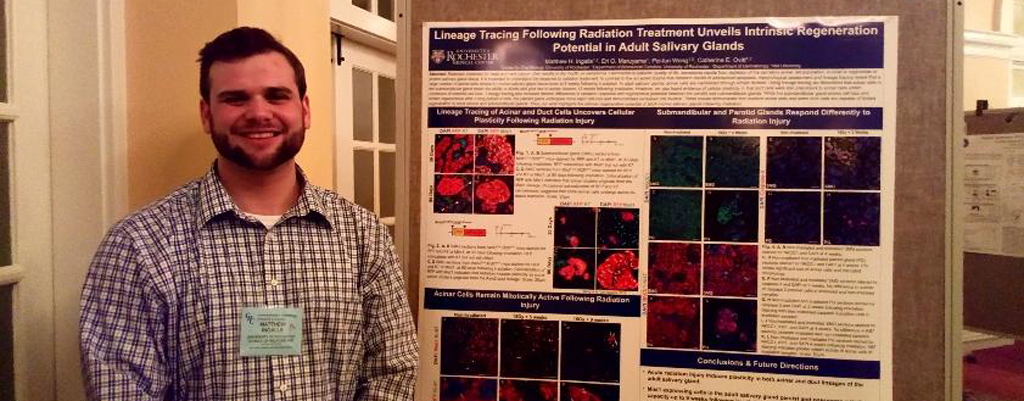
Matt Ingalls With Poster
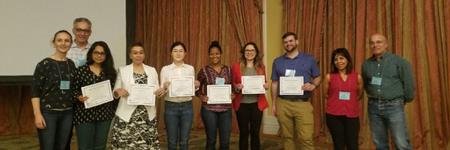
Matt Ingalls with other award winners
GDSC student Matt Ingalls won an award for his poster presentation at the 2019 Gordon Research Conference for Salivary Glands and Exocrine Biology in Galveston, Texas (February 2nd -- 8th). The GRC brought together leading researchers in the field of salivary gland biology from around the world. Matt's poster, titled "Lineage Tracing Following Radiation Treatment Unveils Intrinsic Regeneration Potential in Adult Salivary Glands", highlights differences in radiation response between the submandibular and parotid salivary glands. Utilizing lineage tracing models his work demonstrates the intrinsic regeneration potential of the adult salivary gland. The NIH-supported research was conducted in the laboratory of Dr. Catherine Ovitt and was co-authored by E. Maruyama and P. Weng. -- Congratulations Matt!
Kristen Bush Marshall Successfully Defends Her Thesis
Monday, February 11, 2019
Kristen Bush Marshall successfully defended and submitted her thesis for the PhD in Translational Biomedical Science, with a focus in Infection and Immunity: From Molecules to Populations
Dr. Bush Marshall's research focus was The use of electronic health records (EHR), predictive analytics, and network science to understand infection mobility and improve patient outcomes. Her research was conducted in the labs of Dr. Martin Zand & Dr. Gourab Ghoshal
She will be starting a postdoctoral position with her mentor, Dr. Martin Zand on 2/16, and will be heading down to the CDC for the EIS Fellowship starting in the summer
PREP Scholar Seble Negatu Receives Award
Monday, February 11, 2019
Seble Negatu -- PREP Scholar in the laboratory of Dr. Deborah Fowell
Seble Negatu was one of 9 recipients of the American Association of Immunologists (AAI)-sponsored immunology presentation awards at the ABRCMS meeting in November 2018 in Indianapolis, IN. https://www.abstractsonline.com/pp8/#!/5759/presentation/882
At the meeting, AAI members and meeting chairs, Robert Binder and Cherie Butts, also presented Seble with a 2019 AAI Young Scholars Travel Award, to attend the 2019 AAI Annual Meeting this May in San Diego.
GDSC student Adrian Molina-Vargas co-founds ADSE chapter to tackle underrepresentation in STEM
Friday, February 1, 2019
February 1, 2019
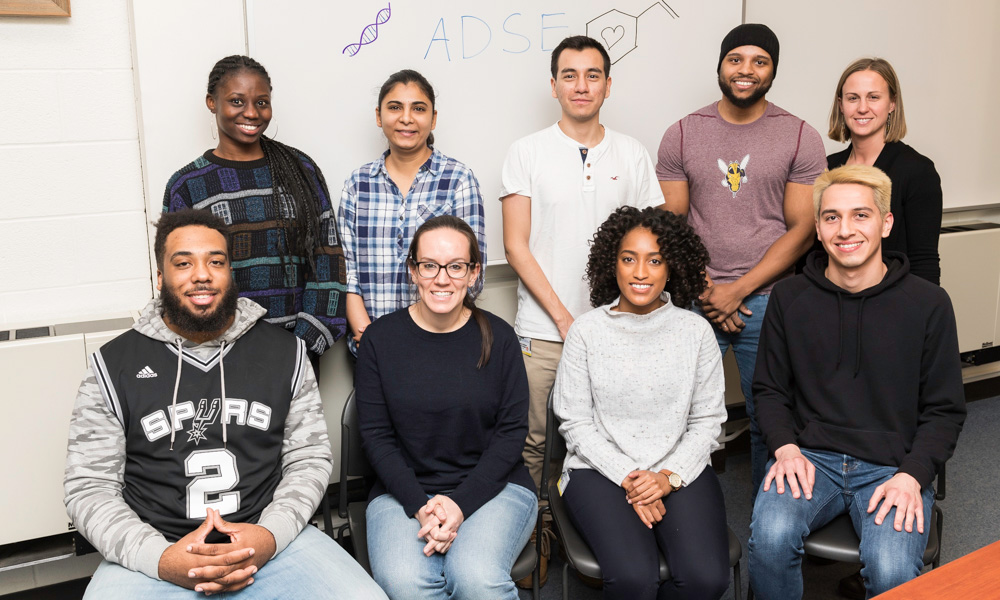
In the front row from the left, Keon Garrett, Ellen Matson, Raven Osborn, and Antonio Tinoco Valencia; and in the back row from the left, Marian Ackun-Farmmer, Heta Gandhi, Adrian Molina Vargas, Shukree Abdul-Rashed, and Liz Daniele are among the founding members of the new Rochester chapter of the Alliance for Diversity in Science and Engineering. (University of Rochester photo / J. Adam Fenster)
Raven Osborn thought long and hard about continuing a PhD at the University of Rochester. Other minority students she knew at the Medical Center had also felt the isolation, the constant "being on edge" and "code-switching"—shifting the way they express themselves—that comes with being an underrepresented minority in a STEM field.
"Can I do this for another five and half years?" she wondered.
Antonio Tinoco, a DREAMer who was born in Mexico and raised in Los Angeles, is a fourth year PhD student in the department of chemistry on the River Campus. He can remember only one or two occasions when a visiting faculty member of underrepresented minority background was invited to give a seminar in his department.
"My goal is to go into academia to be a professor, do research, and teach. But there are so few examples to follow," he says. "I don't even know of anyone who, as a DACA recipient or DREAMer, is a professor in chemistry. So, I could easily tell myself nobody has done it; it's impossible; maybe I should look for something else."
Instead, Tinoco, Osborn, and five other graduate students have banded together to form the University of Rochester chapter of the Alliance for Diversity in Science and Engineering (ADSE). The mission of the national ADSE, which was founded in 2014, is to increase the participation of underrepresented groups in academia, industry, and government through graduate student organizations that reach out to students and scientists of all ages and backgrounds.
Other ADSE chapters are at the University of California campuses at Berkeley and Davis, the University of Central Florida, the University of Colorado, Columbia University, Drexel University, Georgia Institute of Technology, University Maryland, New York University, Northeastern University, and Texas A&M.
Tinoco, the president and founding member of the new chapter, says its immediate goals are twofold:
- Establish a diversity lecture series to bring underrepresented faculty from other universities to Rochester. "It would be an opportunity for underrepresented minority students here to say 'Wow, there's someone out there like me who is making it, so maybe there's hope for me.'" Underrepresented minority postdoctoral fellows would also be invited, especially ones who might be interested in eventually teaching here, Tinoco says.
- Provide a space where underrepresented graduate students in STEM fields from across the University can meet, network, and hold workshops and panels to openly discuss the issues they face. "If we can openly discuss these things, we won't feel as isolated," Tinoco says.
The chapter has been certified by the University and will receive funding through the University's David T. Kearns Center for Leadership and Diversity. ADSE's goals fall well within the Kearns Center's mission to expand the educational pipeline through the doctoral degree for low-income, first-generation college, and underrepresented minority students, says Liz Daniele, the center's assistant director for graduate diversity.
Inviting underrepresented faculty from other campuses to give a science-based talk, but also give a diversity-themed talk about their academic journey "is a great model," she says. "And that's why Kearns is happy to support several semesters of lectures."
"I think this is exactly the type of thing that the University needs right now," says Ellen Matson, assistant professor of chemistry, who will be the chapter's faculty advisor. She, too, is excited about the proposed diversity lecture series—as a way to inspire and motivate students to finish their programs and pursue STEM careers, and also "showcase our research programs and facilities to diverse early-career scientists and post-doctoral research fellows interested in pursuing independent academic research careers."
"Overall, I think that the University of Rochester community, particularly at the graduate level, will really benefit from having a chapter of the Alliance for Diversity in Engineering and Science on campus," Matson says.
Osborn, who is serving as the chapter's treasurer, does not regret her decision to stay at Rochester to pursue a PhD in translational biomedical science. "I've been very lucky to work with faculty members like Tim Dye, Steve Dewhurst, and Juilee Thakar," she says.
Osborn received a medical center community outreach award as a leader in the Rochester Young Scientists Club's program, which encourages pupils at inner-city elementary schools to start thinking like scientists. She is excited to be serving on the search committee for a new vice president for equity and inclusion at the University.
She is hopeful that ADSE will bring together underrepresented graduate students, now separated by Elmwood Avenue "divide" between the River Campus and the Medical Center and the separate "silos" of their STEM disciplines.
And she agrees with Matson that the University will benefit from having a chapter of ADSE.
"This is an amazing institution, and we have so many resources here. If we can make this a place where people who have different backgrounds feel comfortable, where their different perspectives are welcomed, it can only better the institution as a whole."
Former Biochemistry Student Jerry Madukwe, Ph.D. travels to West Africa to Speak With Students
Wednesday, January 30, 2019
Jerry Madukwe, Ph.D., who received his Ph.D. in Biochemistry (2018), and is currently a postdoctoral fellow at Yale University, recently completed a 2-week science-outreach trip to West Africa. Jerry was invited by the West Africa Center for Cell Biology of Infectious Pathogens at the University of Ghana, and the Department of Life sciences at the University of Ilorin in central Nigeria to talk about the work he did as a PhD student and about graduate school in the United States. Jerry, who hails from Nigeria, and got his BS from Lee University in Tennessee, also used the opportunity to visit his former elementary school where he talked to fifth grade pupils about science (see photos), and to demonstrate DNA extraction from bananas. The kids were very excited by his visit, and Jerry found the experience very fulfilling.
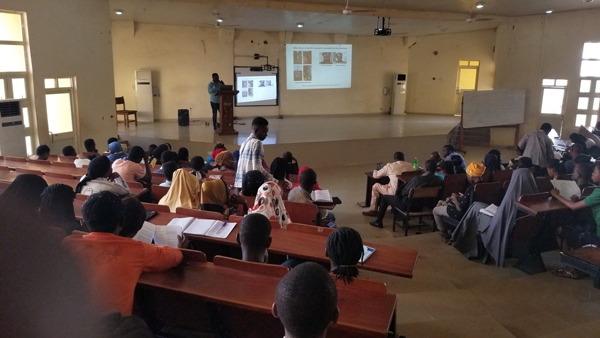
Study suggests how high blood pressure might contribute to Alzheimer’s
Monday, January 28, 2019
The brain's system for removing waste is driven primarily by the pulsations of adjoining arteries, University of Rochester neuroscientists and mechanical engineers report in a new study. They also show that changes in the pulsations caused by high blood pressure slow the removal of waste, reducing its efficiency.
This might explain the association between high blood pressure and Alzheimer' disease, the researchers say. Alzheimer's, the most common cause of dementia among older adults, is characterized by abnormal clumps and tangled bundles of fibers in the brain.
The study, reported in Nature Communications, builds upon groundbreaking discoveries about the brain's waste removal system by Maiken Nedergaard, co-director of the University's Center for Translational Neuromedicine. Nedergaard and her colleagues were the first to describe how cerebrospinal fluid is pumped into brain tissue and flushes away waste. Subsequent research by her team has shown that this glymphatic waste removal system is more active while we sleep and can be damaged by stroke and trauma.
This latest research shows "in much greater depth and much greater precision than before" how the glymphatic system functions in the perivascular spaces that surround arteries in the outer brain membrane, says Douglas Kelley, an assistant professor of mechanical engineering and an expert in fluid dynamics. His lab is collaborating with Nedergaard's team as part of a $3.2 million National Institute on Aging grant.
For this study, Humberto Mestre, a PhD student in Nedergaard's lab, injected minute particles in the cerebrospinal fluid of mice, and then used two-photon microscopy to create videos showing the particles as they moved through the perivascular spaces.
Dr. Kuan Hong Wang comes to the University of Rochester
Monday, January 21, 2019
We are pleased to welcome Dr. Wang to the University of Rochester Medical Center, the Department of Neuroscience and the Del Monte Institute for Neuroscience from the NIH.
Dr. Wang comes to us as the former chief of the Unit on Neural Circuits and Adaptive Behaviors at the National Institute of Mental Health. Dr. Wang received his B.A. in Biochemical Sciences from Harvard College and his Ph.D. from the University of California at San Francisco, where he studied the molecular regulators of sensory axon growth and branching during development with Marc Tessier-Lavigne. Dr. Wang obtained postdoctoral training with Susumu Tonegawa at the Massachusetts Institute of Technology, where he examined the ways in which cortical neurons respond to an animal's experience by directly visualizing the molecular activity of a given set of neurons over several days in the live animal. With this approach, he revealed a physiological function of neural activity regulated gene Arc in sharpening stimulus-specific responses in visual cortex.
Research Roundup: Dealing with Failure and an Unfunded Grant Application
Wednesday, January 9, 2019
Stephen Dewhurst, Ph.D., Vice Dean for Research
It's something we rarely talk about: how it feels when a grant application isn't funded. And yet, it's by far the most common outcome for any such submission -- an unavoidable consequence of paylines that are in the low teens or single digits.
The months between the submission of a grant and its review pass surprisingly quickly. And then time slows to a crawl. The self-doubt and self-criticism become more insistent. And hope flickers -- such a fragile thing, in the end.
Recently, after submitting a grant application, I found myself logging onto the NIH website every day after the review panel had met, to see if the scores had been posted. Eventually, they appeared.
This particular grant isn't going to be funded.
It's a horrible feeling. A private hurt that's immeasurably hard to share with colleagues, family and friends. That's because the narrative is one of failure.
But, I've chosen to write about it anyway -- because we've all been here. Because shame thrives in secrecy and loses its power when we talk about it (something I learned from Brené Brown).
What has helped is input from friends. One wrote: "Thank you for sharing this. I'm glad you did. As Directors etc., we don't share enough of the worries, the worthiness/unworthiness and the vulnerabilities that things like grants.... bring to the work and to our sense of ourselves as 'good' researchers, colleagues, leaders and people."
She went on to say: "I wish I had great advice. I have nothing. Except that you are a good person, a good mentor.... and whatever happens, you will still be those things. If you receive the grant, you know what your work will be; if you don't, you will have new and different work to do."
She's right.
It's also true that a life in science requires resilience -- the ability to pick oneself up after a fall and to learn and improve from failure. No one ever said that it would be easy.
In a few weeks, the summary statement will be released and I'll start thinking (with my colleagues) about ways to address the reviewers' concerns. Until then, I'll keep a space in my heart for these words of Samuel Beckett: "I can't go on. I'll go on."
TBS Student Explores Drug Repurposing to Treat Infectious Disease
Tuesday, January 8, 2019
Infectious diseases still pose a big health risk in resource-limited areas of the world. A fourth-year student in the UR CTSI's Translational Biomedical Sciences Graduate Program, Marhiah Montoya, is exploring the possibility of repurposing pre-existing estrogen receptor drugs, like tamoxifen, to fight these infections. Read Montoya's mini-review in mBio.
TBS Student Dissertation Defense
Monday, January 7, 2019
UR CTSI Translational Biomedical Science graduate student, Kristen Bush Marshall, will defend her dissertation, titled, "Inpatient mobility to predict hospital-onset Clostridium difficile: a network approach," on Friday, January 18. She will discuss her use of electronic health records and network analysis of hospital-onset clostridium difficile, a life-threatening infection triggered by taking antibiotics. Martin Zand, M.D., Ph.D., has been her advisor and mentor for the past three years.
Bush Marshall is committed to becoming an epidemiologist, with a clear focus on infection prevention and understanding the fundamental mechanisms of disease transmission in communities and healthcare facilities.
Date: Friday, January 18
Time: 12:00 pm
Location: Helen Wood Hall Auditorium 1W-304
UR-RCMI Scholarly Exchange Request for Applications
Monday, January 7, 2019
Faculty, staff, and students at the University of Rochester can apply now for funding to support research collaboration activities with their counterparts from any institution in the Research Centers in Minority Institutions (RCMI) program.
The UR-RCMI Scholarly Exchange Program awards up to five projects a maximum of $3,000 each to help colleagues from different cultures, disciplines, and academic appointments build partnerships and produce abstracts, publications, or grant applications together and to foster the next generation of researchers from underrepresented populations.
Learn more and access the application from the UR CTSI Stories blog.
If you have questions, please contact Ivelisse Rivera, M.D., UR-RCMI Exchange Coordinator.
Applications are due Friday, January 25.
In The News: URMC utilizes motion capture technology to study brain, how it ages
Wednesday, December 26, 2018
The following is an excerpt from an article by Norma Holland that originally appeared on WHAM 13:
Rochester, N.Y. -- From Hollywood to Healthcare: Technology used to make movies is being used at the University of Rochester Medical Center to help scientists understand the brain and how it ages.
What researchers learn could help predict a person's risk of developing Alzheimer's disease.
13WHAM watched researchers in the Mobile Brain Body Imaging -- or MoBi -- Lab attach wires to a cap covered in electrodes. The cap picks up the brain wave activity of a volunteer, while infrared cameras surrounding him pick up how his body moves on a treadmill.
This lab is one of 12 around the world combining motion capture technology with brain scans used in real time.
"What we're saying is: Let's get people up, let's get them in a walking situation where they're solving a task, where we can kind of stress them a bit, and then we can ask, 'How's the brain working under duress?' explained Dr. John Foxe, director of the Del Monte Institute for Neuroscience. "And that gives us a window into function, maybe like a neural stress test, akin to the cardiac stress test."
Armed with that information, doctors hope to one day be able to predict a person's dementia risk a decade before symptoms show up. It can also help give us clues about a person's risk of falling as they get older.
Chavali, Couch, DeZoysa and Hao Win Sayeeda Zain Travel Award
Tuesday, December 18, 2018
The department is pleased to announce the winners of the Sayeeda Zain Fall Travel awards: Shashank Chavali, Tyler Couch, Meemanage Dudarshika DeZoysa and Fanfan Hao.
The Sayeeda Zain Travel Award honors the distinguished career and charitable life of Dr. Sayeeda Zain. The award is given in recognition of research excellence to support travel and related expenses associated with attendance at a scientific conference or corporate internship to gain practical experience. The next round of Sayeeda Zain Travel Awards will be offered in Spring 2019.
Thank you to all those who applied and congratulations to Shashank, Tyler, Dudarshika and Fanfan!
Study: Neurons in the Brain Work as a Team to Guide Movement of Arms, Hands
Tuesday, December 11, 2018
 The apparent simplicity of picking up a cup of coffee or turning a doorknob belies the complex sequence of calculations and processes that the brain must undergo to identify the location of an item in space, move the arm and hand toward it, and shape the fingers to hold or manipulate the object. New research, published today in the journal Cell Reports, reveals how the nerve cells responsible for motor control modify their activity as we reach and grasp for objects. These findings upend the established understanding of how the brain undertakes this complex task and could have implications for the development of neuro-prosthetics.
"This study shows that activity patterns in populations of neurons shift progressively during the course of a single movement," said Marc Schieber, M.D., Ph.D., a professor in the University of Rochester Medical Center (URMC) Department of Neurology and the Del Monte Institute for Neuroscience and a co-author of the study. "Interpreting these shifts in activity that allow groups of neurons to work together to perform distinctive and precise movements is the first step in understanding how to harness this information for potential new therapies."
Rochester graduate student named Schwarzman Scholar
Friday, December 7, 2018
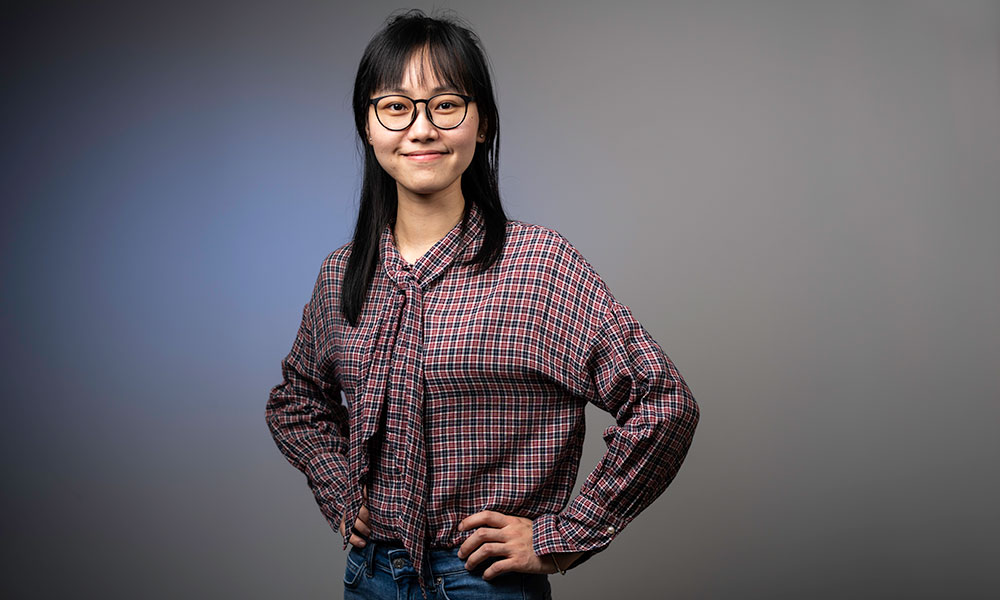
University of Rochester graduate student Beixi Li is one of 140 students selected worldwide as a Schwarzman Scholar. (University of Rochester photo / J. Adam Fenster)
University of Rochester graduate student Beixi Li has been named a 2019-20 Schwarzman Scholar, one of about 140 selected worldwide for this prestigious graduate fellowship. She'll develop leadership skills and professional networks in a one-year master's program at China's elite Tsinghua University in Beijing, beginning next August.
"I'm really excited," the Shanghai, China, native says. "After going through the application process and long interview sessions, it was great to know that everything I did was worth the effort. I'm thrilled to be part of this program."
The international fellowship was established in 2016 with a $100 million donation by philanthropist Stephen Schwarzman, whose goal was to prepare the next generation of global leaders by providing an unparalleled opportunity to gain some understanding of China through an immersive experience. Students pursue a master's degree in global affairs, with concentrations in public policy, economics and business, or international studies. They spend a year in an international community of thinkers, innovators, and leaders in business, politics, and society.
Nearly 2,900 candidates from around the world applied.
Li is currently pursuing a master of public health degree at Rochester's School of Medicine and Dentistry and expects to graduate in May. Her thesis examines the potential impact of maternal dental amalgams (fillings) on offspring neurodevelopment.
As a Schwarzman Scholar, Li intends to concentrate in public policy. She plans a career in preventive medicine, with a focus on children, in the fields of environmental hazards, tobacco control, or infectious diseases.
"The world today is facing various public health issues, like environmental pollution, the Ebola viruses in Africa, the opioid epidemic in the United States, and smoking abuse among teens and adults," Li says. "I've always believed that preventive medicine and public health are the most effective ways to save the lives of millions in the world."
Li is the first Rochester recipient since Jintian (Jay) Li '12 (no relation) was selected to the inaugural class. Suman Kumar '19, a mechanical engineering major from Lalitpur, Nepal, was a Schwarzman Scholar semifinalist and one of around 400 who reached the interview stage of the competition.
"We are delighted and proud to have another Rochester student join the ranks of Schwarzman Scholars and hope that Beixi's selection will inspire more students, including those in graduate and professional degree programs, to consider applying in the future," says Belinda Redden, director of the Fellowships Office.
Li earned her undergraduate degree in preventive medicine from Xiangya School of Medicine at Central South University in Changsha, China, and is a licensed medical doctor in her native country. She began her Rochester graduate study program in fall 2017.
US News and World Report Article: What You Can Do With a Biology Degree?
Tuesday, December 4, 2018
Recently the US News and World report website published an article discussing what you can do with a biology degree. The article features input from URBEST Executive Director, Tracey Baas.
The article goes into detail on the types of jobs a graduate can expect, the variety of roles pursuing such a degree opens up for you including industry options while detailing further academic choices. To read the entire article, visit the US News and World Report Website
Professor Harold Smith, Ph.D. appears on Evan Dawson Radio Program
Thursday, November 29, 2018
Harold C. Smith was a guest along with Bob Duffy (CEO of the Greater Rochester Chamber of Commerce), Jason Klimek (attorney with Boylan Code), Zachary Sarkis (co-founder of Flower City Solutions) and Jacob Fox (founder of Closed Loop Systems) on WXXI Connections with Evan Dawson on 11/21/2018 to address the opportunities and questions surround the emerging hemp industry in Up State NY. (listen to Hemp101http://www.wxxinews.org/programs/connections?page=1&ajax=1)
Dr. Smith spoke regarding the future of labeling and dosing of THC-free and THC-containing products relative to what we understanding from scientific and clinical research. Having founded CannaMetrix, LLC, a New York based company, Dr. Smith seeks to establish through patent pending, cell-based assays, to raise the standards for product development and quality control so as to better information patient choices of products containing full spectrum plant cannabinoids or synthetic cannabinoids and advance medicinal use of cannabis.
Jean Bidlack Featured on WXXI's Second Opinion
Wednesday, November 28, 2018
Professor of Pharmacology and Physiology, Jean Bidlack, Ph.D. and her research were recently featured on WXXI's Second Opinion.
The Medical Innovations segment will air with the "Alcoholism" episode on WXXI where Dr. Bidlack discusses how when dopamine levels spike in the brain, it leads to the very strong reinforcing properties of addiction.
The program will air Thursday January, 3rd at 8:30pm but can be viewed below as well.
23rd WCI Scientific Symposium
Thursday, November 15, 2018
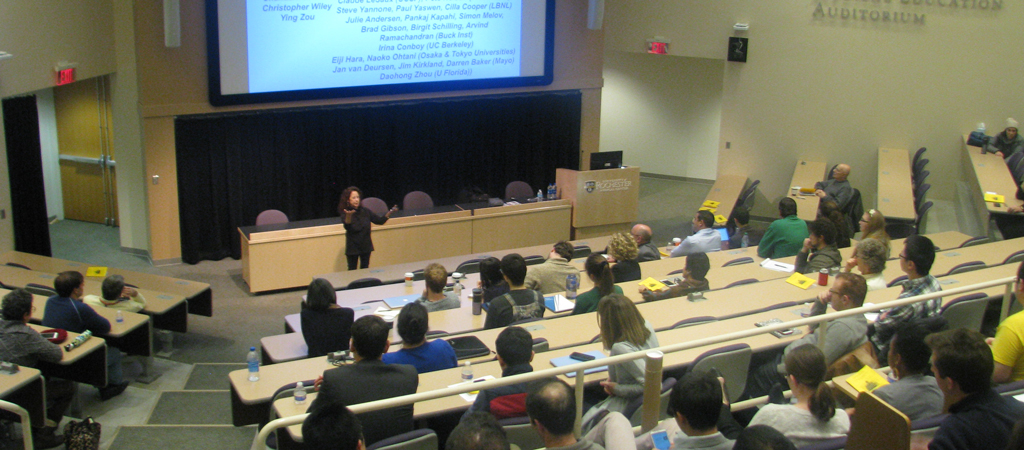
Keynote Lecture in Progress
Supriya Mohile, M.D., M.S.
Judith Campisi, Ph.D.
"This week GDSC assisted the Wilmot Cancer Institute (WCI) in hosting their Twenty Third Scientific Symposium for Cancer Research and Treatment. Graduate Students working in basic, translational and clinical cancer research displayed posters of their respective cancer studies in the Flaum Atrium. GDSC and other faculty gave lectures; including Brian Altman, Stephano Mello, Dirk Bohmann, Vera Gorbunova, Joe Chakkalakal, Laurie Steiner, and Ben Frisch. Additionally, WCI professor Supriya Mohile, gave the Davey Award Lecture titled Improving Care Delivery for Older Patients with Cancer. Finally, Judith Campisi, Ph.D. of the Buck Institute for Research on Aging and USC Leonard Davis School of Gerontology presented the symposium's keynote lecture titled "Cancer and aging: Rival Demons?"
Congratulations to Phong Nguyen and Jose Suarez Loor for receiving ORS Travel Awards!
Thursday, November 15, 2018
Congratulations to PhD students Phong Nguyen and Jose Suarez Loor for receiving Orthopaedic Research Society (ORS) Travel Awards to attend the 2018 ORS Tendon Section Conference in Portland, OR! For more information, please see here: https://www.ors.org/tendon-2018-conference/
URMC Student/Trainee Travel Awards 2018 Request for Applications
Tuesday, November 13, 2018
Two travel reimbursement awards of up to $1,000 will be given this funding cycle (one for clinical research and one for basic sciences research) to support a University of Rochester School of Medicine & Dentistry medical student, graduate student, postdoctoral trainee, clinical resident, and/or clinical fellow to attend important national or international meetings at which they will present their research and make professional connections.
Eligible applications for the current cycle are for travel between September 1, 2018 and February 28, 2019. Submission Deadline: Friday, December 14, 2018, 6:00 pm. For questions, email Amy Blatt, M.D. or call 585-275-4912.
Congratulations Eugene!
Monday, November 12, 2018
We celebrated the successful PhD defense by Eugene Kim last Friday. Working with Jianwen Que, Eugene has identified a significant progenitor cell population in the early foregut. She used a combination of xenopus and mouse models to demonstrate that the transcription factor Isl1 enriched in the unique progenitor population regulates the separation of the esophagus from the trachea. These findings provide important insights into the pathobiology of a relatively common birth defect esophageal atresia with/without trachea-esophageal fistula (EA/TEF). Eugene has a passion for studying developmental biology and stem cells in regeneration, and she plans for a future career in these areas!
Congratulations to the 4th Annual Immune Imaging Symposium Poster and Image Winners
Monday, November 12, 2018
Wish the four winners a hardy congratulations when you see them.
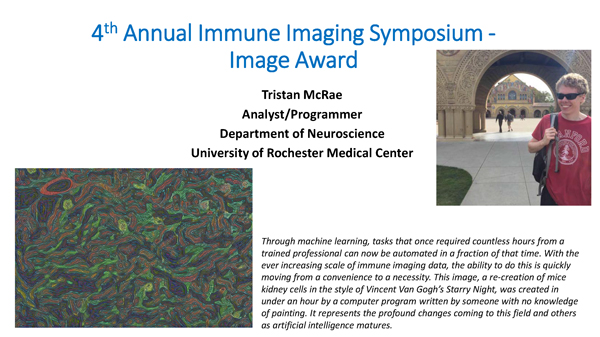

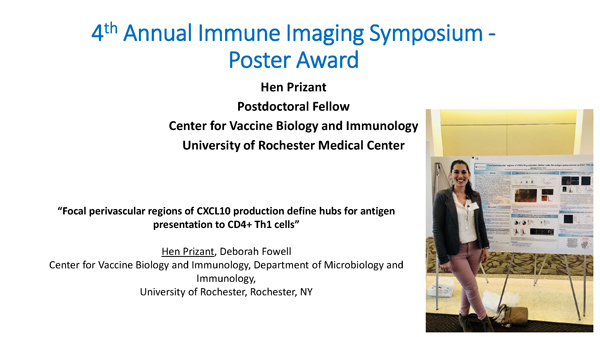
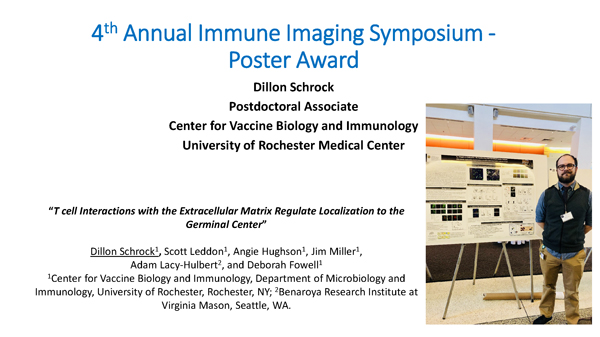
Congratulations Fanju!
Thursday, November 8, 2018
On Thursday, Fanju Meng successfully defended his PhD thesis. Under mentorship of Dr. Benoit Biteau, Fanju's studies focus on the regulatory network that coordinates stem cell proliferation and differentiation in the Drosophila intestinal epithelium. Using advanced fly genetics and cell biology methods, Fanju characterized the expression and role of several transcription factors in adult intestinal progenitors. His work significantly improves our understanding of the programs controlling stem cell function and establishes the fruit fly as a model to study these conserved, critical stem cell factors. His findings have been published in Cell Reports and Stem Cell Investigation. And there are additional papers in the pipeline! Fanju was a recipient of a NYSTEM training grant hosted by the Department of Biomedical Genetics, and the Goodman Doctoral Dissertation Fellowship from the University of Rochester. Fanju is now planning on continuing in his work in the field of stem cell and cancer biology using genetic model organisms -- and we wish him the best of luck! You will be missed.
For further reading, please see:
- A Sox transcription factor is a critical regulator of adult stem cell proliferation in the Drosophila intestine. Cell Reports (2015)
- There and back again: amitosis to repopulate a stem cell pool. Stem Cell Investigation (2017)
Fanju Meng Successfully Defending His Ph.D. Thesis
GDSC Halloween Costume Contest!
Thursday, November 8, 2018
Last week GDSC held our Halloween Costume Contest. Our three GDSC student contestants can be seen below.
Derek Crowe as Bart Simpson
Anne Roskowski as Sailor Moon
Neal Shah as a Medical Garbed Squidward
Derek Crowe earned a very close second place with 14 votes. While first place went to Anne Roskowski with 15 votes. Congrats Anne!"
Dumont Receives 2018 Outstanding Graduate Student Teacher Award
Tuesday, November 6, 2018
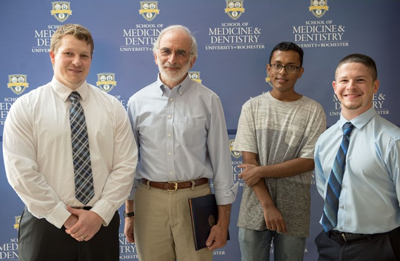
Biochemistry professor Mark Dumont, Ph.D. is the recipient of the 2018 Outstanding Graduate Student Teacher Award. Established in 2013, this award is given to an outstanding graduate student teacher for record of excellence in classroom instruction. Mark was nominated by graduate students Brandon Davis, Ashwin Kumar and Matthew Raymonda.
This award was presented at the School of Medicine and Dentistry Convocation Ceremony, September 6, 2018.
The department would like to extend congratulations to Mark on this well- deserved honor.
GDSC Fall Retreat
Thursday, November 1, 2018
Our graduate program in Genetics, Development and Stem Cells (GDSC) celebrated another successful season of research and academic growth. On the afternoon of Friday October 26th 2018, the faculty, students and families of GDSC held our Fall Retreat at the Ellison Park Pavilion Lodge. Among our many reasons to celebrate was our Department's recent faculty expansion including, Brian J. Altman, Stephano Spano Mello, and Patrick J. Murphy. Welcome! We also celebrated the faculty promotion of Benoit Biteau to Associate Professor. Finally, we celebrated the future research of faculty members Margot Mayer-Pröschel, Douglas Portman, Chris Pröschel, and Andy Samuelson each of whom obtained prominent research grants earlier this year. Our festivities included pumpkin carvings, board games and a cocktail hour. There were also three hotly contested rounds of Science Trivia. (The final scores for the first and second place teams were separated by a margin of half a point!) The winning team "Smooth ER" included members Derek Crow, Li Xie, Shen Zhou, Yungeng Pang, Mark Noble, Daxiang Na, and Andy Samuelson. Additionally, Jessie Hogestyn won our "Hidden Facts" contest testing one's knowledge of eccentric or esoteric trivia regarding GDSC faculty and students. Photos of GDSC's genetic festivities can be seen below.
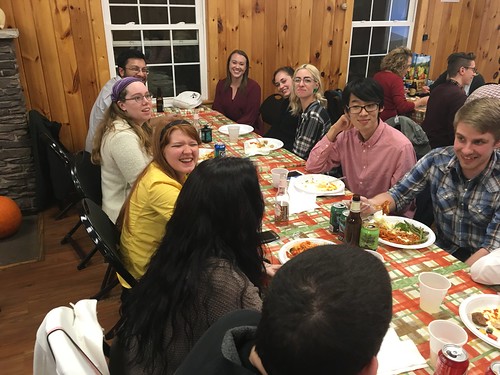
CMPP Graduate Student Published in Nature Communications
Wednesday, October 24, 2018
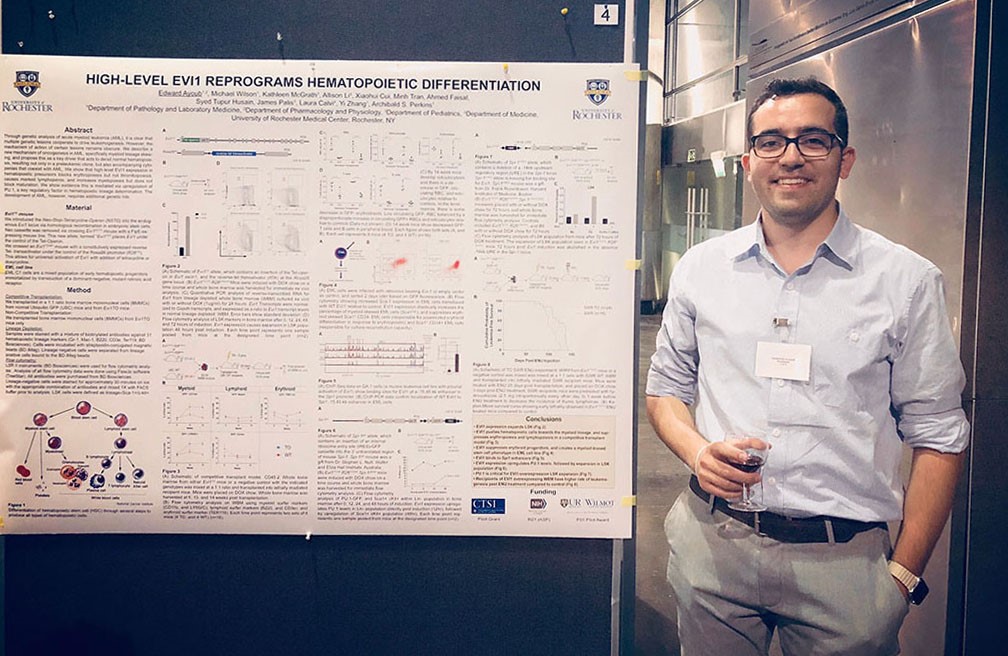 Edward Ayoub, a Graduate student in the Cellular and Molecular Pharmacology and Physiology PhD Program and member of Archibald Perkins Lab published in Nature Communications on 10/12/2018. More information can be found on the Nature Website.
Paper Title & Abstract
EVI1 overexpression reprograms hematopoiesis via upregulation of Spi1 transcription
Edward Ayoub, Michael P. Wilson, Kathleen E. McGrath, Allison J. Li, Benjamin J. Frisch, James Palis, Laura M. Calvi, Yi Zhang & Archibald S. Perkins
Inv(3q26) and t(3:3)(q21;q26) are specific to poor-prognosis myeloid malignancies, and result in marked overexpression of EVI1, a zinc-finger transcription factor and myeloid-specific oncoprotein. Despite extensive study, the mechanism by which EVI1 contributes to myeloid malignancy remains unclear. Here we describe a new mouse model that mimics the transcriptional effects of 3q26 rearrangement. We show that EVI1 overexpression causes global distortion of hematopoiesis, with suppression of erythropoiesis and lymphopoiesis, and marked premalignant expansion of myelopoiesis that eventually results in leukemic transformation. We show that myeloid skewing is dependent on DNA binding by EVI1, which upregulates Spi1, encoding master myeloid regulator PU.1. We show that EVI1 binds to the −14 kb upstream regulatory element (−14kbURE) at Spi1; knockdown of Spi1dampens the myeloid skewing. Furthermore, deletion of the −14kbURE at Spi1 abrogates the effects of EVI1 on hematopoietic stem cells. These findings support a novel mechanism of leukemogenesis through EVI1 overexpression.
Research Roundup: Values
Monday, October 22, 2018
Stephen Dewhurst, Ph.D., Vice Dean for Research
A couple of weeks ago, I gave a presentation at the URBEST retreat, entitled "Mentoring Lessons: What my students have taught me". It was a Pecha Kucha style talk - 20 slides, 20 seconds each; a little over 6 minutes total.
My ratio of prep time to presentation time was frightening. But the process of constructing the talk was incredibly rewarding, because it forced me to reflect on the moments when my students have shown me - through their words and actions - what matters most.
I'm referring to those moments when others teach us something important about ourselves, about our interconnectedness, and even about the workplace culture we aspire to create around us. We've all experienced moments like these. Moments that, even years later, can still inspire tears and feelings of deep gratitude.
As I was putting my slides together, I got to thinking about Tony Broyld - who I first met as a middle schooler at Clara Barton School #2 in the City of Rochester. He's now a Systems Engineer in his early 30s with two M.S. degrees from the University of Rochester and living in the greater New York City area. He is also the first member of his family to go to college. Someone in whose life I was fortunate enough to make a real and profound difference and also someone who taught me a great deal about resilience.
If he were the only student who taught me something important about values, about what matters, this would be a short column. But of course, he wasn't.
Almost every day, I find myself in awe of the people I'm privileged to work with.
Recently, I attended the annual picnic in my home department of Microbiology and Immunology. One of our students spoke to me about her journey to graduate school. How the kindness of a single mentor changed the course of her life, made her believe in herself, helped her see a different future, and brought her here to Rochester.
She spoke also about her father and how he will spend the rest of his life in jail, a measure of how far her life has traveled from the path that it might otherwise have gone down.
She spoke from a place of love and appreciation - and left me feeling intensely honored to be a part of her education.
There are hundreds of stories like hers at our Medical center from people whose lives have been transformed by the power of their own courage and by the drive of their imagination and curiosity. By their desire to learn, by this life in science that we share, and by the values that we talk about -- but don't always appreciate or fully understand -- until we see them up close and personal.
Former Tox Student Claire McCarthy, PhD Featured on NPR
Thursday, October 18, 2018
Early one morning in the spring of 2017, former Toxicology graduate student Claire McCarthy (Sime Lab) started her day as many don't: rolling dried rhinoceros dung into cigarettes and packing them into a machine that smoked them.
Although it might seem bizarre, McCarthy's purpose was serious: She wanted to know what happens when people breathe in dung smoke.
Dung smoke is no joke. Animal dung is used by millions globally for heating and cooking.
It's a dangerous practice. Burning biomass fuels (including animal dung as well as wood, charcoal, and plant matter) generates indoor air pollution, which caused 4 million deaths worldwide in 2012 according to the World Health Organization. Like cigarette smoke, biomass smoke has been linked to increased risk of lung diseases, such as chronic obstructive pulmonary disorder (COPD), lung cancer and respiratory infection.
CMPP Graduate Student Brandon Berry Wins Poster Award
Monday, September 24, 2018
The Wojtovich lab attended the Translational Research in Mitochondria, Aging, and Disease (TRiMaD) Symposium. A yearly event that brings together approximately 150-200 scientists from the Northeast to discuss the role of mitochondria in aging and disease.
Brandon Berry, Graduate Student in Wojtovich lab, was one of four recipients to win a poster award for his work entitled "Novel Optogenetic control of mitochondrial energetics rescues electron transport chain inhibition"
Adrian Moises Molina Vargas is awarded Graduate Alumni Convocation Award
Friday, September 14, 2018
Adrian ('18 University of Alcalá, Spain), one of three new 2018 recruits to the GDSC program was awarded the Graduate Alumni Convocation Award to recognize his promise for exceptional accomplishment in graduate studies. During his year of studying abroad at Tufts during 2017-2018, Adrian worked in the Mirkin lab to study the role of cdc13 mutations in genome instability.
In addition, Sarah Spahr ('18 Ohio State University) was nominated for the Irving Spar Fellowship and Tom O'Connor ('17 University of Buffalo) was nominated for the Newell Stannard Graduate Student Scholarship Award. Congratulations to all three!
Adrian, Sarah & Tom
GDSC Team Participates in 6th annual Wilmot “Warrior Walk”
Friday, September 14, 2018
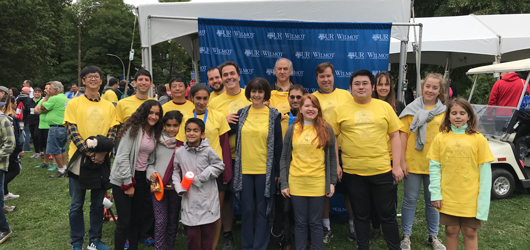
GDSC Team supports the 2017 Wilmot Cancer Warrior Walk
Students and faculty from Biomedical Genetics and the GDSC program attended the 6th Wilmot Cancer Institute Warrior Walk on Sunday. Aptly named the "NextGen Cancer Busters" to symbolize the graduate students and post-docs training to become cancer researchers, the GDSC team mingled with cancer survivors and family members, to support the fight against cancer. As one team member pointed out: "Meeting cancer survivors really helps put the work in the lab into perspective".
In addition to the Cancer Survivor Walk, "NextGen Cancer Busters" also participated in the 10k and 5k events. Notably, Dalia Ghoneim (5k) and Adam Cornwall (10k) and placed 1st and 2nd in their group, and 2nd and 7th overall. In addition, Scott Friedland and our new faculty addition, Brian Altman, both placed 4th in their age group for the 5k. Congratulations!!
Neuroscience Graduate Program Student Receives Award for SfN Trainee Professional Development
Tuesday, September 11, 2018
 Emily Warner was recently selected to receive a 2018 Trainee Professional Development Award (TPDA) from the Society for Neuroscience. These are highly competitive awards and it is a great achievement for Emily.
The award comes with a complementary registration to the conference in San Diego and a monetary award of $1000. Emily will present a poster at a poster session for other recipients and will be able to attend several Professional Development Workshops while at the conference.
Congratulations Emily!
Neuroscience Graduate Program Student Receive 3 Convocation Awards
Wednesday, August 22, 2018
Congratulations to our NGP students for again earning these honors at this year's School of Medicine and Dentistry Convocation Ceremony.
- Kathryn Toffolo (1st year): Merritt and Marjorie Cleveland Fellowship Award
- This fellowship was established in 1991 from Mr. and Mrs. Merritt Cleveland and is awarded to a Ph.D. student entering graduate study through the Biomedical Sciences Program with interest in developing a neuroscience-related research career.
- Monique Mendes (4th year): Outstanding Student Mentor Award
- This award, established in 2015, recognizes a student mentor who guides, supports and promotes the training and career development of others.
- Gregory Reilly (1st year): J. Newell Stannard Graduate Student Scholarship Award
- This scholarship was established by Dr. Stannard, Professor Emeritus, to recognize one deserving incoming graduate student for their commendable academic achievements. Dr. Stannard developed the world's first doctoral program in radiation biology at the School of Medicine and was a faculty member for almost 40 years before retiring in 1975. He taught and mentored hundreds of students who went on to become leaders and experts in the field of radiation health.
Research Roundup: The Loneliness of Grant Writing
Wednesday, August 22, 2018
Stephen Dewhurst, Ph.D., Vice Dean for Research
Almost all of us, as researchers, spend a good deal of our time thinking about grant proposals. That's because grant funding gives us the means to explore our ideas, and to do the things we think are important.
We also all recognize that most grant applications will be rejected by the funding agencies to which we submit them. So we become creatures of persistence.
What's discussed less often, is the actual experience of grant writing.
Its something we all do: at our desks, in coffee shops, at the kitchen table; wherever we can find a space for our laptop. But we don't often talk about how it feels.
There's a strong sense of stepping out of your normal life. For me - and I don't think I'm unusual in this - it involves withdrawing from many of the other things I would normally do. Not only professionally, but also family obligations and social interactions.
This column, for example, was due a week ago. But I deferred it, because I had a grant deadline yesterday.
Grant writing requires us to focus our thoughts to such an extent that we can sink into them; to become fully immersed. The experience is intense, and it is also both lonely and isolating.
That's because the process of writing a grant is an exercise in disconnection. An intentional unplugging.
When I'm writing a grant, I often feel very distant from the people around me. It's as if they're behind glass - because my mind is somewhere else entirely. And then I'll find myself alone in a quiet house, in the middle of the night, with nothing but my own thoughts for company. Struggling to find the right words.
What makes this more bearable is remembering why we're asking for the money - what we plan to do with it - and knowing also that this is a shared experience, common to all academic scientists. It's a part of the life we choose.
Those late nights, those doubts, those uncertainties - we've all been there. It's one of the things that bond us together.
So I wanted to take a moment to acknowledge the hundreds of researchers at the medical center who are engaged in grant writing on any given day. It's their efforts that make the URMC's research enterprise possible, and that make this a special place where discoveries happen every day.
School of Medicine Names New Dean for Graduate Education
Tuesday, August 21, 2018
Richard T. Libby, Ph.D.
Richard T. Libby Ph.D., professor of Ophthalmology and of Biomedical Genetics at the University of Rochester School of Medicine and Dentistry, and a member of the University's Center for Visual Science, has been named Senior Associate Dean for Graduate Education and Postdoctoral Affairs (GEPA), pending approval of the University Board of Trustees. Beginning Sept. 1, Libby will direct the School of Medicine and Dentistry's Ph.D., postdoctoral and master's degree programs. He succeeds Edith M. Lord, Ph.D., who served a decade in the role and is shifting her focus to microbiology and immunology research.
An innovative researcher in the neurobiology of glaucoma, Libby arrived in Rochester in 2006 after postdoctoral and fellowship experiences that enlightened him on the power of model genetics systems in the study of eye disease. Years spent training at the Medical Research Council's Institute for Hearing Research in Nottingham, England, and the Jackson Laboratory in Bar Harbor, Maine, formed the foundation for his current laboratory, which is focused on understanding the cell signaling pathways that lead to vision loss in glaucoma.
Libby is director of the Cell Biology of Disease Graduate Program, has served on numerous academic committees integral to research activities and graduate education, and is a respected mentor and teacher. He has published, as author or co-author, more than 60 peer-reviewed scientific articles and numerous reviews, book chapters and commentaries, and has presented internationally on a range of topics in eye and vision research.
"Rick understands that excellence in a research enterprise is essential to attracting the best and brightest talent and has articulated a vision for further improving the experience here, making it clear to the outside world that Rochester is the best place to learn and study," said Mark Taubman, M.D., CEO of the Medical Center and Dean of the School of Medicine and Dentistry at the University of Rochester. "He is a passionate scientist whose experience in a clinical department will bring valuable insight to graduate programs in basic and clinical research—a true asset to his role in helping prepare future generations of scientists."
"Complementing his expertise in leading graduate programs, and thorough understanding of their needs, Rick has developed a thoughtful approach to what it will take to continue moving them forward. It's clear that he's driven by a desire to develop our trainees and motivated to give them the best graduate/postdoctoral experience possible," said Stephen Dewhurst, Ph.D., Vice Dean for Research at the School of Medicine and Dentistry and Associate Vice President for Health Sciences Research at the University of Rochester. "In addition, having developed his own career in a somewhat untraditional way, Rick brings an added dimension to understanding and supporting others who are exploring diverse career options."
Libby received a doctorate degree in biology from Boston College in the field of neurodevelopment. He was a postdoctoral fellow at the Medical Research Council's Institute for Hearing Research in Nottingham England, and a postdoctoral fellow at the Jackson Laboratory in Bar Harbor, Maine. He joined the School of Medicine and Dentistry faculty as an assistant professor in 2006, was named associate professor in 2012, and professor in 2018.
"Rick is a great choice to succeed Edith Lord as the Senior Associate Dean for Graduate Education," said Dirk Bohmann, Ph.D., Donald M. Foster, M.D. Professor of Biomedical Genetics and Senior Associate Dean for Basic Research, who led the search committee. "He realizes that research excellence and successful graduate and postdoctoral programs are mutually dependent. You cannot have one without the other. He will be a passionate advocate for the graduate students and postdocs."
"Under Dr. Lord's leadership, GEPA has greatly enhanced the support and training of URMC's graduate students and postdoctoral fellows," Libby said. "In fact, GEPA has helped lead the nation in providing enhanced educational opportunities to ready trainees for the numerous careers available to the modern-day scientist. I am excited to be a part of this team. I look forward to further developing GEPA's missions of providing world-class training for our graduate students and postdoctoral fellows, and to helping our trainees continue their important work focused on understanding human health and disease."
Lord's four-decade career in Rochester is dotted with milestones and accomplishments. She joined the School of Medicine and Dentistry faculty as a senior instructor in 1976 and rose through the ranks to professor in 1994. In 10 years as Senior Associate Dean, she worked to improve the experience of graduate students and postdocs in and outside the lab, adding Postdoctoral Affairs to the Office for Graduate Education's name, standardizing salaries and benefits, and advocating on behalf of trainees. She spearheaded a revamping of the fundamental basic science courses, incorporating more workshops and active learning components and emphasizing team-based science. She also fostered professional development initiatives and guided efforts to support students' health and wellbeing. Her return to the research lab will include focusing on an NIH grant to study the immune response in tumors.
Ralph Jozefowicz Honored for Mentoring Next Generation of Leaders in Neurology
Tuesday, August 14, 2018
URMC neurologist Ralph Jozefowicz, M.D., has been awarded the American Academy of Neurology's (AAN) Leading in Excellence through Mentorship award. He received the recognition at the AAN's 2018 annual meeting.
Jozefowicz, a professor of Neurology and Medicine, is a nationally recognized leader and innovator in neurologic education and has received numerous awards and accolades from AAN, the American Neurological Association, the Fulbright Program, the Association of American Medical Colleges, and Jagiellonian University in Poland for his work in the field.
He currently serves as director for the second year medical student "Mind, Brain and Behavior" course and co-director of the third year Neurology Clerkship. He is also the Neurology Residency Program Director at the URMC.
You can read more about the award and perspectives from colleagues he has mentored over the years in Neurology Today.
MSTP Alum, Alan Kenny Headlines MSTP 18th Annual Retreat
Friday, August 10, 2018
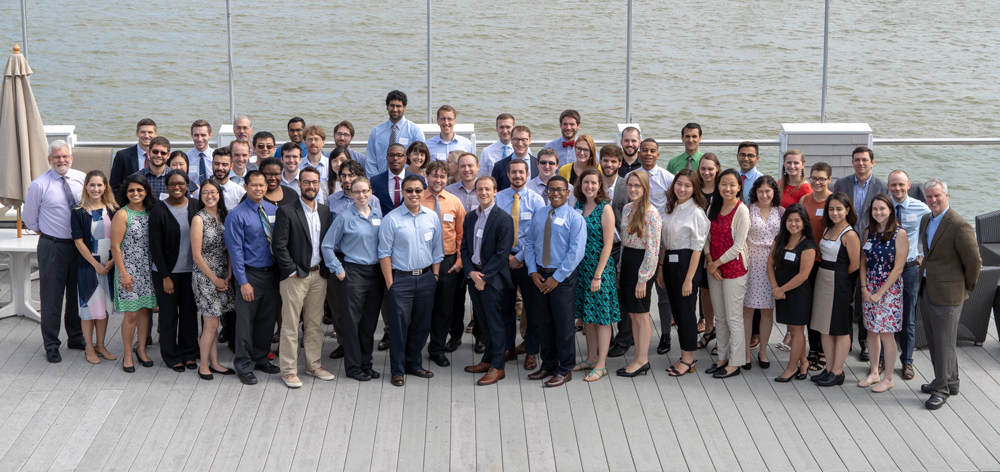
August 10, 2018 marked the Medical Scientist Training Program's 18th Annual Retreat. The retreat was held at the Rochester Yacht Club, overlooking Lake Ontario and the Genesee River.
The Annual Retreat is an opportunity for the entire program to touch base and welcome incoming students. This year, the MSTP welcomed 8 new students: Catherine Beamish, Wash U., Zachary Christensen, UR 2nd year med. (Brigham Young U.), Ankit Dahal (U. Penn), Adam Geber (Columbia U.), Emily Isenstein (Cornell U.), Bryan Redmond (Xavier U.), Alison Roby (Penn St.), Matt Sipple (Cornell U.).
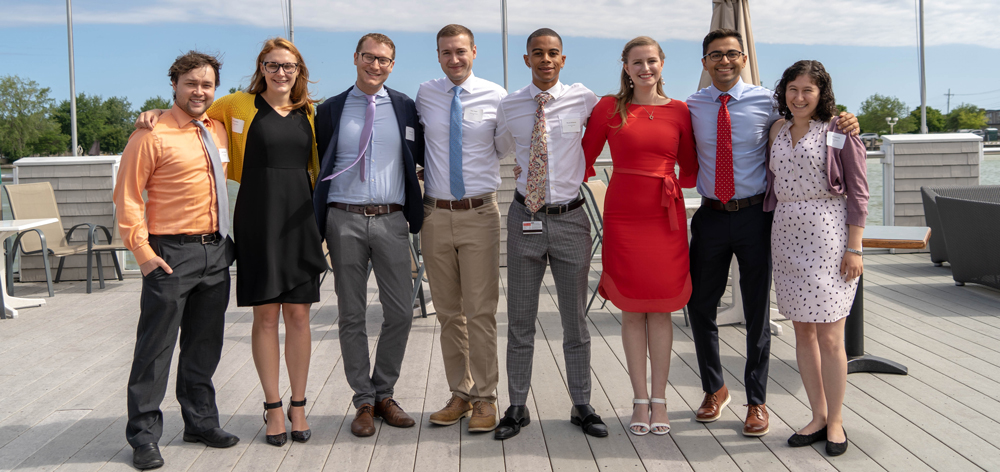
2018 MSTP Incoming Students
The Keynote this year ("Iterations of cross-talk direct differentiation in development") was given by former URMC MSTP Student, Alan P. Kenny, MD, PhD, Assistant Professor, Pediatrics (Neonatology) at the University of Cincinnati Children's Hospital, Cincinnati, OH. Dr. Kenny focuses his research on elucidating the molecular mechanisms controlling the earliest stages of respiratory and digestive organ development. Available evidence suggests that early lung, liver, and pancreas lineages develop from a pool of foregut progenitor cells in the ventral endoderm. They are induced by FGF and BMP signals emanating from the cardiogenic mesenchyme during early somite stages of development through a mechanism that is highly conserved among vertebrates.
Following the keynote, the morning science session concluded with several short-format research talks by Mark Kenney(M2, lab rotation, Summer 2018 - Edward Schwarz, PhD), Jonathan Gigas (G1, Vera Gorbunova, PhD), Karl Foley ( G2, Houhui Xia, PhD), Matthew Tanner (G3, Charles Thornton, MD), Colleen Schneider (G4, Bradford Mahon, PhD), and Evan McConnell, PhD (M3, Maiken Nedergaard, DMD, PhD).
After lunch, the program convened for a business meeting. Attendees of the Keystone MD/PhD Student Conference and the Class Council representative for American Physician Scientist Association (ASPA) reported on their trips to annual meetings and upcoming events. New Student Council members were elected at the end of the afternoon.
After closing the meeting, MD/PhD students met for conversation and drinks overlooking the water. Another successful year for the program!
NGP Student Monique Mendes Selected as a Neuroscience Scholars Program Fellow
Tuesday, August 7, 2018
 Monique was selected by the Society for Neuroscience's Professional Development Committee and its Diversity in Neuroscience Subcommittee as a Neuroscience Scholars Program Fellow. This program is designed to provide underrepresented graduate students in neuroscience with career development and networking opportunities to help them with success going into the future.
The program provides the following benefits:
- A mentoring team consisting of a senior mentor and a member of the Diversity in Neuroscience Subcommittee. The team will discuss a fellow's research, career plans, and overall experience.
- Two years of complimentary SfN membership.
- A travel award to attend the SfN annual meeting each fall during the two-year program.
- Up to $1500 in enrichment funds to support allowed professional development activities.
Congratulations Monique!
Edward Ayoub, CMPP graduate student in the laboratory of Dr. Archibald S. Perkins, was awarded an NRSA F31 beginning 8/1/18
Monday, July 23, 2018
Edward Ayoub - Recipient of a Two-Year Ruth L. Kirschstein National Research Service Award (NRSA)
Individual Predoctoral Fellowship (F31) August 1, 2018 -- July 31, 2020
Thursday, July 19, 2018
Edward Ayoub, graduate student in the laboratory of Dr. Archibald S. Perkins was awarded a two-year Ruth L. Kirschstein National Research Service Award (NRSA) Individual Predoctoral Fellowship entitled, "Therapeutic Strategies for Anemia in 3q26 Rearranged Leukemia".
Project Summary
According to the most recent NIH Cancer Statistics Review, leukemia, a cancer of blood cells, is the ninth most common type of cancer. Acute myeloid leukemia (AML) is an aggressive form of leukemia with high lethality (~75% of patients die 5 years after being diagnosed) characterized by anemia, and excessive proliferation of abnormal myeloid progenitor cells in the bone marrow (BM). Rearrangements of the chromosomal band 3q26 portend further reduction in survival, and lead to the overexpression of the oncogene Ecotropic Viral Integration Site 1 (EVI1). The severity of 3q26 rearranged AML, the lack of in-depth understanding of the role of EVI1 in leukemia, and the inadequate therapeutic strategies interested our lab and others to investigate EVI1 associated leukemogenesis. While previous groups used transplantation of BM virally transduced to overexpress EVI1, we are the first lab to recapitulate the effects of the 3q26 rearrangements in the mouse by establishing an inducible EVI1-overexpression model, which has provided us with new insights into the mechanisms by which EVI1 induces leukemia. We concluded using our in vivo and in vitro models that EVI1 causes myeloid expansion and blocks both erythropoiesis and lymphopoiesis. As an insight to the molecular mechanism, we previously documented that EVI1 binds to GACAAGATA, which overlaps with the binding site of the master regulator of erythropoiesis GATA-1. Additionally, our data indicate that EVI1 upregulates a previously published GATA-1 blocker, PU.1, and we showed that EVI1 binds to an enhancer upstream of PU.1 encoding gene (Spi-1). Thus, we hypothesize that EVI1 blocks erythroid differentiation by two mechanisms: 1) directly competing with GATA-1 for key genomic binding sites harboring EVI1/GATA-1 overlap motifs and 2) binding to Spi-1 enhancer and upregulating PU.1, which suppresses GATA1 function. We will investigate both hypothesized mechanisms using cutting edge techniques including ChIP-seq, ATAC-seq, and CRISPR under the training of my sponsor and collaborator. In order to translate the proposed mechanistic insights into clinical settings and therapeutic strategies, we will perform CRISPR library screening using an in vivo model to identify genes that reverse erythropoiesis blockage associated with EVI1-overexpression.
In summary, this fellowship will focus on investigating erythropoiesis blockage and resulting anemia that might explain the increased lethality associated with 3q26 rearranged leukemia, and It will unveil new therapeutic strategies that reverse the leukemia-associated anemia.
New Frontiers in Research
Tuesday, July 10, 2018
Stephen Dewhurst, Ph.D., Vice Dean for Research
One of the great pleasures of serving as Vice Dean for Research is the opportunity to learn about - and share - the cutting edge research that's being done here at the Medical Center. I've recently spoken with alumni, trustees and friends of the University across the country, as well as to key partners (and potential partners) for our new Empire Discovery Institute. Each time, it's been tremendous fun to have colleagues explain to me the science that most excites them - and to then watch how it resonates with diverse audiences.
Today, I'm starting a new column that's intended to share some of the stories, breakthroughs and discoveries that are being made by the 3,000 researchers who work here.
In diverse fields, ranging from neuroscience, to cancer immunotherapy, to musculoskeletal research, to RNA biology, and immunology and infectious disease, Medical Center researchers are at the forefront of their fields. For example: our basic scientists are unraveling the fundamental processes that regulate RNA metabolism and the trafficking of immune cells through tissue, while our Center for Health and Technology (CHeT) is working to enable anyone anywhere to receive care, participate in research, and benefit from resulting advances.
Another area of remarkable strength is in augmented and virtual reality (AR/VR). Multi-disciplinary teams spanning computer science, engineering, neuroscience, ophthalmology and visual sciences are creating complex virtual environments that will enable us to better understand how the brain integrates sensory data, and how that can be used to treat a wide range of neurological and neuropsychiatric conditions.
In the coming months, I hope to go into greater depth about these and other advances - and to share details of how Medical Center researchers are advancing our understanding of fundamental biological processes, translating discoveries into new treatments, and leading the way in improving clinical and population-level care.
Isaac Fisher, 5th year graduate student in the lab of Alan V. Smrcka, won first place for his poster at the EB/ASPET meeting in San Diego
Monday, July 9, 2018
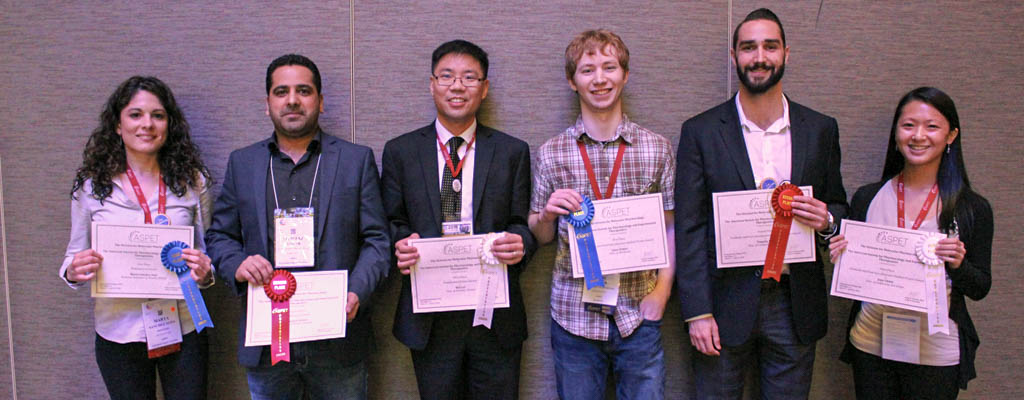
Congratulations to Isaac Fisher, a 5th year student in the laboratory of Dr. Alan V. Smrcka for receiving First Place in the Postbaccalaureate/Graduate Student category within the Division for Molecular Pharmacology! We applaud your contributions to ASPET's 2018 Student Competition.
The winners of the awards for the ASPET Student Poster Competition were announced at the Division Mixer on Tuesday, April 24 at EB 2018 in San Diego.
Poster Details
Title: Hydrogen Deuterium Exchange Mass Spectrometry Reveals Distinct Activation States of PCLb by G-Protein
Authors: Isaac Fisher, Meredith Jenkins, Greg Tall, John Burke, and Alan V. Smrcka
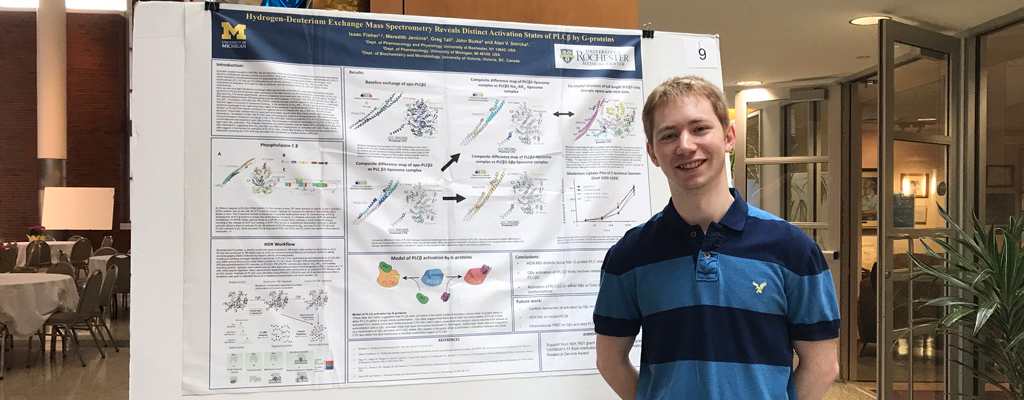
MSTP Student Wins Research Award from American Heart Association
Thursday, June 21, 2018
Jonathan Bartko, MS has received a two-year Predoctoral Fellowship Award from the American Heart Association (AHA).
Bartko is an MD/PhD candidate currently in his second year of the Cell Biology of Disease (Pathology) Graduate Program as part of the Medical Scientist Training Program (MSTP) at the University of Rochester.
He currently works in the lab of Marc Halterman, M.D., Ph.D. which specializes in stroke and cardiac arrest research. Bartko's current project is entitled, "BDNF-TrkB Regulation of ER-Dependent Death in the Peri-Ischemic Cortex."
NGP Student Receives Ruth L. Kirschstein Predoctoral Individual National Research Service Award
Thursday, June 21, 2018
 Rianne Stowell, a fourth year NGP graduate student, has been awarded a two year NIH Fellowship award (F31) for her project titled, "Noradrenergic modulation of microglial dynamics and synaptic plasticity". Rianne works in the laboratory of Ania Majewska, Ph.D.
The purpose of the Kirschstein National Research Service Award program is to enable promising predoctoral students with potential to develop into a productive, independent research scientists, to obtain mentored research training while conducting dissertation research.
Well done Rianne!
Event Recap: Pathology Research Day 2018
Monday, June 18, 2018
The annual Pathology Research Day event at the University of Rochester Medical Center was held on Monday, June 11, 2018.
The day included more than 50 poster presentations in addition to 12 oral presentationsgiven by Pathology residents and fellows, and graduate students in the Cell Biology of Disease Ph.D. Program.
This year's keynote speaker was Andrew Folpe, M.D. who is professor and consultant for Anatomic Pathology at Mayo Clinic. His engaging and informative talk was titled, "Phosphaturic Mesenchymal Tumors: What I Have Learned." A video recording of the keynote is available online (note: UR login is required to view).
The graduate program gave out several awards at a special reception at the end of the day, per below.
Graduate Program Awards
- Outstanding Academic Excellence by a First Year Student -- David Villani, MS
- Outstanding Program Contribution -- Sarah Catheline, MS
- Robert Mooney Thesis Award -- Irena Lerman, Ph.D.
Travel Award for Oral Presentation
- Madison Doolittle, MS
Poster Presentation Travel Awards
- Robert Hoff, MS
- Allison Li, MS
- Xi Lin, MS
- Robert Maynard, MS
Biochemistry & Biophysics Students Going Places
Tuesday, June 12, 2018
By Dr. Joseph Wedekind
The Department of Biochemistry & Biophysics is pleased to announce the winners of the Sayeeda Zain Fall Travel awards: Debapratim Dutta, Sierra Fox and Hong Zhu.
The Sayeeda Zain Travel Award honors the distinguished career and charitable life of Dr. Sayeeda Zain. The award is given in recognition of research excellence to support travel and related expenses associated with attendance at a scientific conference or corporate internship to gain practical experience.
Debapratim (Dave) Dutta is presenting a poster and was invited to give a talk at the Annual RNA Society Meeting (Berkeley, CA). Sierra Fox presented a poster and was a Keystone Symposia Future of Science Fund Scholarship recipient at the Keystone Symposia in Chromatin Architecture and Chromatin Organization, and Gene Control in Development and Disease Symposia (Whistler, BC, Canada). Hong Zhu presented a poster at the III International Conference on Vaccines Research and Development (Washington, DC).
Debapratim (Dave) Dutta
Sierra Fox
Hong Zhu
Neuroscience Grad Student Awarded NIH Diversity Fellowship
Tuesday, June 12, 2018
Monique S. Mendes, a neuroscience Ph.D. student, is the first University of Rochester Medical Center (URMC) graduate student to receive a prestigious diversity award from the National Institute of Neurological Disorders in Stroke (NINDS). Mendes works in the laboratory of Ania Majewska, Ph.D. and studies the role that the brain's immune cells play in development, learning, and diseases like Autism.
Mendes, originally from Kingston, Jamaica, received her undergraduate degree in Biology from the University of Florida. She came to URMC in search of a robust program that focused on glial biology and a collaborative environment. She chose the Del Monte Institute for Neuroscience to complete her thesis work due in part to Majewska's record of mentoring students and her lab's reputation for conducting leading research in brain development.
Mendes has been awarded a F99/K00 NIH Blueprint Diversity Specialized Predoctoral to Postdoctoral Advancement in Neuroscience (D-SPAN) fellowship from NINDS. The award was created to provide outstanding young neuroscientists from diverse backgrounds a pathway to develop independent research careers. Unlike traditional graduate student fellowships, this award provides research funding for 6 years, including dissertation research and mentored postdoctoral research career development.
Read the local Jamacian Observer newspaper article.
GSS Annual Poster Session - Travel Award Winners Announced
Thursday, June 7, 2018
Congratulations to our most recent GSS poster session Travel Award Winners!
Lara Terry, 3rd year student in David Yule Lab: 2nd place -- Title: Effects of Missense Mutations on Inositol 1,4,5-trisphosphate Receptor Mediated Calcium Release.
Si Chen, 4th year student in Chen Yan lab: 3rd place -- Title: PDE10A Inhibition and Deficiency Attenuate Pathological Cardiac Remodeling
Fourth year NGP Graduate Student Publishes in Journal of Neuroscience
Tuesday, May 29, 2018
Fourth year NGP graduate student Patrick Miller-Rhodes (Gelbard lab) has recently published a single author review in Journal of Neuroscience (Journal Club, J Neurosci. 2018 38(19):4457-- 4459) tackling the fascinating and timely topic of the heterogeneity of microglial mechanisms that contribute to normal brain functions such as synaptic plasticity. In this publication, Patrick highlights a recent study by NGP alumna Rebecca Lowery (Majewska lab; Glia 65(11):1744-1761), showing that microglial CX3CR1 loss does not affect multiple forms of plasticity, to make his point that the mechanisms microglia use to support neuronal function are likely diverse and differ based on brain region and developmental stage.
Congratulations Patrick and go NGP!
Outstanding Dissertations Honored
Wednesday, May 23, 2018
Each year, Arts, Sciences & Engineering and the School of Medicine and Dentistry recognize outstanding research and dissertations by PhD students.
Wishing our graduates well at the 2018 Commencement Dinner
Wednesday, May 23, 2018
The 2018 Ph.D.Commencement Dinner was held at the Daisy Flour Mill. Following introductions from Edith Lord, Senior Associate Dean for Graduate Education and Jennifer Stripay, representing the University of Rochester Alumni Council, Awards were presented to three graduating PhD students:
Vincent du Vigneaud Award: Anthony DiPiazza, Microbiology and Immunology, "Insights into CD4 T Cell-Mediated Immunity to Influenza Viruses." The award is conferred by the Office of Graduate Education to a graduating student whose thesis is judged superior and unique in potential for stimulating and extending research in the field.
Wallace O. Fenn Award: Benjamin Plog, Pathology, "Novel Insight into Regulation of Glymphatic Flow with Implications for Traumatic Brain Injury." The award is given annually to a graduating student judged to have performed especially meritorious research and who presented a Ph.D. thesis suitable to honor the name of Wallace Fenn, former professor and chair of physiology.
Marvel-Dare F. Nutting Award (recognizing an outstanding Biochemistry PhD): Amber Cutter, whose PhD dissertation was on "Molecular Characterization of Nucleosome Recognition by Linker Histone H1.0."
Commencement Dinner Photos
Pharmacology Alumni Named Associate Dean
Friday, May 11, 2018
 Jennifer Mathews, PhD has been named the Associate Dean for the Albany College of Pharmacy and Health Sciences - Vermont Campus.
Dr. Mathews earned her doctorate in Pharmacology from the University of Rochester in 2007, her field(s) of interest as a student were Neuropharmacology, Opioid receptors, Pain, Tolerance, Antinociception
Her responsibilities will include execution of the pharmacy program; supervision of faculty; campus operations; and coordination of the development, implementation, and assessment of initiatives that support the programs on the Vermont Campus, which also include a Master's program in Pharmaceutical Sciences.
Congratulations to Dr. Mathews!
Deborah Cory-Slechta Receives Lifetime Achievement Award in Graduate Education
Monday, May 7, 2018
As a faculty member at the School of Medicine and Dentistry, Deborah Cory-Slechta holds professorship positions in the departments of Environmental Medicine, Pediatrics, and Public Health Sciences. A former chair of the Department of Environmental Medicine and principal investigator of the department's National Institute of Environmental Health Sciences Center, Cory-Slechta has been nationally and internationally recognized for her scientific contributions.
Considered one of the medical school's most distinguished faculty members, Cory-Slechta served in leadership roles for several Ph.D. programs, where she also teaches key graduate courses. As the recipient of a Women's Health and the Environment over the Entire Lifespan grant, she oversees a career development and mentoring initiative for junior faculty members.
Widely regarded for her research on the consequences of developmental exposures to environmental chemicals on brain development and behavior, she has examined the effects of exposures to metals, pesticides and air pollutants. That work—particularly her groundbreaking research on the biological effects of exposure to lead—has had important regulatory and policy implications.
After earning her undergraduate and master's degree at Western Michigan University, she received her PhD at the University of Minnesota. Following a postdoctoral fellowship at Rochester, she joined the University in 1982.
Students Present 'Groundbreaking and Transformative' Research at Expo
Friday, May 4, 2018
At the annual Undergraduate Research Exposition, students presented projects on topics ranging from fluid dynamics, deforestation in Bolivia, and nomad cultures in Morocco, to prenatal depression, meteorites, and software that affects education. President's Award winners Lauren Oey '18 (left), Harrah Newman '18, Yiyun Huang '18, and Perry DeMarche '18 were among the students honored at the event.
Pathology Graduate, Ben Plog, Ph.D., Receives 2018 Fenn Award
Wednesday, May 2, 2018
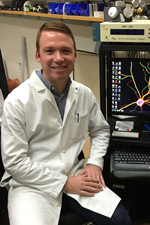 Ben Plog, Ph.D. has been named the recipient of the distinguished Wallace O. Fenn Award. Named after the late University Physiology professor and chair, the award is given to a graduating student whose Ph.D. research and thesis honor the name and work of Dr. Fenn.
Plog was a medical science training program (MSTP) student who entered the Pathology graduate program in 2012 to work in the lab of Maiken Nedergaard, M.D., D.M.Sc. in the Center for Translational Neuromedicine and Neurosurgery. Having defended his thesis (titled Novel Insight into Regulation of Glymphatic Flow with Implications for Traumatic Brain Injury), Plog has returned to Medical School to continue his Medical School training and will be part of 2018 Ph.D. degree conferral.
Latest Rochester Medicine Explores the 'Spirit and Science' of Lynne Maquat
Tuesday, May 1, 2018
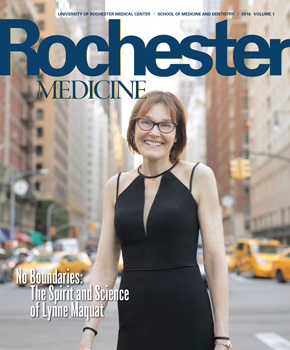
The magazine's new issue, now in an interactive, flip-book format, highlights the investigative work of the J. Lowell Orbison Endowed Chair, as well as the impressive efforts of our medical students, alumni and faculty—past and present.
Neuroscience Graduate Student publishes paper with the Briggs lab
Friday, April 27, 2018
Neuroscience Graduate student Allison Murphy co-authored a paper with the Briggs lab while in a rotation with the lab. Allison contributed an extensive amount of work toward the paper during her fall rotation, and the paper was accepted shortly after her joining the lab.
Postdoctoral fellow, Mike Hasse was the first author on the paper, "Morphological heterogeneity among corticogeniculate neurons in ferrets: quantification and comparison with a previous report in macaque monkeys."
Nice work Allison and Mike!!
The Center for the Integration of Research, Teaching and Learning (CIRTL) Events
Wednesday, April 25, 2018
One of the many sponsored programs within the Center for Professional Development in the School of Medicine & Dentistry is The Center for the Integration of Research, Teaching and Learning (CIRTL). CIRTL is an NSF-funded consortium of 42 PhD granting institutions around the country, whose aim it is to advance the teaching of STEM disciplines in higher education by preparing future faculty. CIRTL uses graduate and postdoc level research trainees as the leverage point to develop national Science, Technology, Engineering, and Mathematics (STEM) faculty committed to implementing and advancing effective teaching practices for diverse student audiences as part of successful professional careers. The goal of CIRTL is to improve the STEM learning of all students at every college and university, and thereby to increase the diversity in STEM fields and the STEM literacy of the nation.
CIRTL provides a number of online workshops, courses, and educational experiences throughout the year. Graduate students and postdocs interested in teaching are encouraged to participate in CIRTL events. For more information about CIRTL, please visit rochester.edu/college/cetl/cirtl/.
Upcoming CIRTL Events Include…
Center for the Integration of Research, Teaching and Learning (CIRTL) @ UR Research Day
Wednesday, May 23 | 9:00 am-5:00 pm | River Campus
Center for the Integration of Research, Teaching and Learning (CIRTL) @ UR will be hosting its annual Research Day and all trainees interested in participating are invited to attend. Kevin Kelly's LinkedIn profile provides an overview of his work in eLearning. The day's agenda will include examining teaching through a research lens, optimizing course design, using technology to assess learning in the classroom, using technology to engage diverse learners, and using technology to share course content. Register for this event. Trainees with an interest in teaching are highly encouraged to attend. For a full overview of the days agenda and workshop descriptions, please contact Dr. Jenny Hadingham at jennifer.hadingham@rochester.edu or (585) 276-5998.
The Bugs in Your Gut Could Make You Weak in the Knees
Tuesday, April 24, 2018
A Prebiotic May Alter the Obese Microbiome and Protect Against Osteoarthritis
The obese microbiome may be a
key driver of osteoarthritis and a
prebiotic supplement may turn
things around.
Bacteria in the gut, known as the gut microbiome, could be the culprit behind arthritis and joint pain that plagues people who are obese, according to a new study published today in JCI Insight.
Osteoarthritis, a common side effect of obesity, is the greatest cause of disability in the US, affecting 31 million people. Sometimes called "wear and tear" arthritis, osteoarthritis in people who are obese was long assumed to simply be a consequence of undue stress on joints. But researchers at the University of Rochester Medical Center provide the first evidence that bacteria in the gut -- governed by diet -- could be the key driving force behind osteoarthritis.
The scientists found that obese mice had more harmful bacteria in their guts compared to lean mice, which caused inflammation throughout their bodies, leading to very rapid joint deterioration. While a common prebiotic supplement did not help the mice shed weight, it completely reversed the other symptoms, making the guts and joints of obese mice indistinguishable from lean mice.
Brandon Berry Recipient of a two-year American Heart Association Predoctoral Fellowship & Professional Member of the AHA July 1, 2018 – June 30, 2020
Monday, April 23, 2018
Brandon Berry, graduate student in the laboratory of Dr. Andrew P. Wojtovich was awarded a two-year American Heart Association Predoctoral Fellowship entitled, "Optogenetic Control of Mitochondrial Function to Protect Against Ischemia Reperfusion Injury".
Project Summary
Mitochondria are central mediators of cell death following the pathologic stress of ischemia reperfusion (IR) injury during heart attack or stroke. However, mitochondria can be targeted with specific interventions that inhibit cell death following IR. The mitochondrial protonmotive force (PMF) is coupled to ATP synthesis, and controls ion gradients and oxidative stress. Dissipation of the PMF in IR injury results in cellular damage and death. Interestingly, mild uncoupling of the PMF from ATP synthesis using low-dose protonophores protects against IR injury. It is unclear whether uncoupling triggers protective signaling, or if uncoupling itself is the effector of protection. Further, pharmacologic tools lack temporal and spatial control, obscuring when and where uncoupling is sufficient to protect against IR injury. Uncoupling mitochondria using optogenetics addresses the spatiotemporal challenge of using protonophores. Spatiotemporal control can determine if the mechanism of uncoupling confers protection before ischemia (preconditioning), during ischemia, during reperfusion, or after reperfusion (postconditioning). Overall, using our novel optogenetic tools, this project aims to test how precise, selective, reversible uncoupling is sufficient to elicit cellular responses that protect against IR injury.
Neuroscience Graduate Student Receives American Heart Association Pre-Doctoral Fellowship
Monday, April 23, 2018
Kathleen Gates has been awarded an American Heart Association Predoctoral Fellowship. This fellowship is meant to enhance the integrated research and clinical training of promising students who are matriculated in pre-doctoral or clinical health professional degree training programs and who intend careers as scientists, physician-scientists or other clinician-scientists, or related careers aimed at improving global cardiovascular health.
Congratulations Kathleen!!
April 23rd - Genetics Day 30th Annual Scientific Symposium
Friday, April 20, 2018
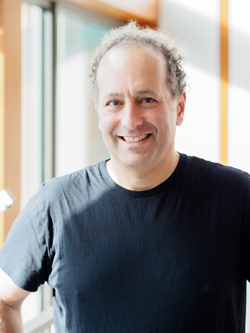 Mark your calendars for the 30th annual Genetics Day! The 16th annual Fred Sherman Lecture will be delivered by Michael Eisen, PhD, from Berkeley University. You and your colleagues are invited to submit your posters for the Genetics Day poster session to be held 12:00 -- 2:00pm on Monday, April 23, 2018. Cash prizes will be awarded to select graduate student and postdoc posters.
New Fellowship Opportunity: TRIUMPH Post-doctoral Fellowship - MD Anderson Center
Wednesday, April 18, 2018
TRIUMPH (Translational Research In Multidisciplinary Program) Post-doctoral Fellowship
The Cancer Prevention & Research Institute of Texas (CPRIT) TRIUMPH Postdoctoral Fellowship Program is a post-doctoral program providing unique training in clinical and translational research. The immediate goal of our program is to recruit talented, productive, well-trained PhDs and train them through didactic course work as well as clinical rotations and a unique mentorship to pursue clinical and/or translational research. A long-term goal of this program is to produce scientists who can be paired with suitable physician scientists to co-PI a research laboratory.
This is a three-year training program. First year postdoctoral fellows participate in a series of didactic clinical course work offered at the MD Anderson UTHealth Graduate School (GSBS), MD Anderson Cancer Center, or the UTHealth McGovern School of Medicine and strategically matched clinical rotations, while pursuing research in a basic or translational research laboratory. Second and third year fellows are co-mentored by a basic science/translational scientist mentor and a physician/clinical scientist mentor on clinical/translational research projects. The TRIUMPH postdoc will obtain a certificate upon successful completion of the program. The expectation for our post-docs is that by the end of their 3-year training, they will have first authored at least 2 papers in high impact journals. Our multidisciplinary training program will award a certificate upon completion.
Please visit the TRIUMPH website for additional information
Thesis competition winner describes protein translation in 3 minutes or less
Wednesday, April 18, 2018
Jillian Ramos showed exactly how to capture an audience's attention -- and hold it -- at the University of Rochester's third annual Three Minute Thesis Competition finals.
As a result, the PhD student in assistant professor Dragony Fu's biology lab walked away with not only the $750 first place prize awarded by a panel of faculty judges, but the $250 people's choice prize awarded by an audience that filled all but a few seats in the Class of '62 Auditorium.
Eight Finalists Confirmed for Three Minute Thesis Competition
Friday, April 6, 2018
Communicating research with three minutes and a slide
At a time when it is more important than ever for scientists to communicate clearly with the public, eight University PhD students and postdocs will do their best to summarize their research with just three minutes and a slide.
They are finalists in the University's annual Three Minute Thesis competition, which will be held at 4 p.m., next Thursday, April 12, in the Class of '62 Auditorium at the Medical Center.
A total of 44 students initially entered the competition, which was founded at University of Queensland, and is now in its third year at Rochester. The eight finalists are:
- Jillian Ramos (biology)
- Derek Crowe (genetics, development, and stem cells)
- Parker Riley (computer science)
- Robert Maynard (cellular biology of disease)
- Marian Ackun-Farmmer (biomedical engineering)
- Lauren VanGelder (chemistry)
- Simeon Abiola (translational biomedical science)
- Kathryn-Mary Wakim (neuroscience)
The winner will receive a $750 research travel award. There are also $500 and $200 research travel awards, respectively, for the runner-up and the people's choice winner.
McMurray Named Associate Director of Pathology Graduate Program
Wednesday, March 28, 2018
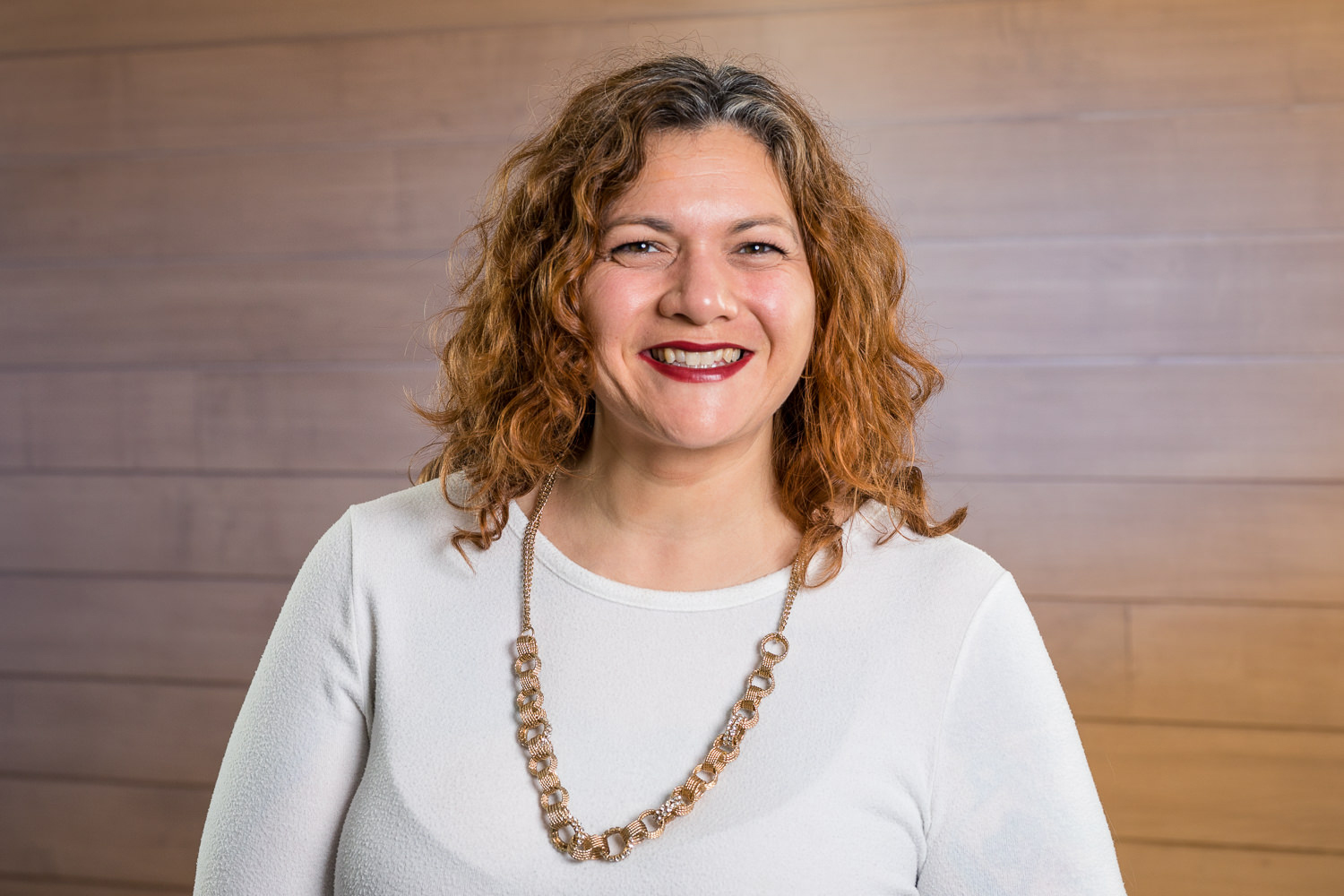 Helene McMurray, Ph.D., has been named the new associate director of the Cell Biology of Disease (Pathology) Graduate Program at the University of Rochester, which became effective in March.
Dr. McMurray is a clinical assistant professor with a primary appointment in Pathology and Laboratory Medicine. She currently serves as the Director-in-Training in the Tissue Typing/Histocompatibility Laboratory at Strong Memorial Hospital.
Her research collaborations with scientists in the Department of Biomedical Genetics focus on identification of vulnerabilities in cancer cells, and utilize approaches in genomics, bioinformatics, biostatistics, and genetics. As an educator, Dr. McMurray works to introduce students to these modern techniques in biomedicine.
Dr. McMurray will join Dr. Richard Libby (Opthalmology) who directs the program.
"Mentors and advisors have helped me imagine new possibilities in my science and in my career," said McMurray. "I wouldn't be who or where I am today without guidance from others. I am excited to take on this new role in the Cell Biology of Disease Graduate Program to try to share what I have learned with the next generation of scientists."
Alumni Spotlight on Dana Olzenak, PhD ‘15
Monday, March 26, 2018
Dana Olzenak McGuire, who graduated with a PhD in Epidemiology from the 2015 class was recently appointed to the role of public health director in St. Lawrence County. As public health director, Dr. Olzenak McGuire supervises about 30 employees including nurses, the county coroners and administrative staff.
Dr. Olzenak McGuire brings a wide range of disciplines into the new role with degrees in Physical therapy, an MBA and the PhD in Epidemiology.
Visit our Epidemiology PhD Program to learn more. Congratulations Dana!
"Epidemiology just sounded really interesting to me, It covers all diseases from environmental to infectious to chronic." - Dana Olzenak McGuire
Leader in the field of epigenetic regulation and cancer biology joins the Department of Biomedical Genetics and GDSC Program
Wednesday, March 7, 2018
 Dr. Paula Vertino, currently the leader of the Cancer Genetics and
Epigenetics Program at Emory University will be joining the University of Rochester Department in Biomedical
Genetics and the Wilmot Cancer Institute this summer. Dr. Vertino's research on cancer epigenetics will greatly
expand our areas of research strengths. She is an exceptionally important player in her field, and we look forward
to welcoming her to the GDSC program!
Dr. Paula Vertino, currently the leader of the Cancer Genetics and
Epigenetics Program at Emory University will be joining the University of Rochester Department in Biomedical
Genetics and the Wilmot Cancer Institute this summer. Dr. Vertino's research on cancer epigenetics will greatly
expand our areas of research strengths. She is an exceptionally important player in her field, and we look forward
to welcoming her to the GDSC program!
Cindy Wang Wins America’s Got Regulatory Science Talent Competition
Monday, March 5, 2018
 Xiaowen (Cindy) Wang, M.S., a graduate student in the Cellular and Molecular Pharmacology and Physiology PhD Program placed first in the 5th annual "America's Got Regulatory Science Talent" competition for her proposal "Dr. Data: An Integrated Drug Repurposing Database for Identifying New Indications of FDA Approved Drugs"
To read more about Cindy's proposal and the competition, please visit the CTSI Stories website.
Congratulations Cindy!
Janelle Veazey Receives F31 National Research Service Award From NIH
Sunday, February 18, 2018
Immunology graduate student Janelle Veazey, has received an F31 National Research Service Award from the NIH. This pre-doctoral fellowship will support her research investigating a new role for airway epithelial protein kinase D in anti-viral immunity.
Congratulations Janelle!
E-Cigarette Flavors Are Toxic to White Blood Cells, Warn Scientists
Thursday, February 1, 2018
A new study led by the Rahman lab and first author, Toxicology post-doctoral researcher, Dr. Thivanka Muthumalage, adds to growing evidence on the harmful health effects of e-cigarettes. Currently, the article has been viewed over 16,500 times (in just one day) and several news sources have written articles and reported about it across the globe.
The paper has been so well received that it is currently ranked in the top 5% of all research outputs ever tracked by Altmetric.
The study has revealed another potential health risk of e-cigarettes, finding that the chemicals used to flavour e-cigarette liquids are toxic to white blood cells. The study wanted to test the assumption that nicotine-free flavoured e-liquids are safer than smoking tobacco cigarettes, looking at what effect e-cigs might have on the immune system.
To do this the researchers directly exposed a type of white blood cell called monocytes, which help the body fight infection, to e-liquids. They found that e-cigarette flavoring chemicals and liquids can cause significant inflammation to monocytes, with many of the flavouring chemicals also causing significant cell death. Some flavours were found to be more harmful than others, with cinnamon, vanilla, and buttery flavours among the worst.
The researchers also found that mixing e-cigarette flavours has a much worse effect than exposure to just one flavour and caused the most toxicity to white blood cells.
The study's first author, Dr. Thivanka Muthumalage, commented on the findings, saying that although these flavouring compounds may be safe for ingestion, the results show they are not safe for inhalation and add to a growing body of evidence suggesting that e-cigarettes are harmful to health. Previous research has also found that the flavors used in e-cigarettes cause inflammatory and oxidative stress responses in lung cells.
Senior author Dr. Irfan Rahman expressed concern: "Our scientific findings show that e-liquid flavors can, and should, be regulated and that e-juice bottles must have a descriptive listing of all ingredients. We urge regulatory agencies to act to protect public health," he said, also warning that, "alluring flavour names, such as candy, cake, cinnamon roll and mystery mix, attract young vapers."
The team are now planning further research and are calling for further long-term human studies to understand better the harmful effects of e-cigarettes. The findings can be found published online in the journal Frontiers in Physiology.
To learn more please read the following articles:
Lungs Mays Hold Key to Thwarting Brain Damage after a Stroke
Wednesday, January 31, 2018
By Mark Michaud
The harm caused by a stroke can be exacerbated when immune cells rush to the brain an inadvertently make the situation worse. Researchers at the University of Rochester Medical Center (URMC) are studying new ways to head off this second wave of brain damage by using the lungs to moderate the immune system's response.
"It has become increasingly clear that lungs serve as an important regulator of the body's immune system and could serve as a target for therapies that can mitigate the secondary damage that occurs in stroke," said URMC neurologist Marc Halterman, M.D., Ph.D. "We are exploring a number of drugs that could help suppress the immune response during these non-infection events and provide protection to the brain and other organs."
Halterman's lab, which is part of the Center for NeuroTherapeutics Discovery, has been investigating domino effect that occurs after cardiac arrest. When blood circulation is interrupted, the integrity of our intestines becomes compromised, releasing bacteria that reside in the gut into the blood stream. This prompts a massive immune response which can cause systemic inflammation, making a bad situation worse.
While looking at mouse models of stroke, his lab observed that a similar phenomenon occurs. During a stroke blood vessels in the brain leak and the proteins that comprise the wreckage of damaged neurons and glia cells in the brain make their way into blood stream. The immune system, which is not used to seeing these proteins in circulation, responds to these damage-associated molecular patterns and ramps up to respond. Mobilized immune cells make their way into the brain and, finding no infection, nevertheless trigger inflammation and attack healthy tissue, compounding the damage.
The culprit in this system-wide immune response is neutrophils, a white cell in the blood system that serves as the shock troops of the body's immune system. Because our entire blood supply constantly circulates through the lungs, the organ serves as an important way station for neutrophils. It is here that the cells are often primed and instructed to go search for new infections. The activated neutrophils can also cause inflammation in the lungs, which Halterman suspects may be mistakenly identified as post-stroke pneumonia. The damage caused by activated neutrophils can also spread to other organs including the kidneys, and liver.
Andrew Cox Receives US Patent
Tuesday, January 30, 2018
Andrew Cox
MD/PhD student, Andrew Cox has been awarded a patent, "Attenuated Influenza Vaccines and Uses Thereof" (9,787,032), for a new live flu vaccine that is safer than the current one so should permit higher dose administration to overcome the current problems with the live vaccine.
When not in medical school, Andrew is currently pursuing his degree in the Dewhurst lab, working on temperature sensitivity of Influenza polymerase as a determinant of pathogenicity.
Congratulations Andrew!
Inaugural Winners of the CPD Travel Award
Thursday, January 25, 2018
The Center for Professional Development (CPD) is excited to announce this year's winners of the CPD Travel Award. Congratulations to Valeriia Sherina, PhD student in Statistics and Cui Li, postdoctoral appointee in the Center for Translational Neuromedicine, for winning the inaugural CPD Travel Award! CPD would like to thank all the PhD students and postdoctoral appointees who submitted applications. Applications for the 2018-2019 academic year will be available in early spring.
Award Information
The Center of Professional Development (CPD) is sponsoring a CPD Travel Award for PhD students and postdoctoral appointees in the School of Medicine and Dentistry. Each travel award is worth up to $1500 and can be utilized for travel to a conference or for a professional development opportunity relevant to preparation for current or future career endeavors.
The Art of Science: Grad Student Finds Inspiration in Images of the Brain
Friday, January 12, 2018
The complex biology, networks, and symphony of signals that underlie human cognition are a font of endless mystery and wonder to those who study it. For Rianne Stowell, a graduate student in the lab of URMC neuroscientist Ania Majewska, Ph.D., these questions are also a source of artistic inspiration which has led to the creation of striking paintings of the brain's inner workings.
Stowell's most recent creation (above) is based on research which has recently been published in the journal Developmental Neurobiology and sheds new light on the role that immune cells called microglia play in wiring and rewiring the connections between nerve cells.
Stowell recalls wanting to pursue a career in art as far back as elementary school in Pennsylvania and while she carried that desire with her to Moravian College, she also began to explore other academic fields. Her interest in biology and psychology attracted her to a degree in neuroscience and that decision ultimately led her to the University of Rochester School of Medicine and Dentistry, where she is in now in her fourth year of graduate studies in pursuit of her Ph.D. in neuroscience.